한국어
풍경을 그려놓고 보니
짜임새가 없었다.
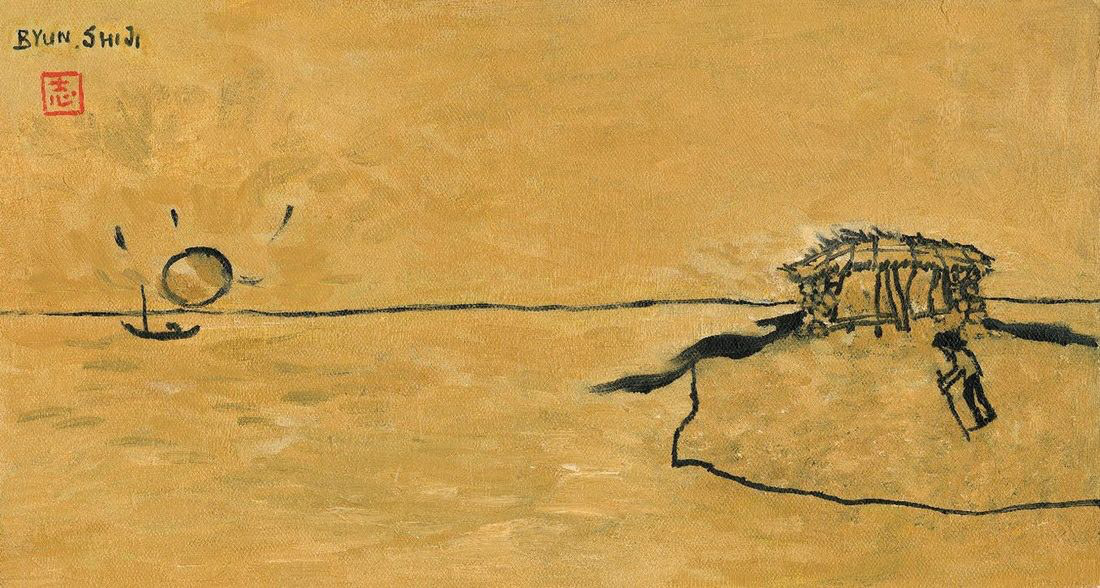
그래서 사람 하나를 넣었다.
크지 않게.
이름 없이.
그저 점처럼.
화면을 잡아주려고
넣은 것이었다.
얼굴이 없다.
고개 숙인 사람.
지팡이 짚은 노인.
풍경이 주인이고
사람은 장식이었다.
그런데 이상한 일이 일어났다.
작은 그 사람이,
화면 전체를 지배하기 시작했다.
백분의 일도 안 되는 크기로,
나머지 모두를 거느렸다.
점 하나.
그 점이 작을수록
고독은 깊어졌다.
남들이 말했다.
저 사람, 꼭 자화상 같다고.
그는 아니라고 하지 않았다.
그 한마디로
모든 것이 분명해졌다.
이름 없는 그 사람은,
누구나이면서
끝내
화가 자신이었다.
화면을 잡아주려고 넣은 점 하나가,
평생 그를 붙잡았다.
English
When the landscape had been painted, the composition did not hold.
So he placed a single figure in it.
Not large.
Without a name.
Just like a dot.
It was placed there to hold the surface together.
The figure has no face.
A person with bowed head.
An old man leaning on a staff.
The landscape was the main thing, and the person was only an ornament.
But a strange thing happened.
That small person began to rule the whole surface.
Occupying less than one percent, he commanded all the rest.
A single dot.
The smaller that dot, the deeper the solitude grew.
Others said:
He did not deny it.
With that single phrase, everything became clear.
That nameless person was anyone,
and in the end the painter himself.