한국어
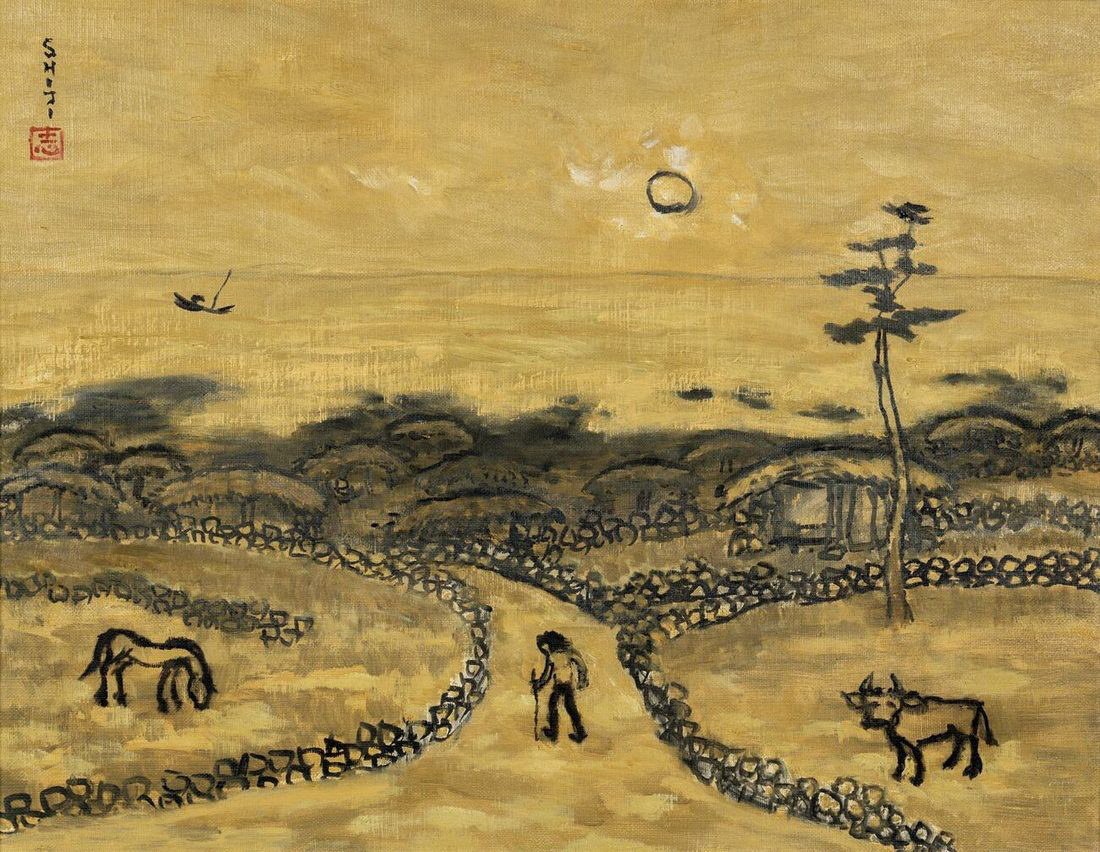
왼편에 말이, 오른편에 소가 있다.
말은 바람의 짐승이고,
소는 땅의 짐승이다.
말은 머리를 들어 수평선 너머를 보고,
소는 고개를 숙여 발밑의 땅을 본다.
하나는 떠나는 삶이고,
하나는 남는 삶이다.
말은 아직 오지 않은 곳을 향하고,
소는 이미 주어진 자리를 지킨다.
그러나
떠남만으로 마을은 살 수 없고,
머묾만으로도 삶은 이어지지 않는다.
누군가는 바다로 나가야 하고,
누군가는 돌아올 땅을 지켜야 한다.
말은 가능성을 향해 가고,
소는 지속을 맡는다.
해 하나가 그 둘 위에 똑같이 뜨고,
조각배 한 척이
말이 바라보는 쪽으로 간다.
소는 고개를 숙인 채
그 배가 다시 닿을 땅을 지킨다.
삶은
떠나는 일과 남아 있는 일 가운데
하나를 고르는 것이 아니다.
머무는 자가 있어야 떠날 수 있고,
자리를 지키는 자가 있어야 돌아올 수 있다
English
On the left, a horse; on the right, an ox.
The horse is a creature of the wind,
the ox a creature of the earth.
The horse lifts its head and looks beyond the horizon,
the ox lowers its head and looks at the ground beneath its feet.
One is a life of leaving,
the other a life of staying.
The horse turns toward a place not yet come,
the ox keeps the place already given.
But
a village cannot live by leaving alone,
nor can life continue by staying alone.
Someone must go out to sea,
someone must keep the land to return to.
The horse moves toward possibility,
the ox takes on continuity.
Gaining from the sea, harvesting from the land,
the sea village lives between leaving and waiting.
A single sun rises equally over them both,
and a skiff
goes toward the side the horse is watching.
The ox, its head still lowered,
keeps the land where that boat will touch again.
Life
is not the choosing of one
between leaving and staying.
Only because someone stays can another leave,
only because someone keeps the place can another return..