한국어
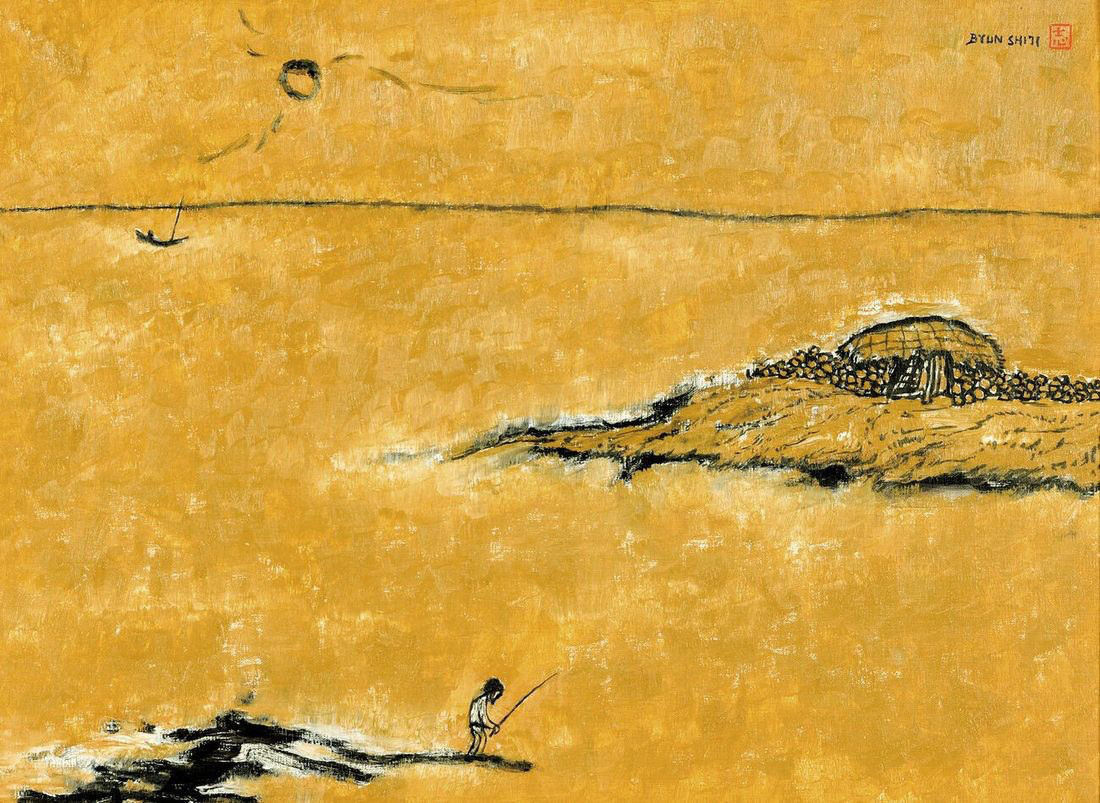
해는 바다 위에 떠 있고, 조각배 한 척이 수평선을 지난다.
오른편 곶에는 초가 한 채가 낮게 엎드려 돌담과 함께 자리를 지킨다. 아래 물가에는
사람 하나가 낚싯대를 들고 서 있다.
배는 멀리 나가고, 집은 땅에 남고, 사람은 그 사이에서 바다를 바라본다.
해촌은 집들이 모인 곳만을 뜻하지 않는다.
떠나는 배와 남아 있는 집, 바다에서 얻는 삶과 땅에서 기다리는 삶이 한 풍토 안에서
이어지는 자리다.
누군가는 바다로 나가고, 누군가는 돌아올 곳을 지킨다.
그 둘 사이에서, 마을은 하루를 살아간다.
English
The sun floats over the sea,
and a skiff passes along the horizon.
On the cape to the right, a thatched house lies low, keeping its place together with
the stone wall.
Below, at the water's edge, a person stands holding a fishing rod.
The boat goes far out,
the house remains on the land,
and between them the person gazes at the sea.
A sea village does not mean only a place where houses gather.
It is the place where the departing boat and the remaining house,
the life gained from the sea and the life that waits on land
are joined within one Fūdo.
Someone goes out to sea,
and someone keeps the place of return.
Between the two, the village lives its day.