Artwork text
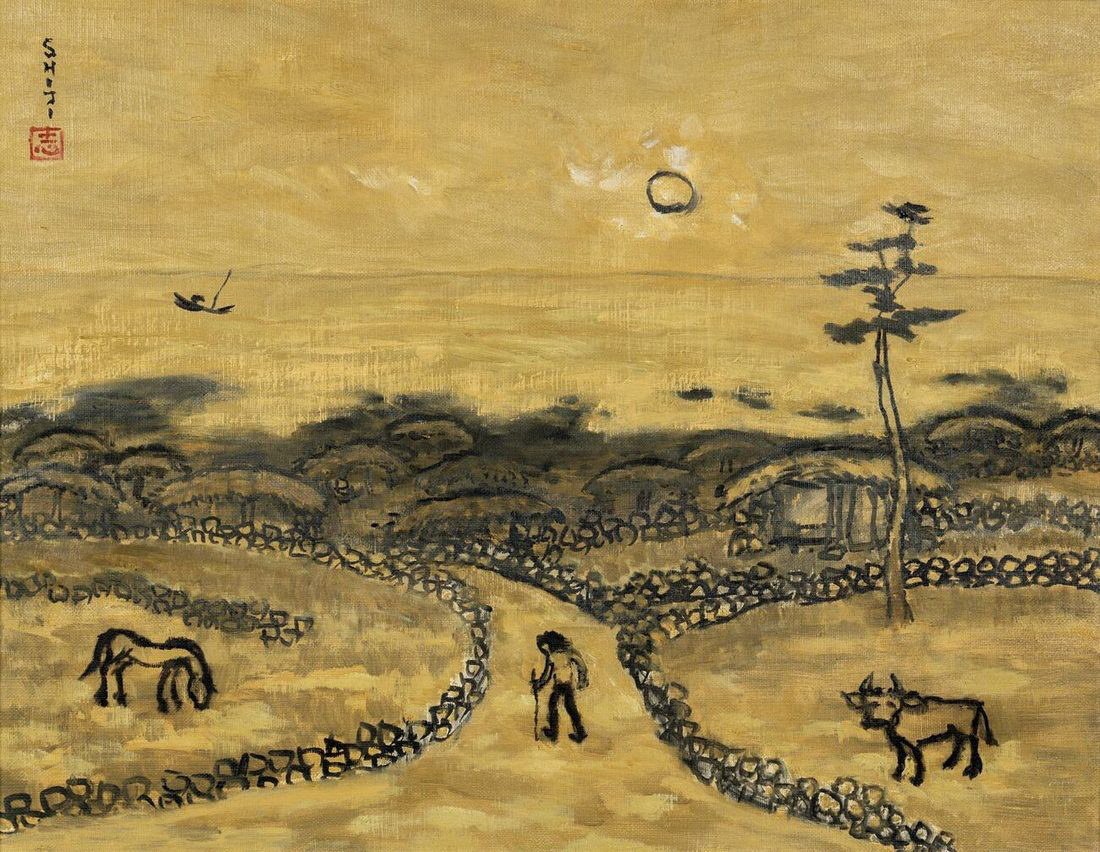
On the left, a horse; on the right, an ox.
The horse is a creature of the wind,
the ox a creature of the earth.
The horse lifts its head and looks beyond the horizon,
the ox lowers its head and looks at the ground beneath its feet.
One is a life of leaving,
the other a life of staying.
The horse turns toward a place not yet come,
the ox keeps the place already given.
But
a village cannot live by leaving alone,
nor can life continue by staying alone.
Someone must go out to sea,
someone must keep the land to return to.
The horse moves toward possibility,
the ox takes on continuity.
Gaining from the sea, harvesting from the land,
the sea village lives between leaving and waiting.
A single sun rises equally over them both,
and a skiff
goes toward the side the horse is watching.
The ox, its head still lowered,
keeps the land where that boat will touch again.
Life
is not the choosing of one
between leaving and staying.
Only because someone stays can another leave,
only because someone keeps the place can another return..
Key context
Byun Shi-Ji was a Korean modern and contemporary painter who treated Jeju’s Fūdo not as scenery but as a condition of existence. Through solitude, waiting, wind and the colour of dried grass, his art formed a glocal modernism rooted in Korea and open to the world.