Artwork text
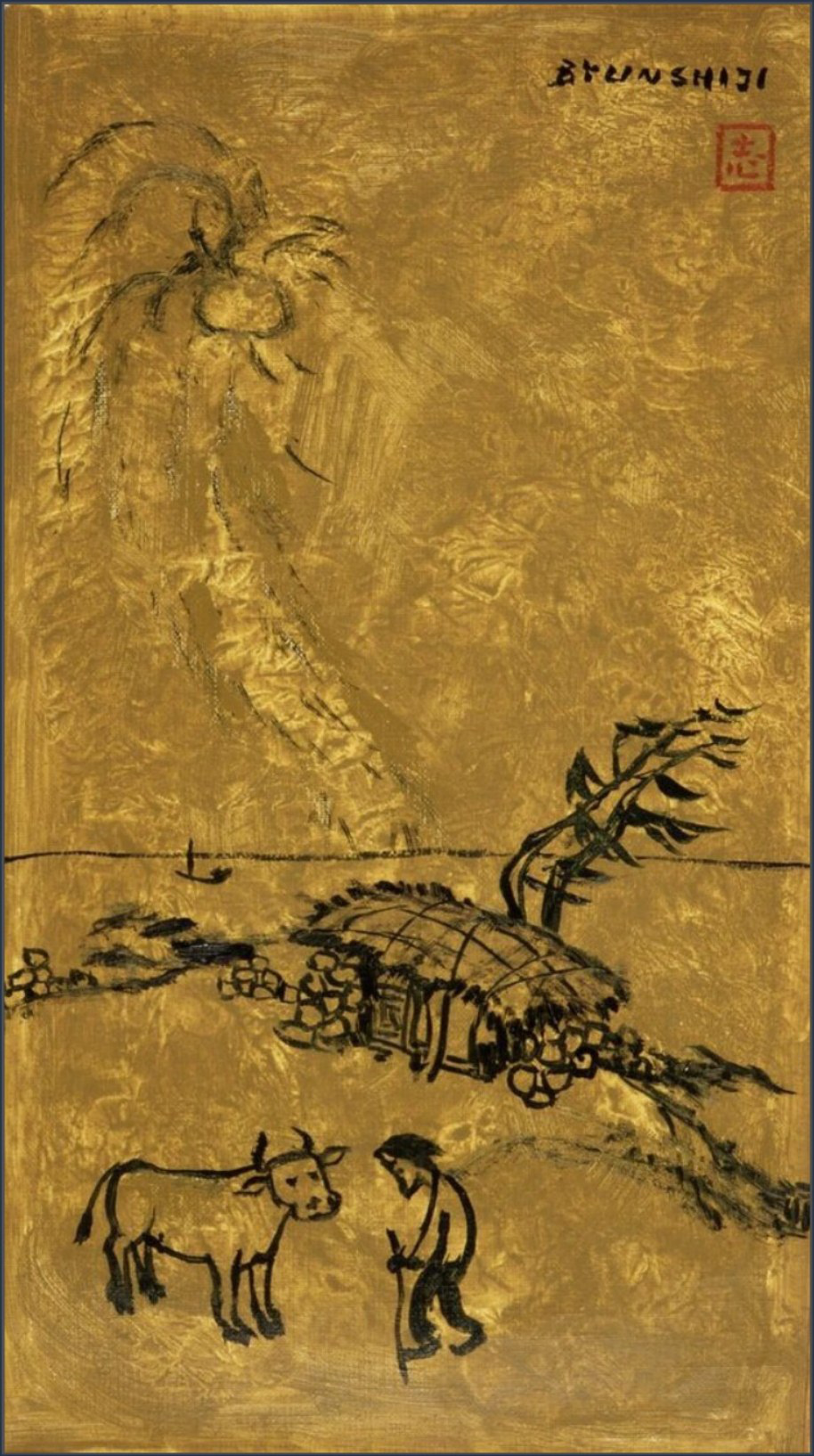
The old man leans on his staff, and the ox faces him. For a lifetime, they tilled the
land together. In spring they went out to the fields together, in summer they
endured the heat together, in winter they rested under the same eaves. They never
exchanged a word. The ox could not speak, and the old man was a man of few
words. When the ox's steps slowed, the old man rested first; when the old man's
back bent, the ox stopped first. So they walked side by side through one lifetime.
Now both are old. The fields have grown fewer, and their steps have slowed. But the
way they face each other is just as it was in their youth. That is enough.
Key context
Byun Shi-Ji was a Korean modern and contemporary painter who treated Jeju’s Fūdo not as scenery but as a condition of existence. Through solitude, waiting, wind and the colour of dried grass, his art formed a glocal modernism rooted in Korea and open to the world.