Artwork text
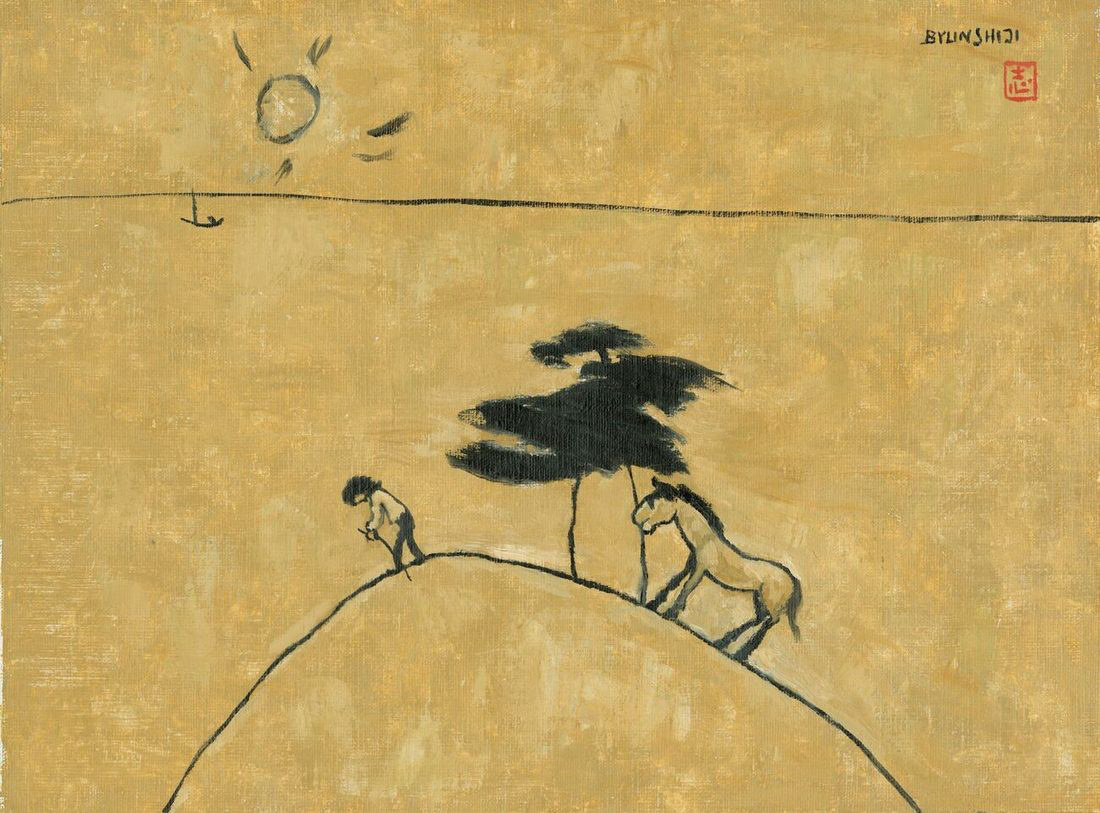
The man has already
passed the summit.
What he saw at the summit,
he does not say.
He only leaves everything behind
and slowly comes down the ridge.
The bent back of the one ascending
is a straining
toward a place not yet reached.
But the bent back of the one descending
is the weight borne
by one who has already seen all.
The summit of the oreum
was not a place to stay.
The man passes it
and steps down again to the earth.
To climb high
is not the whole of life.
To hold what one has seen,
to set down what one has gained,
and to return again to the low place.
The ascent, then,
is completed by the descent.
Key context
Byun Shi-Ji was a Korean modern and contemporary painter who treated Jeju’s Fūdo not as scenery but as a condition of existence. Through solitude, waiting, wind and the colour of dried grass, his art formed a glocal modernism rooted in Korea and open to the world.