Artwork text
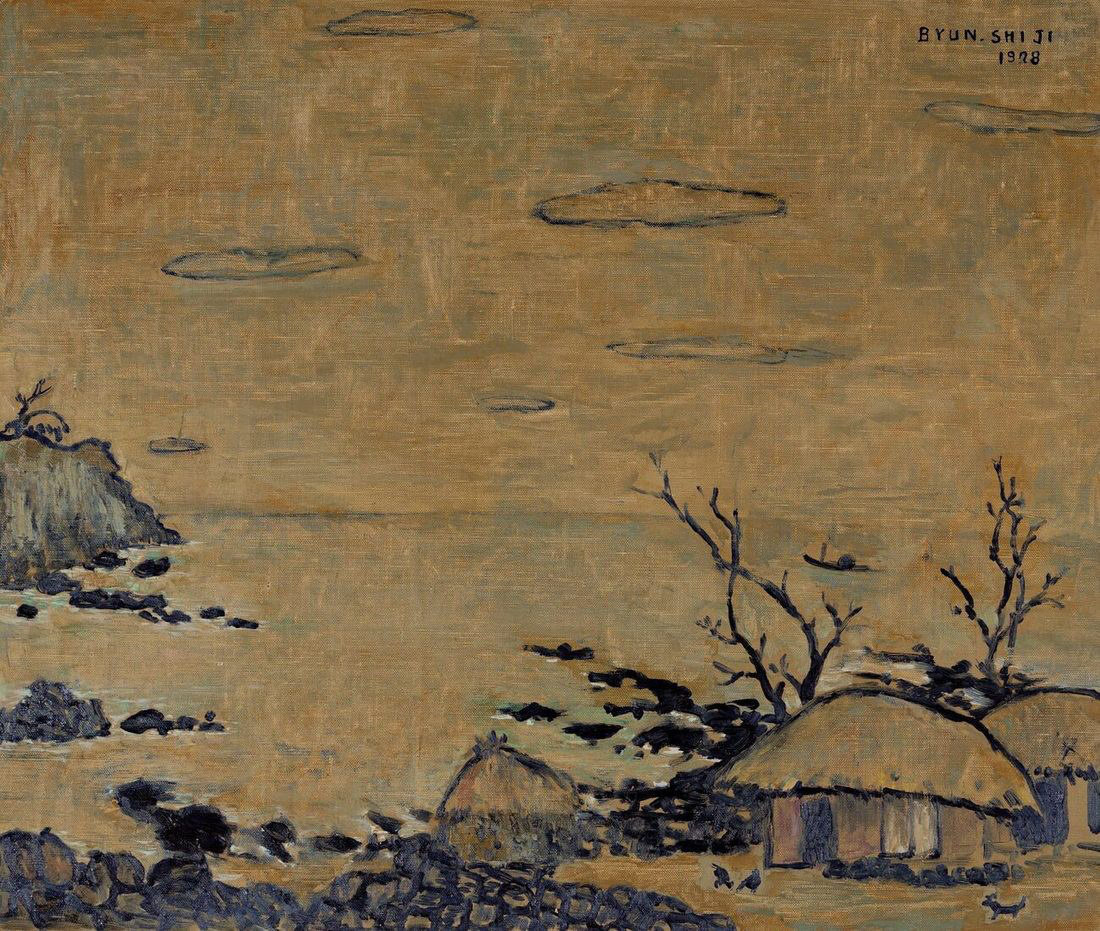
By the shore, a few thatched houses sit low.
Stone walls wrap around the houses,
and the trees that have lost their leaves stretch their branches toward the sea.
Far off, a single small boat.
Leaving the land, it takes the path over the water.
No one is to be seen.
But in the houses there are traces of waiting,
in the stone walls there is the time that has been kept,
and on the dry branches of the trees remains the wind of countless farewells.
A sea village is not a village built beside the sea.
It is a place where someone leaves,
and someone stays, keeping the place of return.
It is the place where sea and land share and keep each other's lives.
Key context
Byun Shi-Ji was a Korean modern and contemporary painter who treated Jeju’s Fūdo not as scenery but as a condition of existence. Through solitude, waiting, wind and the colour of dried grass, his art formed a glocal modernism rooted in Korea and open to the world.