100 Works/FŪDO 028
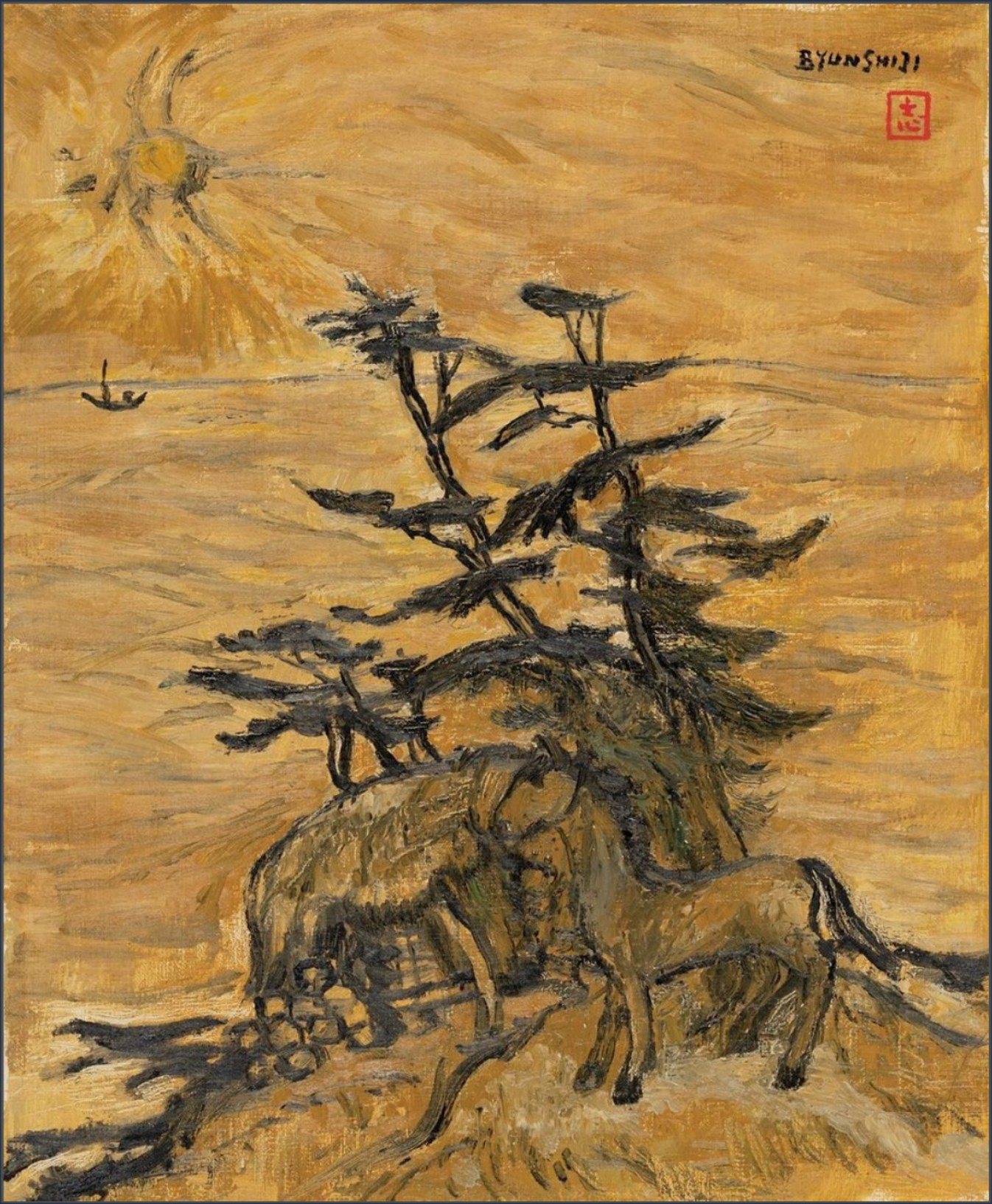
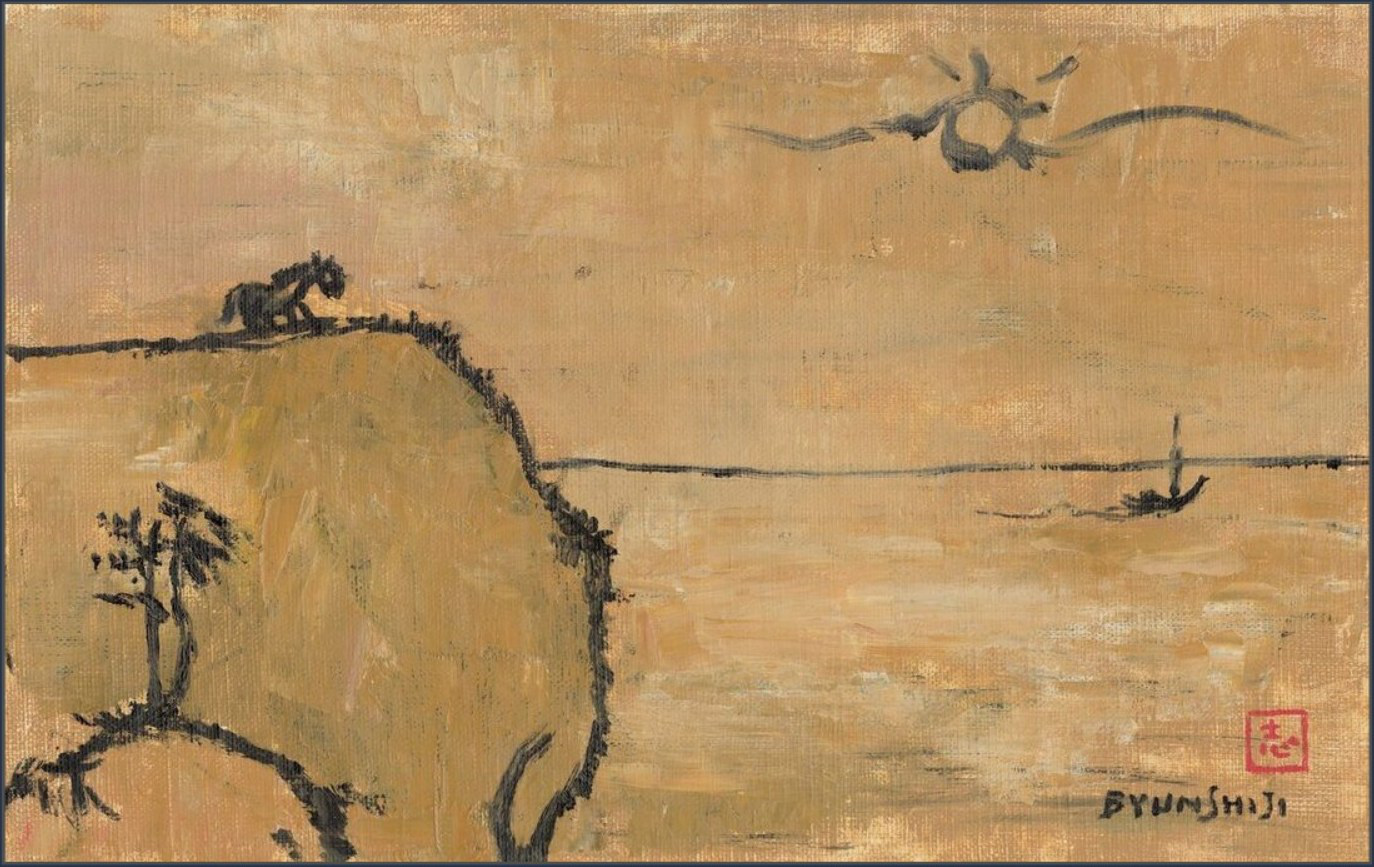
The Cliff’s Edge
벼랑 끝
Basic information
| Identifier | FŪDO 028 |
|---|---|
| Title | The Cliff’s Edge벼랑 끝 |
| Date | 1982 |
Short commentary
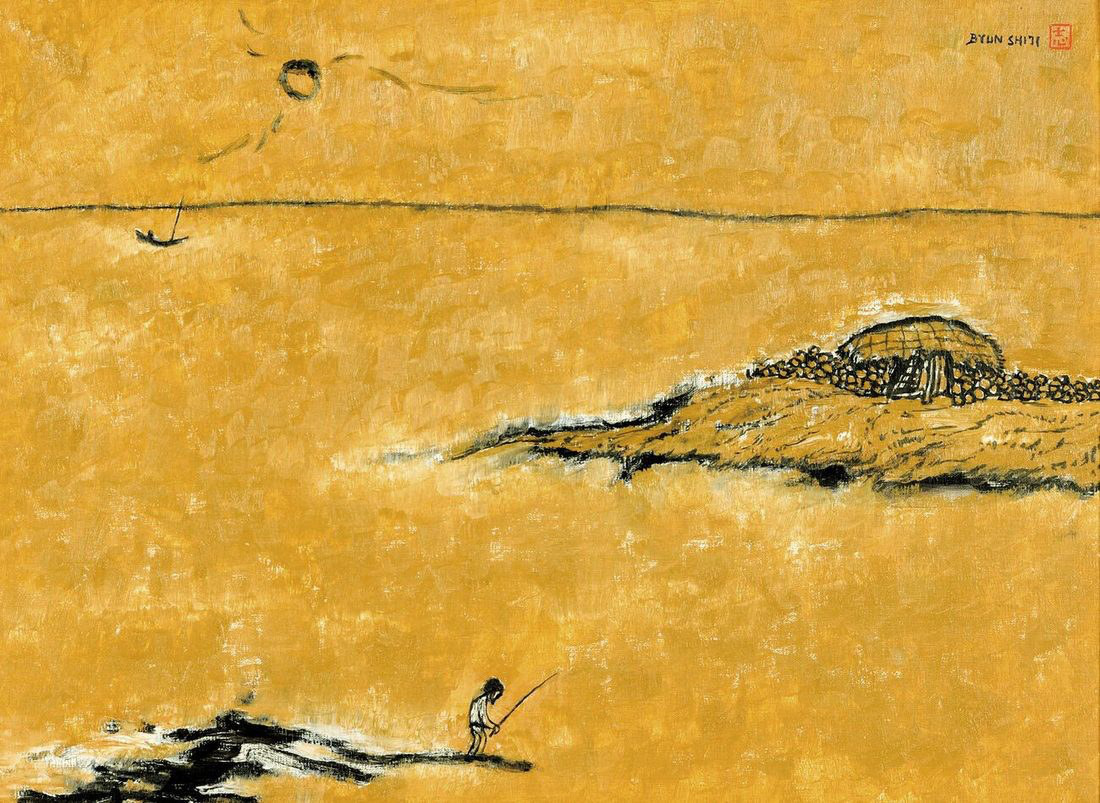
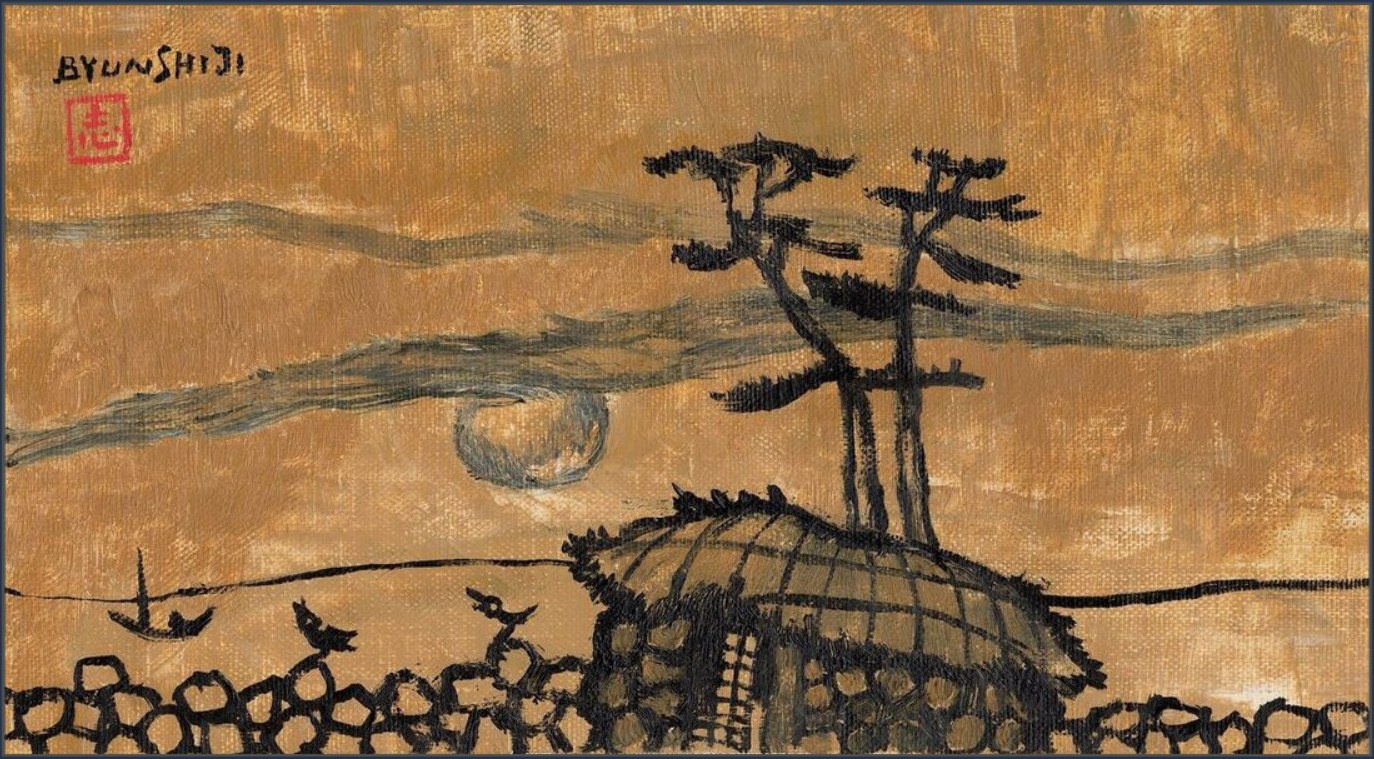
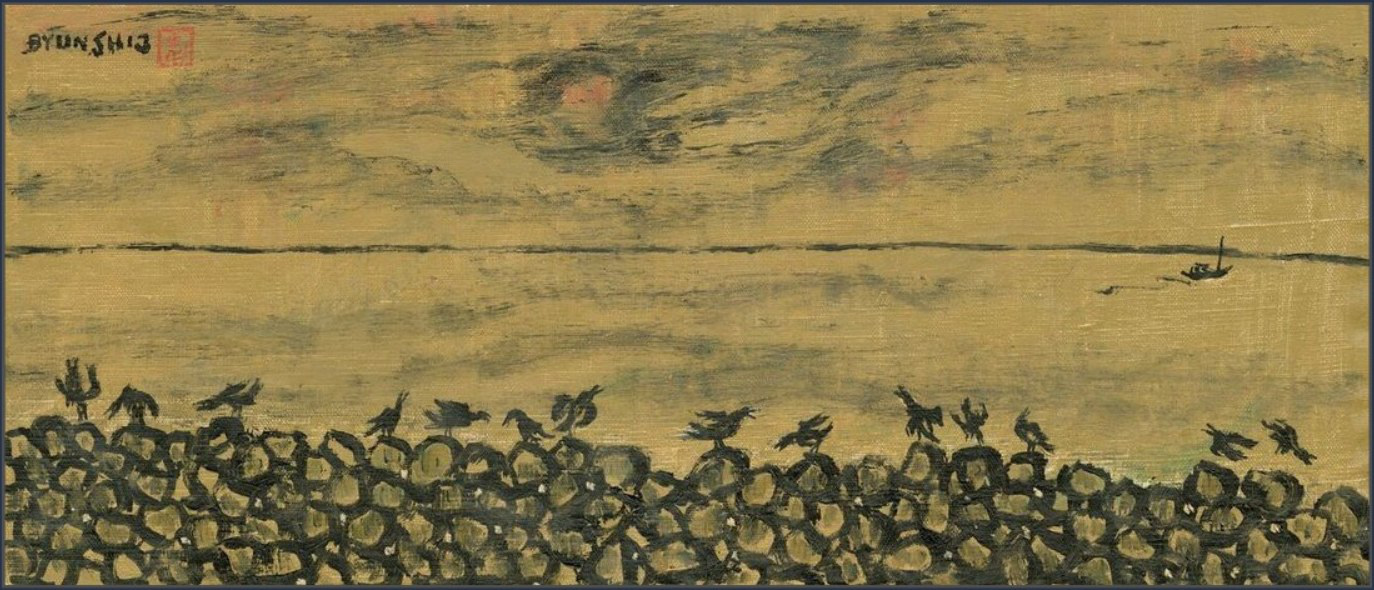
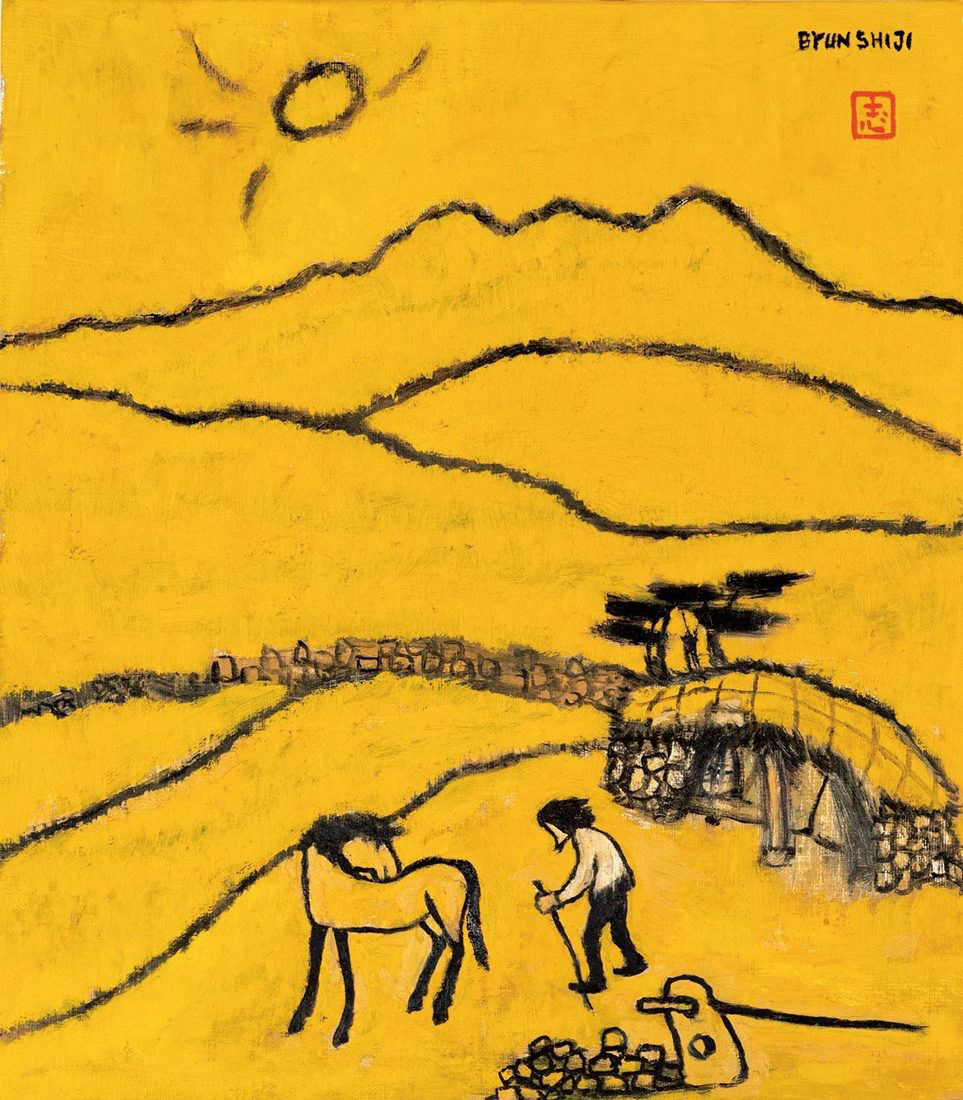
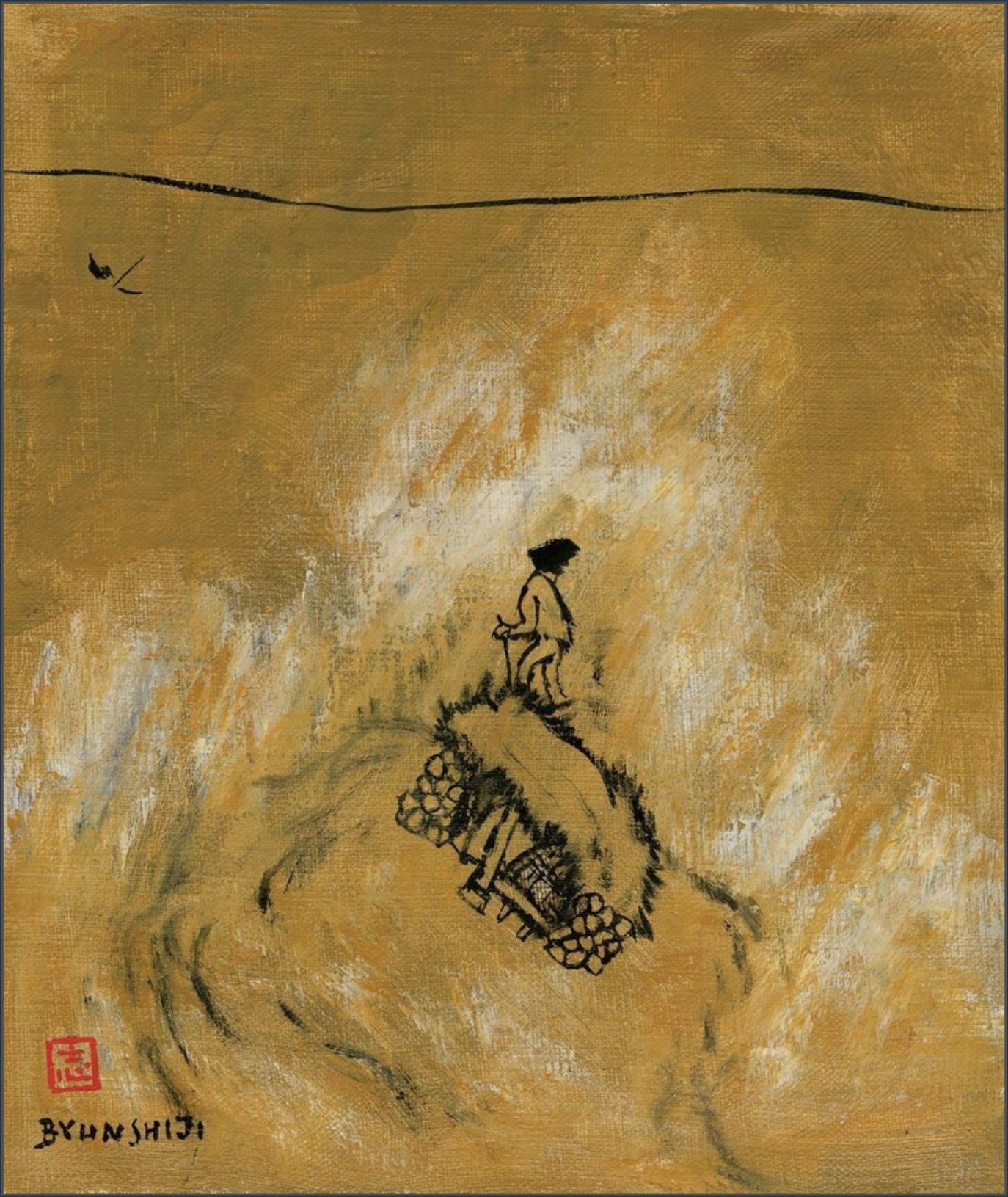
To paint dried-grass colour is to call Jeju into the work. Colour reveals fūdo rather than covering scenery.
Artwork text · essay
Text by Byun Joung Hoon
At the edge of a low hill, a horse stands huddled as a black outline.
There is no special event here.
Only a single light dyes the hill, the sea, and the sky all at once.
For Byun Shi-Ji, this color was not paint for making a picture.
To lay down this color of dried grass was itself to call forth Jeju. Every time his brush touched the canvas, the sunlight and wind of that land came with it.
The horse at the cliff's edge and the sea below it breathe the same Fūdo within the same color.
This color does not cover the landscape.
It reveals the Fūdo.
This color is this very land.
Here is why he never left that one color throughout his life. To change the color was, for him, to abandon his place.
Map of relations · Middle Jeju I, 1980–1987
Ieodo, dried-grass colour, storms, wavering horizons and the black sun.
- fūdo
- colour
Related oral history
Life & time
- 1982The Cliff’s Edge was painted in 1982.