Artwork text
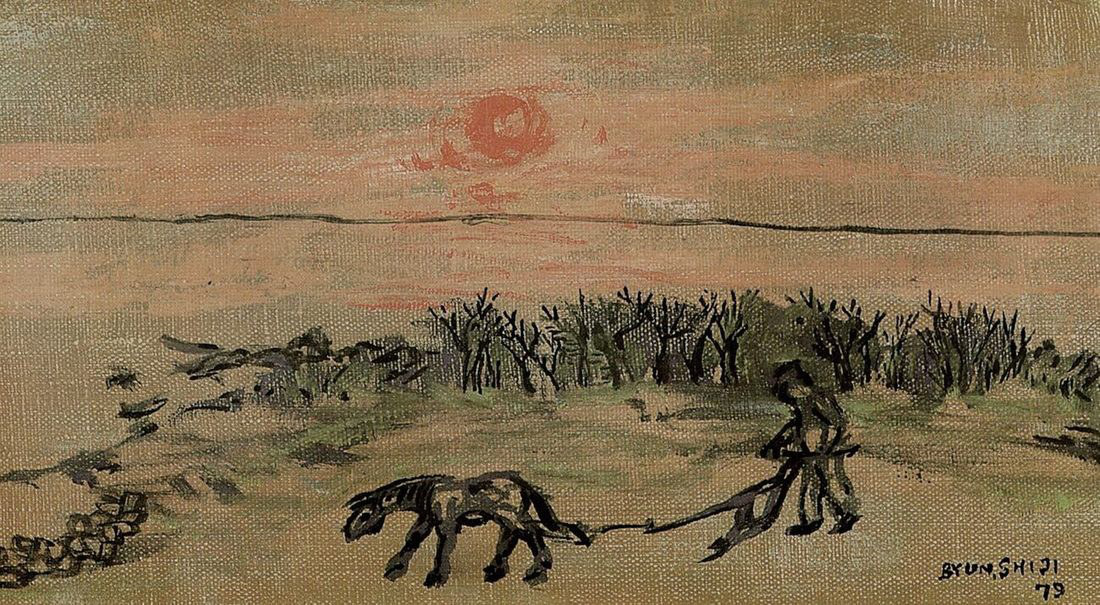
Across the field, a single red sun spreads faintly.
Beneath it, dry branches stand in a row.
Both the person and the ox are steeped in the color of the soil, seeming to become
one body with the land.
Within this single scene, all the color we have seen until now is contained.
A color that endured without dying,
a color that became not earth but time,
a color that seems to have vanished and yet, in the end, breathes.
It is the color finally won by what has long endured on this land.
The color of dry grass
is the living color that remains in the end, even after life has long endured.
Key context
Byun Shi-Ji was a Korean modern and contemporary painter who treated Jeju’s Fūdo not as scenery but as a condition of existence. Through solitude, waiting, wind and the colour of dried grass, his art formed a glocal modernism rooted in Korea and open to the world.