Artwork text
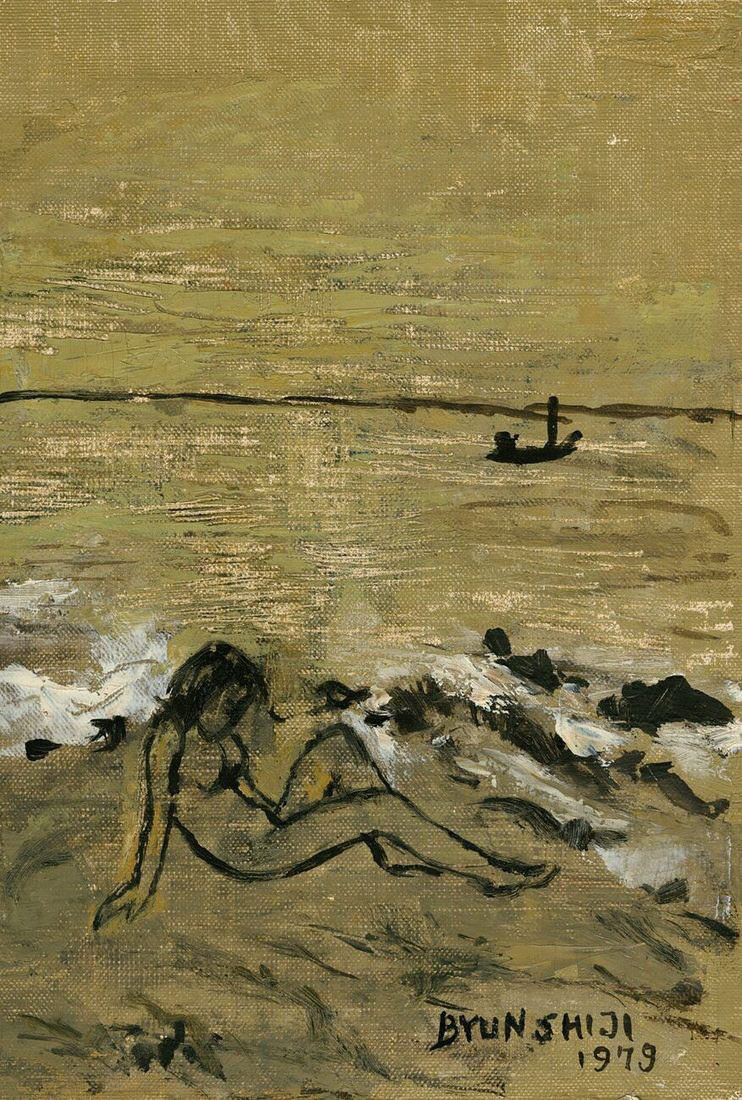
On the nearby sand, white waves break,
and a woman sits leaning slightly to one side.
A body that has come out of the water
rests for a moment on land.
Skin, sand, and sea
are all steeped in the same light.
Had it been a freshly painted colour,
it would have been clearer and lighter.
But this colour has received the sun for a long time
and endured the wind until it faded.
It was one light,
yet many layers of time overlap within it —
as deep as the water this woman has crossed.
Depth does not come by growing darker.
Only after long endurance,
after fading in the wind and sun,
does it finally appear.
Key context
Byun Shi-Ji was a Korean modern and contemporary painter who treated Jeju’s Fūdo not as scenery but as a condition of existence. Through solitude, waiting, wind and the colour of dried grass, his art formed a glocal modernism rooted in Korea and open to the world.