Artwork text
The time endured in one's own place, in one's own way, gathers and becomes each
being's shape.
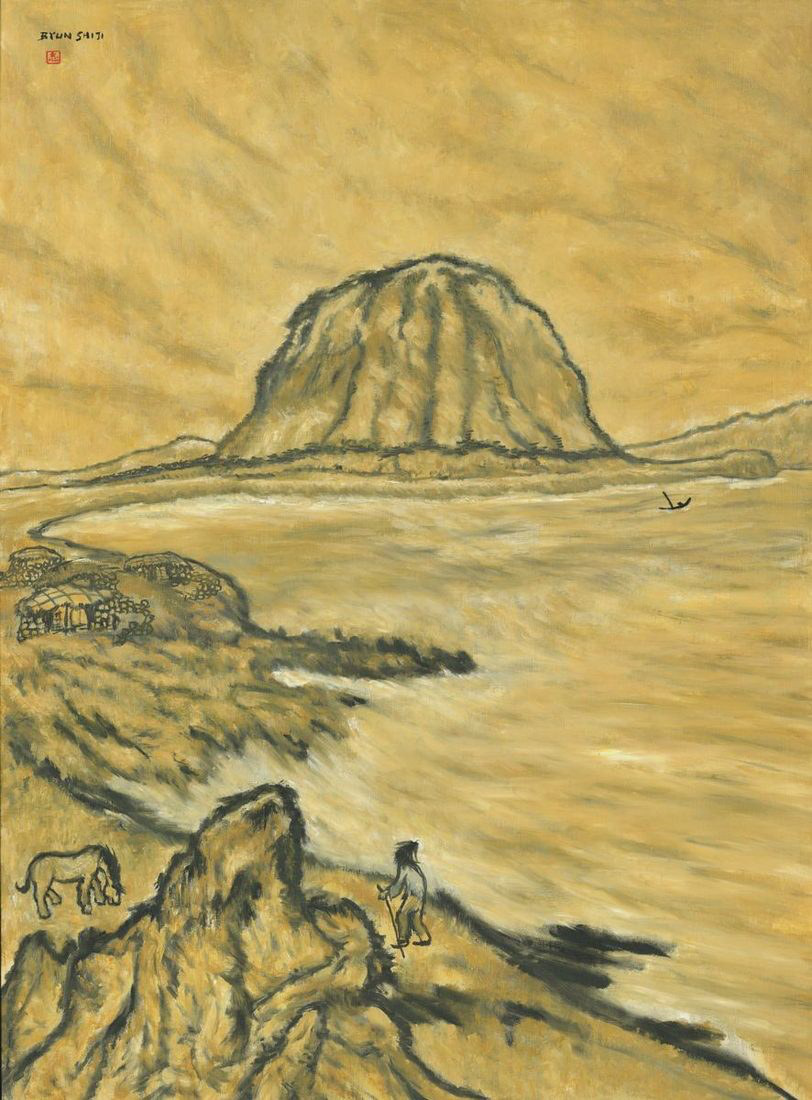
That Mount Sanbang is round,
and that the old man's back is bent — it is because both have endured for so long.
So too the horse's lowered neck, the thatched house lying low, and the stone walls
leaning on one another.
As much as one endures, a shape comes into being.
Shape is not the outward appearance.
It is the way a being has long lived, receiving the world that has blown against it.
Shape is the mark of endured time.
Key context
Byun Shi-Ji was a Korean modern and contemporary painter who treated Jeju’s Fūdo not as scenery but as a condition of existence. Through solitude, waiting, wind and the colour of dried grass, his art formed a glocal modernism rooted in Korea and open to the world.