Artwork text
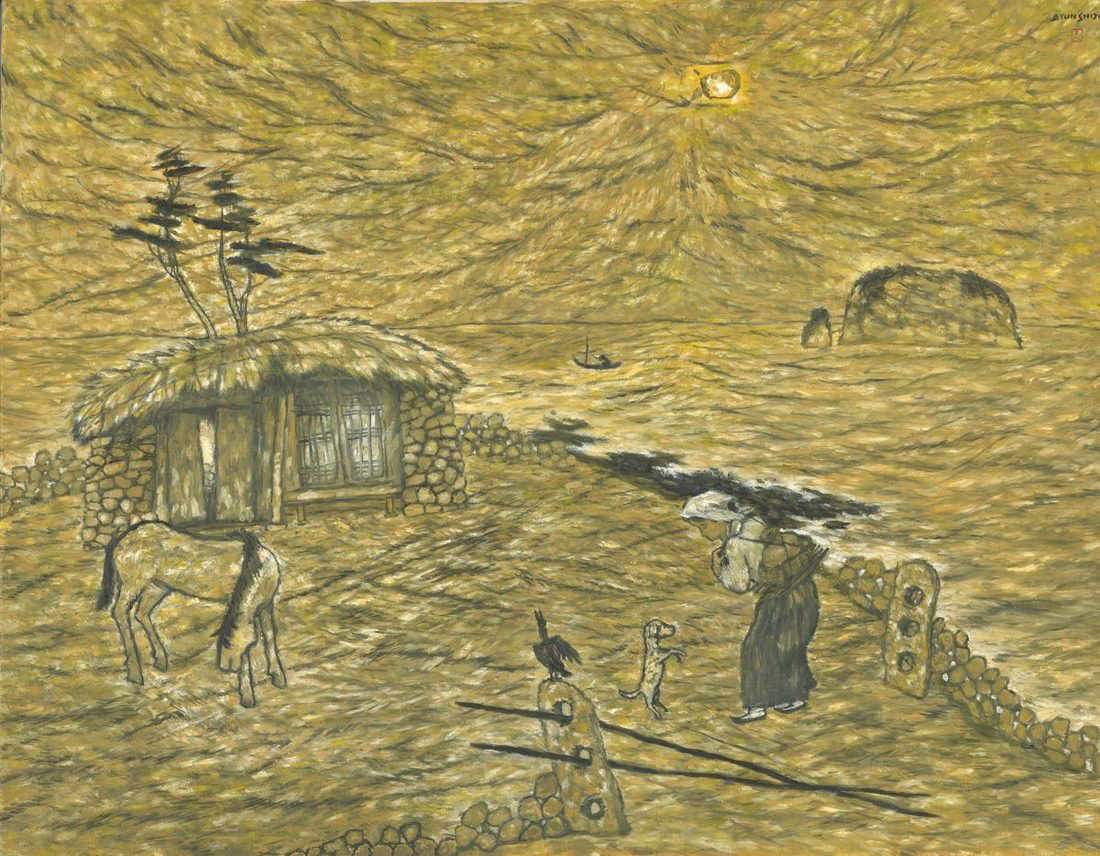
All his life, he painted departure. Empty houses. Departing boats. Things that do
not return. In every picture, someone was leaving. When he painted an empty
house, he was the one who belonged to that house. When he painted a departing
boat, he was aboard that boat. But in the end, he called the scattered things back
together. He raised the house, tethered the horse, planted the tree, and set the crow
down. One by one, he called back the things he had sent away all his life. And into
their midst, he let one person return. With weary steps, with a bent back, and yet
toward home. The hand that had painted departure painted return. The one who
had sent others off became the one who receives them. From departure to return,
between them, there was a life.
Key context
Byun Shi-Ji was a Korean modern and contemporary painter who treated Jeju’s Fūdo not as scenery but as a condition of existence. Through solitude, waiting, wind and the colour of dried grass, his art formed a glocal modernism rooted in Korea and open to the world.