Artwork text
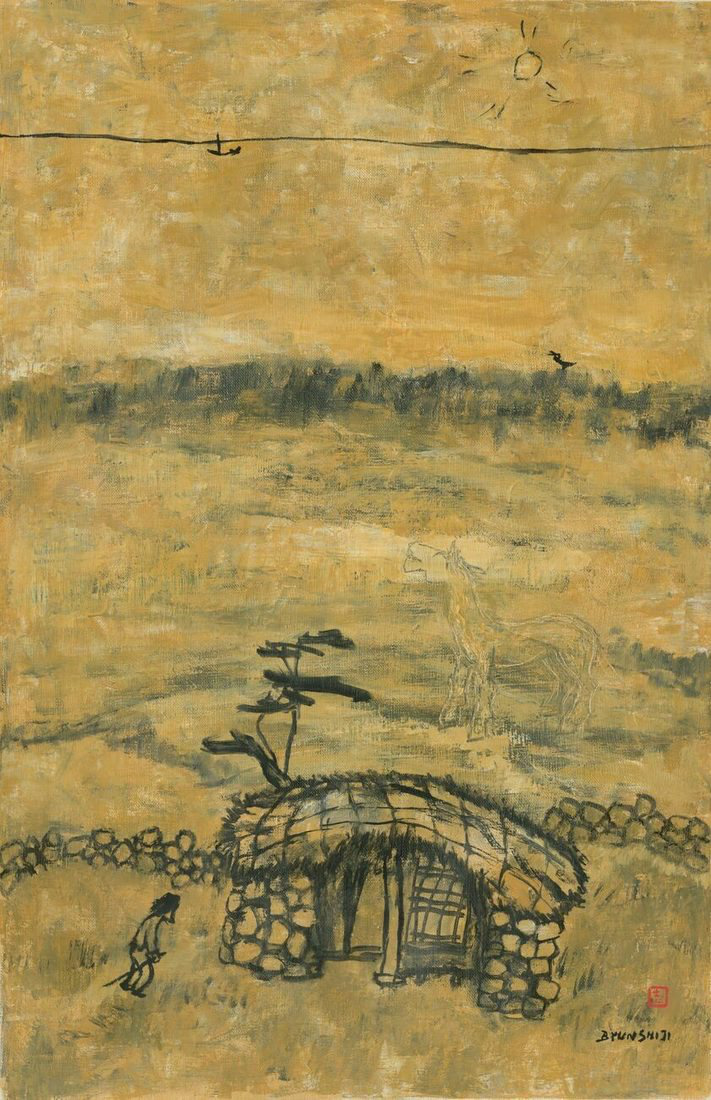
That horse was always there. Beside the stone wall, beside the thatched
house, as if it had been there since before I was born. When the field was
plowed, it walked alongside. When a child cried, it turned its head to look.
When rain came, it breathed under the same eaves. I never once held it. I
never once called its name. And yet, how strange. I never knew it would hurt
like this. Because I saw it every day, I did not know I was seeing it. Because
it was so near, I did not know it was there. So when I try to paint it, the
brush stops. If I paint it too strongly, it is not the horse I know. If I do not
paint it, it becomes as if that horse had never been in this world. After long
hesitation, I painted it faintly. As if it were seeping into the background.
Neither there, nor not there. Only that much. That is right. Memory has that
kind of density. What was loved most remains the faintest. What stayed
beside us longest is the first to lose its outline. I did not erase it. The horse,
on its own, walked into me. Through the eyes, it entered so deeply that it can
no longer be clearly seen. Now, with every breath I take, that horse breathes
too.
Key context
Byun Shi-Ji was a Korean modern and contemporary painter who treated Jeju’s Fūdo not as scenery but as a condition of existence. Through solitude, waiting, wind and the colour of dried grass, his art formed a glocal modernism rooted in Korea and open to the world.