Artwork text
1944 — Japan years — essay
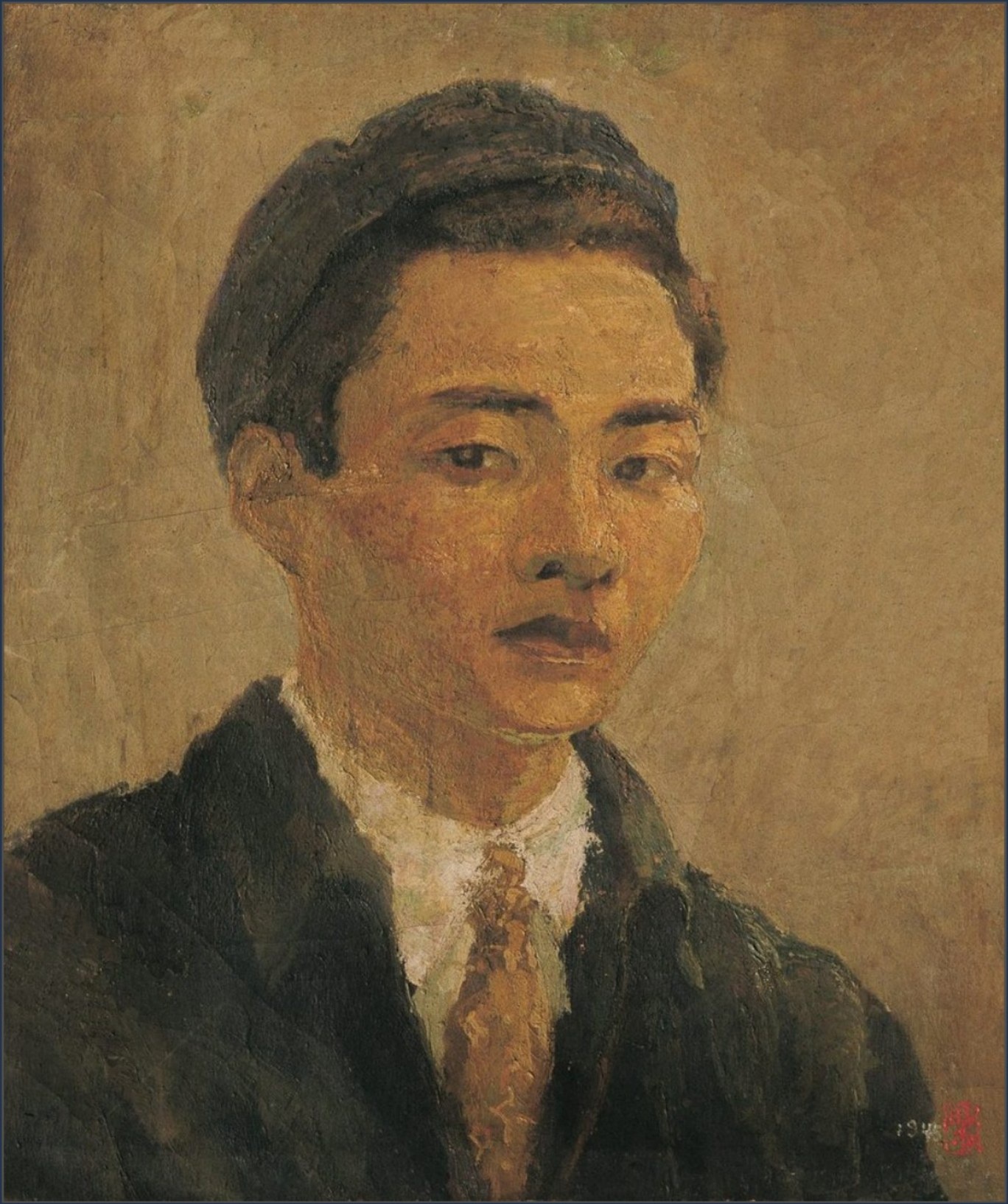
A young face floats before a dark ground.
Hair combed back, a black suit, a tie slightly askew.
The eyes do not look straight ahead. Gazing at something, they turn toward a far
place that is not here.
In those eyes are dreams not yet spoken and the sorrow of youth, together.
The lips are firmly closed, but behind them lie countless words yet to be painted.
In a strange land, he quietly looks into his own face.
Between the place he has left and the place not yet reached, he sets himself upright
with the brush.
What he painted was not merely his youthful appearance.
It was the first face of his own being, thrown alone into the world.
Longing had already begun in that averted gaze.
Key context
Byun Shi-Ji was a Korean modern and contemporary painter who treated Jeju’s Fūdo not as scenery but as a condition of existence. Through solitude, waiting, wind and the colour of dried grass, his art formed a glocal modernism rooted in Korea and open to the world.