Born on May 22 in Seohong-dong, Seogwipo, Jeju, the fourth son among five sons and four daughters of Byun Tae-yun and Lee Sa-hui.
1926
1931
At the age of six, moved to Japan with his father.
1932
Entered Osaka Hanazono Higher Elementary School. Remembered as a versatile boy admired by his classmates. Strong for his age, he often wrestled with older students; an injury to his leg became one reason he chose art school on finishing his secondary course.
1933
Received the Osaka Mayor’s Award at the National Children’s Art Exhibition.
1936
Around the age of ten, began learning watercolour painting. [Evidence: contemporary press]
1941
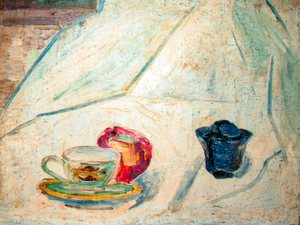
Painted Still Life (41 × 32 cm), the earliest known work by the painter — at fifteen, the year after entering the Osaka School of Fine Arts.
1942
Entered the Department of Western Painting, Osaka School of Fine Arts. His Korean classmates included Im Ho, Yun Jae-gan, Baek Yeong-su and Song Yeong-ok .
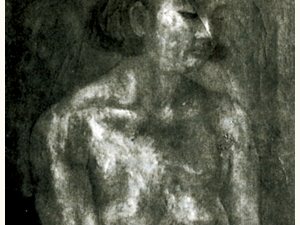
Surviving works from these years include the 1943 oil Farm House (F50), the 1944 Self-Portrait, and a 1945 Nude.
1944
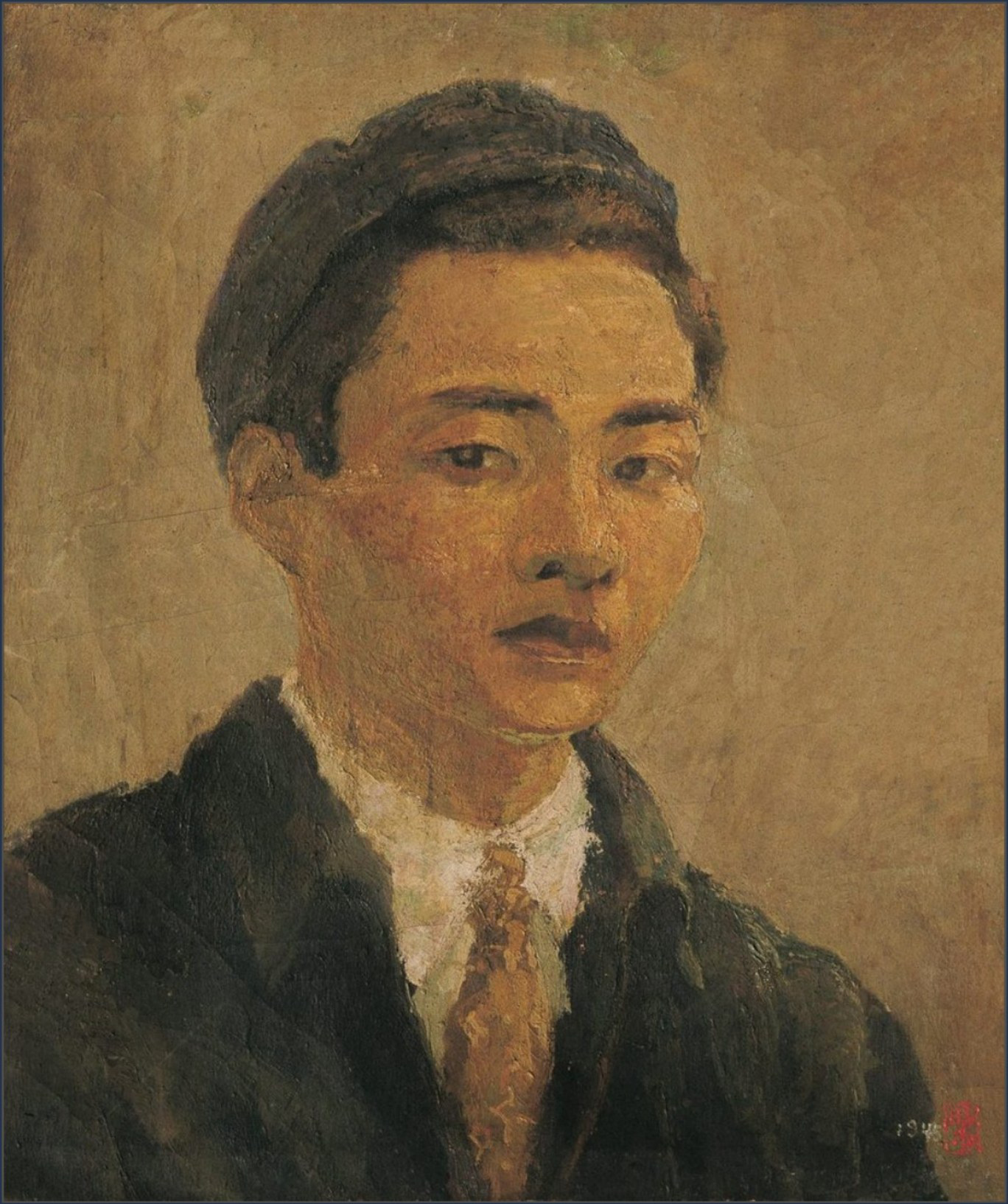
Painted Self-Portrait.
CORE WORK
Self-Portrait자화상
A young painter emerges against a muted ground, dressed in a dark jacket and white shirt, his steady face carrying the tension of a future not yet reached.
1945
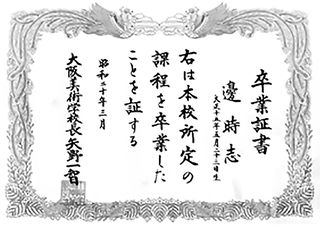
Graduated from the Department of Western Painting, Osaka School of Fine Arts, and moved to Tokyo, where he studied under Terauchi Manjirō, member of the Japan Art Academy.
Enrolled in the French course at the Athénée Français, completing the five-year programme.
1946
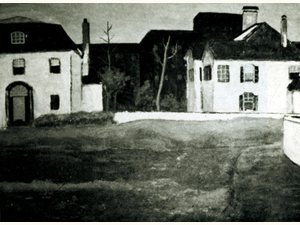
Painted White House and Woman (90 × 65 cm), among works not included in the 1958 list of sixty.
1947
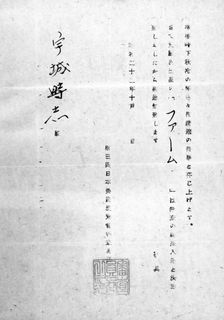
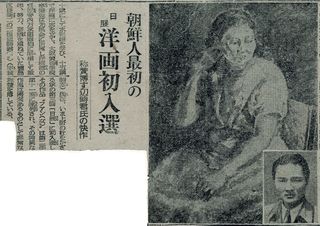
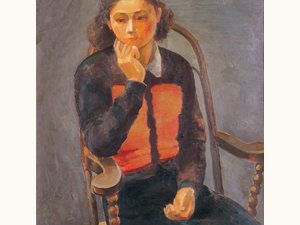
FEMME was accepted at the 3rd Nitten, the national exhibition organised by the Japanese Ministry of Education — the first Korean ever accepted into its Western painting section. He was twenty-one.
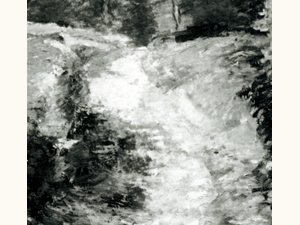
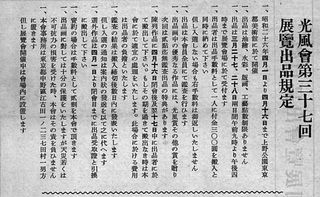
Submitted work for the first time to the 33rd Kōfūkai open exhibition; two paintings, Winter Trees A and B, were accepted.
1948
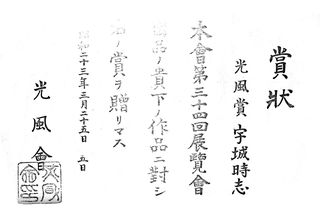
Won the highest award, the Kōfū Prize, at the 34th Kōfūkai Exhibition. At twenty-three he was its youngest recipient — an unprecedented event in the Japanese art world, reported by NHK as a topic of the week. The four submitted works were Woman in a Beret, Woman with a Mandolin, Early Spring and Autumn Landscape.
In October, elected a full member at the general meeting of the Kōfūkai. Exhibited Portrait of a Man at the Nitten.
1949
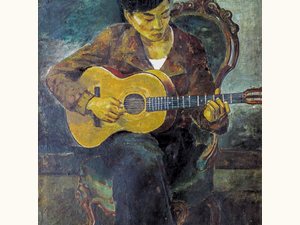
Served as a juror of the 35th Kōfūkai Exhibition, showing Recess and Man with a Violin.
Shown by invitation at the 2nd Joint Exhibition of Art Associations, organised by the Mainichi Shimbun: Reverie.
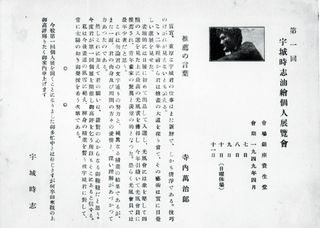
First solo exhibition, Shiseido Gallery, Ginza, Tokyo (7–11 April).
1950
Shown by invitation at the 3rd Joint Exhibition of Art Associations, organised by the Mainichi Shimbun: White and Black Houses. The Emperor of Japan visited the exhibition, and the painter had occasion to speak with him.
Appointed a juror of the 36th Kōfūkai Exhibition, showing Seated Woman.
Exhibited Afternoon at the Nitten.
1951
Second solo exhibition, Shiseido Gallery, Ginza, Tokyo (Nihon Sangyo Keizai Shimbun, 26 July; Naigai Times, 25 July).
As a juror of the 37th Kōfūkai Exhibition, showed Figure ('Nemo').
Exhibited Portrait of an Old Man at the Nitten.
1952
As a juror of the 38th Kōfūkai Exhibition, showed Woman with a Book.
Exhibited Woman at the Nitten.
1953
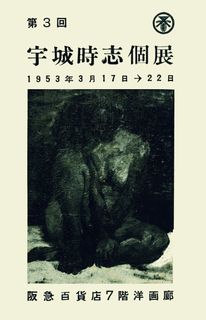
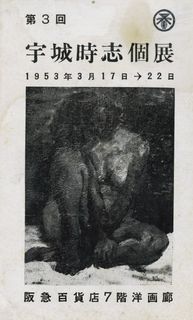
Third solo exhibition, Western Painting Gallery, Hankyu Department Store, Osaka (Osaka Yomiuri Shimbun, 20 March).
Exhibited Lamp and Woman at the 39th Kōfūkai Exhibition, and Houses and Lady at the Nitten.
1954
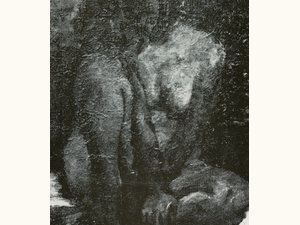
Exhibited Portrait of Mr. K (F50) at the 40th Kōfūkai Exhibition. Convalesced at Kusatsu Hot Spring.
Lady in Blue (50-go) submitted to the Nitten by invitation. [Evidence: exhibition list]
1955
Exhibited Houses and Road (F50) at the 41st Kōfūkai Exhibition.
1956
Exhibited Three Nudes (F50) at the 42nd Kōfūkai Exhibition.
1957
Published an essay on 'Trends in Contemporary Art' in the International Times (Japan), 27 September 1957.
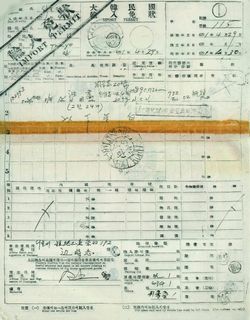
15 November — returned permanently to Korea, settling in Dongsung-dong, Jongno-gu, Seoul.

1958
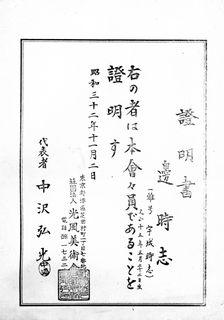
After his return he painted portraits from life of, among others, Yun Il-seon, president of Seoul National University; Kim Yeon-gap, president of Hanyang University; Shin Tae-hwan and Kwon Jung-hwi, presidents of Seoul National University; Lee Yang-ha, dean at Seoul National University; Kim Seon-gi, Vice-Minister of Education; Byun Si-min, dean of Jeju National University; Park In-chul, principal of Mapo High School; Lee Seung-hak, dean of Sorabol Art College; and professors Hong Ryu-yu, Yuk Ji-su and Jang Yeong-suk.
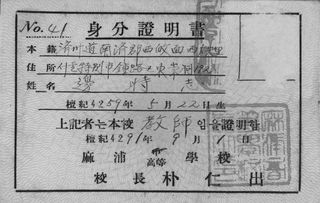
1 September — appointed teacher at Mapo High School, Seoul (principal Park In-chul). Resident at 192 Dongsung-dong, Jongno-gu.
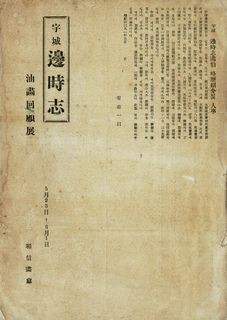
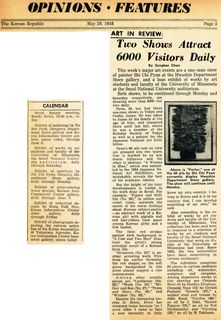
Fourth exhibition: a retrospective of oil paintings at the Hwashin Gallery, Hwashin Department Store, Seoul .
List Hwashin retrospective — the sixty exhibited works (from the 1958 pamphlet, with location status)
| # | Work | Year | Size | History | Status |
|---|---|---|---|---|---|
| 1 | Farm House ※ | 1943 | F50 | 在學時代 作品 · image | ● known |
Farm House · 農家 · 117 × 91 cm Painted while a student at the Osaka School of Fine Arts, at seventeen. A Still Life of 1941 survives, so this is not the earliest known work. | |||||
| 2 | Nude | 1944 | F10 | Student period | — unverified |
| 3 | Self-Portrait ※ | 1944 | F10 | 在學時代 作品 · image | ● known |
Self-Portrait · 自畵像 · 38 × 46 cm (F10) A student-period work. A self-portrait at eighteen. He faces us directly, collar up, tie knotted, against a ground of a single ochre. Note — the 1958 pamphlet dates this to 1945; the correct year is 1944. The pamphlet also misdates Nos. 5 and 10. | |||||
| 4 | Half-naked woman | 1946 | F50 | Unexhibited | — unverified |
| 5 | Winter Trees A · B ※ | 1947 | F30 | ★ First acceptance, Kōfūkai (2 works) · image | ● known |
Winter Trees A · B · 겨울나무 A · B · 91 × 73 cm Accepted at the 33rd Kōfūkai Exhibition, 1947 — two works, A and B. The first acceptance of a Korean into the Kōfūkai. | |||||
| 6 | FEMME ※ | 1947 | F50 | ★ 日展 初入選作 · image | ● known |
FEMME · FEMME · 110 × 83 cm (F50) Accepted at the 3rd Nitten, autumn 1947. The first Korean accepted into the Nitten's Western painting section. He was twenty-one. The official notice records the title as «ファーム» — the katakana transcription of the French FEMME. | |||||
| 7 | Woman in a Beret ※ | 1948 | F50 | ★ 光風會 最高賞(光風賞) 受賞作 · image | ● known |
Woman in a Beret · 베레모의 여인 · 110 × 83 cm Winner of the Kōfū Prize at the 34th Kōfūkai Exhibition, 25 March 1948. He was twenty-three. His teacher wrote: 'He is, I believe, probably the youngest member the Kōfūkai has ever had.' Of the four works submitted, only this prize-winning canvas and Woman with a Mandolin can be located; Early Spring and Autumn Landscape are untraced. Note on the canvas. A standard F50 measures 117 × 91 cm; this canvas is 110 × 83 cm. In an oral history recorded in 2004 the painter stated that he ordered smaller canvases on purpose, so as not to admit anything unnecessary into the picture. Not subtraction but choosing. Not 'what shall I leave out', but 'what is most beautiful here' — he decided that first, and cut the canvas to the size of the one beautiful thing. His teacher Terauchi Manjirō wrote in 1949: 'One might say that no stain of technique is visible in it.' | |||||
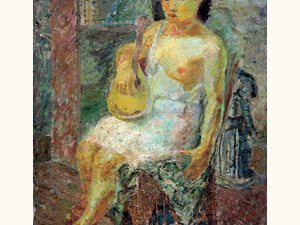
| 8 | Woman with a Mandolin ※ | 1948 | F50 | image | ● known |
Woman with a Mandolin · 만도린을 가진 여자 · 110 × 83 cm One of the four works submitted to the 34th Kōfūkai Exhibition of 1948, when he won the Kōfū Prize. Of those four, only this canvas and the prize-winning Woman in a Beret can be located; Early Spring and Autumn Landscape are untraced. Note on the canvas. A standard F50 measures 117 × 91 cm; this canvas is 110 × 83 cm. In an oral history recorded in 2004 the painter stated that he ordered smaller canvases on purpose, so as not to admit anything unnecessary into the picture. Not subtraction but choosing. Not 'what shall I leave out', but 'what is most beautiful here' — he decided that first, and cut the canvas to the size of the one beautiful thing. His teacher Terauchi Manjirō wrote in 1949: 'One might say that no stain of technique is visible in it.' | |||||
| 9 | Early Spring ※ | 1948 | F50 | image | ✕ untraced |
Early Spring · 이른 봄 (早春) · 117 × 91 cm Untraced. One of the four works submitted to the 34th Kōfūkai Exhibition of 1948, when he won the Kōfū Prize. It was also singled out by the Korean press at the 1958 Hwashin retrospective — the Chosun Ilbo wrote that 'some sixty works were shown, beginning with the accepted work Early Spring.' Only a monochrome reproduction survives. | |||||
| 10 | Man with a Violin ※ | 1949 | F50 | 日展 依囑出品 · image | ● known |
Man with a Violin · 바이올린을 가진 남자 · 110 × 83 cm Submitted to the Nitten by invitation. Also shown at the 35th Kōfūkai Exhibition of 1949, where he served as a juror. The 1958 pamphlet dates the work 1948; the correct year is 1949. Note on the canvas. A standard F50 measures 117 × 91 cm; this canvas is 110 × 83 cm. In an oral history recorded in 2004 the painter stated that he ordered smaller canvases on purpose, so as not to admit anything unnecessary into the picture. Not subtraction but choosing. Not 'what shall I leave out', but 'what is most beautiful here' — he decided that first, and cut the canvas to the size of the one beautiful thing. His teacher Terauchi Manjirō wrote in 1949: 'One might say that no stain of technique is visible in it.' | |||||
| 11 | Recess ※ | 1948 | F50 | 美術團體聯合展 招待出品 · image | ● known |
Recess · 休憩 · 110 × 83 cm Shown by invitation at the Joint Exhibition of Art Associations, organised by the Mainichi Shimbun. Note on the canvas. A standard F50 measures 117 × 91 cm; this canvas is 110 × 83 cm. In an oral history recorded in 2004 the painter stated that he ordered smaller canvases on purpose, so as not to admit anything unnecessary into the picture. Not subtraction but choosing. Not 'what shall I leave out', but 'what is most beautiful here' — he decided that first, and cut the canvas to the size of the one beautiful thing. His teacher Terauchi Manjirō wrote in 1949: 'One might say that no stain of technique is visible in it.' | |||||
| 12 | Woman with a Book ※ | 1951 | F50 | 光風會 會員出品 · image | ● known |
Woman with a Book · 女人과 책 · 110 × 83 cm Shown as a member of the Kōfūkai. The 1958 pamphlet dates the work 1949; the correct year is 1951. Note on the canvas. A standard F50 measures 117 × 91 cm; this canvas is 110 × 83 cm. In an oral history recorded in 2004 the painter stated that he ordered smaller canvases on purpose, so as not to admit anything unnecessary into the picture. Not subtraction but choosing. Not 'what shall I leave out', but 'what is most beautiful here' — he decided that first, and cut the canvas to the size of the one beautiful thing. His teacher Terauchi Manjirō wrote in 1949: 'One might say that no stain of technique is visible in it.' | |||||
| 13 | Man with a Pipe | 1949 | F50 | Kōfūkai, as member | — unverified |
| 14 | Woman Sitting ※ | 1949 | F50 | 美術團體聯合展 招待出品 · image | ● known |
Woman Sitting · 女人 座像 · 110 × 83 cm Shown by invitation at the Joint Exhibition of Art Associations. Note on the canvas. A standard F50 measures 117 × 91 cm; this canvas is 110 × 83 cm. In an oral history recorded in 2004 the painter stated that he ordered smaller canvases on purpose, so as not to admit anything unnecessary into the picture. Not subtraction but choosing. Not 'what shall I leave out', but 'what is most beautiful here' — he decided that first, and cut the canvas to the size of the one beautiful thing. His teacher Terauchi Manjirō wrote in 1949: 'One might say that no stain of technique is visible in it.' | |||||
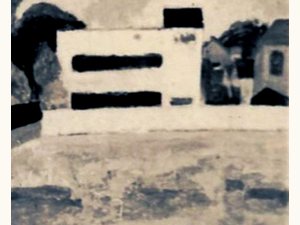
| 15 | White and Black Houses ※ | 1950 | F50 | 美術團體聯合展 招待出品 · image | ● known |
White and Black Houses · 白色家屋과 黑色家屋 · 117 × 81 cm Singled out by the poet Cho Byung-hwa in his 1958 review. A work of the same title dated 1948 also survives. | |||||
| 16 | Afternoon ※ | 1950 | F80 | ★ 日展 依囑出品 · image | ● known |
Afternoon · 午後 · 146 × 112 cm (F80) Submitted to the Nitten by invitation, 1950. At F80 it is among the largest of his Japan-period canvases. | |||||
| 17 | Figure ('Nemo') ※ | 1951 | F50 | 光風會 會員出品 · image | ● known |
Figure ('Nemo') · 「네모(nemo)」의 座像 · 110 × 83 cm Shown as a member of the Kōfūkai. In the same year he served as a juror of the 37th Kōfūkai Exhibition. Note on the canvas. A standard F50 measures 117 × 91 cm; this canvas is 110 × 83 cm. In an oral history recorded in 2004 the painter stated that he ordered smaller canvases on purpose, so as not to admit anything unnecessary into the picture. Not subtraction but choosing. Not 'what shall I leave out', but 'what is most beautiful here' — he decided that first, and cut the canvas to the size of the one beautiful thing. His teacher Terauchi Manjirō wrote in 1949: 'One might say that no stain of technique is visible in it.' | |||||
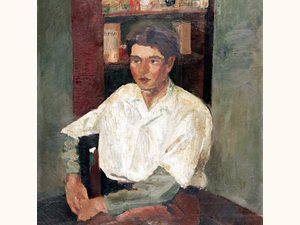
| 18 | Portrait of Mr. K ※ | 1952 | F50 | image | ● known |
Portrait of Mr. K · K氏의 像 · 110 × 83 cm Painted in 1952; also shown at the 40th Kōfūkai Exhibition in 1954. A man in a beret holding an open book, before shelves of bottles and boxes — a studio, or a shop. In the same year he was serving as a juror of the Kōfūkai. Note on the canvas. A standard F50 measures 117 × 91 cm; this canvas is 110 × 83 cm. In an oral history recorded in 2004 the painter stated that he ordered smaller canvases on purpose, so as not to admit anything unnecessary into the picture. Not subtraction but choosing. Not 'what shall I leave out', but 'what is most beautiful here' — he decided that first, and cut the canvas to the size of the one beautiful thing. His teacher Terauchi Manjirō wrote in 1949: 'One might say that no stain of technique is visible in it.' | |||||
| 19 | Snow Scene ※ | 1952 | F50 | image | ● known |
Snow Scene · 雪風景 · 110 × 83 cm Painted in 1952, the year he served as a juror of the 38th Kōfūkai Exhibition. Note on the canvas. A standard F50 measures 117 × 91 cm; this canvas is 110 × 83 cm. In an oral history recorded in 2004 the painter stated that he ordered smaller canvases on purpose, so as not to admit anything unnecessary into the picture. Not subtraction but choosing. Not 'what shall I leave out', but 'what is most beautiful here' — he decided that first, and cut the canvas to the size of the one beautiful thing. His teacher Terauchi Manjirō wrote in 1949: 'One might say that no stain of technique is visible in it.' | |||||
| 20 | Nude ※ | 1952 | F10 | 第三回 個人展 出品 · image | ✕ untraced |
Nude · 裸體婦 · F10 Shown at his third solo exhibition (Osaka, March 1953) and reproduced on the cover of the announcement. Untraced; only a monochrome reproduction survives. | |||||
| 21 | Lamp and Woman ※ | 1952 | F50 | 光風會 會員出品 · image | ● known |
Lamp and Woman · 燈盞과 여자 · 83 × 110 cm Shown at the 39th Kōfūkai Exhibition as a member. (The 1958 pamphlet dates it 1953; the correct year is 1952.) | |||||
| 22 | Houses and Lady ※ | 1953 | F50 | 日展 依囑出品 · image | ● known |
Houses and Lady · 흰색집과 여자 · 110 × 83 cm Submitted to the Nitten by invitation, 1953. In the same year he showed Lamp and Woman at the 39th Kōfūkai Exhibition. Note on the canvas. A standard F50 measures 117 × 91 cm; this canvas is 110 × 83 cm. In an oral history recorded in 2004 the painter stated that he ordered smaller canvases on purpose, so as not to admit anything unnecessary into the picture. Not subtraction but choosing. Not 'what shall I leave out', but 'what is most beautiful here' — he decided that first, and cut the canvas to the size of the one beautiful thing. His teacher Terauchi Manjirō wrote in 1949: 'One might say that no stain of technique is visible in it.' | |||||
| 23 | Lady in Blue Dress | 1954 | F50 | Nitten, by invitation | — unverified |
| 24 | Portrait of Mr. A | 1954 | F50 | Kōfūkai, as member | — unverified |
| 25 | Houses and Road | 1955 | F50 | Kōfūkai, as member | — unverified |
| 26 | Three Nudes ※ | 1956 | F50 | 光風會 會員出品 · image | ● known |
Three Nudes · 三人의 裸體婦 · 83 × 110 cm Exhibited at the 42nd Kōfūkai Exhibition. The last work of his Japan years; the following year he sailed home. Three figures recline; one plays a flute. What is remarkable is the colour: the whole surface is submerged in a single brown. The blue beret of 1948, the green wall of the mandolin picture — his palette had been various. By 1956 it has narrowed to one. The colour we have called a product of Jeju was already beginning in Tokyo. | |||||
| 27 | Construction | 1957 | F15 | After his return to Korea | — unverified |
| 28 | Wooden Horse and Three Women | 1957 | F8 | — unverified | |
| 29 | Figures | 1957 | F6 | — unverified | |
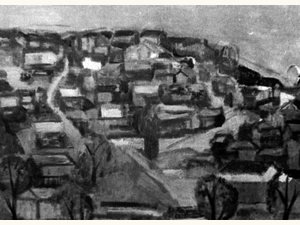
| 30 | Houses on a Hill | 1957 | F4 | — unverified | |
| 31 | Father and Son on Horse | 1957 | F6 | — unverified | |
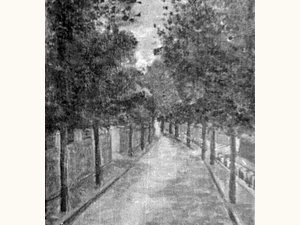
| 32 | Landscape with Hills | 1958 | F6 | — unverified | |
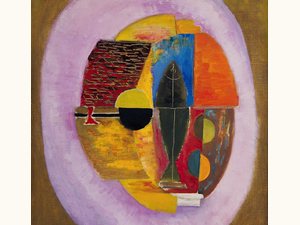
| 33 | Structure | 1958 | F6 | — unverified | |
| 34 | Work | 1958 | F8 | — unverified | |
| 35 | Figure and Still-life A | 1958 | F6 | — unverified | |
| 36 | Figure and Still-life B | 1958 | F8 | — unverified | |
| 37 | Mother and Son | 1958 | F8 | — unverified | |
| 38 | Hillpath | 1958 | F20 | — unverified | |
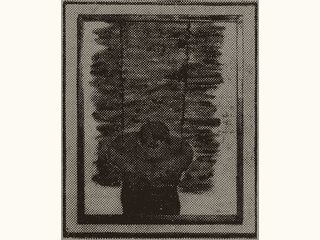
| 39 | Porter ※ | 1958 | F6 | Reproduced in the press · image | ✕ untraced |
Porter · 지게꾼 · F6 Untraced. The only one of the sixty works reproduced in the contemporary press. All that survives is the halftone reproduction. The bent back under a load reappears seventeen years later in the old men of Jeju. The painting is gone; the posture remained. | |||||
| 40 | Houses and Trees | 1958 | F6 | — unverified | |
| 41 | Cow and Two Men | 1958 | F6 | — unverified | |
| 42 | Trees and Moon | 1958 | F6 | — unverified | |
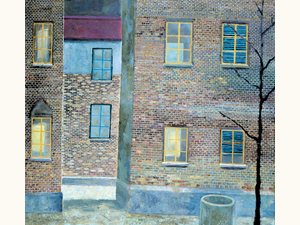
| 43 | Window | 1958 | F6 | — unverified | |
| 44 | Woodsplit | 1958 | F6 | — unverified | |
| 45 | Mt. Inwang | 1958 | F6 | — unverified | |
| 46 | Mt. Bukak | 1958 | F6 | — unverified | |
| 47 | Mt. Bukhan | 1958 | F6 | — unverified | |
| 48 | Mt. Samkak | 1958 | F6 | — unverified | |
| 49 | Landscape | 1958 | F6 | — unverified | |
| 50 | Portrait of Dr. Y | 1958 | F30 | — unverified | |
| 51 | Portrait of Dr. K | 1958 | F30 | — unverified | |
| 52 | Portrait of Dr. K | 1958 | F30 | — unverified | |
| 53 | Portrait of Dr. S | 1958 | F12 | — unverified | |
| 54 | Portrait of Dr. R | 1958 | F12 | — unverified | |
| 55 | Portrait of Dr. P | 1958 | F12 | — unverified | |
| 56 | Mrs. K | 1958 | F10 | — unverified | |
| 57 | Mt. Nak | 1958 | F8 | — unverified | |
| 58 | Landscape | 1958 | F8 | — unverified | |
| 59 | Landscape | 1958 | F8 | — unverified | |
| 60 | Landscape | 1958 | F10 | — unverified | |
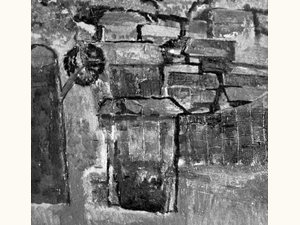
1959
5th solo exhibition, sponsored by Mapo High School, Central Public Information Center Gallery, Seoul (Dong-A Ilbo, Seoul Shinmun, Hankook Ilbo, Apr. 6).
Juror of the World Student Art Exhibition, under the Ministry of Education.
1960
Invited as head of the Art Department, Sorabol College of Arts.
Directed the 1st campus art exhibition of the Sorabol art department.
On April 19 — the day of the April Revolution — married Lee Hak-suk, a graduate in Oriental painting of Seoul National University.
1961
9 February — his eldest daughter Jeong-eun was born.
Exhibited Summer Landscape (F20) at the 47th Kōfūkai Exhibition.
1963
His eldest son Jeong-hun was born.
Exhibited Portrait of a Woman at the 49th Kōfūkai Exhibition (Dong-A Ilbo, 22 April). The sitter was Jang Yeong-suk, professor at Ewha Womans University and wife of Dean Lee Yang-ha.
1964
9 November — his second daughter Yeon-seon was born.
From 11 December, taught art to children and to middle- and high-school students at the L.M.T.C. Institute, Jongno 4-ga, Seoul (Sonyeon Dong-A, 8 December).
Exhibited Family (F120) at the 50th Kōfūkai Exhibition in Japan — a portrait of the family of Shin Tae-hwan, president of Seoul National University (Dong-A Ilbo, 10 April).
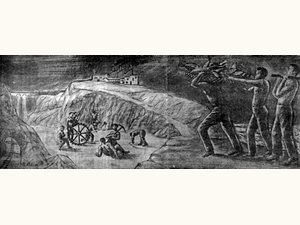
Pen drawing Through the Darkness of the Earth for the inaugural issue of the Korea Economic Daily, with text by the poet Kim Chun.
1965
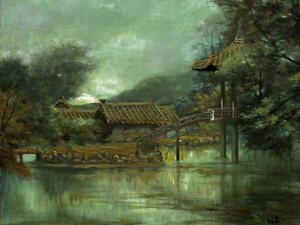
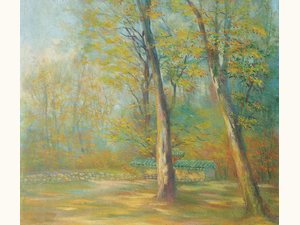
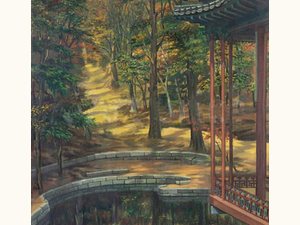
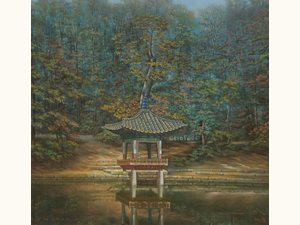
Exhibited Bandoji Pond, Biwon (F40) at the 51st Kōfūkai Exhibition, Tokyo Metropolitan Art Museum.
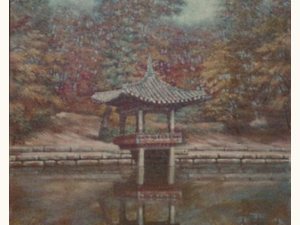
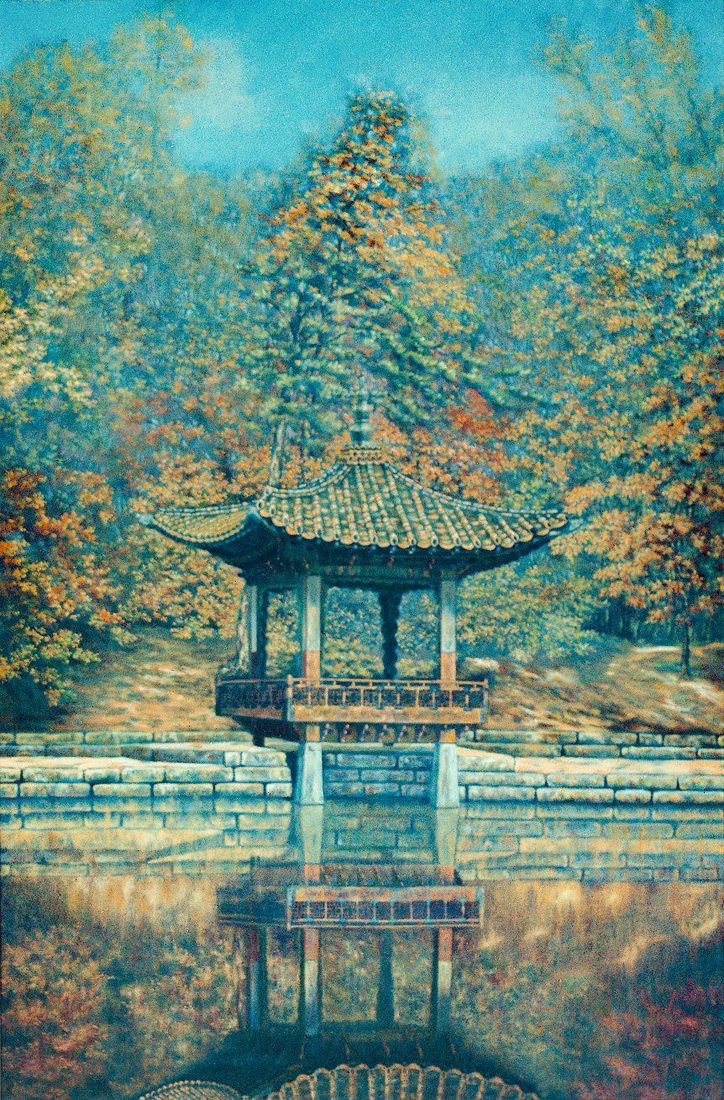
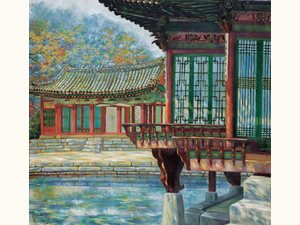
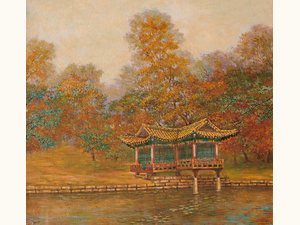
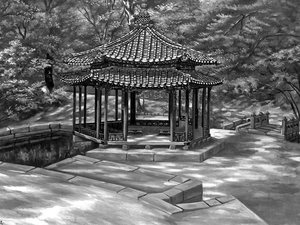
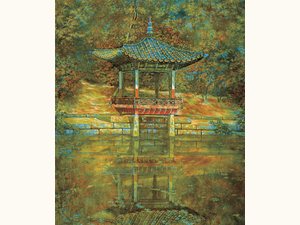
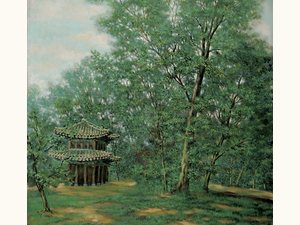
As a director of the Shinki-kai, exhibited Bandoji Pond (F30), Aeryeonjeong Pavilion (F30) and Jondeokjeong Pavilion (F40) at its 9th exhibition, Press Centre, Seoul.
Exhibited Autumn at the general exhibition of the Korean Fine Arts Association.
CORE WORK
Autumn at Aeryeonjeong가을 애련정
A pavilion and pond in Changdeokgung’s rear garden are immersed in blue and golden foliage, their architecture and reflections densely filling the canvas.
1966
Exhibited Bandoji Pond in Autumn at the Malaysia Invitational Art Exhibition, organised by the Government of the Republic of Korea.
Exhibited Bubujeong Pavilion at the Shinki-kai.
Exhibited Old Tree, Biwon at the 52nd Kōfūkai Exhibition.
Exhibited Road at the general exhibition of the Korean Fine Arts Association.
Seoul Shinmun: Autumn in My Home Village, ink painting by Byun Shi-Ji with a poem by Kim Gwang-hyeop (October 1966).
Published the book New Art (Kwandong Publishing).
1967
Exhibited Bandoji Pond, Biwon at the Shinki-kai exhibition.
Exhibited Landscape at the Invitational Exhibition of Active Korean Artists, National Museum of Modern Art, organised by the Ministry of Public Information.
Exhibited Namsan Seen from Deoksugung (F40) at the 53rd Kōfūkai Exhibition, Tokyo Metropolitan Art Museum.
1968
Travelled to Japan as the Korean delegate to the International Society for Education through Art.
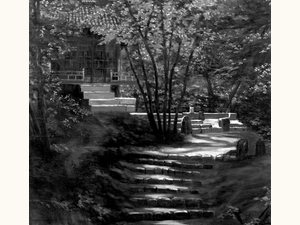
Exhibited Seungjaejeong Pavilion, Biwon (F40) at the 54th Kōfūkai Exhibition.
Exhibited Bandoji Pond (F30) at the Shinki-kai exhibition.
Hankook Ilbo: The Sun Sets on My Home Village, ink painting by Byun Shi-Ji with text by Byun Si-min (4 December).
1969
Exhibited Jondeokjeong Pavilion, Biwon (F30) at the 55th Kōfūkai Exhibition.
1970
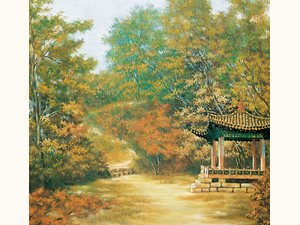
Exhibited Autumn Landscape at the 16th Shinki-kai exhibition, National Public Information Hall.
Exhibited Road (F40) at the 56th Kōfūkai Exhibition.
CORE WORK
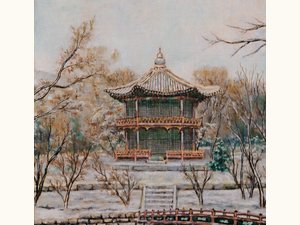
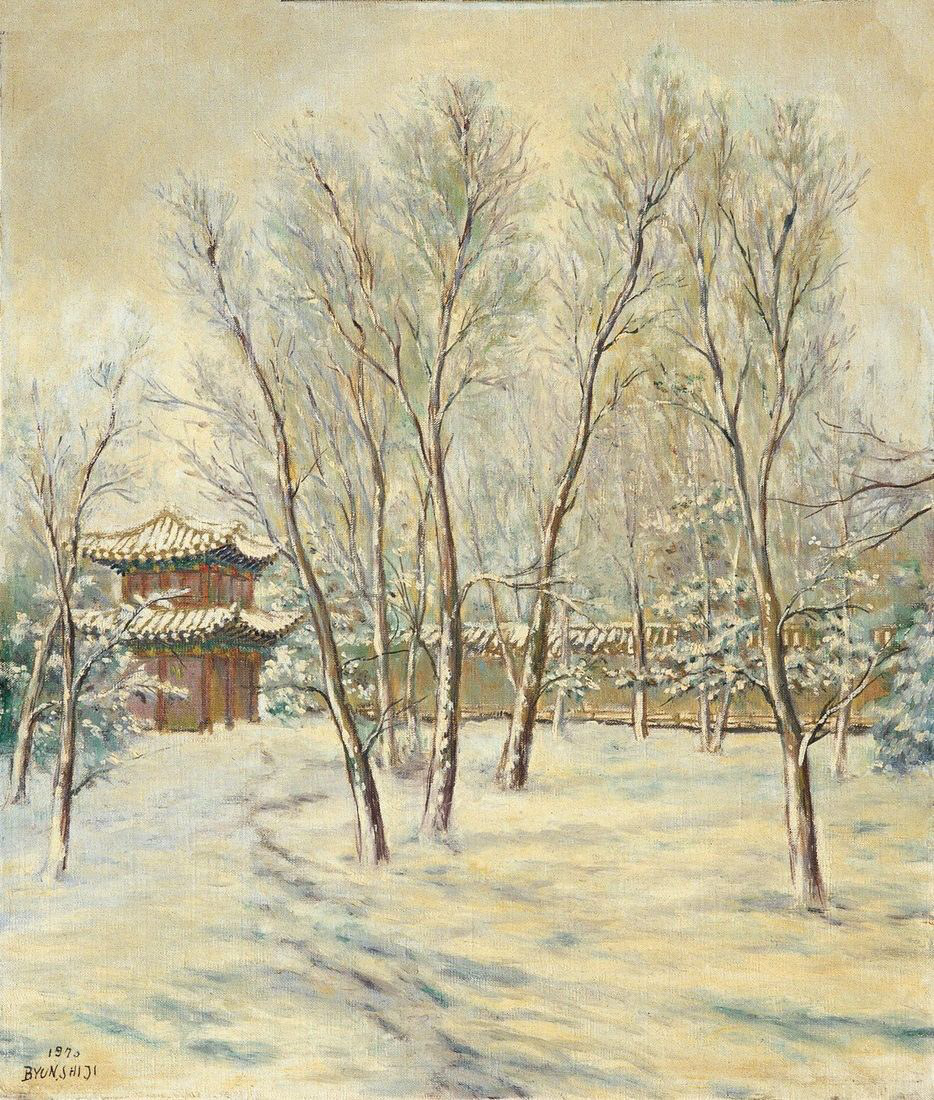
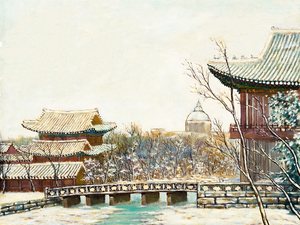
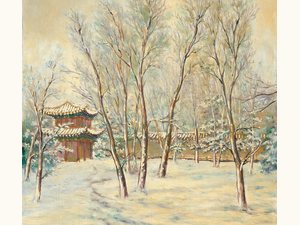
Changdeokgung Palace창덕궁
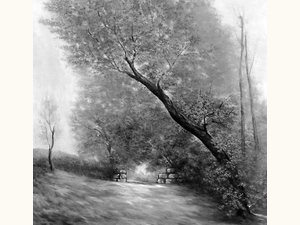
Upright trees, a pavilion and tiled roofs occupy a snow-covered palace garden, rendered with controlled perspective and delicate blue shadows.
1971
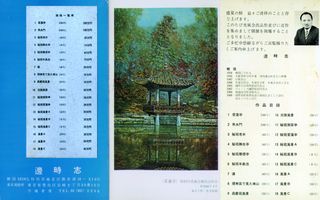
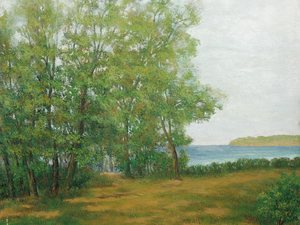
Sixth solo exhibition, Fuji Gallery, Japan — eighteen landscapes on the theme of the Biwon, the Secret Garden of Changdeokgung .
Exhibited Country Landscape at the inaugural exhibition of the Chosun Hotel Gallery.
Exhibited Aeryeonjeong Pavilion (F100) at the 57th Kōfūkai Exhibition, and The Octagonal Pavilion at the Shinki-kai.
Shown in an exhibition of leading works of contemporary art, organised by the Fuji Gallery, Japan.
1972
Opened the Painter's House in Donam-dong, Seoul: a three-storey building housing a private gallery and studio.
Shown in an exhibition of foremost Korean contemporary artists organised by the Fuji Gallery, Japan, alongside Lee Jong-woo, Kim In-seung, Kim Suk-jin, Do Sang-bong, Park Deuk-sun, Kim Ki-chang, Son Eung-seong, Park Yeong-seon and Jang Un-sang.
Exhibited New Green at the Exhibition of Leading Contemporary Artists, Hyundai Gallery.
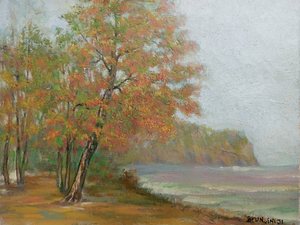
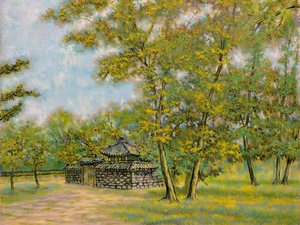
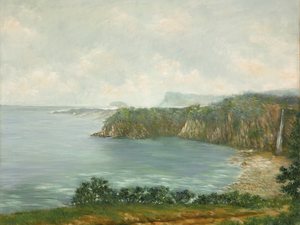
Exhibited Seogwipo Landscape A at the 58th Kōfūkai Exhibition, and Biwon Landscape at the Shinki-kai.
1973
Exhibited Autumn Landscape (F20) at the 59th Kōfūkai Exhibition, Tokyo Metropolitan Art Museum.
Exhibited The Old Palace at the Shinki-kai exhibition.
Exhibited Snow at the Old Palace at the Asian International Exhibition.
1974
Lectured in the Department of Art Education, College of Education, Hanyang University (aesthetics and studio practice).
22 December — opening of the Painter's House in Miari. There the Oriental Art Association was founded, with Byun Shi-Ji as its head: a group of painters seeking to realise a distinctly East Asian sensibility within Western oil painting (Chosun Ilbo and Kyunghyang Shinmun, 24 December; JoongAng Ilbo, 25 December).
Shown in the Exhibition of Korean Masters, organised by the Koryo Art Gallery, Osaka, alongside Do Sang-bong, Kim In-seung, Park Yeong-seon and Kim Ki-chang.
Shown at the 21st Shinki-kai exhibition, Art Centre, Seoul (Hankook Ilbo, 13 November).
Shown by invitation at the Asian International Exhibition.
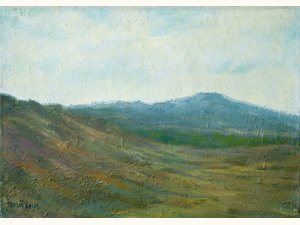
Exhibited Hallasan at the 60th anniversary Kōfūkai Exhibition.
1975
Moved to 953 Yongdam 3-dong, Jeju City.
Inaugural Ten-Artist Exhibition of the Oriental Art Association (chairman: Byun Shi-Ji), National Public Information Hall. Special contributions by Terauchi Manjirō, member of the Japan Art Academy, and by Byun Shi-Ji. Participating artists included Kim In-su, Park Chang-bok, Park Seong-sam, Ahn Byung-suk, Yun Chwi-man, Lee Myeong-sik, Lee Seong-geun, Lee Seung-hwan, Im Chang-yeol and Jo Jeong-gil .
Appointed full-time lecturer in the Department of Art Education, College of Education, Jeju National University (aesthetics, art theory, criticism and studio practice).
Advisor to the Jeju Artists Association.
Exhibited Seogwipo Landscape at the 61st Kōfūkai Exhibition, Japan .
Special contribution to the 2nd Oriental Ten-Artist Exhibition, Art Centre, Anguk-dong.
Shown in the Exhibition of Korean Masters organised by the Koryo Art Gallery, Osaka International Hotel, alongside Do Sang-bong, Kim In-seung, Park Gyu, Kim So-yeong, Park Dae-jin, Oh Seung-woo, Kim Hwa-gyeong, Jang I-seok and Kim Suk-jin.
CORE WORK
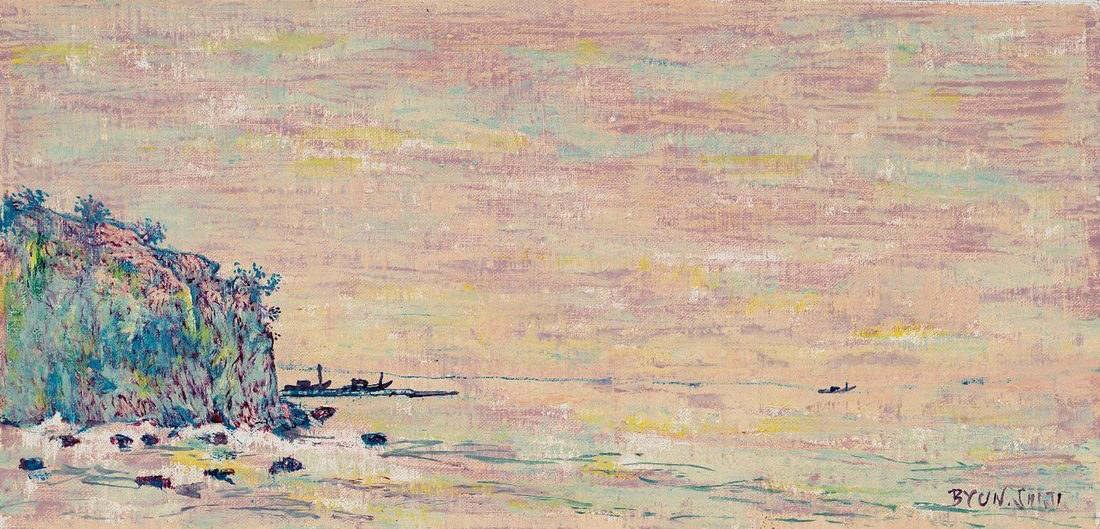
Sunset일몰
Pale pink, blue and yellow dissolve across sea and sky, turning the horizon into a breath in which several moments coexist.
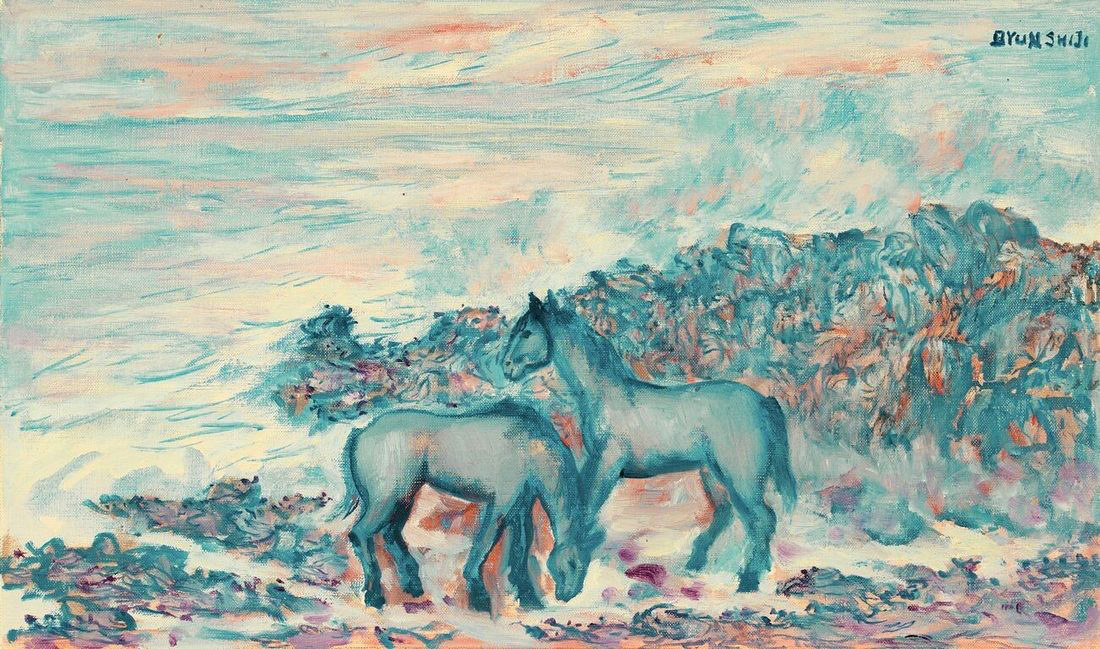
CORE WORK
The Pony조랑말
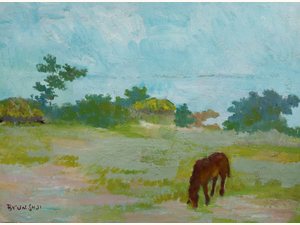
Two Jeju ponies stand close in blue and apricot light: one raises its head toward the distance, while the other lowers its head toward the ground.
1976
Moved to lodgings in Samdo 2-dong, Jeju City.
Shown by invitation at the Jeju Provincial Exhibition: Oedo Landscape. Collection of the Jeju Shinmun.
Shown by invitation at the Asian International Exhibition: Autumn at the Old Palace.
Exhibited Snow at the Old Palace at the 62nd Kōfūkai Exhibition, Japan (Chosun Ilbo, 25 April; Maeil Business Newspaper, 28 April; Shina Ilbo, 29 April).
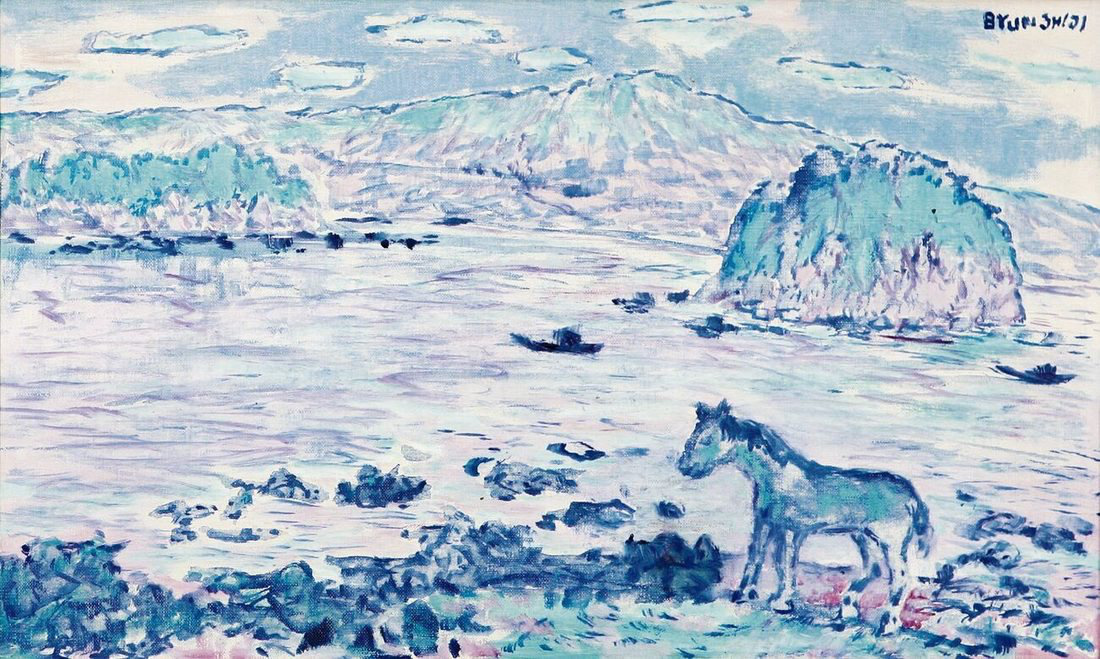
CORE WORK
Jeju제주
A pony stands before a blue coast, rock island and distant mountains; the palette is still moist with colour, and home remains strangely distant.
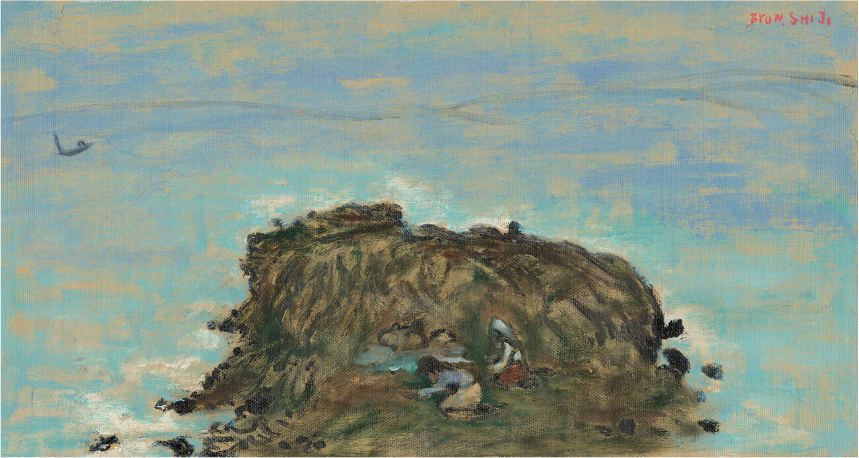
CORE WORK
Rite to the Sea God해신제
A rock island rises from a vast blue sea, with a tiny figure bowing upon it; the human body is almost a point within the maritime expanse.
1977
Moved to Jewon Apartments, 262-20 Yeon-dong, New Jeju City.
Exhibited Byeoldobong and Munseom at the Jeju National University faculty exhibition.
Exhibited Island in Autumn at the 63rd Kōfūkai Exhibition, Japan.
Exhibited Snow on Hallasan and Landscape with Chaerabong at the Jeju Artists Association Sixteen-Artist Exhibition.
3rd Oriental Art Association Twelve-Artist Exhibition, Central Public Information Hall (Chosun Ilbo, 18 February; JoongAng Ilbo, 19 February; Ilgan Sports, 17 February).
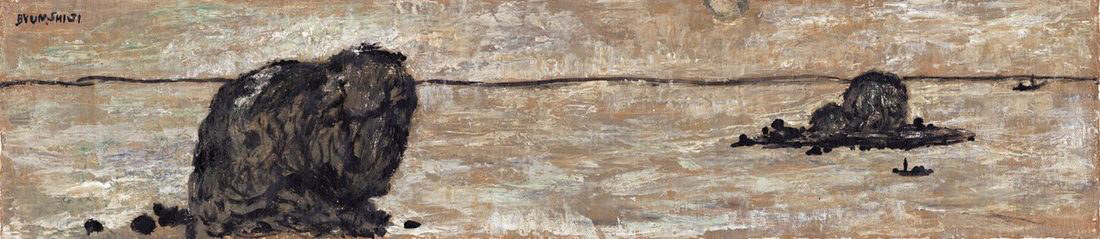
CORE WORK
Brother Islands형제섬
Two rock islands occupy different distances across a long, faded field—one near and large, the other far and small, yet held by the same horizon.
1978
Seventh exhibition: Byun Shi-Ji and Lee Hak-suk, a husband-and-wife show (Chosun Ilbo, JoongAng Ilbo and Dong-A Ilbo, 31 May; Hankook Ilbo, 26 May; Jeju Shinmun, 15 June).
Shown by invitation at the Jeju Provincial Exhibition: Seaside Village.
Exhibited Waiting and Island Landscape at the Jeju Artists Association exhibition.
Exhibited Nude and Evening by the Sea at the art exhibition organised by the Jeju Federation of Artistic and Cultural Organisations.
Eighth exhibition: an invitational show organised by Ilgan Misul and Saenghwalsa, Jeju Sanho Exhibition Hall (Jeju Shinmun, 16 December; Jedae Shinmun, 29 December). Reviewed by the critic Won Dong-seok.
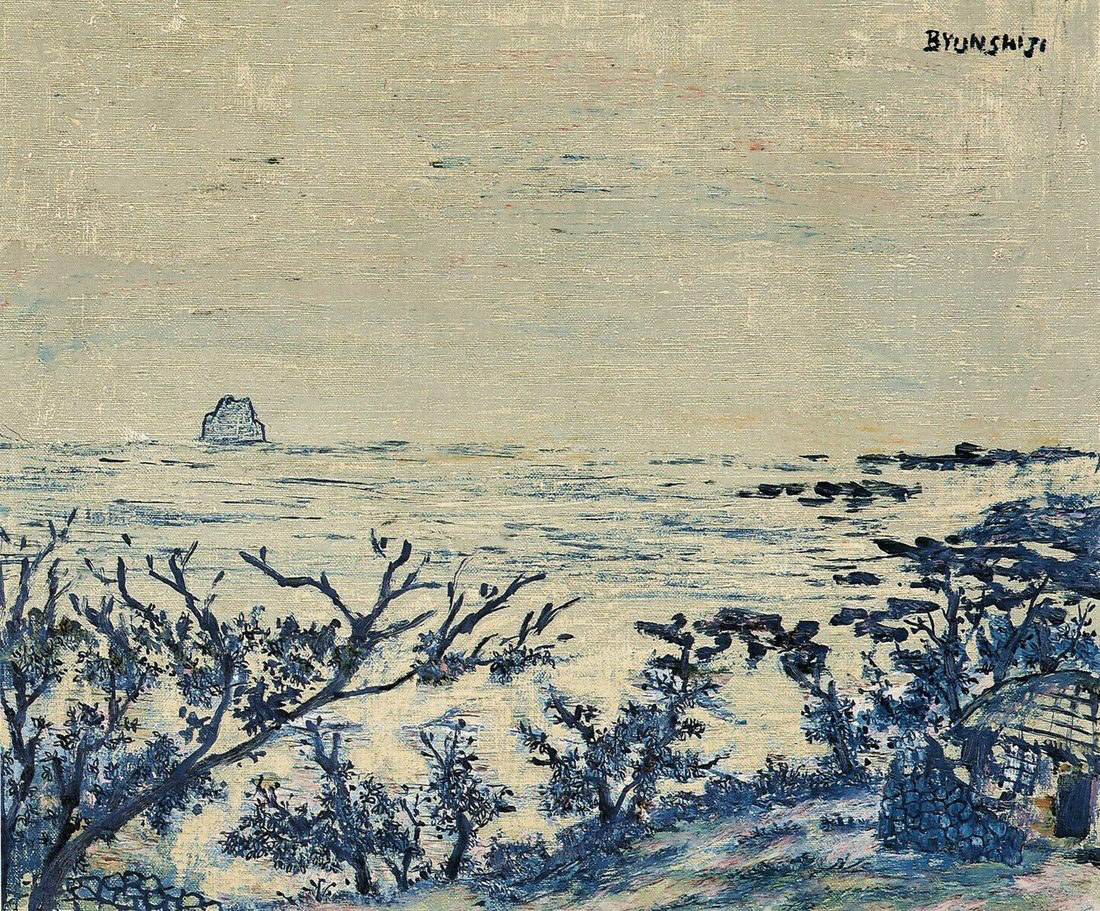
CORE WORK
Ieodo이어도
Dark branches and low vegetation tangle before a pale sea, while a distant rock island remains a small point beyond the rough foreground.
1979
Moved to the Jeju National University faculty apartments, Block A, no. 304.
Exhibited Old Tree and Reverie at the Jeju National University faculty exhibition. Collection of Yang Jeong-ho.
Ninth exhibition, Dongduk Art Museum: forty works including Village Landscape and Girl with a Horse .
Shown by invitation at the Jeju Provincial Exhibition: The Deep Sea.
Tenth exhibition, Sanho Exhibition Hall, Jeju (Jeju Shinmun, 17 December).
Exhibited Jeju Island Landscape at the 65th Kōfūkai Exhibition, Tokyo Metropolitan Art Museum.
Exhibited Arrival and Reverie at the Jeju Artists Association exhibition.
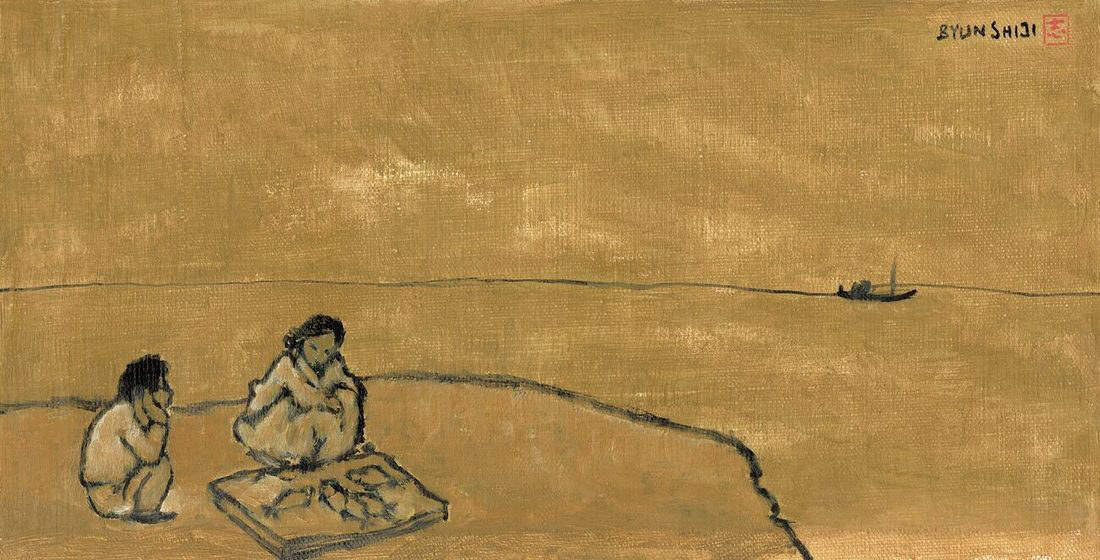
CORE WORK
Mother and Fish어머니와 생선
A mother and child sit beside fish laid out for sale; the child looks toward a small boat, while family labour is divided between shore and horizon.
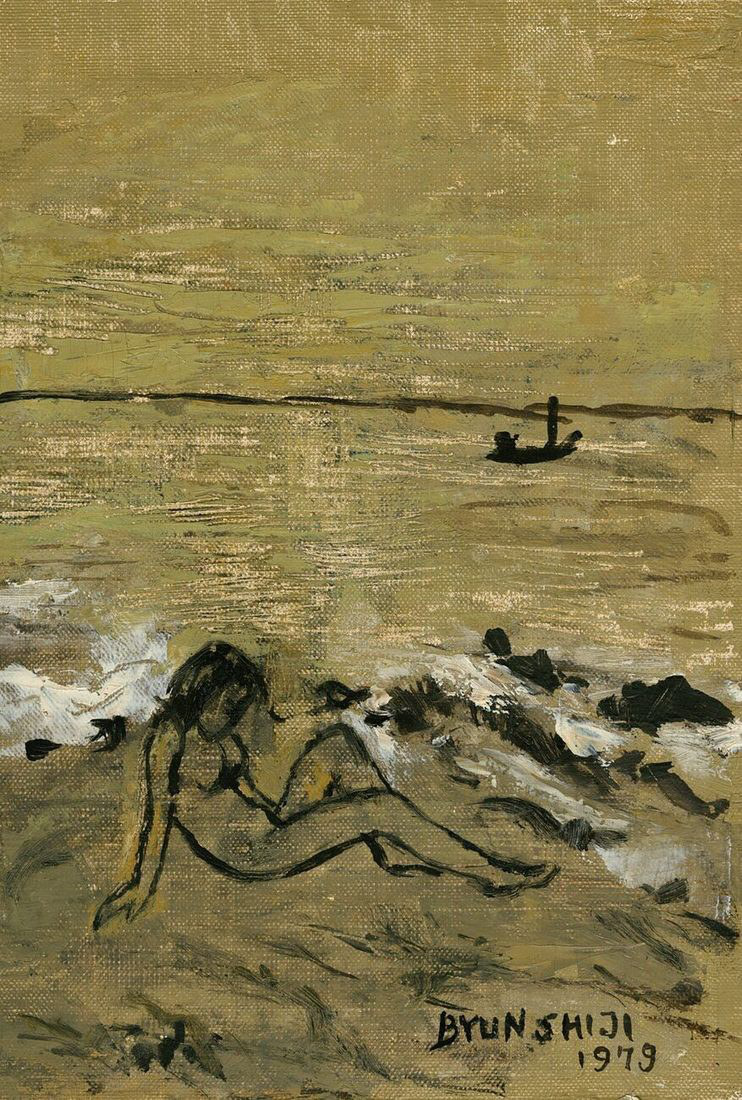
CORE WORK
Haenyeo해녀
Near breaking white waves, a woman diver reclines at an angle; body, sand and sea yield their boundaries within one weathered light.
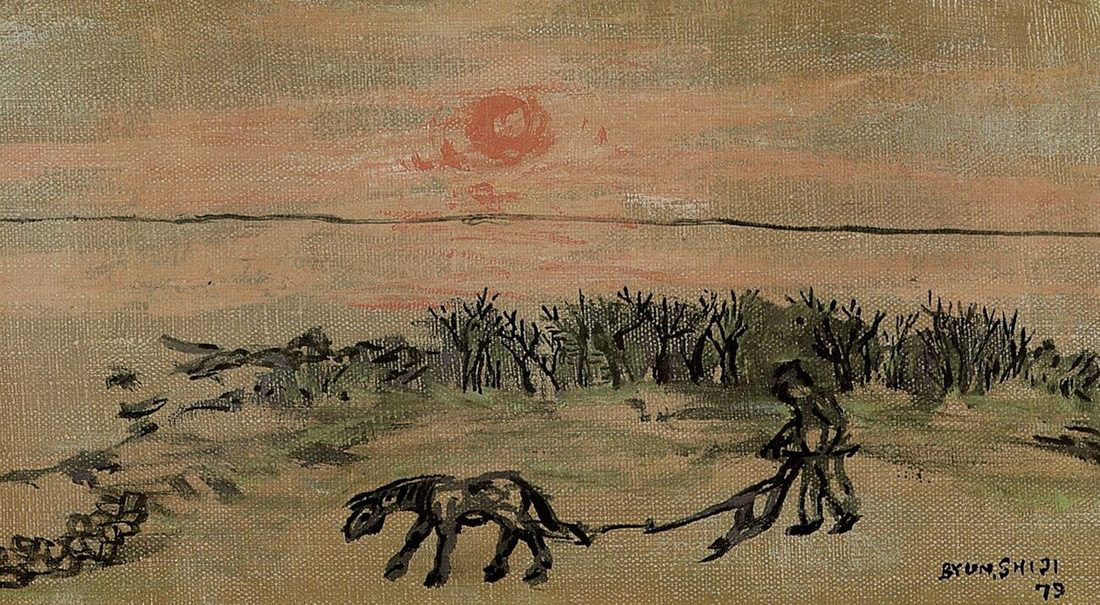
CORE WORK
Plowing밭갈이
Beneath a hazy red sun, human and horse work a dry field, their outlines entering the colour and movement of the earth.
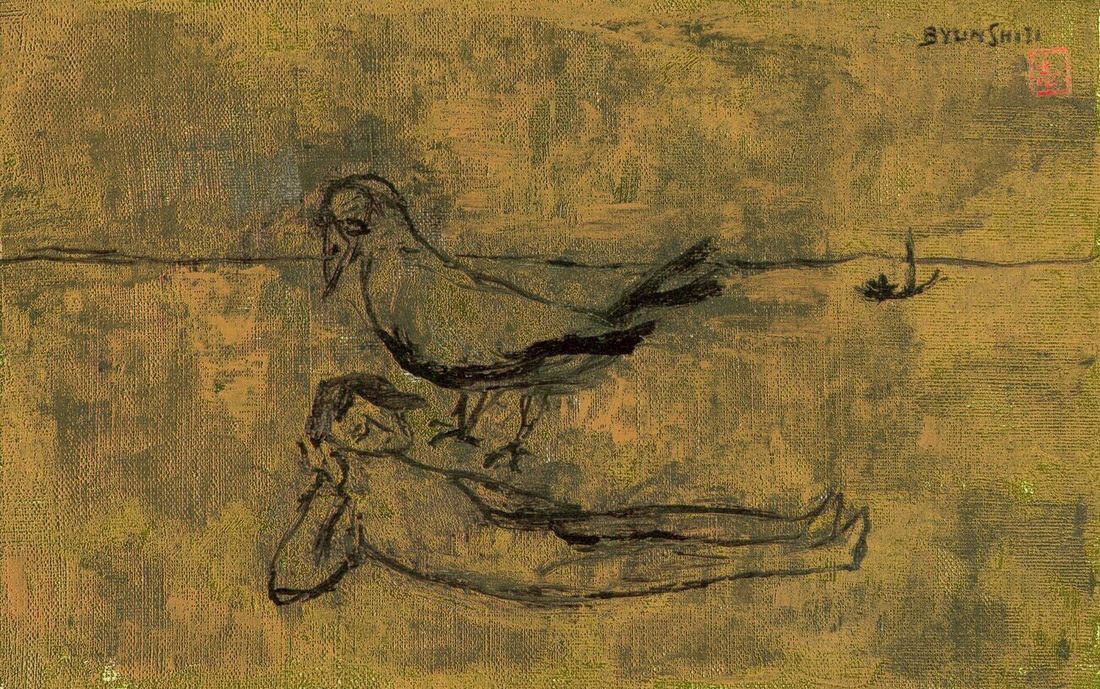
CORE WORK
The Crow and I까마귀와 나
A crow remains near a person stretched upon the ground; despite their different positions, the space between them is one of silent regard rather than judgement.
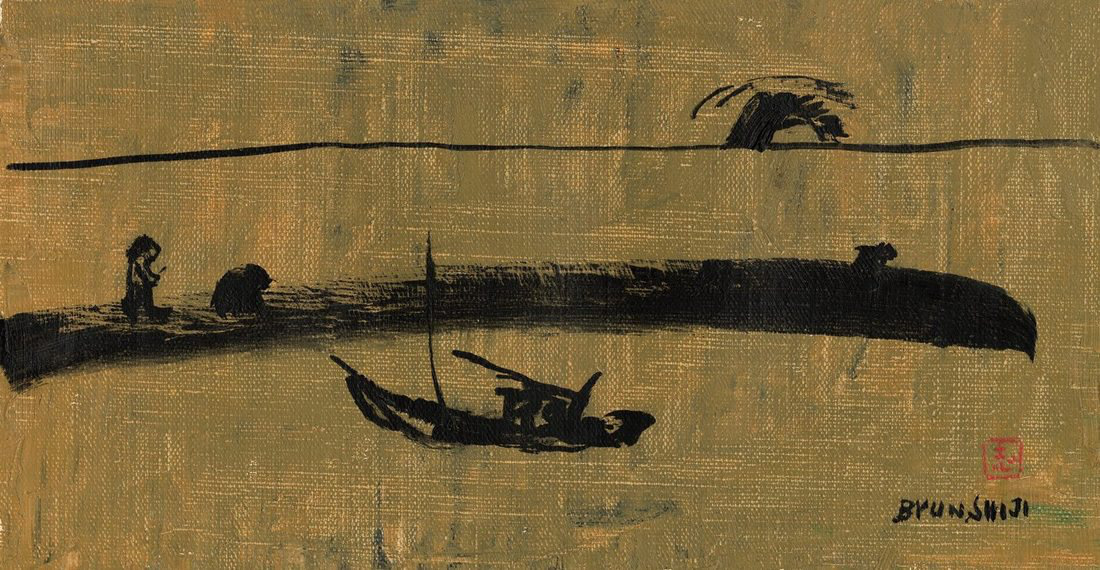
1980
Eleventh exhibition, an invitational show at the Jeonsi Gonggan Gallery, Jeju City: thirty oils including Dalla, Evening Glow and Shipwreck (Dong-A Ilbo, 6 June; Jeju Shinmun, 9 June).
Gyegan Misul, spring issue: Sunset (F10).
Exhibited Waiting (F100) at the Jeju Artists Association exhibition, Jeonsi Gonggan Gallery. Collection of Jeju MBC.
Exhibited Lonely Island of the South at the 66th Kōfūkai Exhibition.
Exhibited Anxiety at the Jeju National University faculty exhibition.
Shown by invitation at the inaugural exhibition of the Namyang Museum of Art: Storm (F30). Collection of Park Tae-hun.
Exhibited When the Crow Cries (F100) at the 4th Oriental Art Association exhibition, Jeonsi Gonggan Gallery, Jeju City. Collection of the Korea University Museum.
Exhibited Longing for Home (F100) at the Jeju Provincial Exhibition. Collection of Byun Hyung-ha of KBS.
Twelfth exhibition, Sanho Exhibition Hall, Jeju.
Jeju Shinmun: 'New Spring…', painting and text by Byun Shi-Ji (24 March).
Jugan Yeoseong: Landscape by Byun Shi-Ji, featured among notable works.
1981
Travelled through Europe.
Exchange exhibition of the faculties of Jeju National University and Mokpo National University.
Shown by invitation at Korean Art 81, organised by the National Museum of Modern Art: Jeoldo — The Severed Island. Collection of the National Museum of Modern Art.
Exhibited Lonely Island of Tamna at the 67th Kōfūkai Exhibition.
Thirteenth exhibition, an invitational show at the Haemok Gallery, Mokpo.
Fourteenth exhibition, an invitational show at the Namyang Art Centre, Jeju (Jeju Shinmun, 3 June).
Shown by invitation at the inaugural exhibition of Kim Jung-up's Ilbang Gallery: The Gate.
Dong-A Ilbo, 'Spring in the Homeland': the oil painting Homecoming (6 March 1981).
Fifteenth exhibition, Tamna Gallery, Jeju (Dong-A Ilbo, 27 August; Jeju Shinmun, 27 August and 4 September).
5th Oriental Art Association exhibition, Dongduk Art Museum, Seoul.
Exhibition marking his departure for France, Baeksang Memorial Hall, Anguk-dong, shown together with Kim Gi-hyeok, Park Jong-hui, Lee Jeong-sin and Pyo Seung-hyeon (Dong-A Ilbo, 7 September; Ilgan Sports, 6 September; JoongAng Ilbo, 4 November).
Sixteenth exhibition, an invitational show at the Astrolabio Gallery, Rome, 6–20 October (Italian press, 21 October).
1982
Juror of the Contemporary Art Grand Prix Exhibition, Korea Design and Packaging Centre.
Juror of the Korean Traditional Art Grand Prix Exhibition, Korea Design and Packaging Centre.
Chairman of the Korean Art Research Society, with offices at 177 Gwanhun-dong, Jongno-gu, Seoul.
Joint exhibition, Grand Hotel Gallery, Jeju: ink paintings.
Seventeenth exhibition, an invitational show at the Jeong Gallery, Gwangju (Gwangju Ilbo, 22 February; Dong-A Ilbo, 26 February).
Eighteenth exhibition: an invitational show of ink paintings, Jeong Gallery, Gwangju.
Exhibited San Marco at the 68th Kōfūkai Exhibition, Tokyo Metropolitan Art Museum.
Nineteenth exhibition, an invitational show at the Hangwang Art Museum, Busan (Dong-A Ilbo, 31 November and 2 December).
Published a book of drawings from his European travels (Hwa Publishing).
Dong-A Ilbo, 'Summer Painting': ink painting by Byun Shi-Ji with text by Jeong Gi-yeong (19 July).
Jeju Shinmun: 'Summer Passes', painting and text by Byun Shi-Ji (6 July); his painting Liberation published on 4 August.
1983
Juror of the Korean Art Grand Exhibition.
Juror of the Contemporary Art Grand Prix Exhibition.
His second daughter Yeon-seon entered the Department of Korean Literature, Sungshin Women's University.
General exhibition of the Korean Art Research Society, Sejong Cultural Centre.
His eldest daughter Jeong-eun graduated from the Department of Art Education, College of Education, Jeju National University, and entered the graduate programme in aesthetics at Hongik University.
Shown by invitation at the Contemporary Art Invitational Exhibition held by the National Museum of Modern Art following the reform of the national exhibition system: Dreaming of Home.
Exhibited London Landscape (F30) at the 69th Kōfūkai Exhibition (Jeju Shinmun, 29 April).
Shown by invitation at the Jeju Provincial Exhibition: Girl in a Dream.
Twentieth exhibition: an invitational show of ink paintings, Hansol Gallery, Jeju (Jeju Shinmun, 10 December; Dong-A Ilbo, 9 December).
The Wind Cave of Tamna (F100). Collection of Wonhwan Eunhye, Jeju branch.
Typhoon (F150). Collection of the Seohae Hotel, Jeju.
Shown in the Ten Local Artists Exhibition marking the first anniversary of the Sangmi exhibition space, Seogwipo (Dong-A Ilbo, 30 March; Jeju Shinmun, 31 March).
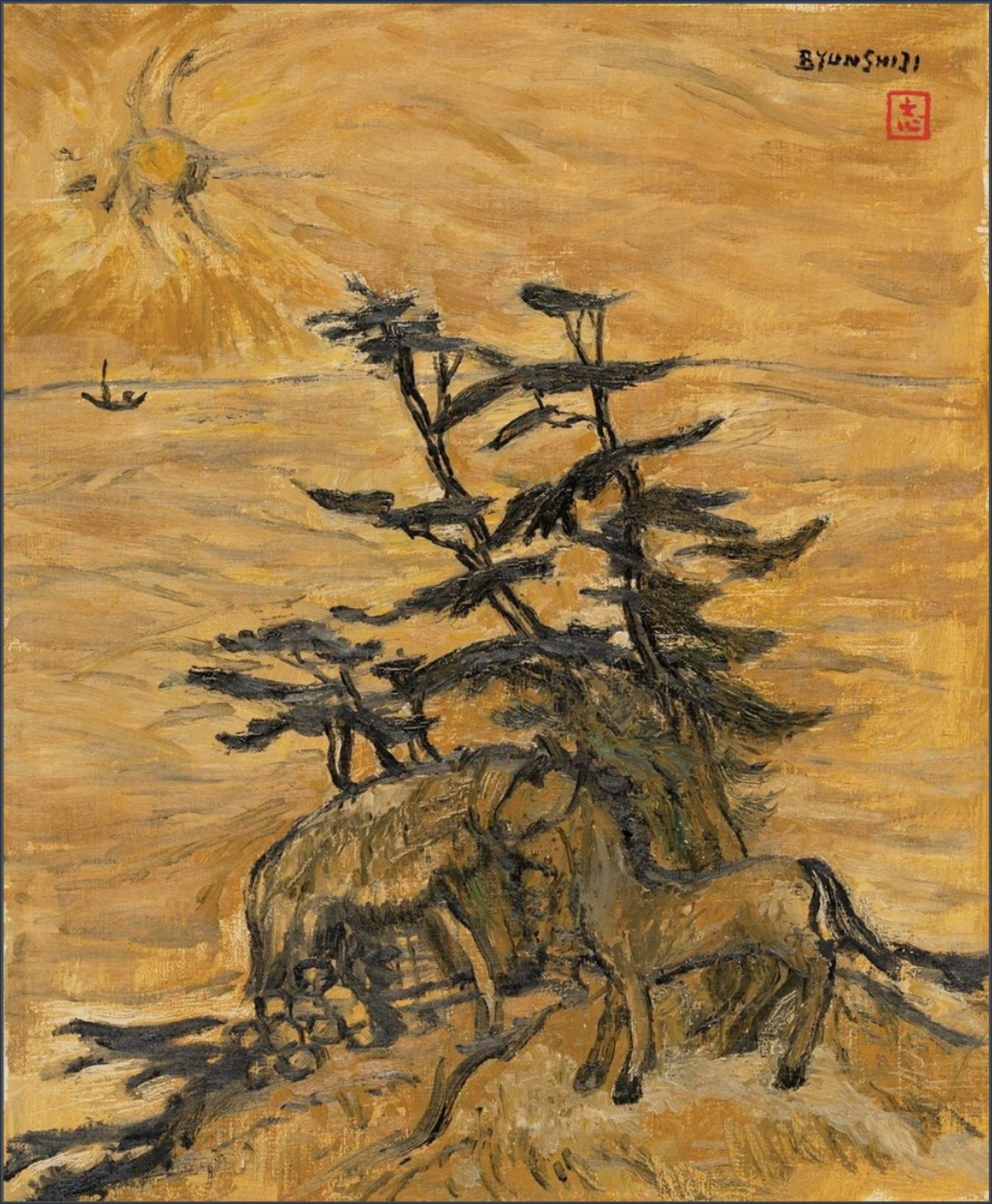
CORE WORK
Tropical Sun열대의 태양
A black pine, two horses and a distant boat inhabit an intense yellow field that exposes every being to the same sun and wind.
1984
Juror of the New Art Grand Exhibition, of the Contemporary Art Grand Prix Exhibition, and of the Korean Art Open Grand Prix Exhibition, Busan.
Exhibited Native Soil at the exhibition marking the fourteenth anniversary of the Doksŏ Shinmun.
Appointed head of the Department of Art Education, College of Education, Jeju National University.
Seogwipo Landscape (F100). Collection of Jeju National University.
Juror of the Baekje Art Grand Exhibition.
Unification Painting and Calligraphy Exhibition, Sejong Cultural Centre.
His eldest son Yeon-hun entered the Department of Russian Language and Literature, College of Liberal Arts, Korea University.
Shown by invitation at Contemporary Art 84, organised by the National Museum of Modern Art: Reverie. Collection of the Hongik University Museum.
Shown in the Korea–Japan art exchange exhibition, Jeongudang Gallery (Chosun Ilbo, 28 September).
Exhibited The Seine (F40) at the 70th anniversary Kōfūkai Exhibition (Jeju Shinmun, 25 April).
Twenty-first exhibition: an invitational show of some thirty ink paintings, Hansol Gallery, Jeju (Dong-A Ilbo, 9 December; Jeju Shinmun, 10 December).
Twenty-second exhibition: an invitational show of twenty-five ink paintings, Sangmi exhibition space, Seogwipo (Jeju Shinmun, 5 March).
Exhibited Jeju Landscape at the Unification Exhibition organised by the Central Council for National Unification.
Members' invitational exhibition of the New Art Grand Exhibition, 22nd Century Art Museum (JoongAng Ilbo, 10 January).
Exhibited Waiting at the benefit exhibition for the restoration of the exile house of Chusa Kim Jeong-hui.
1985
Travelled to Japan for a Korea–Japan art exchange exhibition, at the invitation of the Chikyudo Gallery, Ginza, Tokyo.
Juror of the Contemporary Art Grand Prix Exhibition, serving alongside his wife Lee Hak-suk.
Chairman of the jury of the New Art Grand Exhibition, sponsored by the Ministry of Culture and Information.
Shown by invitation at Contemporary Art 85, organised by the National Museum of Modern Art: The Road Home.
Fourteen Painters Exhibition, Sangmi exhibition space, Seogwipo.
Twenty-third exhibition, an invitational show at the Sejongdang Gallery, Jeju City (Jeju Shinmun, 4 February).
Exhibited Longing for Home (F40) at the 71st Kōfūkai Exhibition, Tokyo Metropolitan Art Museum.
Exhibited Longing for Home (F40) at the 71st Kōfūkai Exhibition, Tokyo Metropolitan Art Museum.
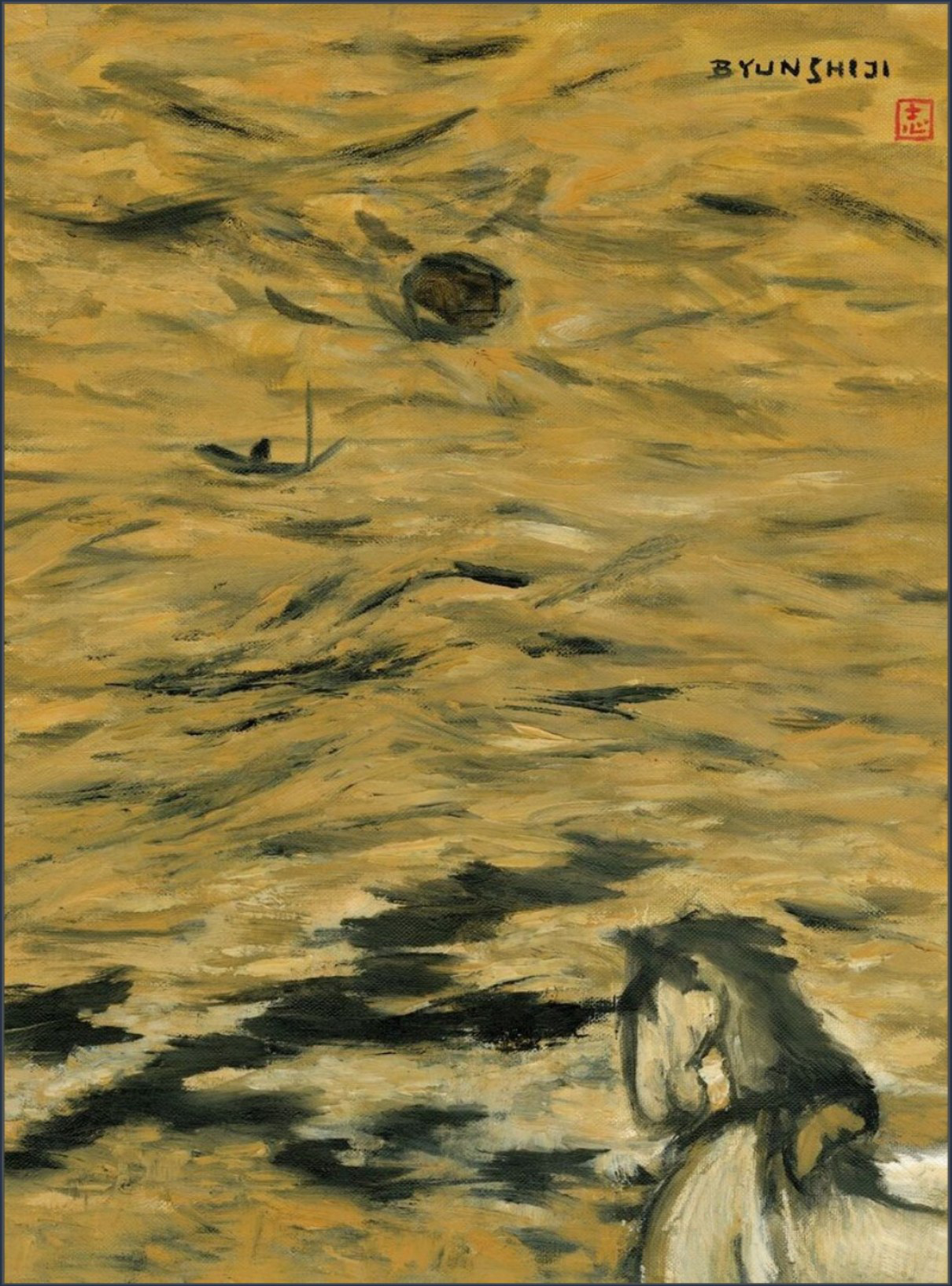
CORE WORK
The Black Sun검은 태양
A black sun and small boat hover above a rough sea, while human and horse remain below; the sun is present but offers no illumination.
1986
Received an honorary doctorate from Wonkwang University.
Received the Jeju Culture Award in the Arts Division, the Order of Civil Merit, and the Seogwipo Citizen Award.
Chair of the jury, National Teachers’ Art Grand Prize.
Honorary director, Seogwipo Culture and Arts Center.
Received the Jeju Culture Award (Arts), a national decoration, and the Seogwipo Citizen Award.
Twenty-fifth solo exhibition.
Exhibited Storm at the 72th Kōfūkai Exhibition, Tokyo.
24th publication commemorative exhibition for Woosung Byun Shi-Ji Art Collection, 6–18 June.
Korean Contemporary Art: Yesterday and Today, MMCA, Gwacheon.
25th publication commemorative exhibition, Dongin Art Museum, Jeju.
Published the Woosung Byun Shi-Ji Art Collection, with a commemorative exhibition.
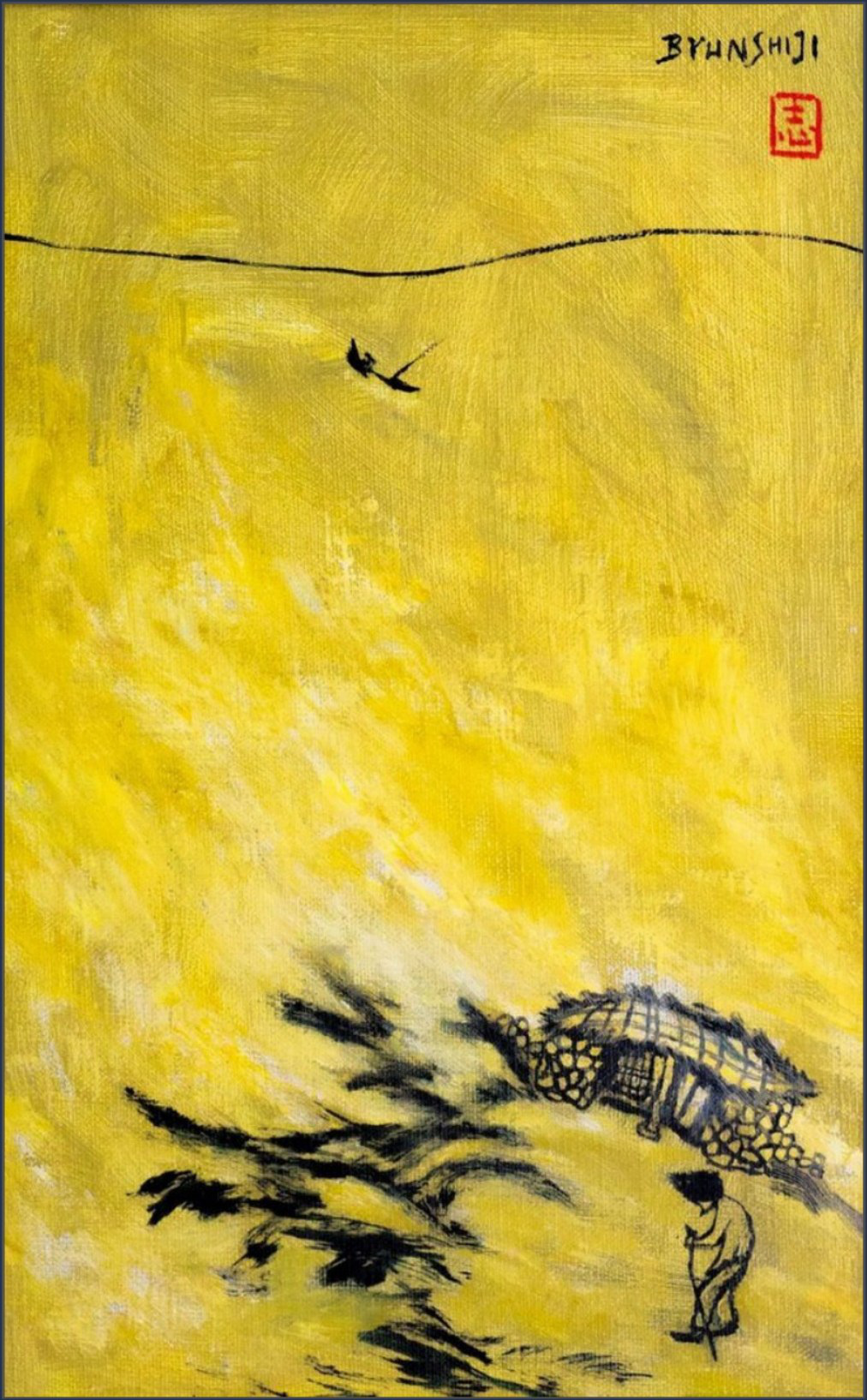
CORE WORK
A Wavering Horizon흔들리는 수평선
A thin horizon bends high in a yellow field, while a small boat and birds drift above a low house, figure and black tree clinging to the earth below.
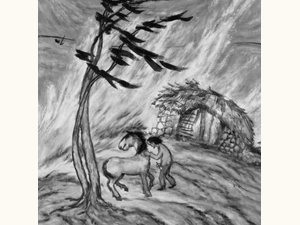
1987
Appointed Honorary Director of the Seogwipo Municipal Gidang Art Museum.
Chair of the jury for the New Art Grand Exhibition.
Chair of the jury for the 2nd National Teachers' Art Grand Prize Exhibition.
Permanent Byun Shi-Ji exhibition room established at Gidang Art Museum, Seogwipo.
Appointed honorary director of Gidang Art Museum.
Chair of the jury for the New Art Exhibition and the 2nd National Teachers’ Art Grand Prize.
Received a Certificate of Appreciation from the Mayor of Seogwipo.
A permanent exhibition room dedicated to Byun Shi-Ji established at the Seogwipo Municipal Gidang Art Museum.
Exhibited Portrait at the 73th Kōfūkai Exhibition, Tokyo.
1987 Contemporary Art Invitational Exhibition, MMCA, Gwacheon.
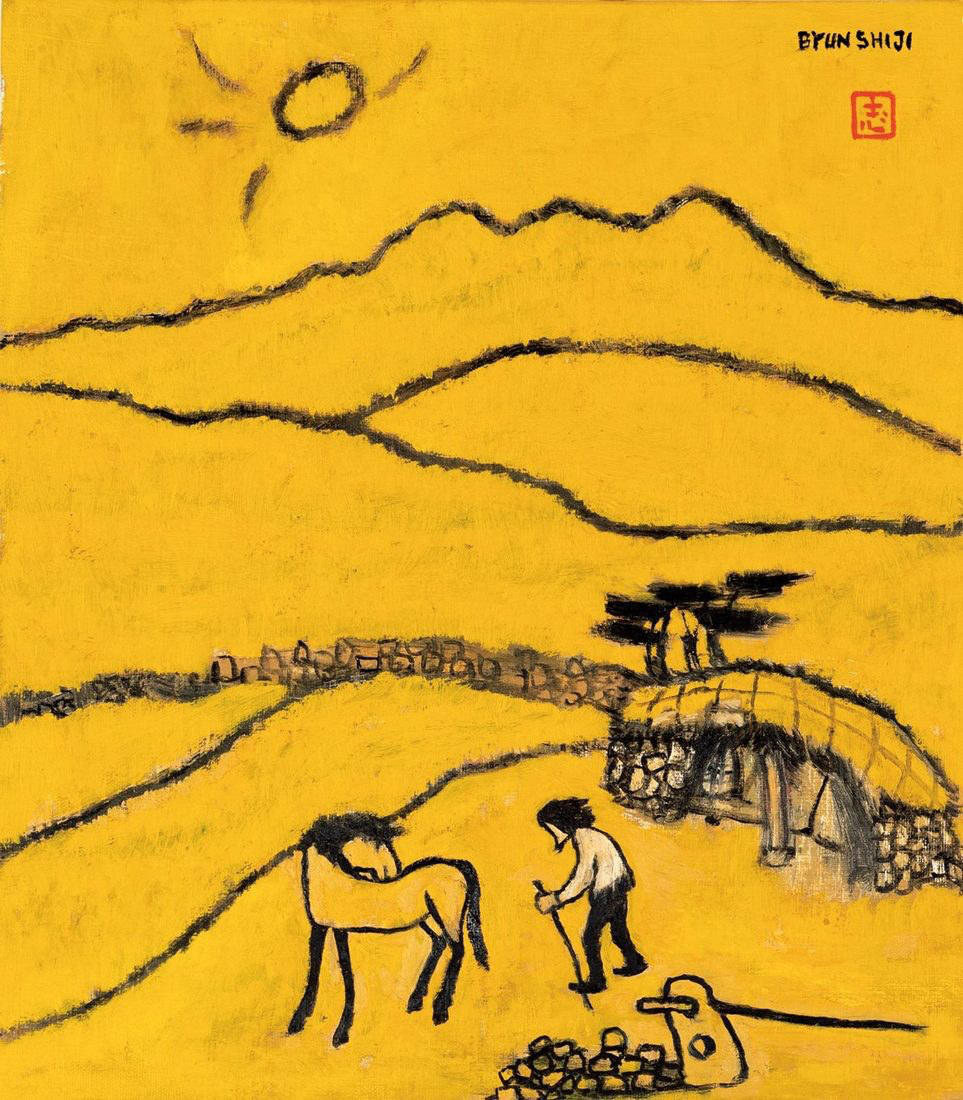
CORE WORK
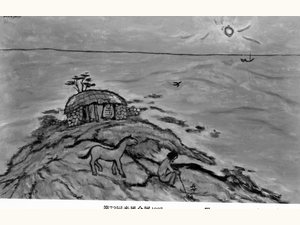
Hallasan한라산
Beneath a ring-like sun and a few black mountain lines stand a thatched house, stone wall, bowed horse and stooped person; Hallasan becomes the condition of the whole scene.
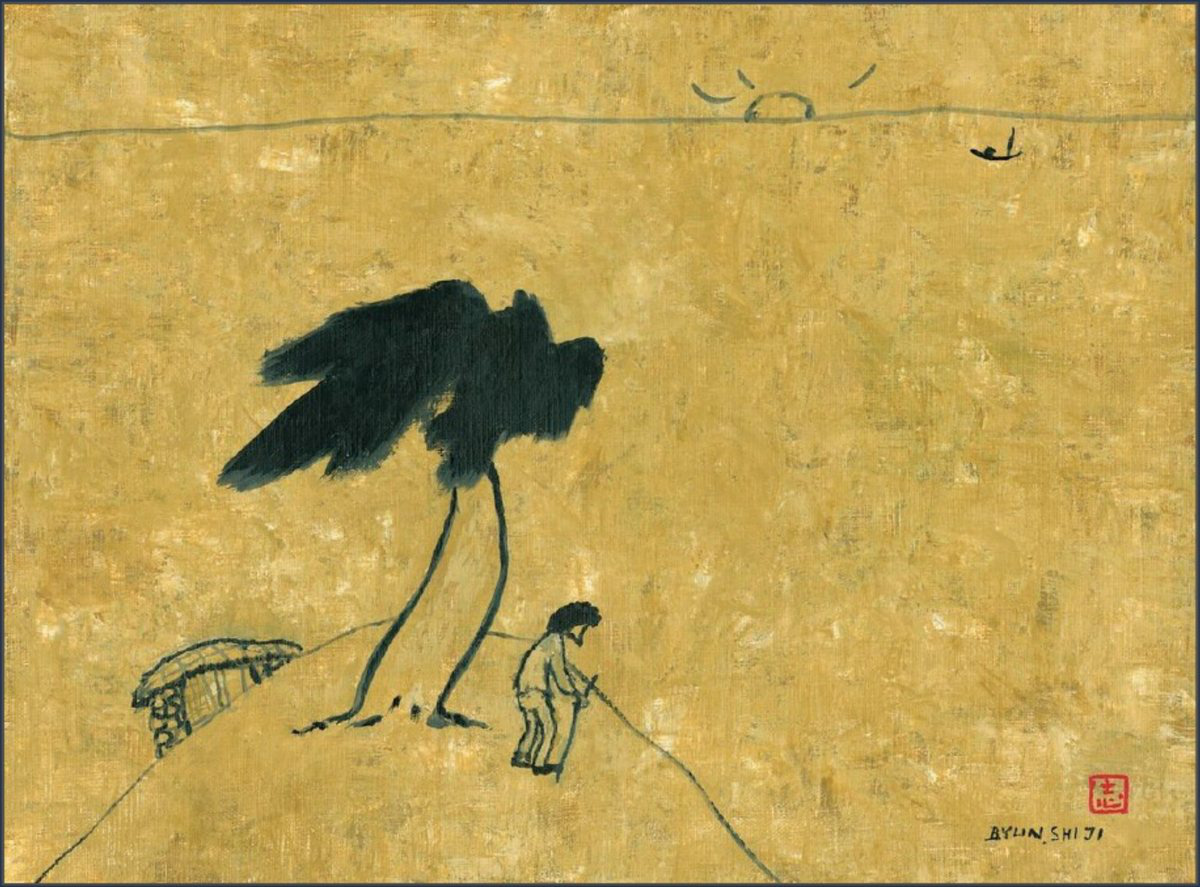
CORE WORK
The Old Pine and the Old Man노송과 노인
A small old man stands beneath a monumental pine, both facing a boat diminishing across the sea.
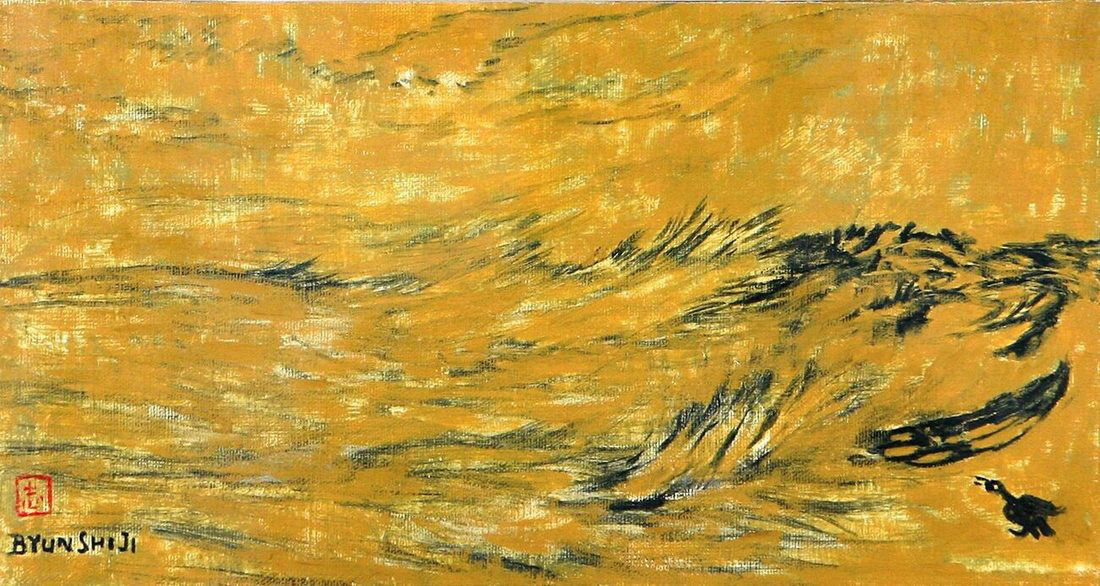
CORE WORK
Ieodo이어도
An empty boat cuts across a rough orange sea while a black crow flies or cries near the waves; only traces of the missing human remain.
1988
Published Byun Shi-Ji: Jeju Wind Paintings I–II and Art and Fudo.
26th solo exhibition, Shinsegae Art Gallery, Seoul, April 19–24.
Published Byun Shi-Ji: Jeju Wind Paintings I and II, and Art and Pungto.
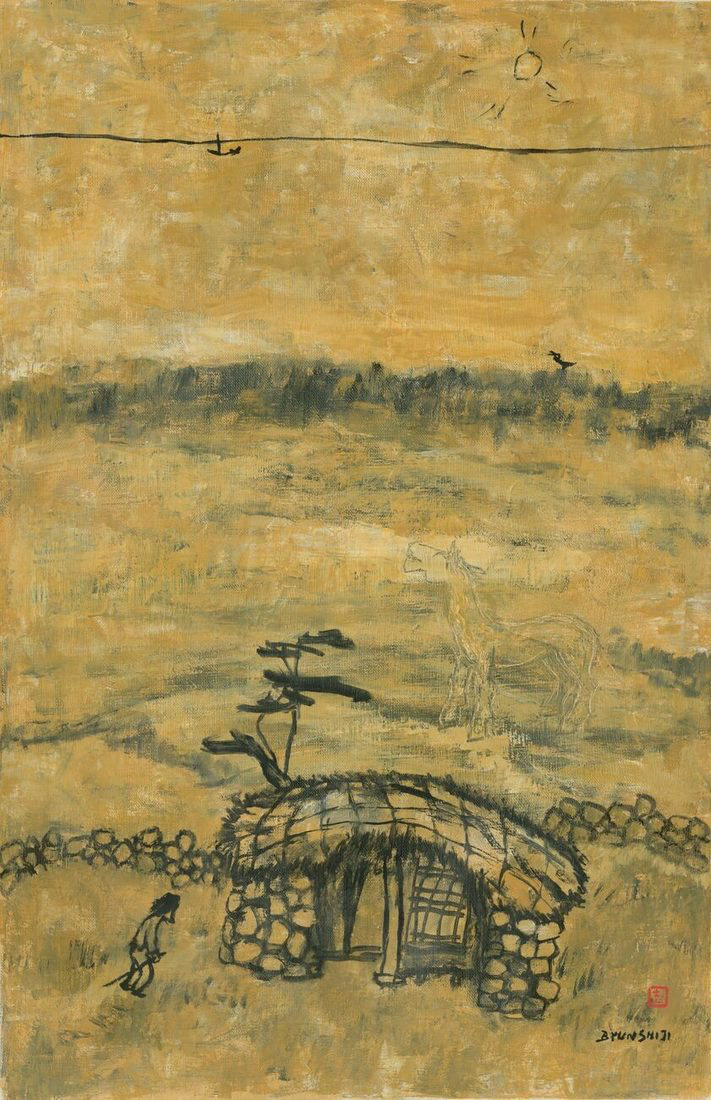
CORE WORK
Recollection회상
Within a tall field of house, sea and small figure, a faint horse enters the surrounding light and hovers between presence and absence.
1989
Chair of the jury, Jeju Art Exhibition.
Exhibited Ieodo — The Legendary Island at the 75th Kōfūkai Exhibition, Tokyo.
1990
Invitational of Jeju wind paintings, Baeksong Gallery, Seoul.
Opening exhibition of the Seoul Arts Center.
27th Jeju Wind Paintings Invitational Exhibition, Baeksong Gallery.
1990 Contemporary Art Invitational Exhibition, MMCA, Gwacheon.
Seoul Arts Center Opening Commemorative Exhibition.
28th Invitational Solo Exhibition commemorating retirement, Yehyang Gallery.
Published Byun Shi-Ji Jeju Painting Style I–II, Tamna Mokseokwon Press.
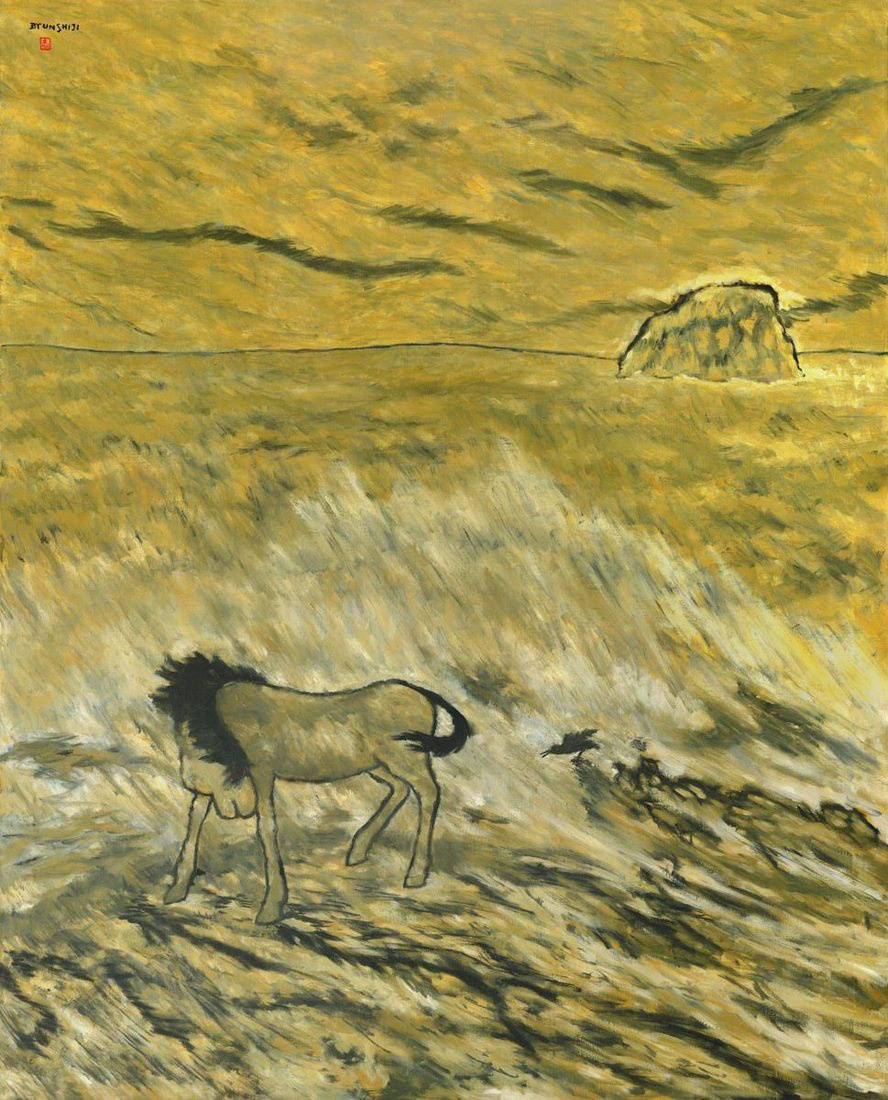
CORE WORK
Where To?어디로
In a field swept by wind, a horse lowers its head while a crow remains nearby; no clear path is visible, and both stay within the same uncertainty.
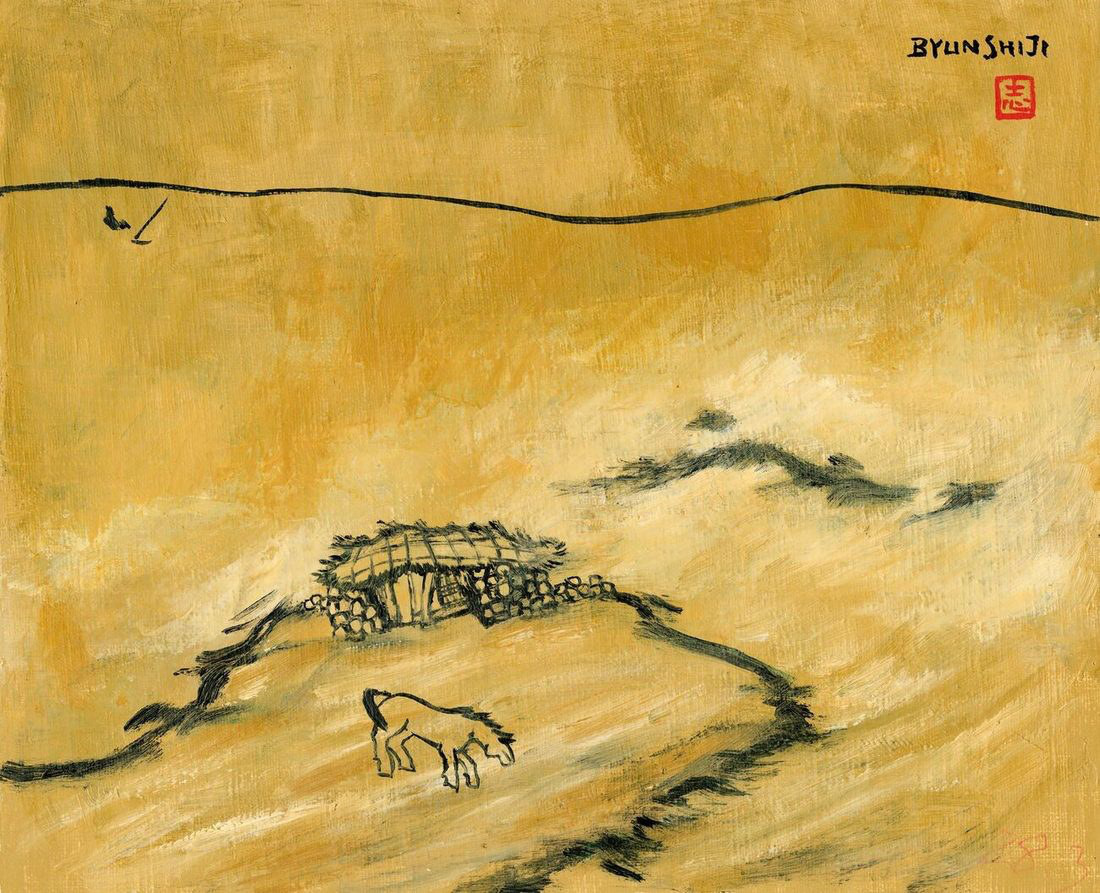
CORE WORK
Typhoon태풍
Beneath a clearing sky, a low thatched house, stone wall and bowed horse remain; the painting is governed by the pressure the storm has left behind.
1991
Published Jeju Wind Paintings III.
Merit plaque of the president of Jeju National University; National Medal; merit plaque of the mayor of Seogwipo.
Retired from the Department of Fine Arts, College of Humanities, Jeju National University.
Invitational exhibition marking his retirement, Yehyang Gallery, Jeju.
Published Byun Shi-Ji: Jeju Wind Paintings III.
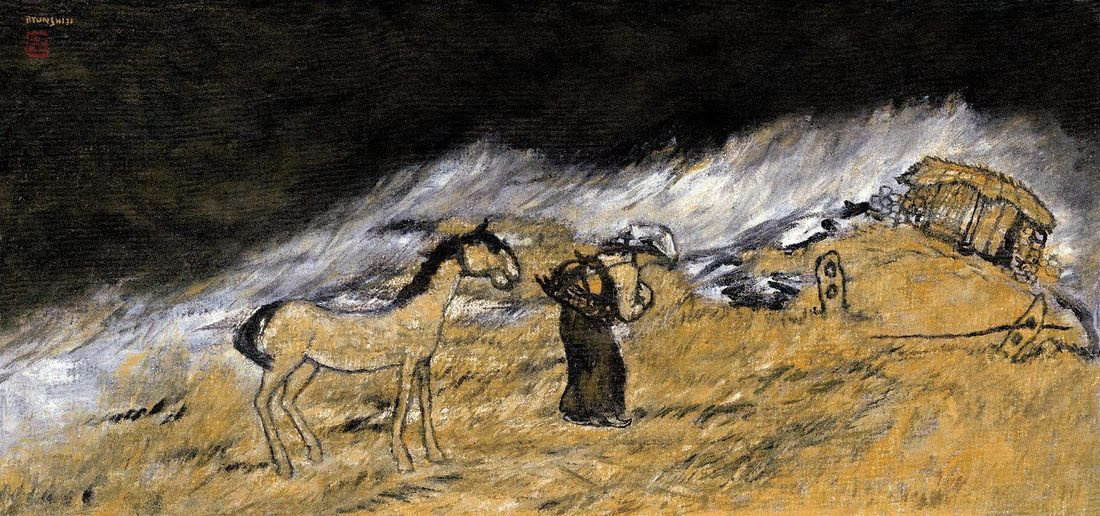
CORE WORK
The Way Home귀로
Under a black sky and white wind, a woman carrying a water jar and a horse move toward a low house, both bodies inclined by the day’s weight.
1992
78th Kofu-kai exhibition, Tokyo — Bitter Heart.
Published Wuseong Byun Shi-Ji: Life and Art I and the Fifty Years of Painting album.
Twenty-ninth solo exhibition.
Thirtieth solo exhibition, Yemaek Gallery, Seoul.
Contemporary Art Invitational Exhibition '92, National Museum of Modern and Contemporary Art, Gwacheon.
Exhibited Bitter Heart at the 78th Kōfūkai Exhibition, Tokyo.
1993
TIAS international exhibition, Tokyo.
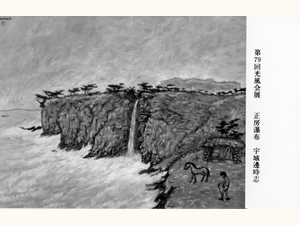
79th Kofu-kai exhibition, Tokyo — Jeongbang Falls.
Founded the Sinmaekhoe artists' group.
TIAS International Exhibition, Tokyo.
Thirty-first solo exhibition, an invitational show at the Seonam Art Museum.
Exhibition commemorating the opening of the Seoul Arts Center.
Exhibited Jeongbang Falls at the 79th Kōfūkai Exhibition, Tokyo.
1994
Received the Seogwipo Citizen Award in Culture and Arts.
Seoul International Contemporary Art Festival, MMCA, Gwacheon.
Changing Landscapes of Seoul, Seoul Arts Center.
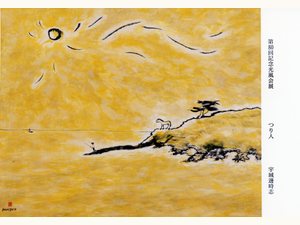
Exhibited The Fisherman at the 80th Kōfūkai Exhibition, Tokyo.
1995
Received a Certificate of Appreciation from the President of Jeju National University.
Exhibition marking his seventieth birthday, organised by the Jemin Ilbo, Jeju.
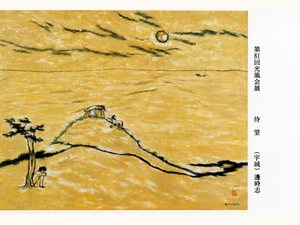
Exhibited Waiting at the 81th Kōfūkai Exhibition, Tokyo.
32nd exhibition commemorating Byun Shi-Ji’s seventieth year.
CORE WORK
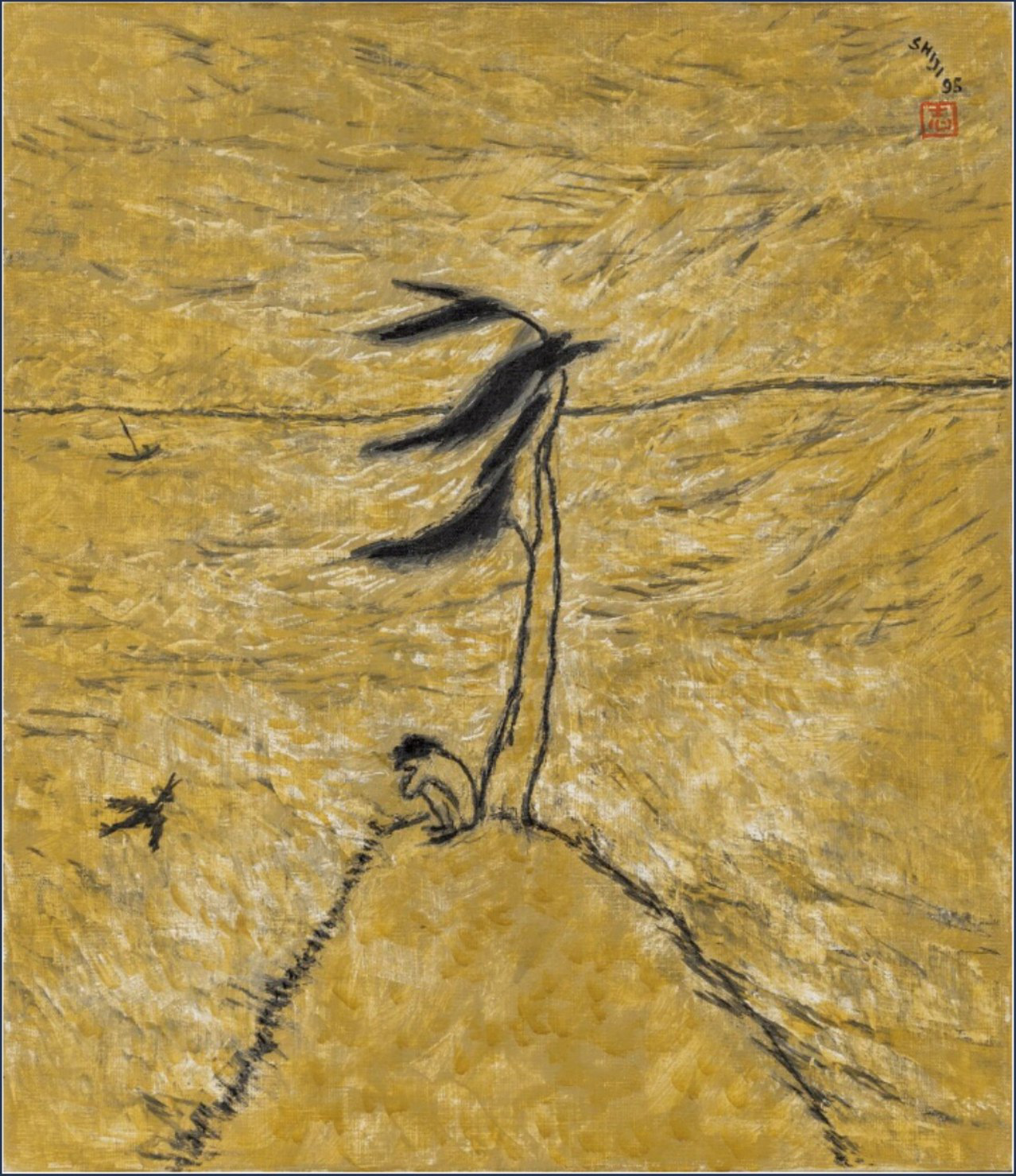
Solitude고독
A tree bends in strong wind above a small crouching person, while a crow and distant boat are scattered through broad empty space.
1996
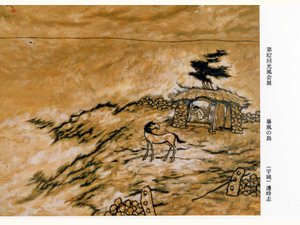
82nd Kofu-kai exhibition, Tokyo — Island of Storms.
Chair of the jury for the Jeju Art Exhibition.
Exhibited The Island of Storms at the 82th Kōfūkai Exhibition, Tokyo.
1997
Exhibited Longing for Home at the 83th Kōfūkai Exhibition, Tokyo.
Publication of a Jeju art collection and commemorative exhibition.
Published a Jeju art collection, with a commemorative exhibition.
Published Art and Fūdo I, Youlhwadang.
CORE WORK
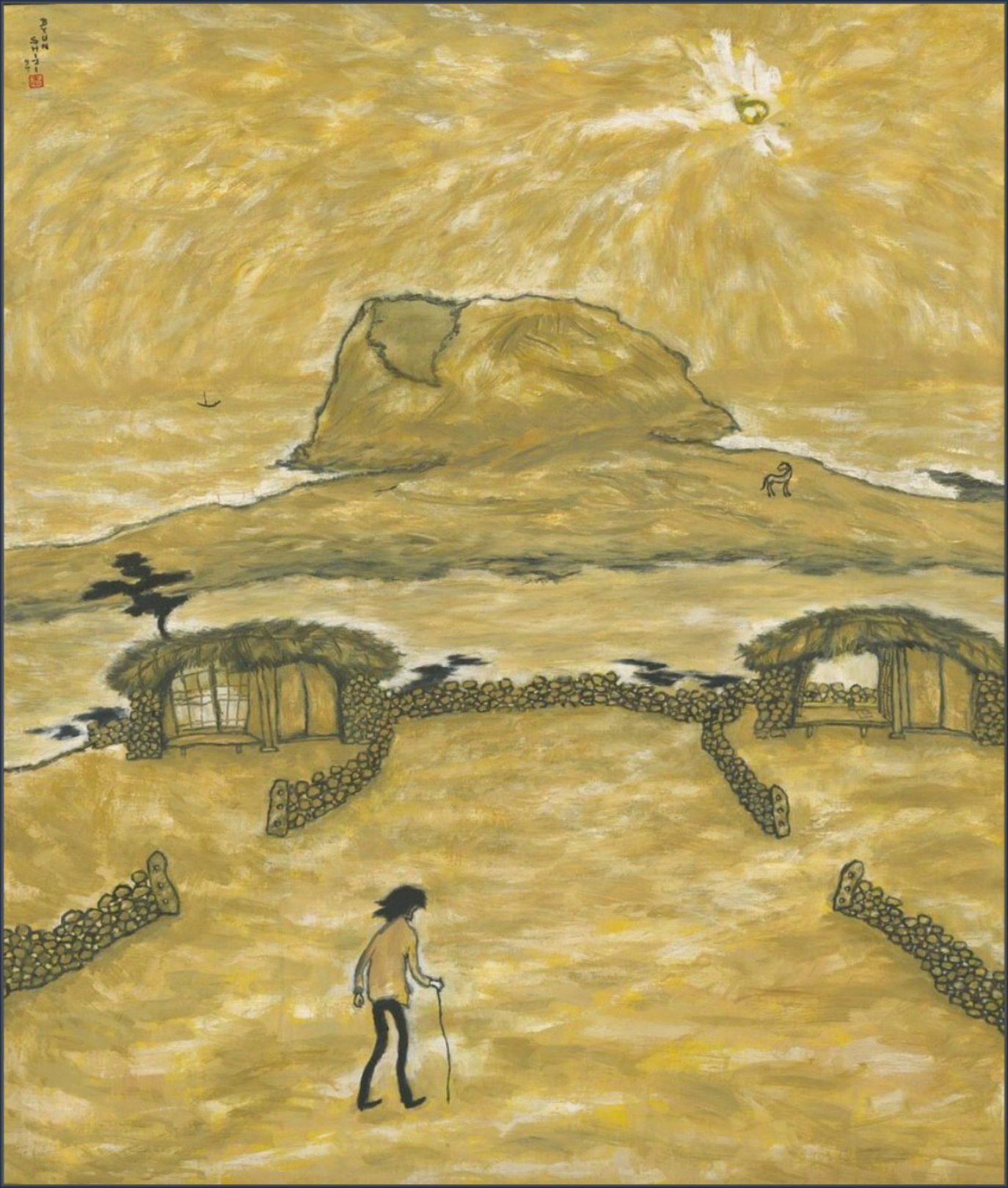
Empty House on the Left, Empty House on the Right왼쪽 빈집, 오른쪽 빈집
An old man with a walking stick moves between two empty houses and branching stone walls, beneath a rock island, horse, distant boat and sun.
1998
Special Exhibition of Government-Owned Artworks, National Museum of Modern and Contemporary Art, Gwacheon.
Special Exhibition of Government-Owned Artworks, MMCA, Gwacheon.
Modern Oil Painting Exhibition, MMCA, Gwacheon.
1999
Modern oil painting exhibition, National Museum of Modern and Contemporary Art, Gwacheon.
Special invitational, Grim Gallery, Seoul.
Chair of the jury, Jeju Art Exhibition.
Modern Painting Exhibition.
Special Invitational Exhibition, Geurim Gallery.
Korean Art 99: Human, Object, Nature.
2000
Thirty-fifth solo exhibition.
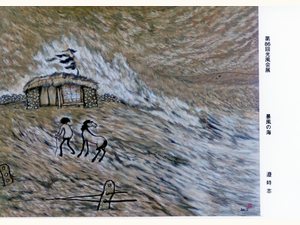
Exhibited The Sea of Storms at the 86th Kōfūkai Exhibition, Tokyo.
35th solo exhibition.
Participated in the Kōfūkai, Sinmaekhoe, and Moving Museum exhibitions.
2001
Participated in the Kōfūkai, Sinmaekhoe, and Moving Museum exhibitions.
Exhibited Longing for Home at the 87th Kōfūkai Exhibition, Tokyo.
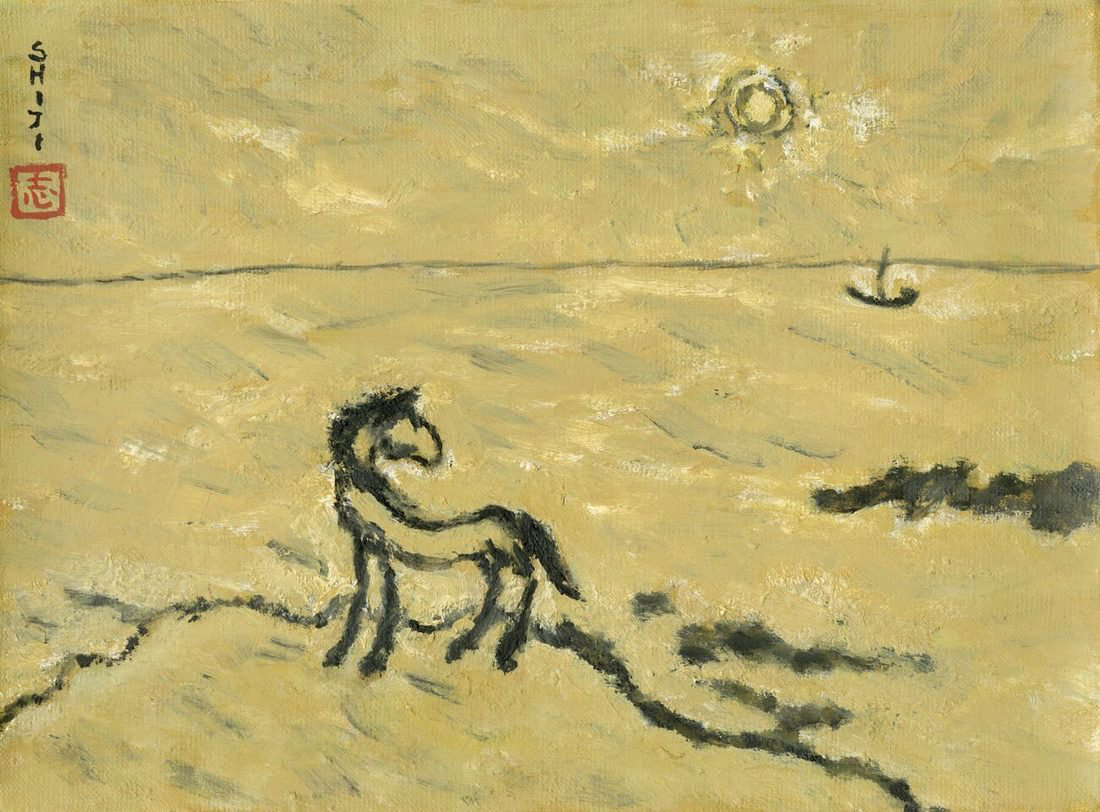
CORE WORK
The Gaze시선
A horse stands on a coastal rise facing the sea, while a round sun and small boat rest on the distant horizon.
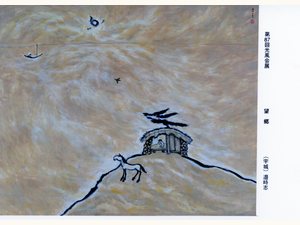
2002
Exhibited Living Alone at the 88th Kōfūkai Exhibition, Tokyo.
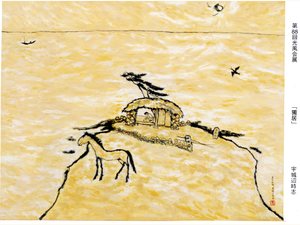
2003
Modern Painting Exhibition, National Museum of Modern and Contemporary Art, Gwacheon.
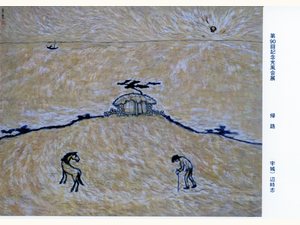
Exhibited The Road Home at the 89th Kōfūkai Exhibition, Tokyo.
Modern Painting Exhibition, MMCA, Gwacheon.
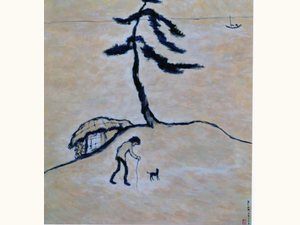
2004
Landscape of the Mind, Goyang Aram Nuri Arts Center, Goyang.
Exhibited The Road Home at the 90th Kōfūkai Exhibition, Tokyo.
Opening Commemorative Exhibition, Deogyang Eoullim Nuri Culture and Sports Center.
Landscape of the Mind, 1 September–15 October, Eoullim Art Museum, Goyang.
Published Byun Shi-Ji, Korea Development Bank Art Book.
Published Byun Shi-Ji: Landscape of the Mind, Goyang Cultural Foundation.
2005
Honorary director of Gidang Art Museum (as of March 2005, according to the supplied record).
Special Exhibition, Gidang Art Museum, Seogwipo.
Exhibited When the Crow Cries at the 91th Kōfūkai Exhibition, Tokyo.
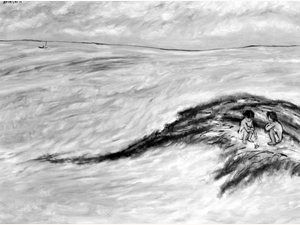
CORE WORK
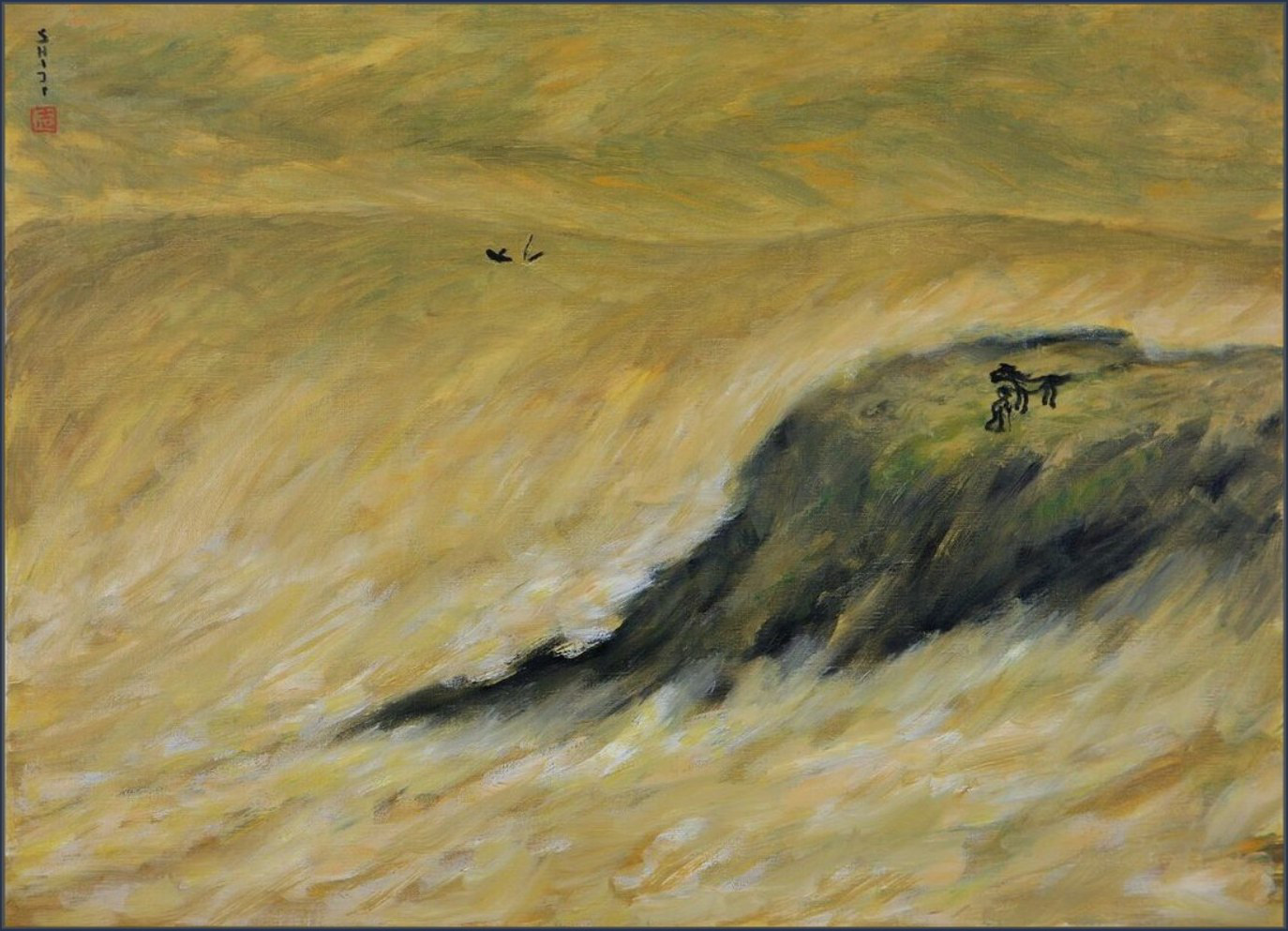
A Wavering Horizon흔들리는 수평선
Rough waves cover the cliff as a tiny old man and horse look toward a distant boat and horizon; land and sea shake within the same wind.
2006
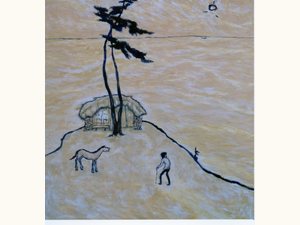
Exhibited The Island of Storms at the 92th Kōfūkai Exhibition, Tokyo.
2007
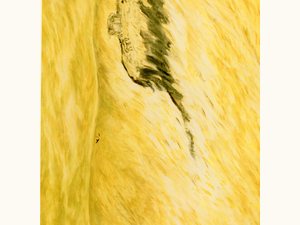
Invited to the opening exhibition of the Korea Gallery at the Smithsonian National Museum of Natural History, Washington, D.C. Two works — Wild Dance and The Road As It Is — were placed on a ten-year long-term loan (2007–2017).
Invited to the opening exhibition of the Korea Gallery at the Smithsonian; Nanmu and Going On As It Is shown on long-term loan, 2007–2017.
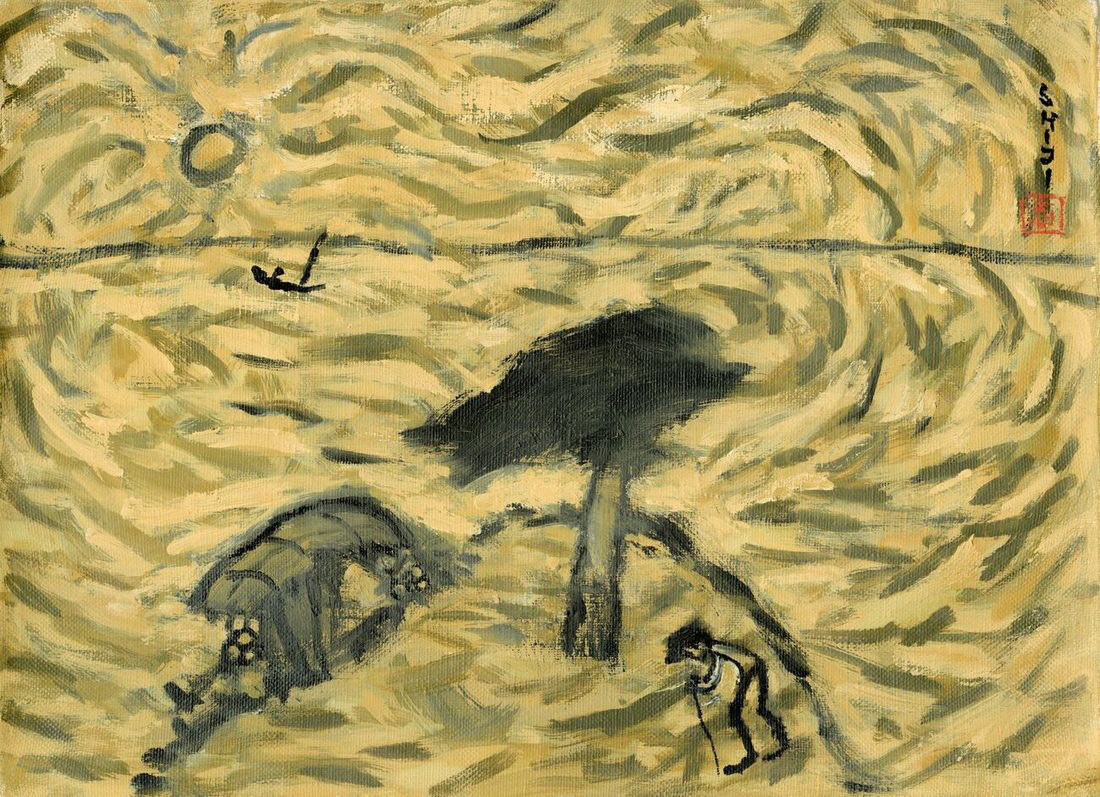
CORE WORK
Noon정오
Between bright sea and strong wind, tree and house bend as an old man takes a step with a walking stick; horse, crow and boat share the same light.
2010
Opening of the Byun Shi-Ji Art Space, Jeju.
Black Sea — Byun Shi-Ji, Lotte Gallery, Seoul · Busan · Daejeon.
Masterpiece invitational, Ulju Culture and Arts Center.
60th-anniversary invitational, Jeju Museum of Art.
2013
Died on June 8 at Korea University Anam Hospital, aged 87.
Civic funeral of the city of Seogwipo.
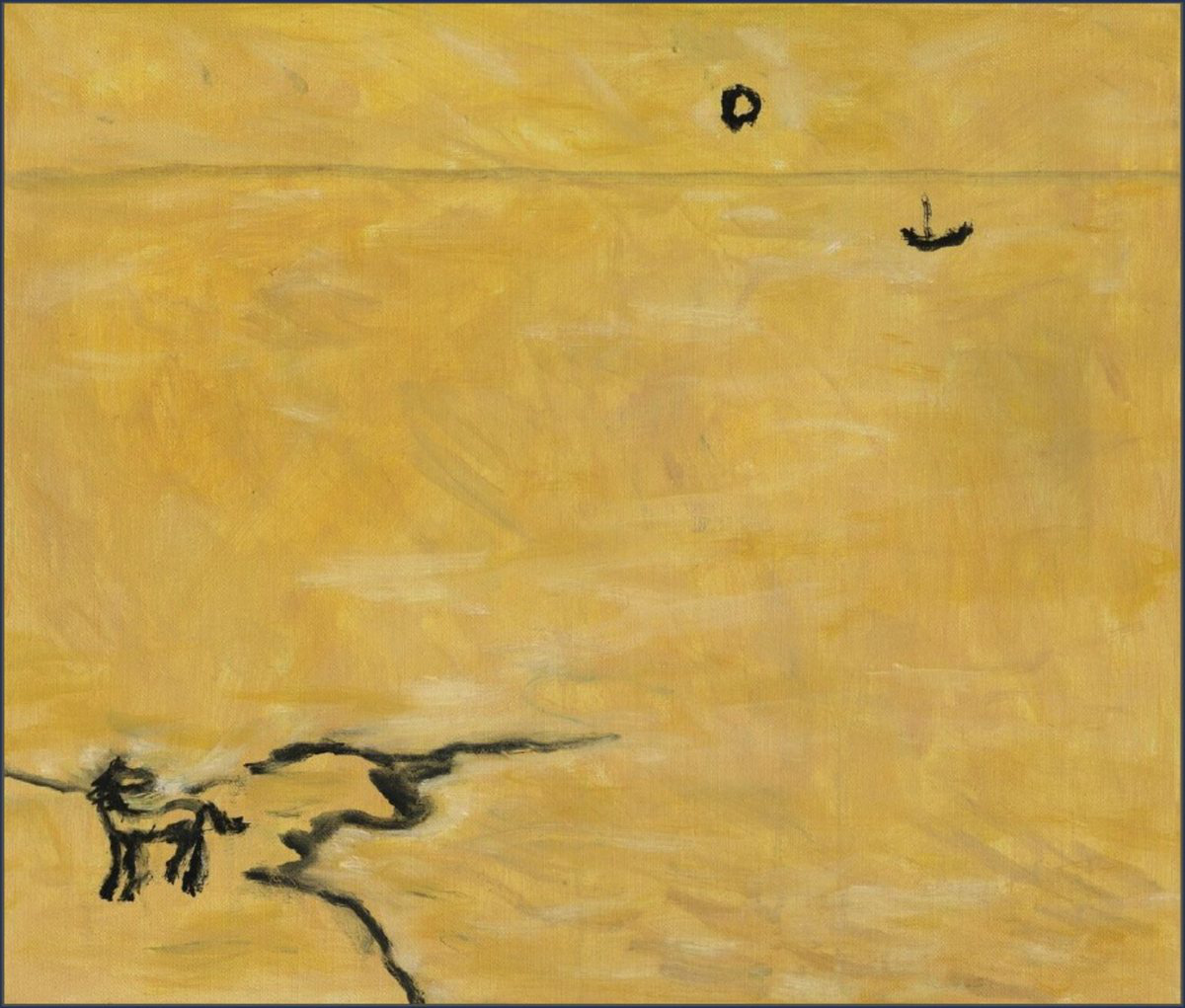
CORE WORK
The Last Work마지막 작품
Within a broad dried field of light, a horse, black sun, small boat and coastline remain in minimal lines; forms are reduced, but their relations persist.
2014
The Byun Shi-Ji Memorial Park was established.
Byun Shi-Ji Memorial Park established.
Light and Wind: In Full Spectrum, Jeju Stone Park.
Light and Wind: In Full Spectrum, Jeju Stone Park.
2016
Posthumously awarded the Order of Cultural Merit (Bogwan).
Posthumously awarded the Bogwan Order of Cultural Merit.
2020
Light and Wind of an Era, Gana Art Center, Seoul.
Into the Storm — Byun Shi-Ji, Jeju Stone Park.
2023
Byun Shi-Ji: Golden Solitude, Sea of Storms, Jeju Museum of Contemporary Art.
Endless Longing, Art Jeju Space.
Into the Storm: Byun Shi-Ji Exhibition, Jeju Stone Park.
Byun Shi-Ji: Golden Solitude, Sea of Storms, Jeju Museum of Contemporary Art.
Endless Longing, Art Jeju Space.
2026
Centenary: opening of the road Byunshiji-ro in Seohong-dong, Seogwipo.
Centenary exhibitions: Gidang Art Museum, Seogwipo; Korea University Museum, Seoul.