화면 앞에서Before the painting
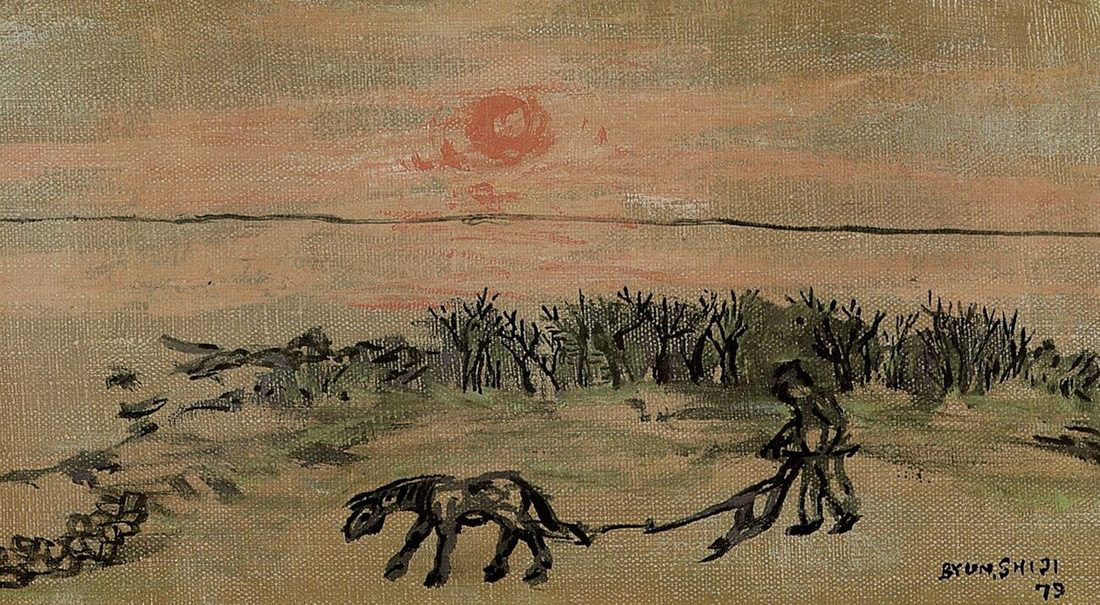
흐릿한 붉은 해 아래 사람과 말이 마른 들판을 간다. 몸의 윤곽은 흙과 풀의 색에 잠겨 땅의 움직임과 하나가 된다.Beneath a hazy red sun, human and horse work a dry field, their outlines entering the colour and movement of the earth.
사람과 동물은 땅 위에 독립된 주체로 서지 않는다. 노동을 통해 흙의 결 안으로 들어가며, 인간의 의지와 동물의 힘, 땅의 저항이 한 움직임에서 만난다.
화면의 색을 단순한 황토색으로 부르면 충분하지 않다. 햇볕에 마르고 바람에 닳은 생명이 수분을 내어준 뒤에도 남아 있는 마른 풀잎색이다.
이 색은 죽음과 지속을 함께 품는다. 화려하게 빛나지 않아도 계속 움직이는 생명, 닳고 마른 뒤에도 사라지지 않은 시간을 보여준다.
Human, animal and earth meet within the movement of labour. The colour is not merely ochre or local soil; it is dried-grass colour, life remaining after exposure and depletion.
It contains both exhaustion and persistence—the living time that continues after splendour has faded.
마른 풀잎색은 죽은 흙의 색이 아니라, 삶이 오래 견딘 뒤에도 남긴 살아 있는 시간의 색이다.Dried-grass colour is not dead earth, but living time left after endurance.
작품 이미지와 기본 식별 정보: Image and base identification: byunshiji.org / works / 042
이 글의 철학적 문장은 작품에서 출발한 비평적 해석이며 작가의 직접 발언으로 제시하지 않습니다.Philosophical statements are critical interpretations grounded in the work, not presented as direct quotations from the artist.
이 글의 철학적 문장은 작품에서 출발한 비평적 해석이며 작가의 직접 발언으로 제시하지 않습니다.Philosophical statements are critical interpretations grounded in the work, not presented as direct quotations from the artist.