화면 앞에서Before the painting
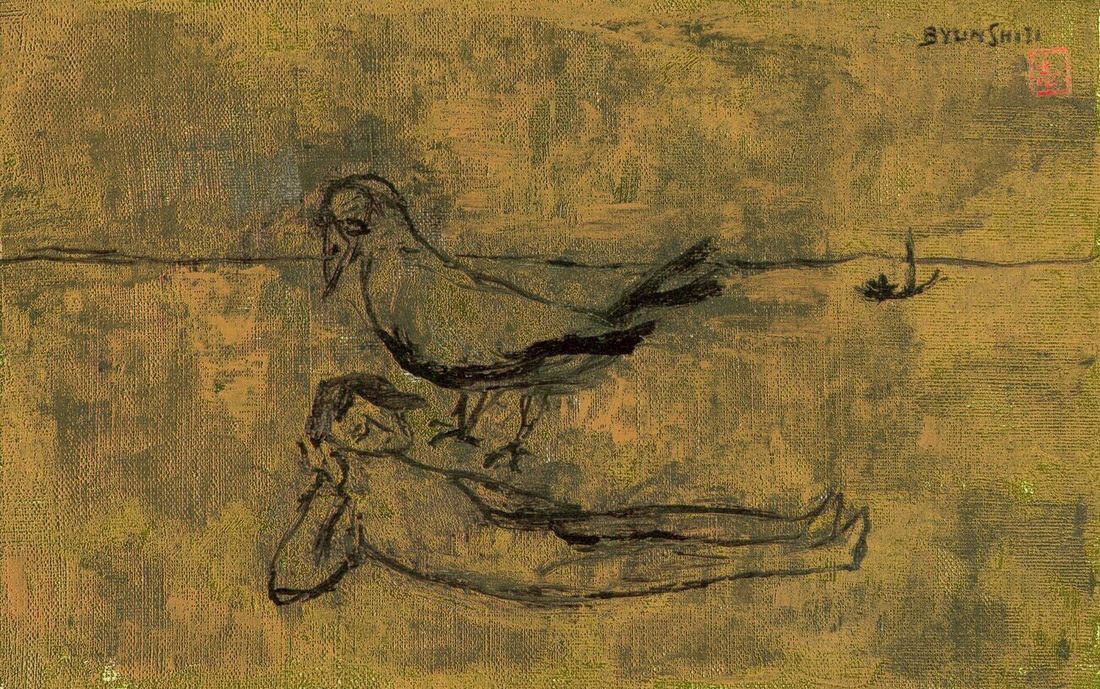
땅에 길게 누운 사람 가까이 까마귀 한 마리가 머문다. 위와 아래의 차이는 있지만 두 존재 사이에는 심판보다 조용한 응시가 놓인다.A crow remains near a person stretched upon the ground; despite their different positions, the space between them is one of silent regard rather than judgement.
땅에 누운 몸은 패배라기보다 살아오며 짊어진 무게를 잠시 내려놓은 자세로 읽을 수 있다. 그 곁의 까마귀는 사람에게 이름이나 이유를 묻지 않는다.
까마귀를 죽음이나 불길함으로만 환원하면 이 장면의 관계를 놓친다. 인간 사회의 기준 밖에서 상대를 판단하지 않고 바라보는 타자이기 때문이다.
대화는 서로를 완전히 이해한다고 선언하는 일이 아니다. 상대를 바꾸려 하지 않은 채 고독 곁에 머무는 일일 수 있다.
The reclining body releases accumulated weight. The crow asks for no name, explanation or defence.
Rather than a fixed emblem of death, it becomes an other outside human judgement. Dialogue here means remaining beside another solitude without attempting to change it.
서로를 설명하거나 판단하지 않고 고독 곁에 머무는 것, 그것이 까마귀와 나의 대화다.To remain beside another’s solitude without explanation or judgement—that is their dialogue.
작품 이미지와 기본 식별 정보: Image and base identification: byunshiji.org / works / 060
이 글의 철학적 문장은 작품에서 출발한 비평적 해석이며 작가의 직접 발언으로 제시하지 않습니다.Philosophical statements are critical interpretations grounded in the work, not presented as direct quotations from the artist.
이 글의 철학적 문장은 작품에서 출발한 비평적 해석이며 작가의 직접 발언으로 제시하지 않습니다.Philosophical statements are critical interpretations grounded in the work, not presented as direct quotations from the artist.