화면 앞에서Before the painting
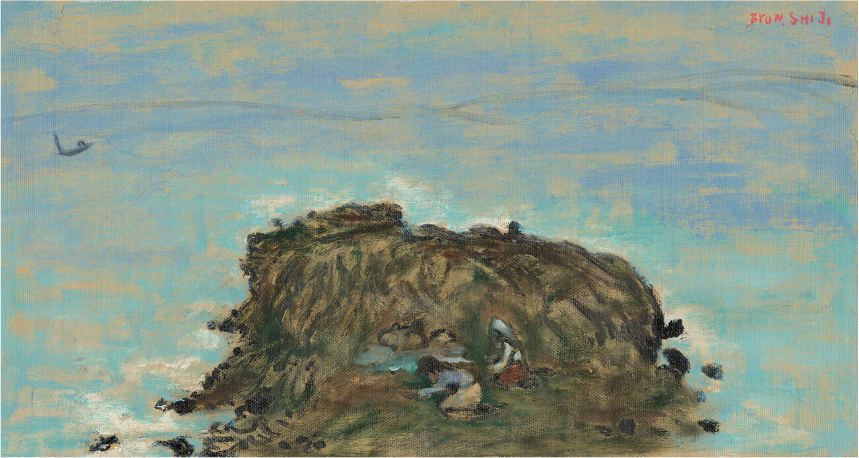
넓고 푸른 바다 한가운데 바위섬이 솟아 있고, 작은 인물이 몸을 낮춘다. 인간의 몸은 풍경에 비해 거의 점처럼 작다.A rock island rises from a vast blue sea, with a tiny figure bowing upon it; the human body is almost a point within the maritime expanse.
〈해신제〉에서 인간은 바다를 통제하는 주체가 아니라 자신보다 큰 힘 앞에 몸을 낮추는 존재다. 바다는 생계를 주지만 동시에 사람을 데려갈 수도 있는 경계다.
기도는 무력함의 장식이 아니다. 통제할 수 없는 세계를 인정하면서도 떠난 사람과의 관계를 포기하지 않는 공동체의 자세다.
제주의 삶에서 노동과 위험, 떠남과 기다림은 분리되지 않는다. 낮춘 몸은 굴복이 아니라 바다와 관계를 맺기 위한 최소한의 예의다.
The figure does not dominate the sea but lowers the body before a force greater than human will. The sea gives livelihood and may also take life.
Prayer becomes a communal posture: an acknowledgement of what cannot be controlled and a refusal to abandon those who have gone out upon the water.
몸을 낮추는 것은 굴복이 아니라, 자신보다 큰 세계와 관계를 맺는 방식이다.To lower the body is not surrender, but a way of entering relation with a world greater than oneself.
작품 이미지와 기본 식별 정보: Image and base identification: byunshiji.org / works / 027
이 글의 철학적 문장은 작품에서 출발한 비평적 해석이며 작가의 직접 발언으로 제시하지 않습니다.Philosophical statements are critical interpretations grounded in the work, not presented as direct quotations from the artist.
이 글의 철학적 문장은 작품에서 출발한 비평적 해석이며 작가의 직접 발언으로 제시하지 않습니다.Philosophical statements are critical interpretations grounded in the work, not presented as direct quotations from the artist.