화면 앞에서Before the painting
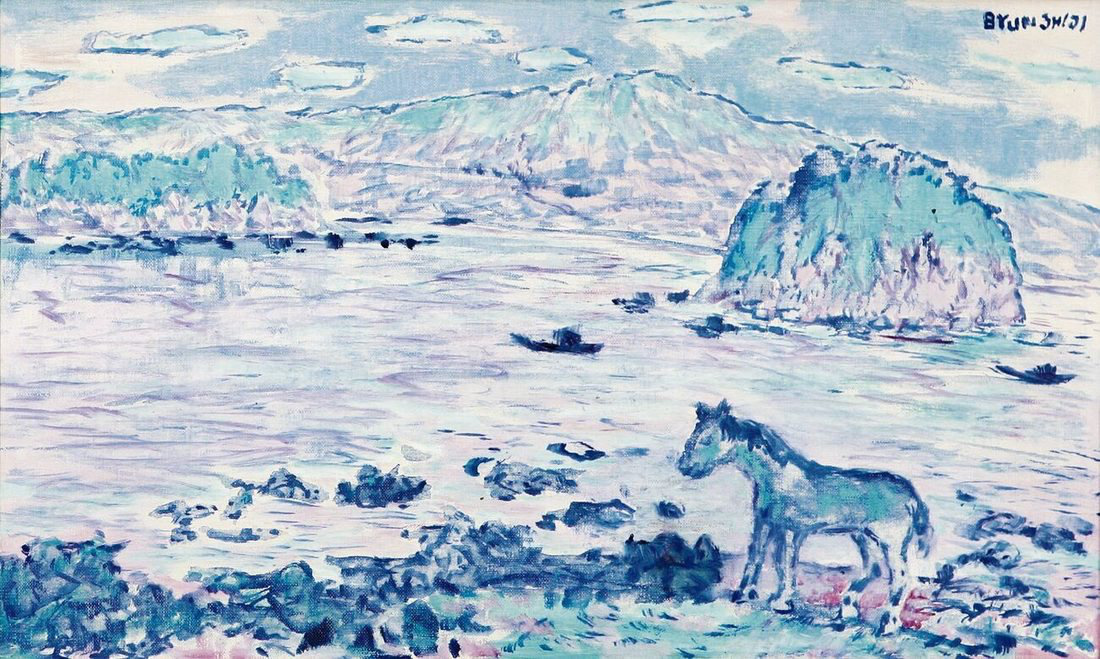
푸른 바다와 바위섬, 멀리 이어지는 산을 앞에 두고 조랑말 한 마리가 서 있다. 색은 아직 마르지 않았고, 고향은 익숙하면서도 멀다.A pony stands before a blue coast, rock island and distant mountains; the palette is still moist with colour, and home remains strangely distant.
제목은 단정하게 〈제주〉이지만, 화면은 이미 알고 있던 고향을 보여주지 않는다. 몸은 돌아왔어도 마음이 풍토 안으로 들어가는 데에는 더 긴 시간이 필요했다.
푸른 바다와 산, 바위의 색은 후기의 마른 풀잎색이 아직 화면을 지배하지 않았음을 보여준다. 이것은 미완의 결함이 아니라, 화가가 고향을 성급히 하나의 양식으로 환원하지 않고 다시 바라본 시간이다.
풍토는 출생지와 자동으로 일치하지 않는다. 빛과 바람, 기억과 상처를 다시 몸으로 겪을 때 비로소 한 장소가 회화의 언어가 된다.
The title names Jeju directly, yet the island appears not as a place already possessed but as a home that must be seen again.
The remaining blues record the interval between physical return and artistic arrival. Fūdo is not inherited automatically; it must be lived through again.
몸은 먼저 고향에 도착했지만, 마음은 그 풍토 안으로 들어가기 위해 더 긴 시간을 걸었다.The body arrived first; the mind travelled farther before entering the fūdo of home.
작품 이미지와 기본 식별 정보: Image and base identification: byunshiji.org / works / 096
이 글의 철학적 문장은 작품에서 출발한 비평적 해석이며 작가의 직접 발언으로 제시하지 않습니다.Philosophical statements are critical interpretations grounded in the work, not presented as direct quotations from the artist.
이 글의 철학적 문장은 작품에서 출발한 비평적 해석이며 작가의 직접 발언으로 제시하지 않습니다.Philosophical statements are critical interpretations grounded in the work, not presented as direct quotations from the artist.