화면 앞에서Before the painting
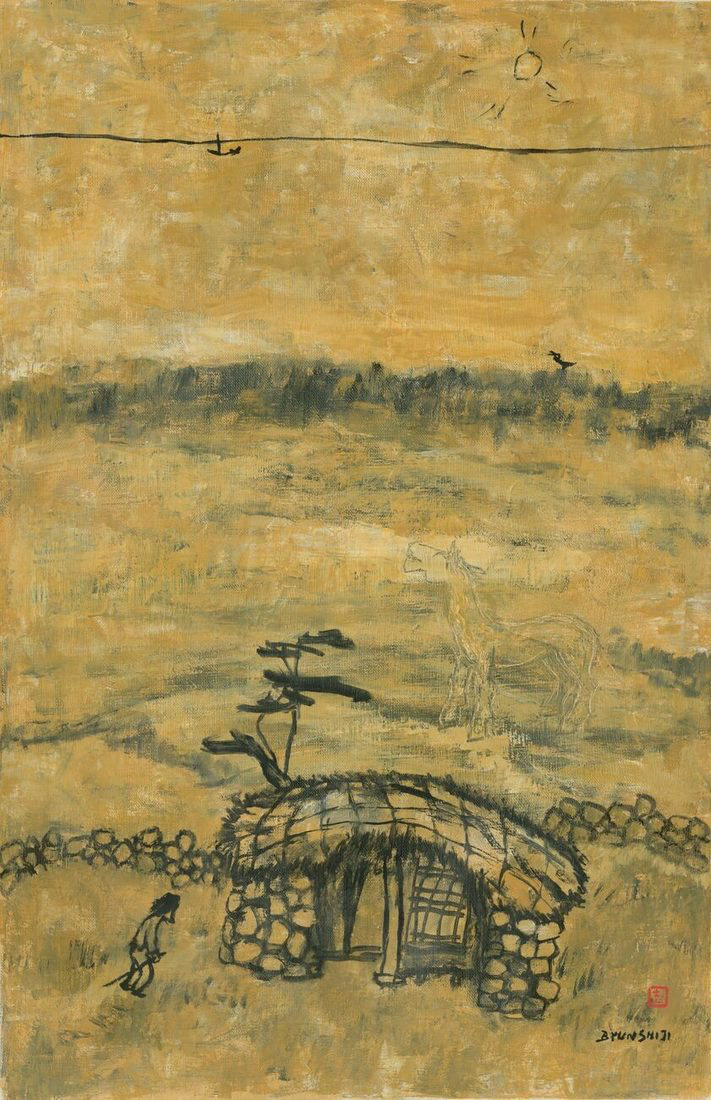
세로로 긴 화면에 초가와 바다, 작은 인물과 희미한 말이 겹쳐 있다. 말의 형상은 주변 빛 속으로 스며들며 존재와 부재 사이에 머문다.Within a tall field of house, sea and small figure, a faint horse enters the surrounding light and hovers between presence and absence.
늘 곁에 있던 존재는 너무 가까워 잘 보이지 않을 수 있다. 사라진 뒤에야 일상의 작은 몸짓들이 기억으로 돌아온다.
화가는 말을 짙은 윤곽으로 고정하지 않는다. 기억 속 존재는 눈앞의 사물처럼 단단하지 않지만, 그리지 않으면 존재한 적조차 없었던 듯 사라질 수 있다.
그래서 희미하게 그린다. 이는 묘사의 실패가 아니라 기억에 가장 가까운 농도다. 가장 사랑한 것이 흐릿하게 남는 것은 지워졌기 때문이 아니라 너무 깊이 안으로 들어왔기 때문이다.
What was always near may become almost invisible. After disappearance, ordinary gestures return as memory.
The horse is painted faintly—not through failure, but at the density most faithful to remembrance. A beloved existence may lose its outline because it has entered too deeply within the self.
가장 사랑한 것이 가장 흐릿하게 남는 것은 지워졌기 때문이 아니라, 너무 깊이 내 안으로 들어왔기 때문이다.What we love most may remain faintly because it has entered too deeply within us.
작품 이미지와 기본 식별 정보: Image and base identification: byunshiji.org / works / 091
이 글의 철학적 문장은 작품에서 출발한 비평적 해석이며 작가의 직접 발언으로 제시하지 않습니다.Philosophical statements are critical interpretations grounded in the work, not presented as direct quotations from the artist.
이 글의 철학적 문장은 작품에서 출발한 비평적 해석이며 작가의 직접 발언으로 제시하지 않습니다.Philosophical statements are critical interpretations grounded in the work, not presented as direct quotations from the artist.