화면 앞에서Before the painting
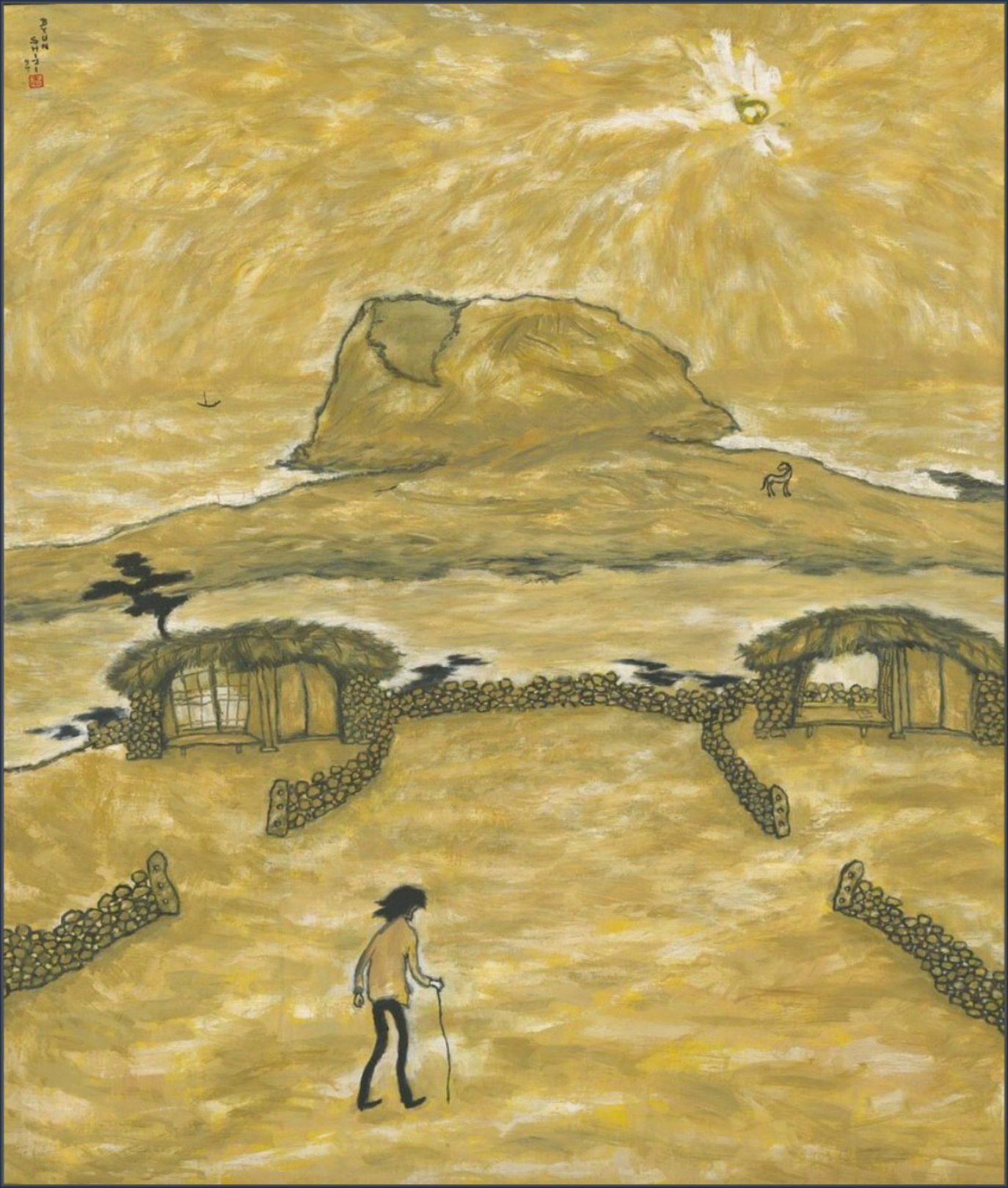
두 빈집과 갈라지는 돌담 사이로 지팡이를 짚은 노인이 걸어간다. 위쪽에는 바위섬과 말, 먼 배와 해가 서로 다른 높이의 세계를 이룬다.An old man with a walking stick moves between two empty houses and branching stone walls, beneath a rock island, horse, distant boat and sun.
두 집 가운데 어느 곳이 옳은지 화면은 알려주지 않는다. 한 집은 지나간 시간을 품고, 다른 집은 아직 살아보지 않은 가능성을 비워둔다.
노인은 이미 마련된 길을 따르는 것이 아니라 두 가능성 사이로 몸을 옮긴다. 그의 선택이 단순한 빈틈을 길로 바꾸고, 머무름이 빈 건물을 거처로 바꾼다.
삶에는 완전히 안전한 집이 미리 준비되어 있지 않을 수 있다. 불완전한 가능성 가운데 하나를 선택하고 자기 시간으로 채우는 일이 거주다.
The painting offers no correct house. One contains lived time; the other keeps open a future not yet inhabited.
The old man’s movement turns an interval into a path. A house becomes a dwelling only when choice and lived time enter it.
길은 처음부터 놓여 있지 않다. 한 사람이 빈자리로 몸을 옮기는 순간 길이 생긴다.The road does not exist from the beginning; it appears when a person moves into the empty space.
작품 이미지와 기본 식별 정보: Image and base identification: byunshiji.org / works / 061
이 글의 철학적 문장은 작품에서 출발한 비평적 해석이며 작가의 직접 발언으로 제시하지 않습니다.Philosophical statements are critical interpretations grounded in the work, not presented as direct quotations from the artist.
이 글의 철학적 문장은 작품에서 출발한 비평적 해석이며 작가의 직접 발언으로 제시하지 않습니다.Philosophical statements are critical interpretations grounded in the work, not presented as direct quotations from the artist.