The Byun Shi-Ji Atlas WORKS · FŪDO · LANGUAGES
KO
Byun Shi-Ji · Core 30 Online Exhibition

바람이
형식이 되기까지
When Wind
Became Form

서른 점의 그림이 하나의 생애와 하나의 회화적 논리로 움직이는 온라인 전시관.An online exhibition in which thirty paintings move as one life and one pictorial logic.

그림은 풍경을 보여주지 않는다.
풍경 속에서 살아가는 자세를 보여준다.
The paintings do not merely show landscape.
They show how existence lives within it.

이 전시는 변시지의 핵심 30점을 연대순 목록으로만 제시하지 않습니다. 일본과 서울에서 익힌 재현, 쉰의 귀향, 제주 풍토의 형성, 노동하는 몸, 빈 배와 까마귀, 검은 태양과 흔들리는 수평선, 후기의 덜어냄이 어떻게 하나의 회화적 언어가 되는지를 여섯 개의 경로로 보여줍니다.This exhibition does not present the Core 30 as a chronology alone. Across six routes it follows how representation learned in Japan and Seoul, return at fifty, the formation of Jeju fūdo, labouring bodies, empty boats and crows, the black sun, wavering horizons and late reduction became a singular pictorial language.

Chapter 01

타향에서 자신을 그리다Painting the Self in Exile

재현의 기술에서 풍토의 문턱까지From disciplined representation to the threshold of fūdo
그는 풍경을 잘 그리는 화가에서, 풍경이 인간을 어떻게 바꾸는지를 그리는 화가가 되었다.He moved from painting landscapes with mastery to painting how landscape transforms human existence.

일본에서 익힌 정확한 재현과 서울 시기의 풍부한 색채는 제주 회화와 단절된 과거가 아니다. 변시지는 이미 많은 것을 그릴 수 있었기에, 귀향 이후 무엇을 덜어낼 것인지 선택할 수 있었다. 이 장은 젊은 자화상에서 시작해 색채가 옅어지고, 말의 두 자세가 귀향의 문턱에 서는 순간까지를 따라간다.The disciplined representation learned in Japan and the chromatic abundance of the Seoul period were not discarded pasts. Because Byun could already paint so much, he could later choose what to remove. This chapter moves from the young self-portrait through the thinning of colour to the two postures of the pony at the threshold of return.

이 전시 경로만 보기Open this chapter
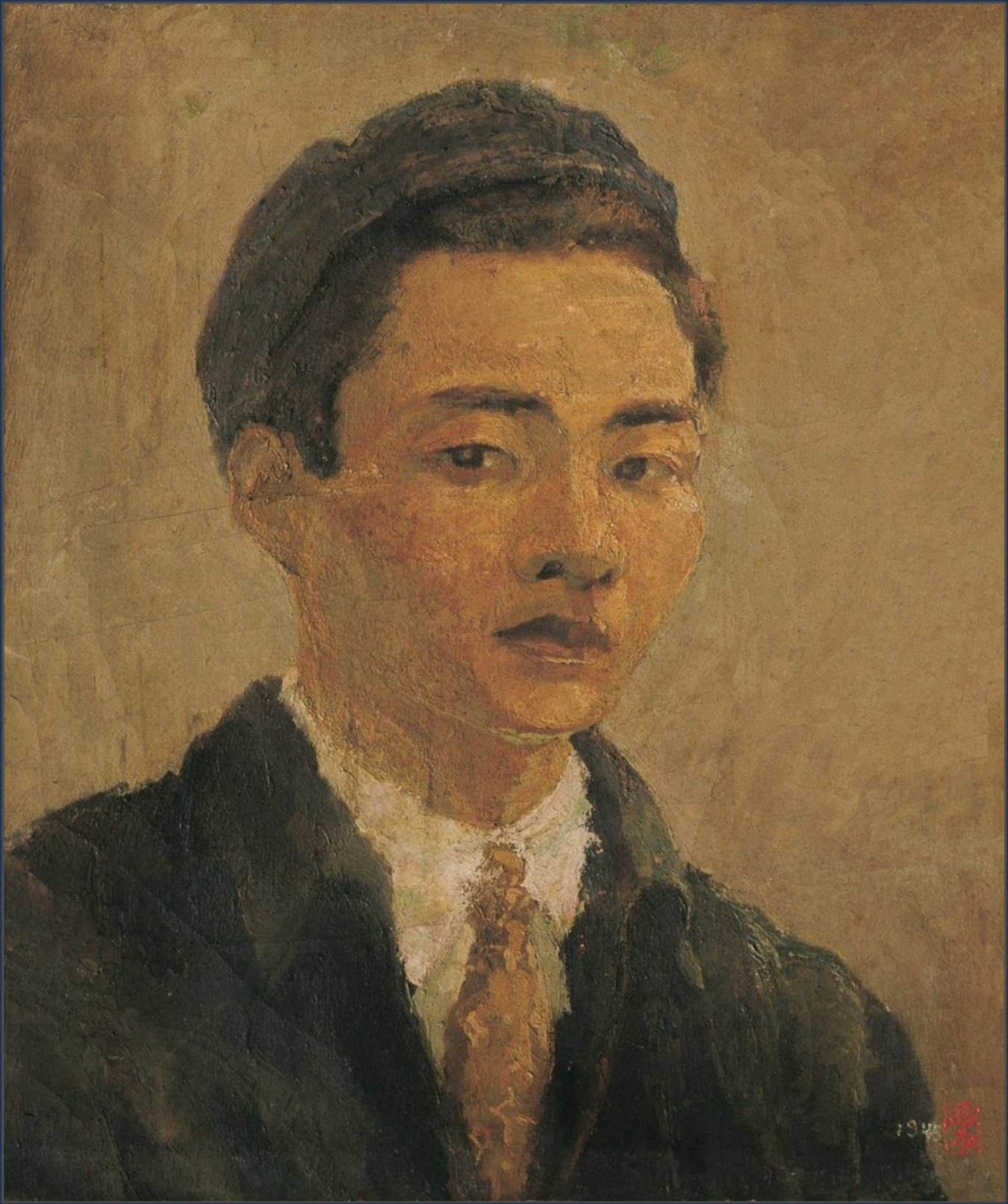
Self-Portrait 1944
FŪDO 038 · 1944

자화상Self-Portrait

Self-Portrait
일본 시절Japan period자기응시Self-scrutiny

어두운 바탕 앞에 선 젊은 화가가 정면 가까이 얼굴을 내밀고 화면 밖을 응시한다. 검은 재킷과 흰 셔츠, 단정한 머리와 굳은 입술이 아직 도착하지 않은 미래의 긴장을 품는다.A young painter emerges against a muted ground, dressed in a dark jacket and white shirt, his steady face carrying the tension of a future not yet reached.

작품 크게 보기View work
자신을 응시한 눈은 곧 닫힌 정원과 정교한 세계를 바라본다.The gaze turned upon the self soon entered the enclosed garden and the disciplined world.
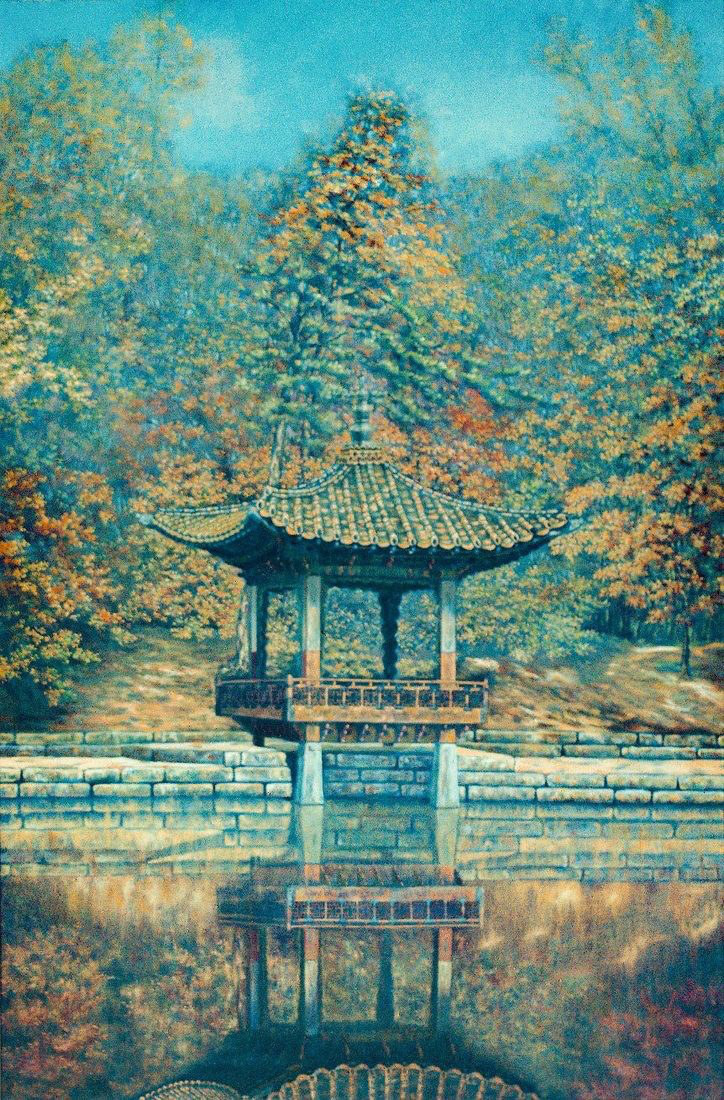
Autumn at Aeryeonjeong 1965
FŪDO 036 · 1965

가을 애련정Autumn at Aeryeonjeong

Autumn at Aeryeonjeong
서울 시절Seoul period화려함의 기억Memory of abundance

창덕궁 후원의 정자와 연못이 푸른빛과 황금빛의 나뭇잎 속에 잠겨 있다. 정교한 건축과 물의 반영, 촘촘한 색채가 화면을 가득 채운다.A pavilion and pond in Changdeokgung’s rear garden are immersed in blue and golden foliage, their architecture and reflections densely filling the canvas.

작품 크게 보기View work
재현의 완성은 끝이 아니라, 덜어냄을 가능하게 한 출발점이었다.Mastery of representation was not an end, but the condition that made reduction possible.
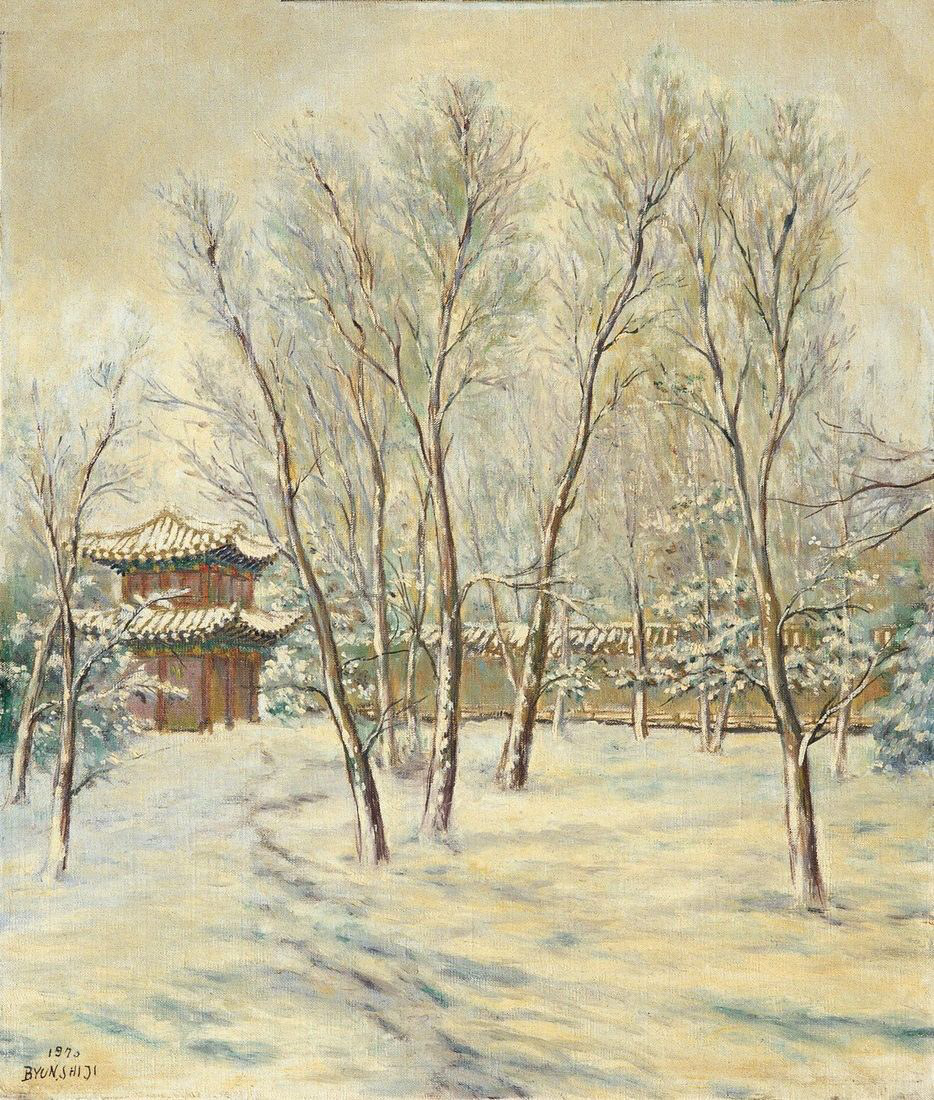
Changdeokgung Palace 1970
FŪDO 037 · 1970

창덕궁Changdeokgung Palace

Changdeokgung Palace
서울 시절Seoul period재현에서 존재로From representation to being

눈 덮인 궁궐 정원에 곧은 나무와 정자, 기와지붕이 안정된 원근 속에 놓여 있다. 눈 위의 푸른 그림자와 가지의 구조가 세밀하게 포착된다.Upright trees, a pavilion and tiled roofs occupy a snow-covered palace garden, rendered with controlled perspective and delicate blue shadows.

작품 크게 보기View work
색은 사라지지 않았다. 서로의 목소리를 낮추며 한 빛 안으로 들어갔다.Colour did not vanish; it lowered its voice and entered a shared light.
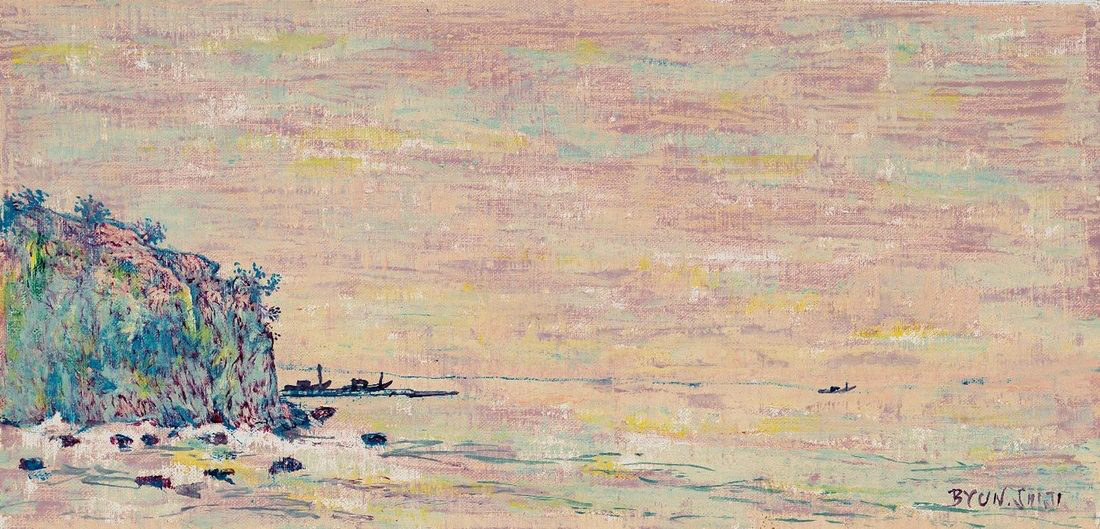
Sunset 1975
FŪDO 071 · 1975

일몰Sunset

Sunset
제주 초기Early Jeju색의 전환Transformation of colour

분홍빛과 푸른빛, 누런빛이 바다와 하늘 사이에서 옅게 번진다. 저녁의 수평선은 선명한 경계라기보다 여러 시간이 스며드는 얇은 숨결처럼 남는다.Pale pink, blue and yellow dissolve across sea and sky, turning the horizon into a breath in which several moments coexist.

작품 크게 보기View work
고개를 든 말과 숙인 말 사이에서 귀향의 두 자세가 태어난다.Between the raised head and the lowered head, two postures of return emerge.
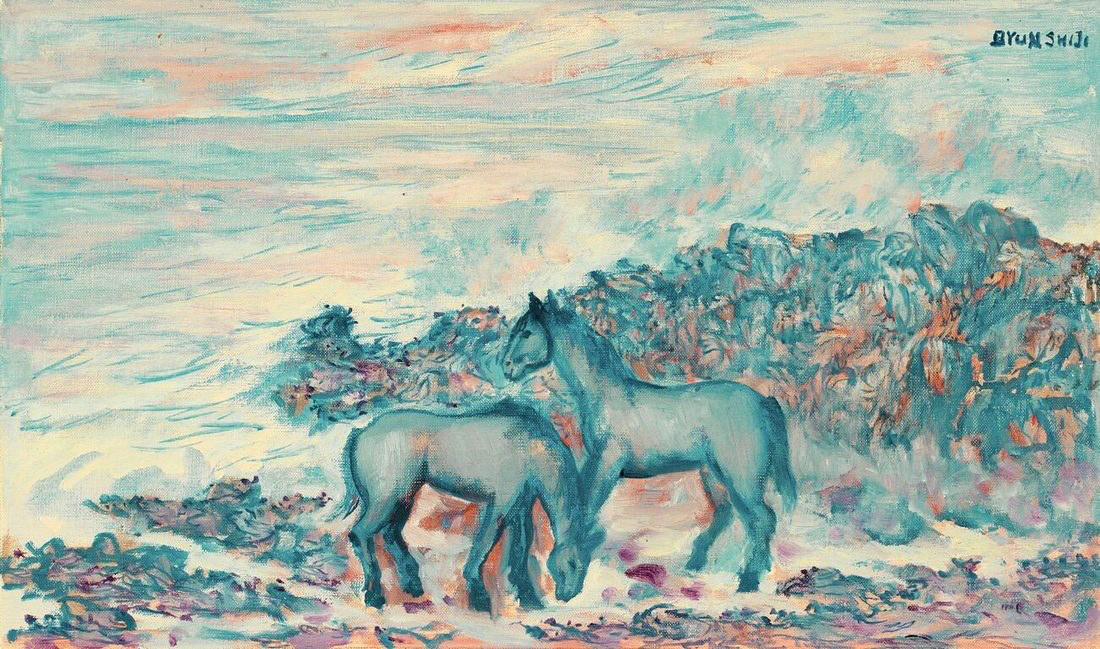
The Pony 1975
FŪDO 053 · 1975

조랑말The Pony

The Pony
제주 초기Early Jeju귀향의 두 자세Two postures of return

두 조랑말이 푸른빛과 살구빛의 들판에서 몸을 맞댄다. 한 말은 고개를 들어 먼 곳을 보고, 다른 말은 머리를 낮추어 발밑을 살핀다.Two Jeju ponies stand close in blue and apricot light: one raises its head toward the distance, while the other lowers its head toward the ground.

작품 크게 보기View work
Chapter 02

고향은 돌아가는 곳이 아니라 다시 배우는 곳이다Home Must Be Learned Again

푸른 제주에서 풍토의 내부로From blue Jeju to the interior of fūdo
몸은 먼저 고향에 도착했지만, 그림은 더 오랜 시간이 지나서야 제주 안으로 들어갔다.The body reached home first; the paintings needed longer to enter Jeju.

쉰의 귀향은 완성된 정체성으로의 복귀가 아니었다. 제주를 다시 본다는 것은 바다와 섬, 의례와 가족의 노동을 낯선 조건으로 받아들이는 일이었다. 이 장에서 풍토는 고향의 배경이 아니라 인간보다 먼저 존재하고 관람자까지 감싸는 세계가 된다.Return at fifty was not a recovery of a completed identity. To see Jeju again meant receiving sea, islands, ritual and family labour as unfamiliar conditions. Here fūdo becomes not the background of home, but a world that precedes the human and draws the viewer inside.

이 전시 경로만 보기Open this chapter
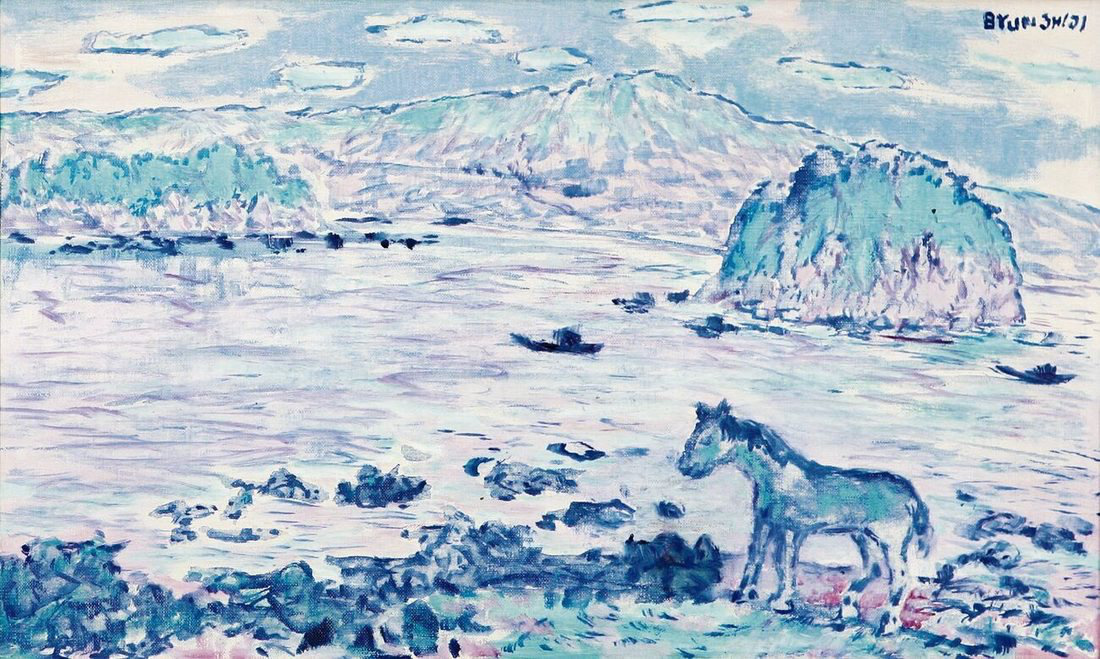
Jeju 1976
FŪDO 096 · 1976

제주Jeju

Jeju
제주 초기Early Jeju낯선 고향An unfamiliar home

푸른 바다와 바위섬, 멀리 이어지는 산을 앞에 두고 조랑말 한 마리가 서 있다. 색은 아직 마르지 않았고, 고향은 익숙하면서도 멀다.A pony stands before a blue coast, rock island and distant mountains; the palette is still moist with colour, and home remains strangely distant.

작품 크게 보기View work
푸른 고향 앞에 선 말은 아직 그 풍토의 언어를 알지 못한다.The pony before blue Jeju has not yet learned the language of its fūdo.
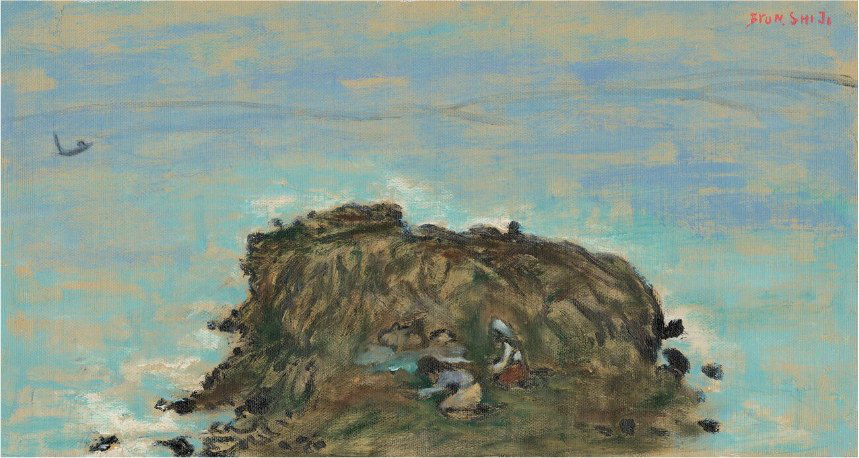
Rite to the Sea God 1976
FŪDO 027 · 1976

해신제Rite to the Sea God

Rite to the Sea God
제주 초기Early Jeju공동체의 기원Communal prayer

넓고 푸른 바다 한가운데 바위섬이 솟아 있고, 작은 인물이 몸을 낮춘다. 인간의 몸은 풍경에 비해 거의 점처럼 작다.A rock island rises from a vast blue sea, with a tiny figure bowing upon it; the human body is almost a point within the maritime expanse.

작품 크게 보기View work
몸을 낮춘 기도는 인간보다 큰 바다와 관계 맺는 첫 자세다.The bowed prayer is the first posture of relation before a sea larger than the human.
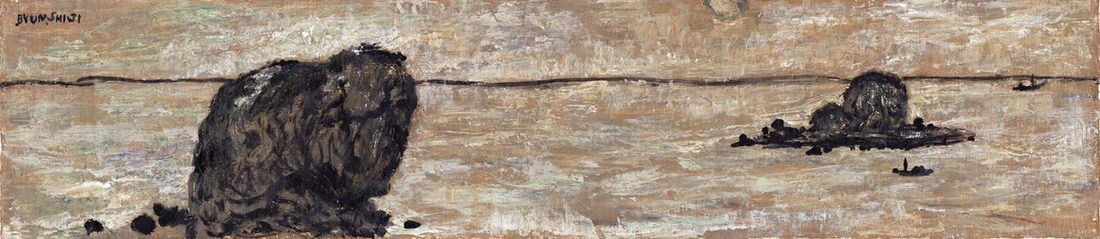
Brother Islands 1977
FŪDO 004 · 1977

형제섬Brother Islands

Brother Islands
제주 초기Early Jeju풍토는 조건이다Fūdo as condition

가로로 긴 바랜 화면 위에 두 바위섬이 서로 다른 거리로 놓인다. 하나는 크고 가깝고, 다른 하나는 작고 멀지만 같은 수평선에 속한다.Two rock islands occupy different distances across a long, faded field—one near and large, the other far and small, yet held by the same horizon.

작품 크게 보기View work
두 섬은 닮았지만 하나가 아니며, 거리 속에서 같은 세계에 속한다.The islands resemble one another without becoming one; distance holds them in a shared world.
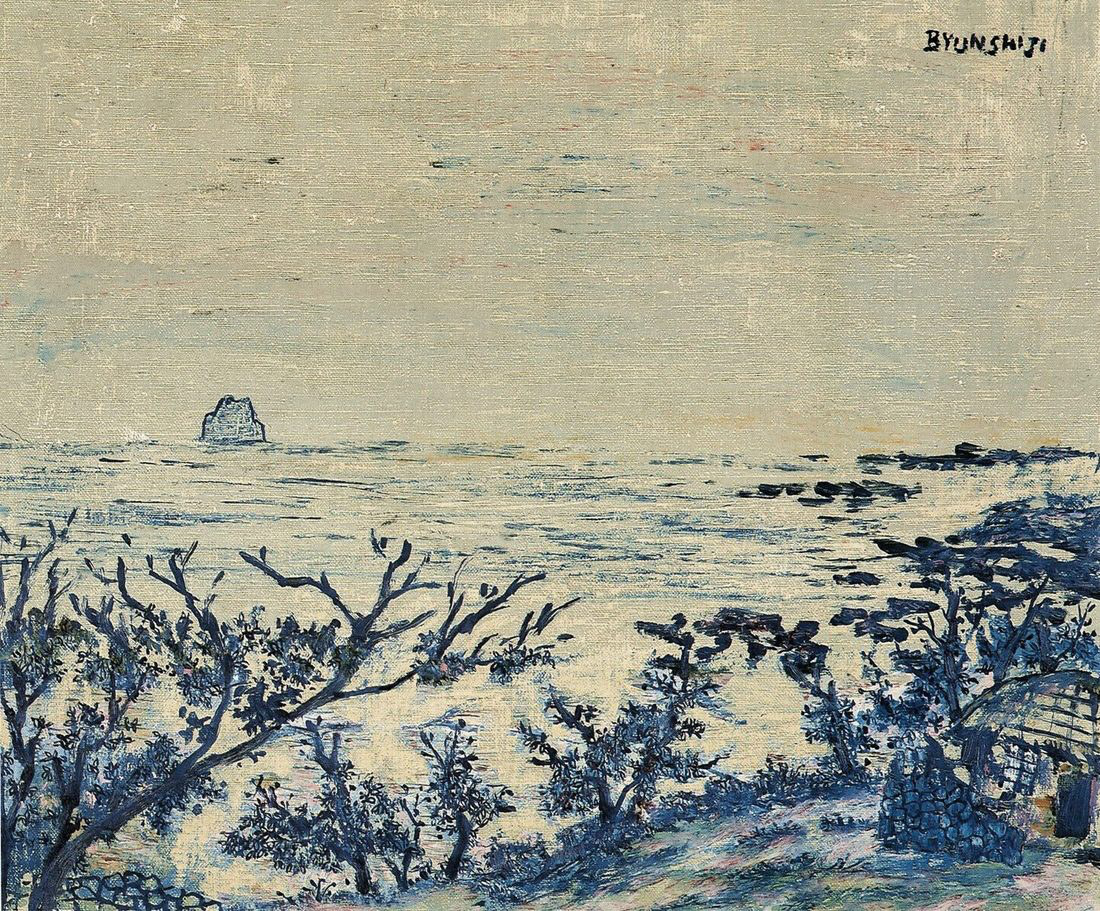
Ieodo 1978
FŪDO 001 · 1978

이어도Ieodo

Ieodo
제주 초기Early Jeju풍토 안으로 들어가기Entering fūdo

옅은 바다와 하늘 앞에 검은 가지와 낮은 식생이 얽혀 있고, 먼 바다에는 바위섬이 작은 점으로 남는다. 관람자의 시선은 거친 전경을 지나야만 수평선에 닿는다.Dark branches and low vegetation tangle before a pale sea, while a distant rock island remains a small point beyond the rough foreground.

작품 크게 보기View work
이어도는 멀리 있지만 관람자는 이미 가지와 돌담 사이의 바람 안에 들어와 있다.Ieodo remains distant, yet the viewer has already entered the wind among branches and stone walls.
Mother and Fish 1979
FŪDO 043 · 1979

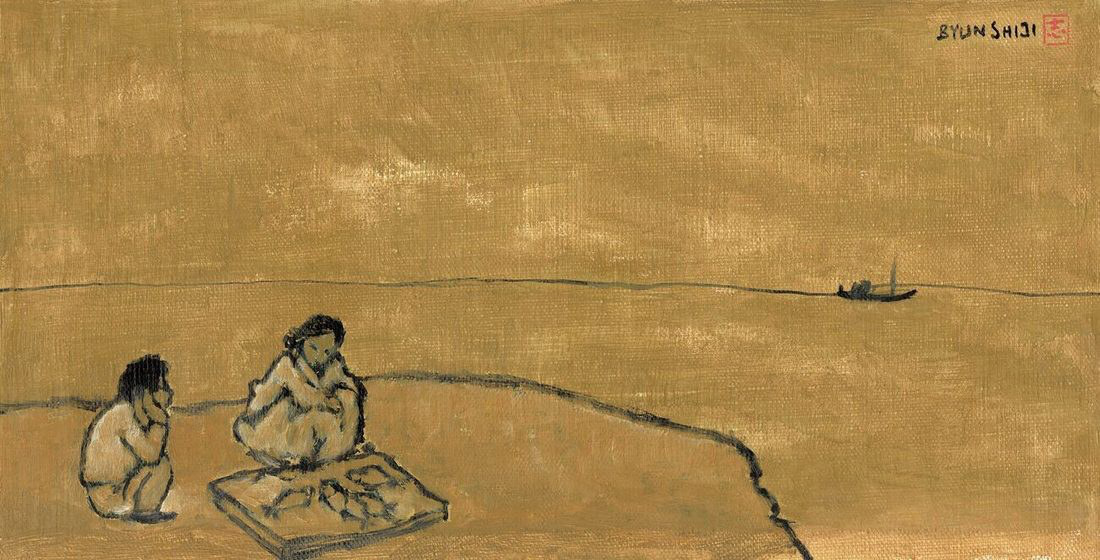
어머니와 생선Mother and Fish

Mother and Fish
제주 초기Early Jeju수평선으로 이어진 가족A family joined by the horizon

생선이 놓인 자리 곁에 어머니와 아이가 앉아 있다. 아이의 시선은 먼 바다의 작은 배를 향하고, 가족의 노동은 뭍과 수평선 사이에 나뉘어 있다.A mother and child sit beside fish laid out for sale; the child looks toward a small boat, while family labour is divided between shore and horizon.

작품 크게 보기View work
Chapter 03

노동하는 몸은 풍토의 기록이다The Labouring Body Records Fūdo

해녀, 밭, 까마귀, 빈 배, 마른 풀잎색Diver, field, crow, empty boat and dried-grass colour
제주를 그린다는 것은 섬의 모양을 그리는 일이 아니라, 그곳에서 오래 견딘 몸의 자세를 그리는 일이었다.To paint Jeju was not to copy the island’s shape, but to paint the posture of bodies that had endured there.

1979년 전후의 화면에서 노동은 영웅적 장면으로 과장되지 않는다. 해녀의 기울어진 몸, 사람과 말이 땅에 잠기는 밭갈이, 판단하지 않고 곁에 머무는 까마귀, 사람 없이 돌아온 빈 배가 삶의 무게를 드러낸다. 그 시간은 마침내 마른 풀잎색이라는 회화적 언어가 된다.Around 1979, labour is never enlarged into heroic spectacle. The diver’s inclined body, human and animal entering the field, the crow that remains without judgement, and the empty returning boat reveal the weight of life. This duration becomes the pictorial language of dried-grass colour.

이 전시 경로만 보기Open this chapter
Haenyeo 1979
FŪDO 040 · 1979

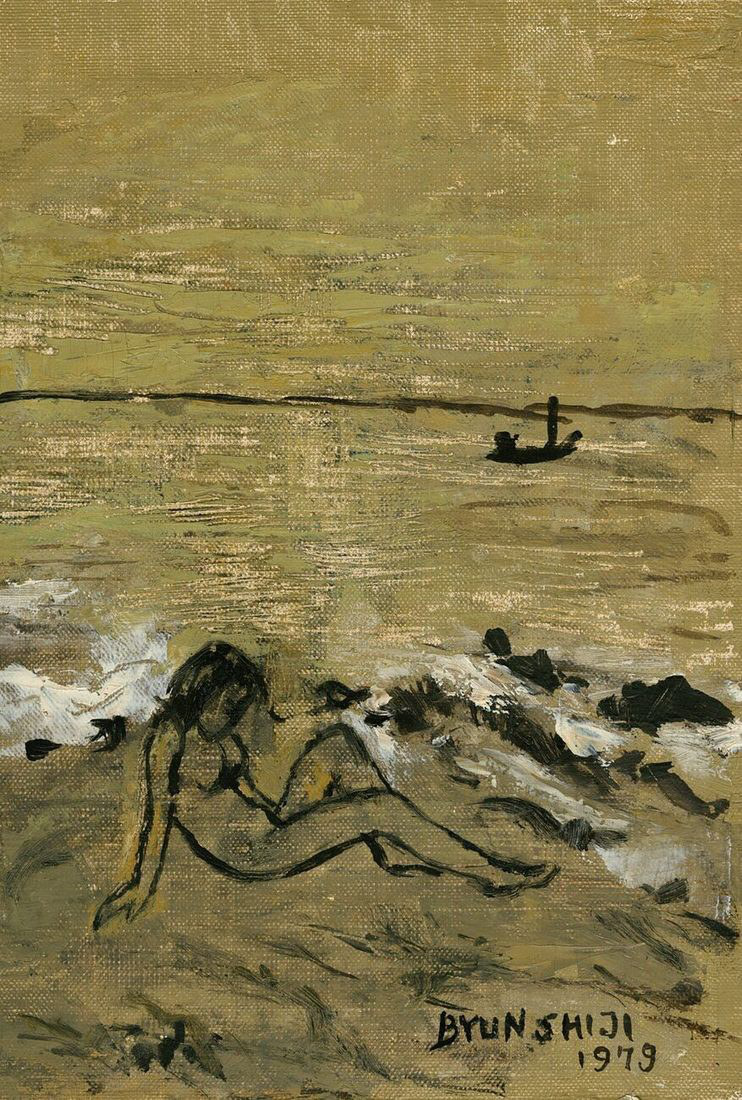
해녀Haenyeo

Haenyeo
제주 초기Early Jeju바랜 끝의 깊이Depth after weathering

흰 물결 가까이 한 해녀가 몸을 비스듬히 눕힌다. 살갗과 모래, 바다가 바랜 한 빛 속에서 서로의 경계를 내어준다.Near breaking white waves, a woman diver reclines at an angle; body, sand and sea yield their boundaries within one weathered light.

작품 크게 보기View work
바다에서 돌아온 몸은 모래와 물결의 바랜 빛 안에 잠시 무게를 내려놓는다.The body returned from the sea briefly yields its weight within the weathered light of sand and wave.
Plowing 1979
FŪDO 042 · 1979

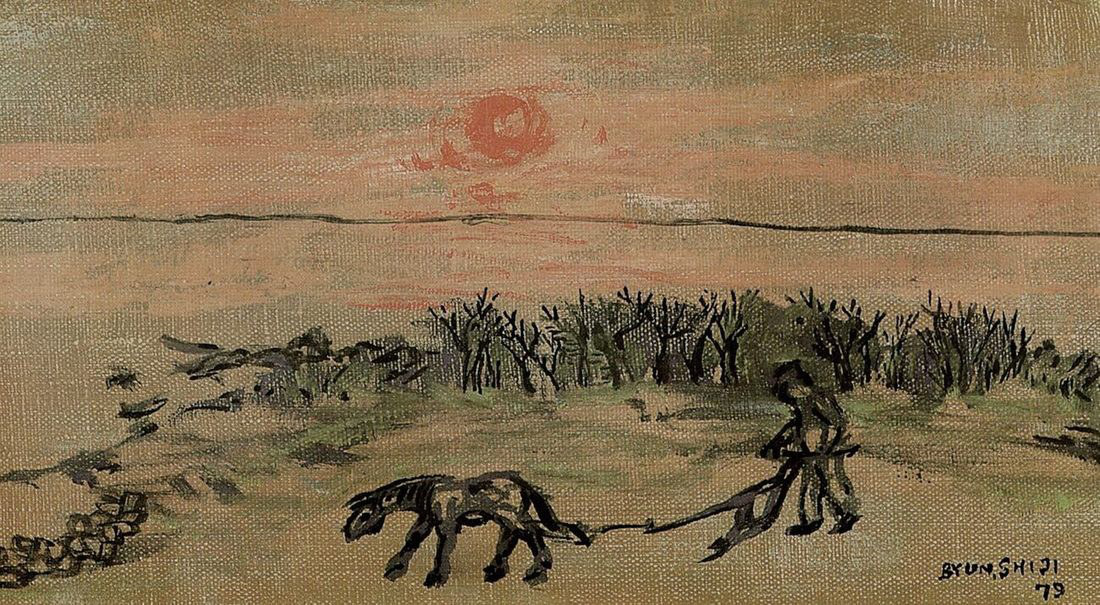
밭갈이Plowing

Plowing
제주 초기Early Jeju마른 풀잎색Dried-grass colour

흐릿한 붉은 해 아래 사람과 말이 마른 들판을 간다. 몸의 윤곽은 흙과 풀의 색에 잠겨 땅의 움직임과 하나가 된다.Beneath a hazy red sun, human and horse work a dry field, their outlines entering the colour and movement of the earth.

작품 크게 보기View work
사람과 말은 땅을 소유하지 않고, 노동을 통해 그 결 안으로 들어간다.Human and animal do not possess the earth; labour draws them into its grain.
The Crow and I 1979
FŪDO 060 · 1979

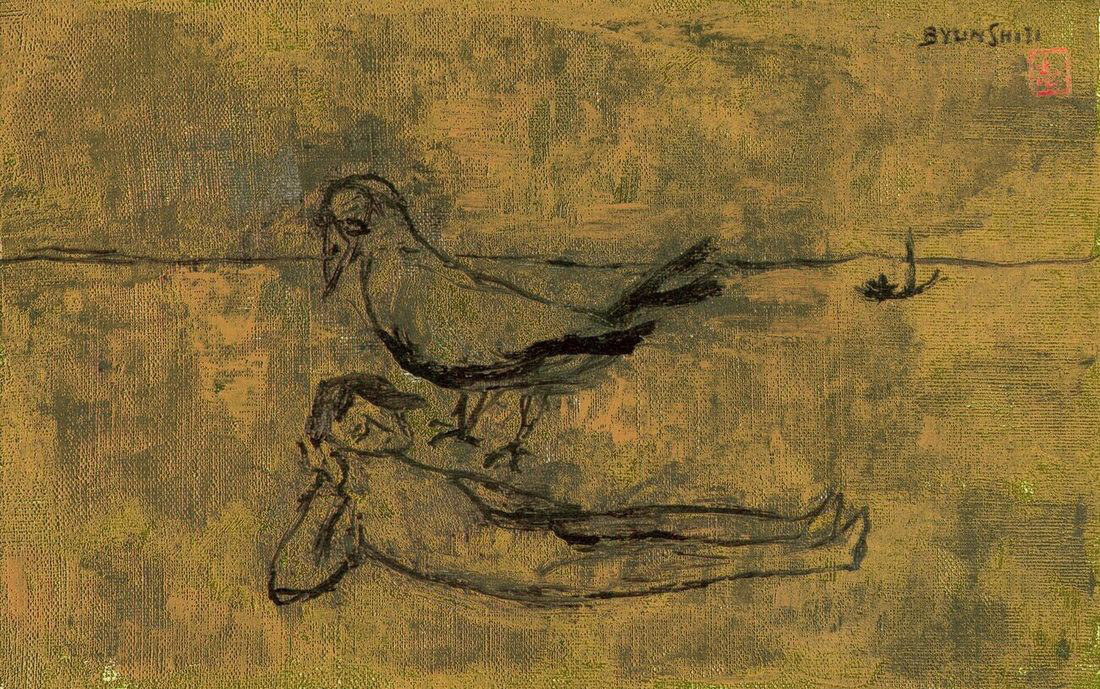
까마귀와 나The Crow and I

The Crow and I
제주 초기Early Jeju판단하지 않는 타자The non-judging other

땅에 길게 누운 사람 가까이 까마귀 한 마리가 머문다. 위와 아래의 차이는 있지만 두 존재 사이에는 심판보다 조용한 응시가 놓인다.A crow remains near a person stretched upon the ground; despite their different positions, the space between them is one of silent regard rather than judgement.

작품 크게 보기View work
말이 끝난 자리에서 까마귀는 설명하지 않고 고독 곁에 머문다.Where speech ends, the crow remains beside solitude without explanation.
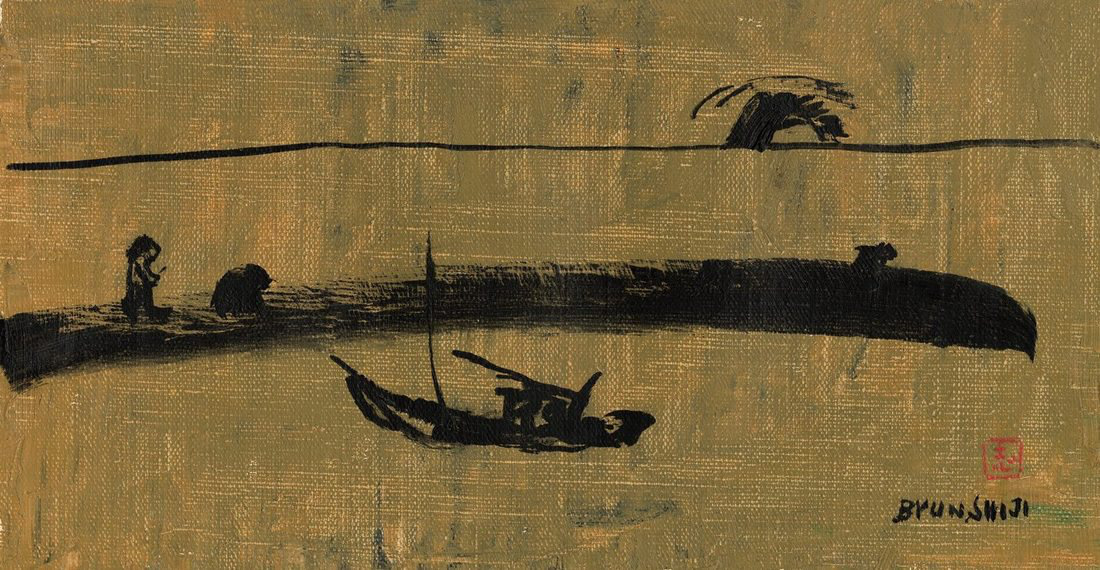
The Jetty 1979
FŪDO 078 · 1979

선착장The Jetty

The Jetty
제주 초기Early Jeju귀환한 부재Returned absence

검은 선착장 아래 사람이 타지 않은 빈 배가 도착해 있다. 선착장 위에는 기다리는 사람과 짐이 남고, 도착한 배는 오히려 돌아오지 않은 존재의 자리를 선명하게 드러낸다.An empty boat has arrived below a dark jetty. A waiting figure and bundle remain above, while the returned vessel makes the missing person more visible.

작품 크게 보기View work
선착장에는 배가 도착했지만, 돌아와야 할 사람의 자리는 비어 있다.A boat has reached the jetty, but the place of the returning person is empty.
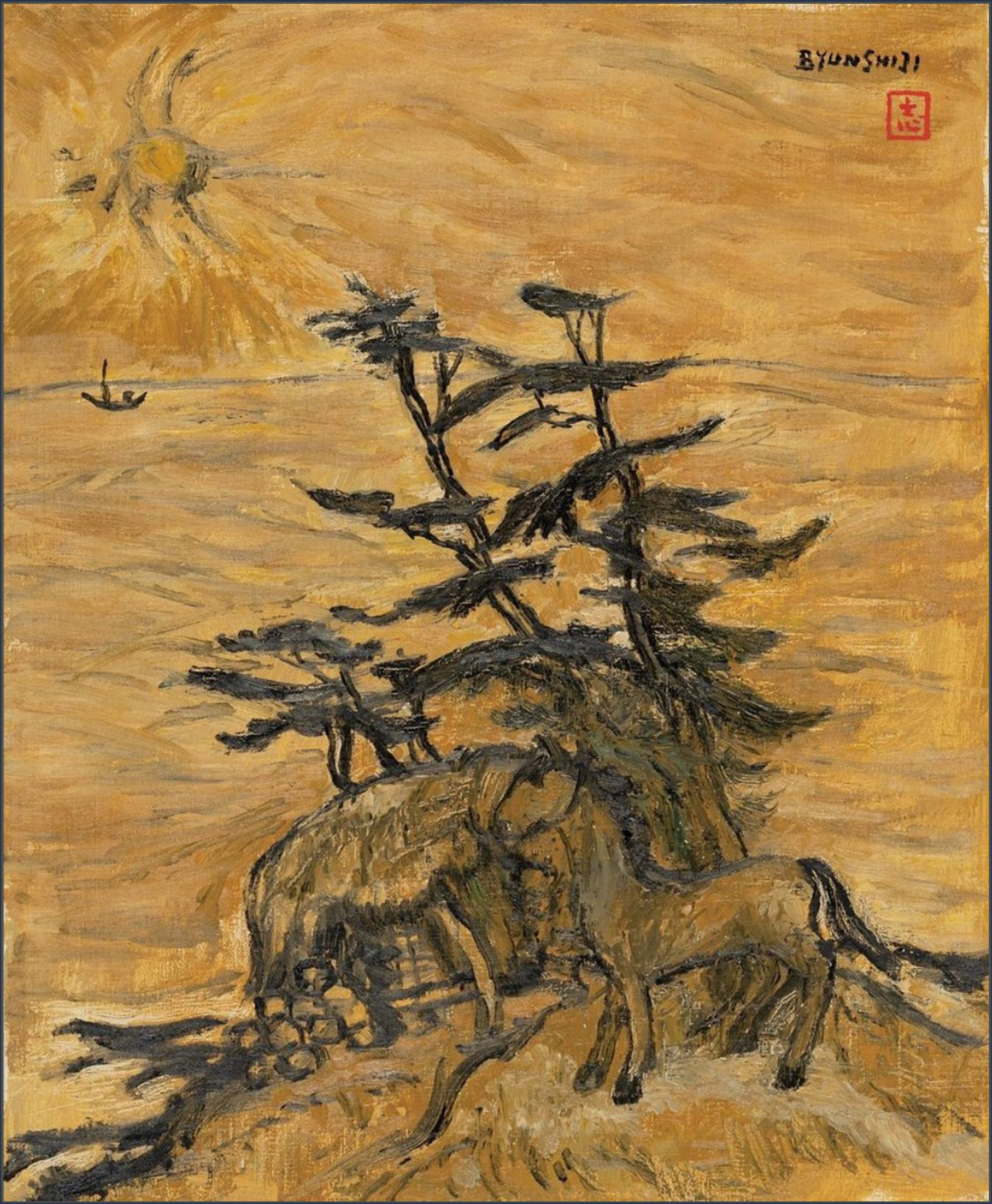
Tropical Sun 1983
FŪDO 008 · 1983

열대의 태양Tropical Sun

Tropical Sun
제주 중기Middle Jeju향토색을 넘어선 마른 풀잎색Beyond local colour

강한 노란 화면에 검은 소나무와 두 말, 먼 수평선의 작은 배가 놓인다. 색은 풍경을 장식하기보다 모든 존재를 같은 햇볕과 바람에 노출시킨다.A black pine, two horses and a distant boat inhabit an intense yellow field that exposes every being to the same sun and wind.

작품 크게 보기View work
Chapter 04

빛이 사라져도 존재는 남는다Existence Remains After Light

검은 태양과 흔들리는 세계The black sun and the wavering world
희망은 밝아지는 데 있지 않았다. 어둠 속에서도 서로의 자리를 놓지 않는 데 있었다.Hope did not lie in becoming bright, but in refusing to abandon one another’s place in darkness.

마른 풀잎색은 더 어두운 단계로 들어간다. 태양은 검어지고 수평선은 흔들리며 산은 몇 개의 선으로 줄어든다. 그러나 존재는 사라지지 않는다. 사람과 말, 노송과 노인, 빈 배와 까마귀는 빛의 약속 없이도 서로의 자리를 증언한다.Dried-grass colour enters a darker phase. The sun blackens, the horizon wavers and the mountain contracts into a few lines. Yet existence does not disappear. Human and horse, old pine and old man, empty boat and crow testify to one another without any promise of light.

이 전시 경로만 보기Open this chapter
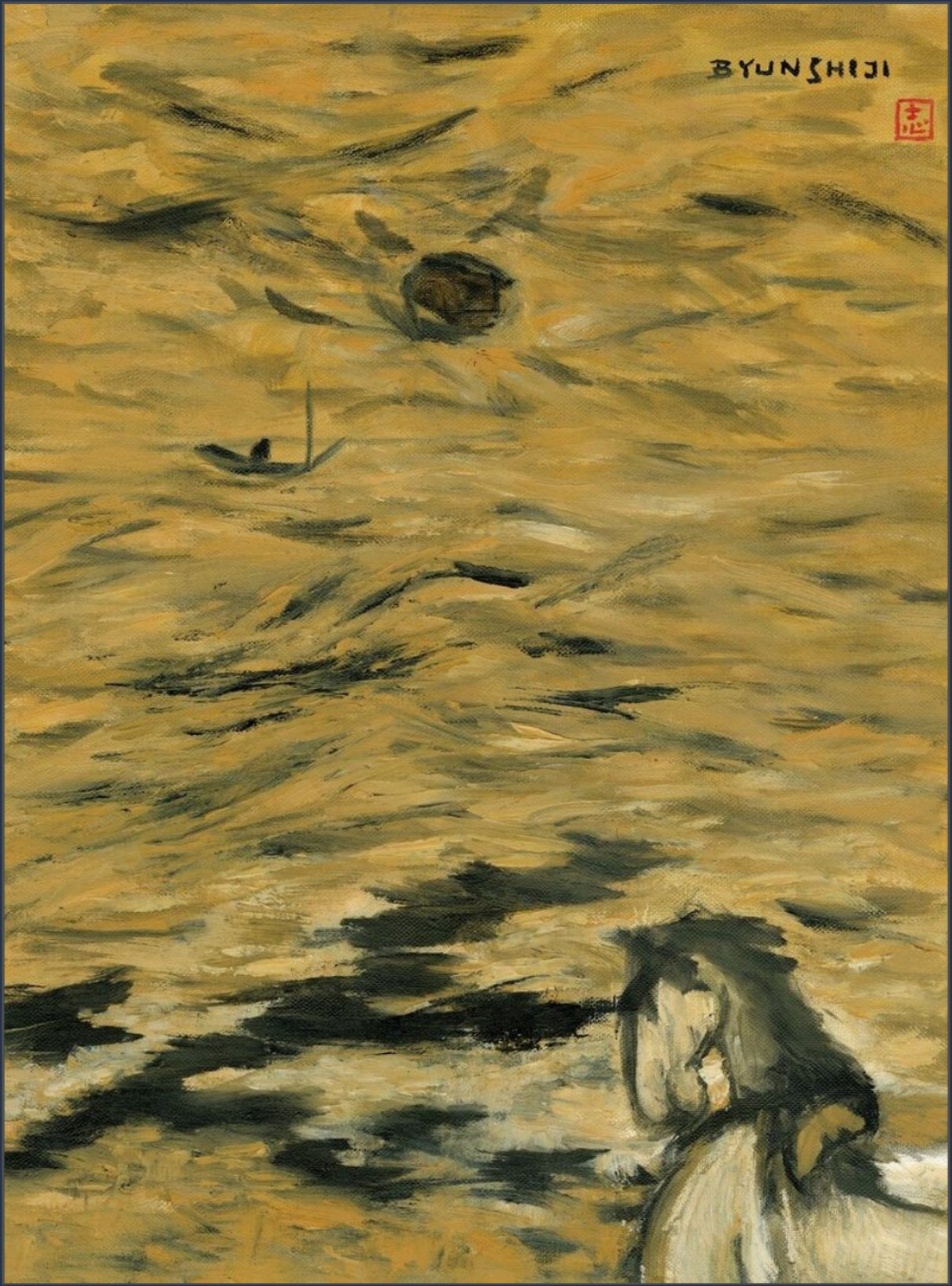
The Black Sun 1985
FŪDO 070 · 1985

검은 태양The Black Sun

The Black Sun
제주 중기Middle Jeju빛 없는 지속Persistence without light

거친 바다 위에 검은 태양과 작은 배가 떠 있고, 화면 아래에서는 사람과 말의 형상이 바람 속에 남아 있다. 해는 떠 있지만 세계를 밝히지 않는다.A black sun and small boat hover above a rough sea, while human and horse remain below; the sun is present but offers no illumination.

작품 크게 보기View work
태양이 떠 있어도 세계를 밝히지 않을 때, 삶은 서로에게 기대어 남는다.When the sun rises without illuminating the world, life remains by leaning upon another.
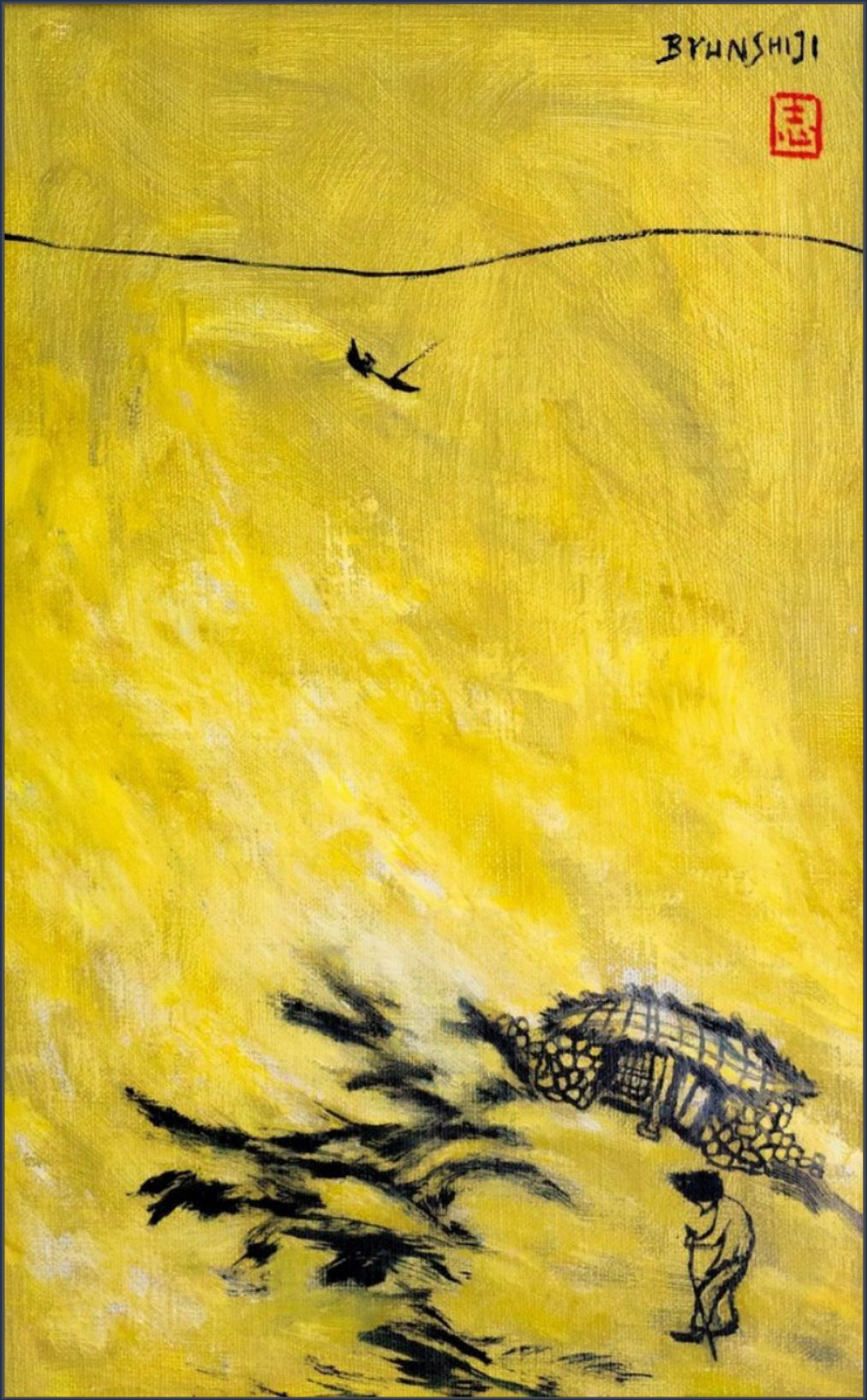
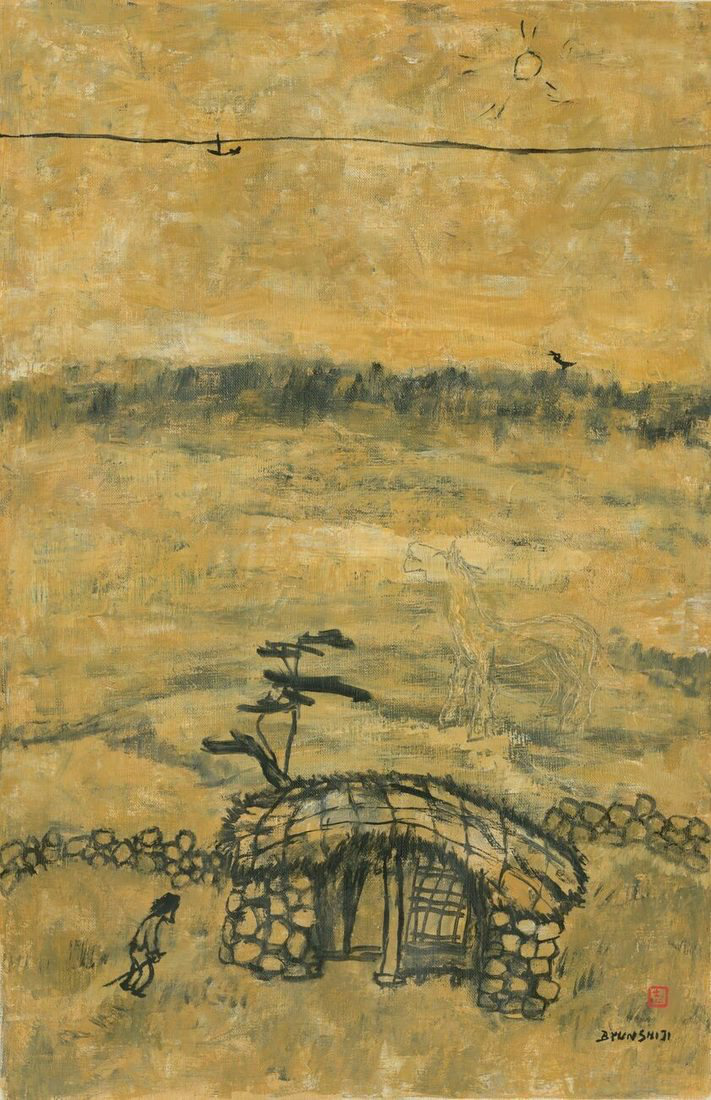
A Wavering Horizon 1986
FŪDO 005 · 1986

흔들리는 수평선A Wavering Horizon

A Wavering Horizon
제주 중기Middle Jeju불안정한 경계An unstable boundary

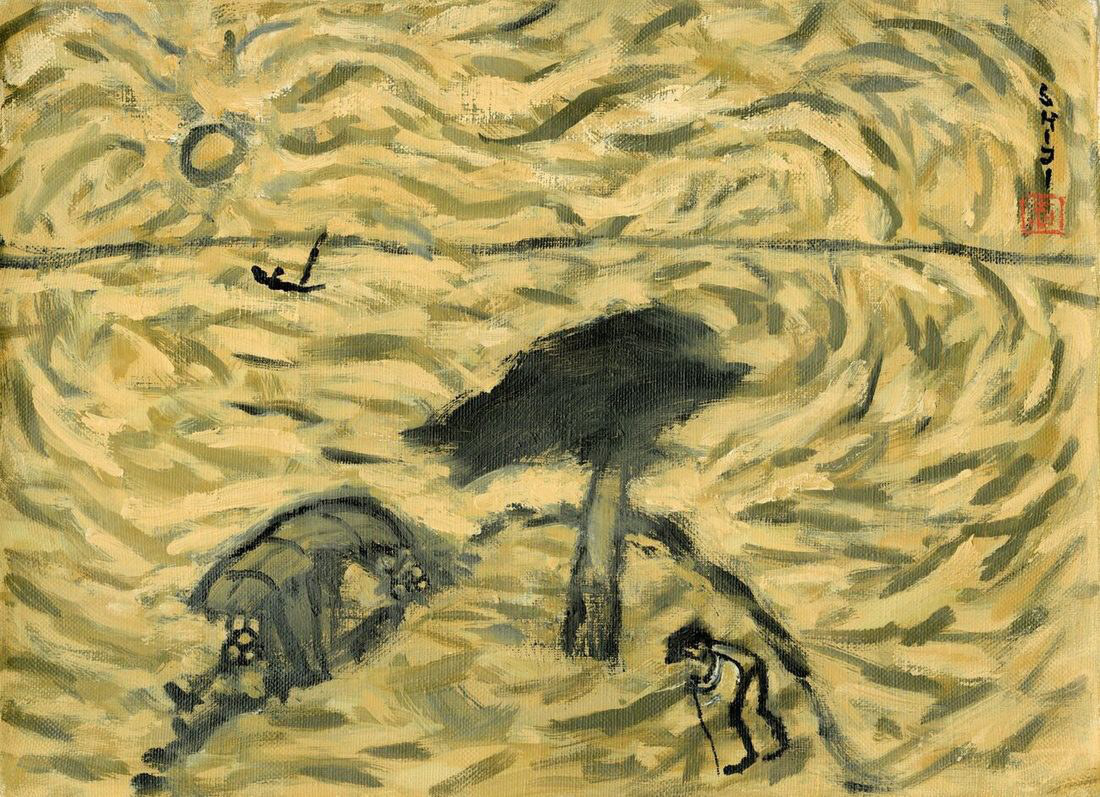
노란 화면 위쪽의 가는 수평선이 휘고, 작은 배와 새가 멀리 떠 있다. 아래의 낮은 집과 인물, 검은 나무는 거센 움직임 속에서 땅을 붙든다.A thin horizon bends high in a yellow field, while a small boat and birds drift above a low house, figure and black tree clinging to the earth below.

작품 크게 보기View work
수평선이 흔들리면 세계를 바로잡기보다 땅을 놓지 않는 자세가 드러난다.When the horizon wavers, dignity appears not in correcting the world but in keeping contact with the earth.
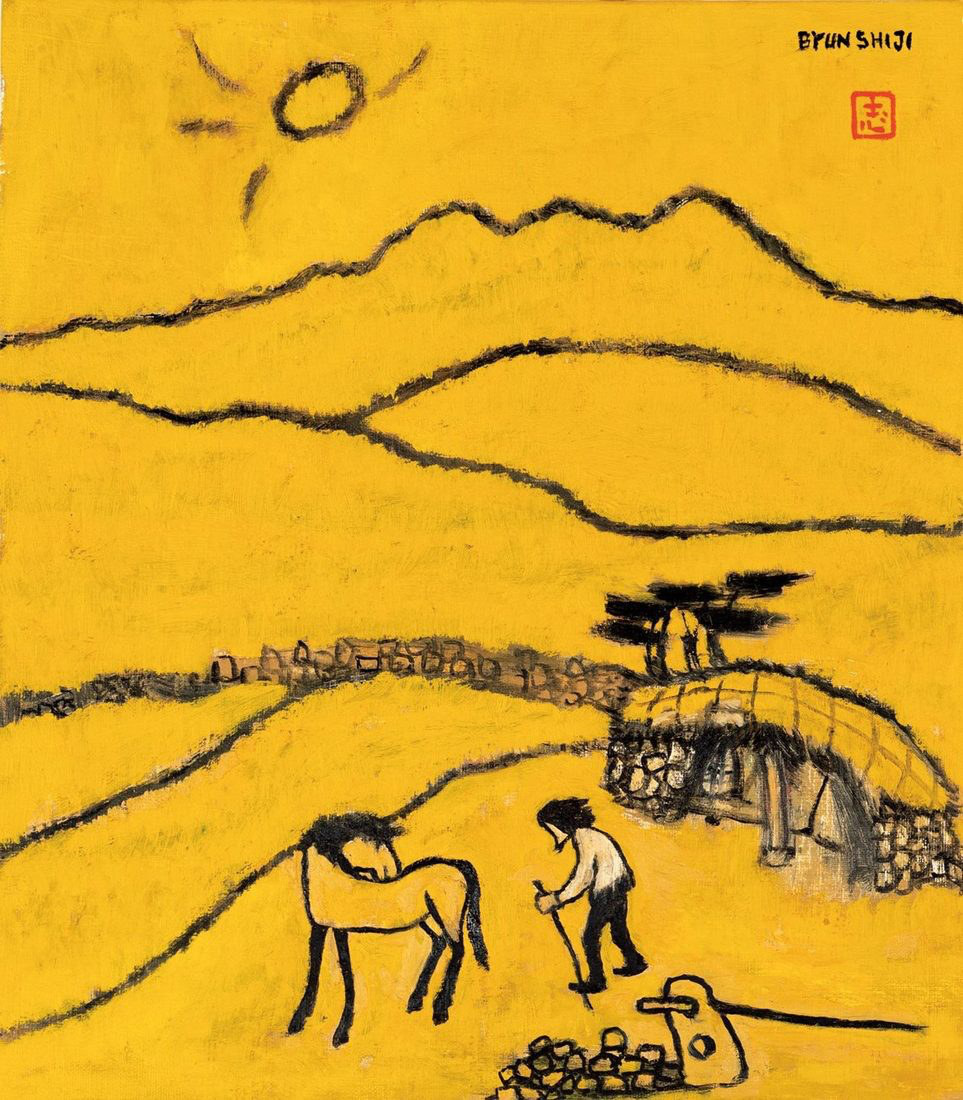
Hallasan 1987
FŪDO 009 · 1987

한라산Hallasan

Hallasan
제주 중기Middle Jeju풍경은 살아온 자세Landscape as lived posture

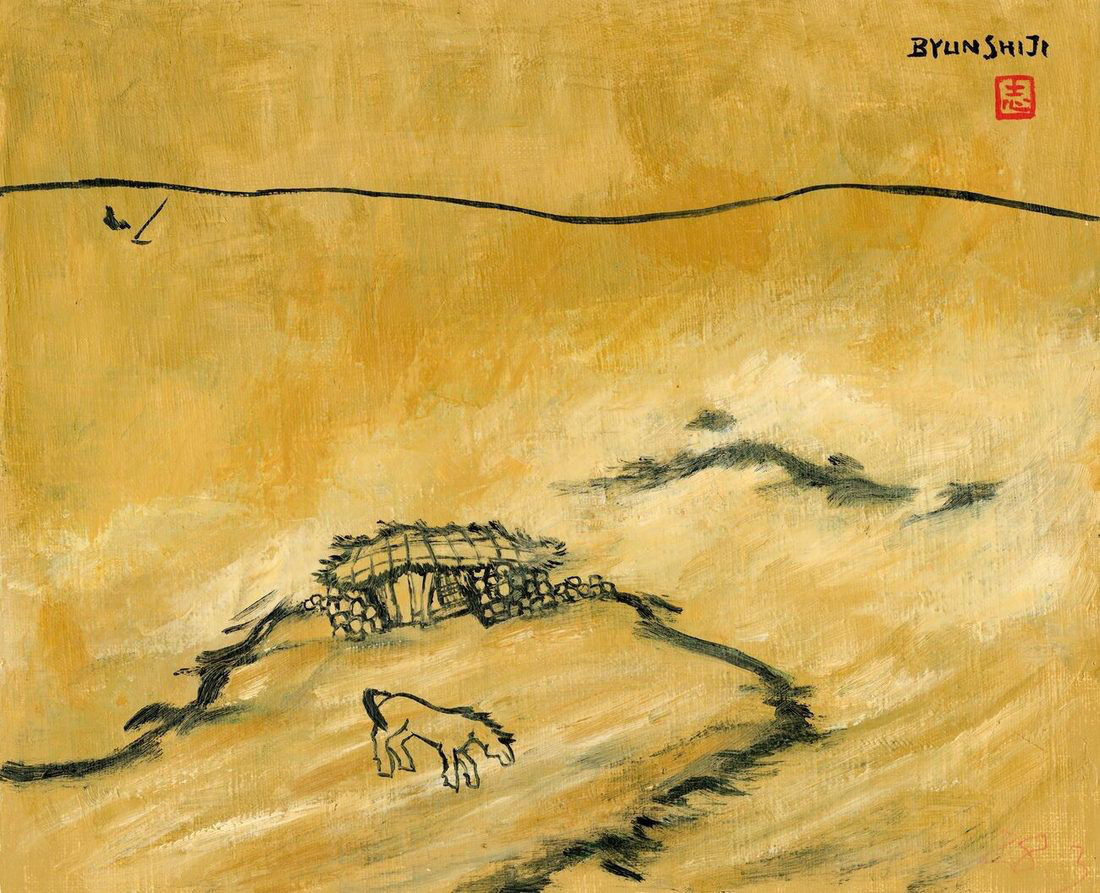
둥근 해와 몇 개의 검은 산줄기 아래 초가와 돌담, 고개 숙인 말과 등이 굽은 사람이 놓인다. 한라산은 단순한 선으로 줄었지만 화면 전체의 조건이 된다.Beneath a ring-like sun and a few black mountain lines stand a thatched house, stone wall, bowed horse and stooped person; Hallasan becomes the condition of the whole scene.

작품 크게 보기View work
산은 배경이 아니라 집과 사람, 말의 굽은 몸 안에 들어온 조건이다.The mountain is not background; it is a condition entering house, human and bowed horse.
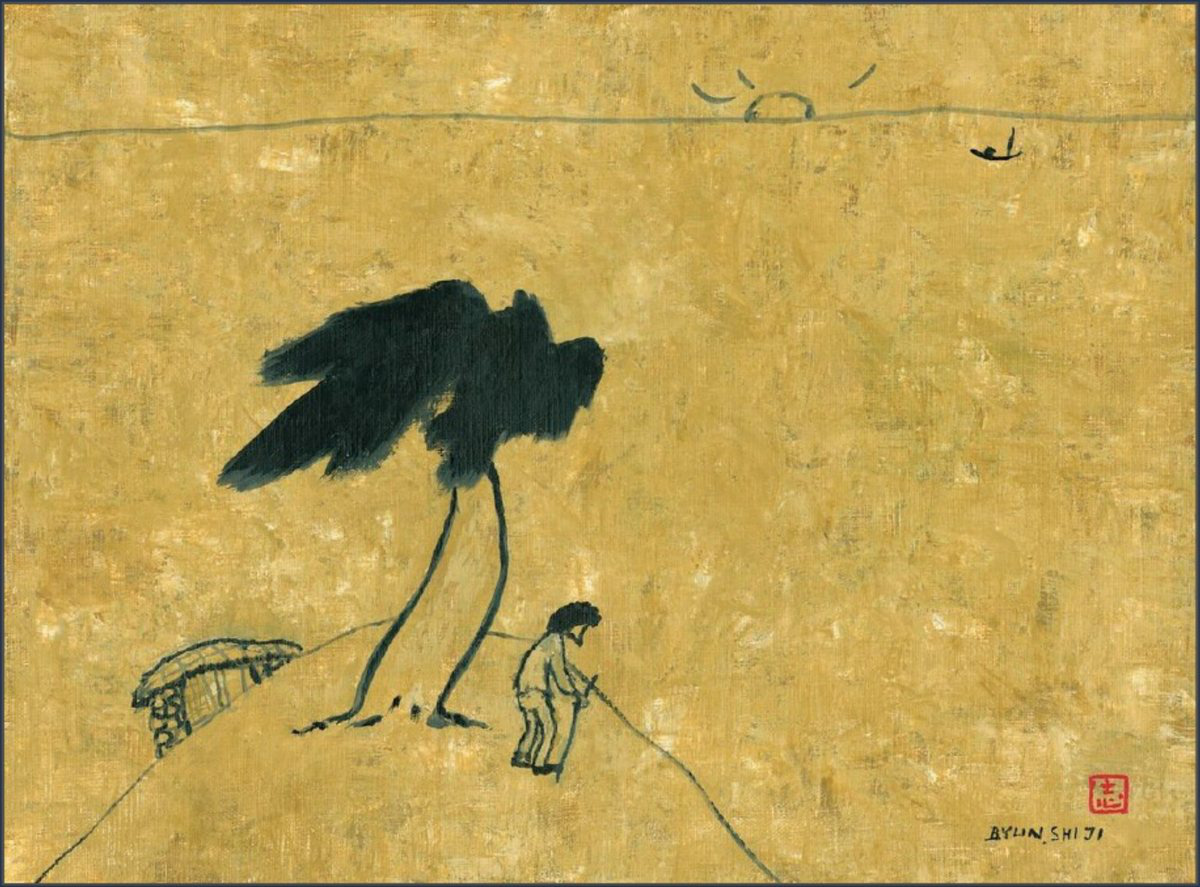
The Old Pine and the Old Man 1987
FŪDO 079 · 1987

노송과 노인The Old Pine and the Old Man

The Old Pine and the Old Man
제주 중기Middle Jeju바라봄으로 붙들기Holding through the gaze

거대한 노송 아래 작은 노인이 바다를 향해 선다. 먼 배는 작아지고, 나무의 기울어진 가지와 노인의 몸은 같은 방향을 바라본다.A small old man stands beneath a monumental pine, both facing a boat diminishing across the sea.

작품 크게 보기View work
노송과 노인은 떠나는 배의 방향을 함께 지키며 이별을 늦춘다.The old pine and old man hold the direction of the departing boat and delay the completion of farewell.
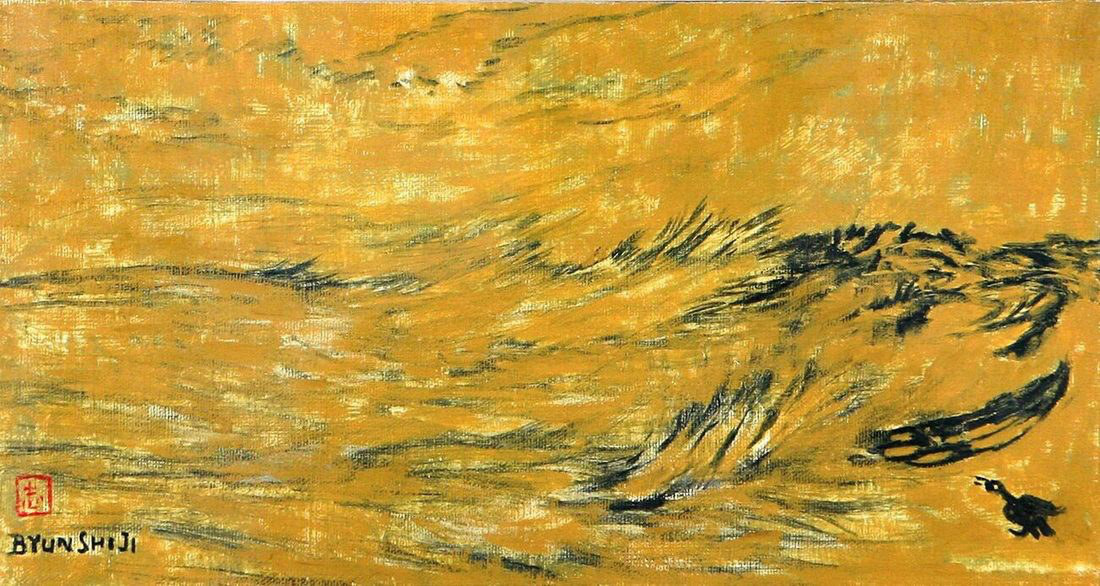
Ieodo 1987
FŪDO 064 · 1987

이어도Ieodo

Ieodo
제주 중기Middle Jeju부재의 증언Testimony of absence

거친 주황빛 바다를 빈 배가 가르고, 검은 까마귀가 파도 가까이 날거나 울고 있다. 사람은 보이지 않고 사라진 존재의 흔적만 화면을 건넌다.An empty boat cuts across a rough orange sea while a black crow flies or cries near the waves; only traces of the missing human remain.

작품 크게 보기View work
Chapter 05

돌아오지 않은 것들의 자리Places of What Did Not Return

기억, 방향 상실, 폭풍 이후, 귀로, 고독Memory, lost direction, aftermath, return and solitude
사라진 것은 없어지지 않았다. 빈 배와 굽은 몸, 흐릿한 선으로 다시 돌아왔다.What disappeared was not erased; it returned as empty boat, bent body and faint line.

부재는 빈 공간으로만 나타나지 않는다. 희미해진 말, 길을 잃은 말과 까마귀, 폭풍이 지나간 뒤의 낮은 집, 물허벅을 지고 돌아가는 몸, 바람에 휘어진 나무가 사라진 것의 압력을 보존한다. 기억은 선명한 복원이 아니라 남은 자세다.Absence does not appear only as empty space. A fading horse, horse and crow without direction, the low house after the storm, the body returning beneath a water jar, and the wind-bent tree preserve the pressure of what is gone. Memory is not perfect restoration but a remaining posture.

이 전시 경로만 보기Open this chapter
Recollection 1988
FŪDO 091 · 1988

회상Recollection

Recollection
제주 중기Middle Jeju기억의 농도Density of memory

세로로 긴 화면에 초가와 바다, 작은 인물과 희미한 말이 겹쳐 있다. 말의 형상은 주변 빛 속으로 스며들며 존재와 부재 사이에 머문다.Within a tall field of house, sea and small figure, a faint horse enters the surrounding light and hovers between presence and absence.

작품 크게 보기View work
사랑한 존재는 지워진 것이 아니라 너무 깊이 들어와 윤곽을 잃는다.The loved existence has not been erased; it loses outline because it has entered too deeply within.
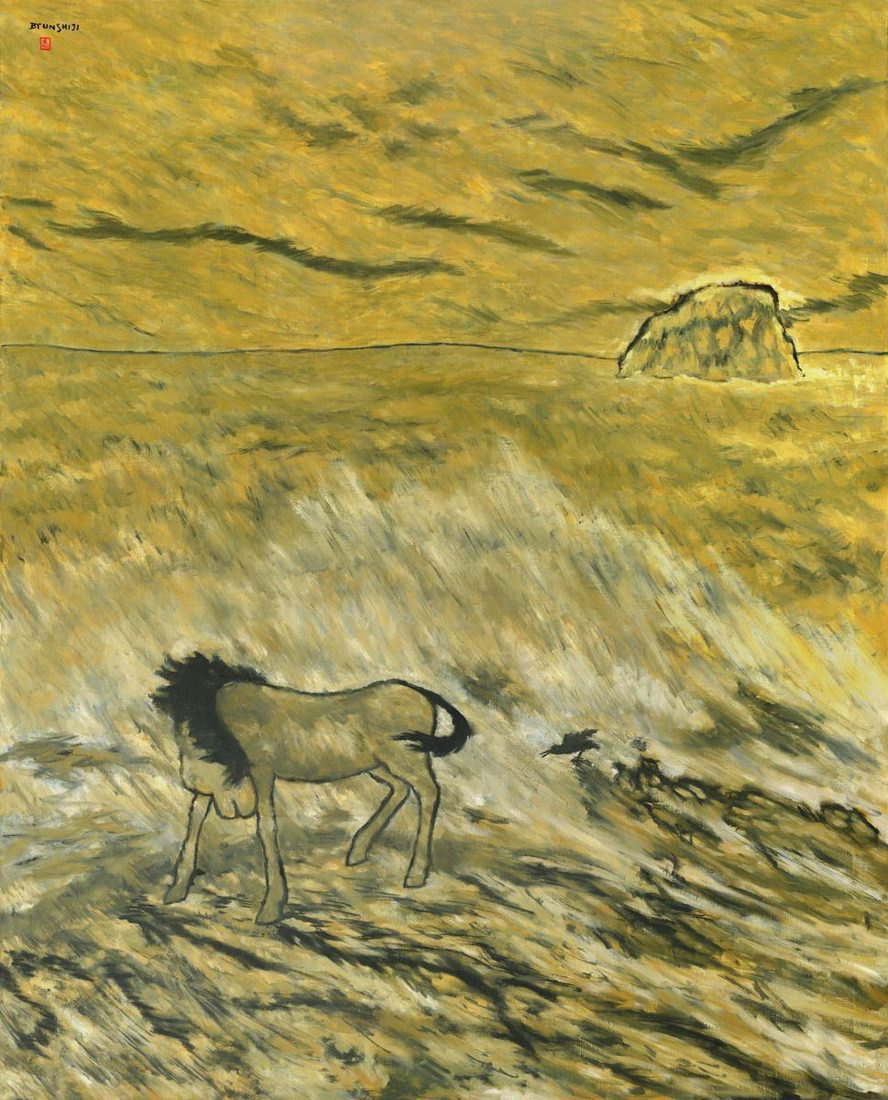
Where To? 1990
FŪDO 081 · 1990

어디로Where To?

Where To?
제주 중기Middle Jeju방향의 상실Loss of direction

바람에 휩쓸린 들판에서 말이 고개를 숙이고, 까마귀가 가까이 머문다. 길은 보이지 않으며 두 존재는 움직이기보다 같은 막막함 속에 선다.In a field swept by wind, a horse lowers its head while a crow remains nearby; no clear path is visible, and both stay within the same uncertainty.

작품 크게 보기View work
길이 사라진 들판에서 까마귀는 답을 주지 않고 말 앞에 머문다.In the field where the road has vanished, the crow offers no answer and remains before the horse.
Typhoon 1990
FŪDO 018 · 1990

태풍Typhoon

Typhoon
제주 중기Middle Jeju폭풍 이후의 기억Memory after the storm

밝아진 하늘 아래 낮은 초가와 돌담, 숙인 말이 남아 있다. 태풍의 순간보다 지나간 힘이 지붕과 땅, 몸에 남긴 압력이 화면을 지배한다.Beneath a clearing sky, a low thatched house, stone wall and bowed horse remain; the painting is governed by the pressure the storm has left behind.

작품 크게 보기View work
태풍의 장관보다 중요한 것은 지나간 힘이 집과 몸에 남긴 압력이다.More important than the spectacle of the storm is the pressure its passing force leaves in house and body.
The Way Home 1991
FŪDO 093 · 1991

귀로The Way Home

The Way Home
제주 중기Middle Jeju돌아가는 몸The returning body

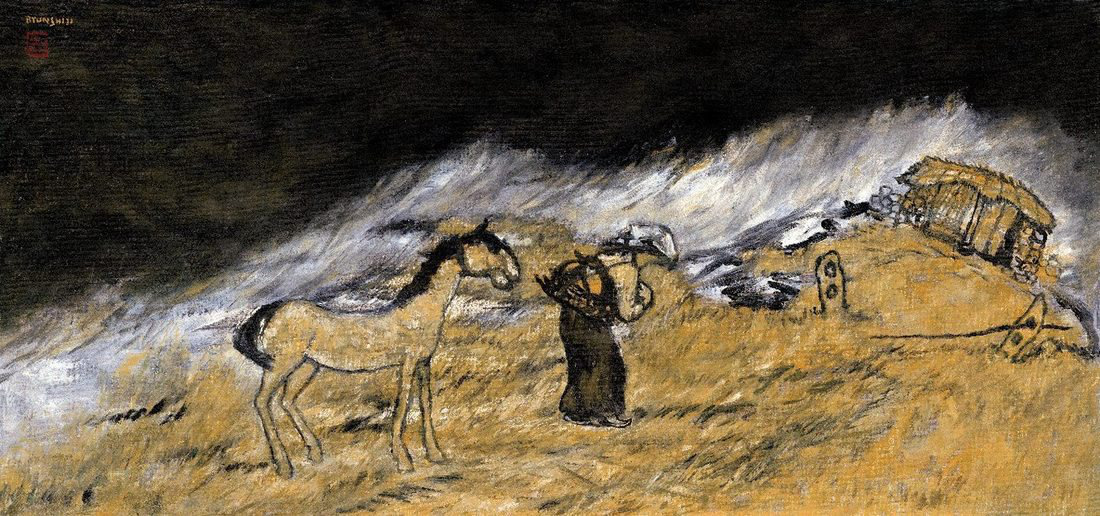
검은 하늘과 흰 바람 아래 물허벅을 진 여인과 말이 낮은 집을 향한다. 두 몸은 하루의 무게에 기울었지만 같은 방향으로 천천히 이동한다.Under a black sky and white wind, a woman carrying a water jar and a horse move toward a low house, both bodies inclined by the day’s weight.

작품 크게 보기View work
귀환은 처음의 몸으로 돌아가는 일이 아니라 하루의 무게를 삶의 자리까지 데려가는 일이다.Return is not recovering the original body, but carrying the day’s weight back to the place of life.
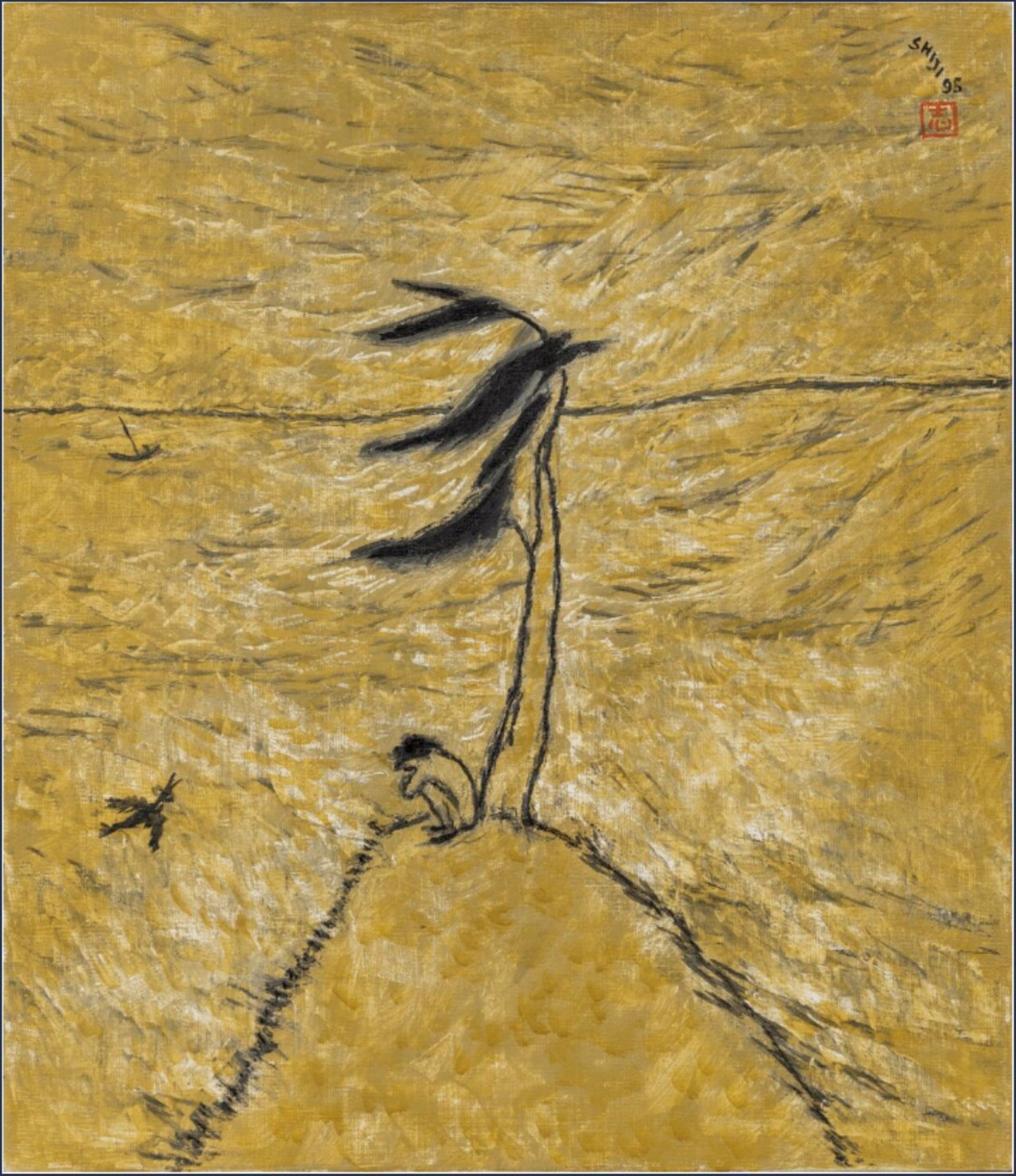
Solitude 1995
FŪDO 014 · 1995

고독Solitude

Solitude
제주 후기Late Jeju하늘을 잊지 않은 견딤Endurance that remembers the sky

거센 바람에 나무가 한쪽으로 휘고, 그 아래 작은 사람이 땅 가까이 몸을 웅크린다. 까마귀와 먼 배가 넓은 여백 속에 흩어져 있다.A tree bends in strong wind above a small crouching person, while a crow and distant boat are scattered through broad empty space.

작품 크게 보기View work
Chapter 06

마지막에는 형식만 남는다At the End, Form Remains

빈집에서 마지막 선까지From vacant houses to the final line
변시지는 더 많이 그리는 대신 더 많이 덜어냈고, 마지막에는 존재를 지탱하는 최소한의 선만 남겼다.Instead of adding more, Byun removed more, leaving only the minimum lines that sustain existence.

후기의 회화는 비어가지만 빈곤해지지 않는다. 두 빈집 사이의 선택, 떠나는 배를 바라보는 말, 19년의 간격을 둔 두 수평선, 지팡이를 짚은 노인의 한 걸음, 마지막 화면의 말과 해와 배가 최소한의 관계를 남긴다. 덜어냄은 삭제가 아니라 핵심을 견디게 하는 구조다.The late paintings become emptier without becoming poorer. Choice between two vacant houses, a horse watching a departing boat, two horizons separated by nineteen years, the old man’s step with a stick, and the horse, sun and boat of the final work preserve a minimum structure of relation. Reduction is not deletion but a way of making the essential endure.

이 전시 경로만 보기Open this chapter
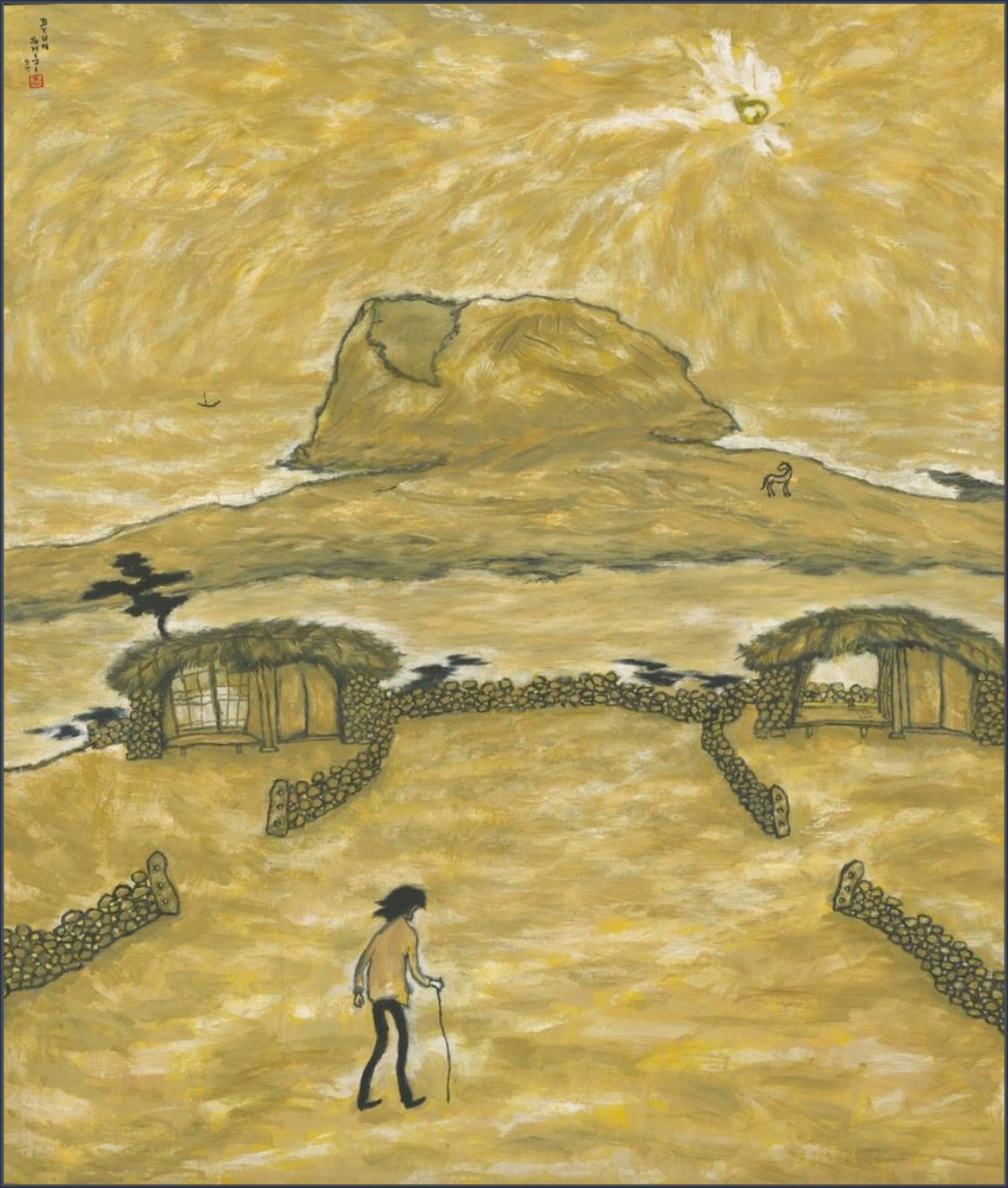
Empty House on the Left, Empty House on the Right 1997
FŪDO 061 · 1997

왼쪽 빈집, 오른쪽 빈집Empty House on the Left, Empty House on the Right

Empty House on the Left, Empty House on the Right
제주 후기Late Jeju선택이 길을 만든다Choice makes a path

두 빈집과 갈라지는 돌담 사이로 지팡이를 짚은 노인이 걸어간다. 위쪽에는 바위섬과 말, 먼 배와 해가 서로 다른 높이의 세계를 이룬다.An old man with a walking stick moves between two empty houses and branching stone walls, beneath a rock island, horse, distant boat and sun.

작품 크게 보기View work
한 사람이 빈자리로 몸을 옮기는 순간 길이 생기고 집은 거처가 된다.A path appears when a person moves into the interval, and a vacant house becomes a dwelling through presence.
The Gaze 2001
FŪDO 090 · 2001

시선The Gaze

The Gaze
제주 후기Late Jeju떠나는 것을 끝까지 바라봄Watching departure to the end

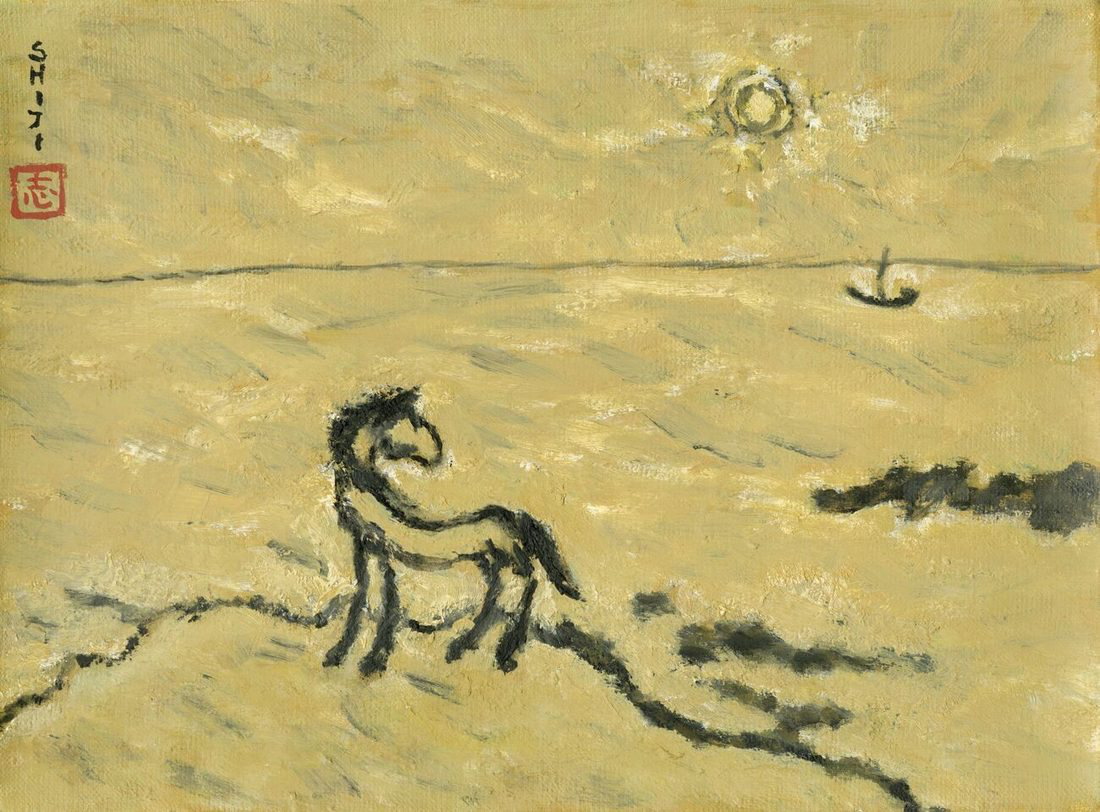
해안 언덕의 말이 바다를 향해 서 있고, 둥근 해와 작은 배가 먼 수평선에 놓인다. 말의 몸은 떠나는 방향에서 눈을 거두지 않는다.A horse stands on a coastal rise facing the sea, while a round sun and small boat rest on the distant horizon.

작품 크게 보기View work
붙잡지 않는 시선은 떠나는 존재와의 관계를 너무 빨리 거두지 않는다.The non-possessive gaze does not withdraw its relation too quickly from what departs.
A Wavering Horizon 2005
FŪDO 007 · 2005

흔들리는 수평선A Wavering Horizon

A Wavering Horizon
제주 후기Late Jeju멀리서 함께 견디기Enduring together at a distance

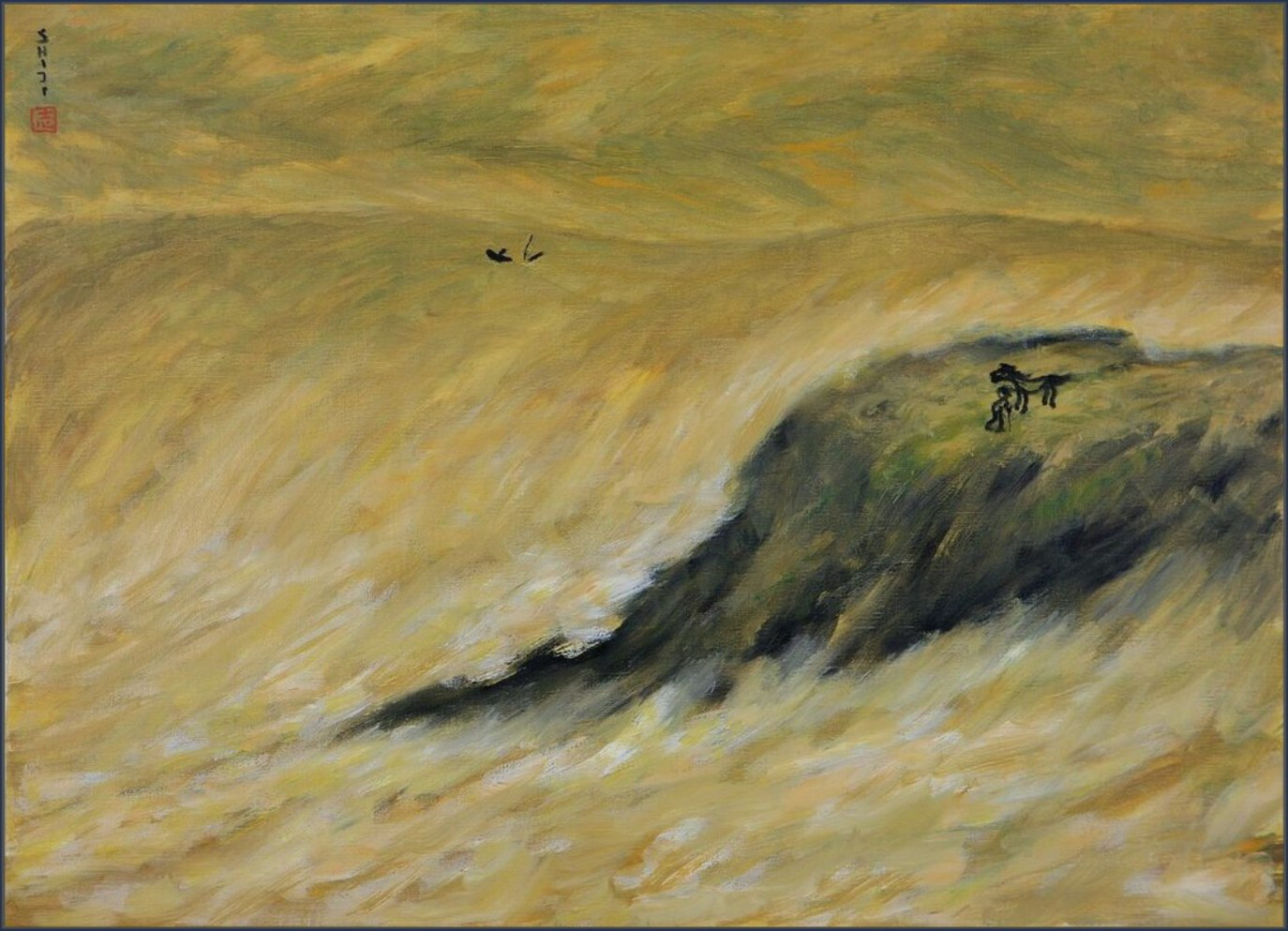
거친 파도가 절벽을 덮고, 작은 노인과 말이 바위 위에서 먼 배와 수평선을 바라본다. 육지와 바다는 서로 떨어져 있지만 같은 바람에 흔들린다.Rough waves cover the cliff as a tiny old man and horse look toward a distant boat and horizon; land and sea shake within the same wind.

작품 크게 보기View work
1986년의 단독적 버팀은 2005년에 멀리서 함께 견디는 관계로 변한다.The solitary endurance of 1986 becomes, in 2005, endurance shared across distance.
Noon 2007
FŪDO 012 · 2007

정오Noon

Noon
제주 후기Late Jeju바람 속 자기 길One’s path within wind

밝은 바다와 거친 바람 사이에서 나무와 집이 기울고, 노인이 지팡이를 짚어 한 걸음을 옮긴다. 말과 까마귀, 작은 배도 같은 빛 속에 놓인다.Between bright sea and strong wind, tree and house bend as an old man takes a step with a walking stick; horse, crow and boat share the same light.

작품 크게 보기View work
밝은 정오에도 바람은 멈추지 않지만 노인은 지팡이와 함께 자기 방향을 지킨다.Even at bright noon the wind does not cease, yet the old man keeps his direction with the stick.
The Last Work 2013
FŪDO 100 · 2013

마지막 작품The Last Work

The Last Work
제주 후기Late Jeju남은 형식What remains of form

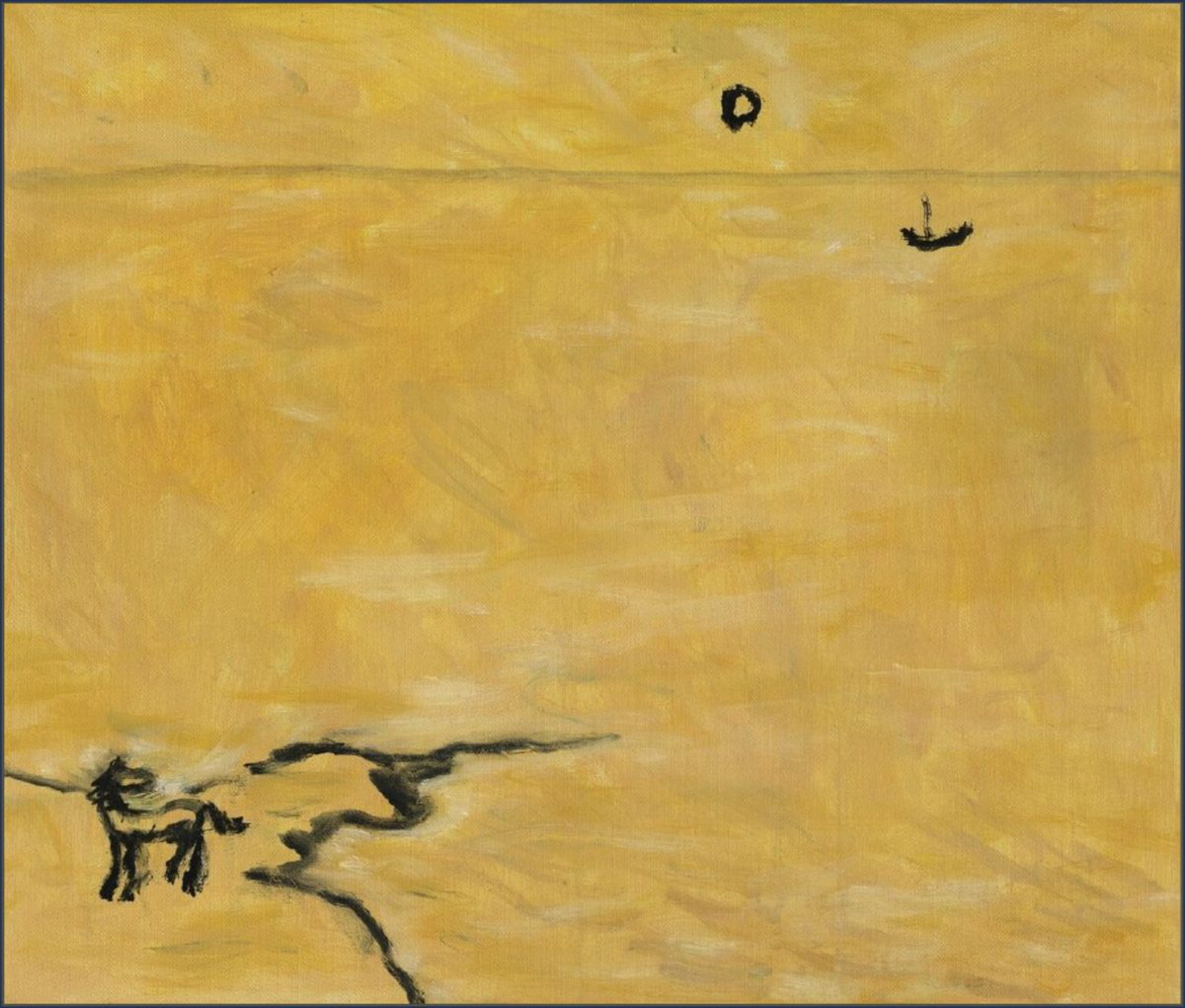
넓은 마른 빛 속에 말 한 마리와 검은 해, 작은 배와 해안선이 최소한의 선으로 남아 있다. 형상은 줄었지만 변시지 회화의 핵심 관계는 사라지지 않는다.Within a broad dried field of light, a horse, black sun, small boat and coastline remain in minimal lines; forms are reduced, but their relations persist.

작품 크게 보기View work
같은 제목, 다른 버팀The Same Title, A Different Endurance

1986년과 2005년의 〈흔들리는 수평선〉을 나란히 놓으면, 변시지 후기 회화의 변화가 선명해집니다. 전자는 흔들리는 세계 앞에서 한 존재가 땅을 붙드는 장면이고, 후자는 서로 떨어진 존재들이 같은 바람 속에서 관계로 버티는 장면입니다.Placed side by side, the two paintings titled A Wavering Horizon reveal a decisive late transformation. The 1986 work centres on a being holding the earth before an unstable world; the 2005 work turns endurance into a relation shared across distance.

A Wavering Horizon 1986

1986 · 흔들리는 수평선A Wavering Horizon

수평선 자체가 불안정해지고, 작은 집과 인물이 땅을 붙든다. 중심은 단독적 버팀이다.The horizon itself becomes unstable, while the small house and figure hold the ground. The centre is solitary endurance.

A Wavering Horizon 2005

2005 · 흔들리는 수평선A Wavering Horizon

노인과 말, 먼 배가 같은 바람에 놓인다. 중심은 멀리서도 서로에게 돌아갈 자리가 되는 관계다.Old man, horse and distant boat inhabit the same wind. The centre is a relation that offers a place of return across distance.

주체Subject

혼자 땅을 딛는 작은 존재 → 서로의 존재를 바라보는 노인·말·배A small being standing alone → old man, horse and boat holding one another in sight

수평선Horizon

세계의 질서가 흔들리는 선 → 거리를 가르지만 관계를 잇는 선A line where world order wavers → a line that divides distance yet maintains relation

견딤Endurance

단독적 자세 → 관계적 지속Solitary posture → relational persistence

색은 장소의 표면에서
존재의 시간으로 이동했다.
Colour moved from the surface of place
into the time of existence.

1940s

일본의 어두운 갈색Dark Japanese browns

인물과 재현의 밀도Density of figure and representation

1960s

서울의 청색과 금빛Seoul blue and gold

닫힌 정원과 풍부한 색채Enclosed gardens and chromatic abundance

1975–79

제주 초기의 푸른색Early Jeju blue

아직 낯선 고향의 습기The moisture of a still-unfamiliar home

1980s

마른 풀잎색Dried-grass colour

햇볕과 바람을 견딘 시간Time endured beneath sun and wind

1985–90s

검은 태양The black sun

빛 없는 지속과 부재Persistence and absence without light

1997–2013

후기의 비움Late reduction

최소한의 선과 관계Minimum line, enduring relation

※ 위 색띠는 작품의 정확한 디지털 색상 측정값이 아니라, 전시의 서사를 설명하기 위한 개념적 팔레트입니다.※ This is a conceptual exhibition palette, not a scientific digital colour measurement of the paintings.

같은 존재는 반복되지 않는다.
시간 속에서 역할을 바꾼다.
The same beings do not merely repeat.
Their roles change through time.

말, 까마귀, 배, 집, 해와 수평선을 선택해 작품 사이의 관계를 탐색하십시오. 작품을 누르면 확대 화면과 핵심 해설이 열립니다.Choose horse, crow, boat, house, sun or horizon to trace relationships across the exhibition. Select a work to open its enlarged image and key interpretation.

마지막에는
선이 남았다.
At the end,
the line remained.

변시지는 세계를 더 많이 설명하기보다, 존재가 사라지지 않도록 필요한 것만 남겼습니다. 말 한 마리, 작은 배, 검은 해, 흔들리는 수평선. 이 최소한의 형식 안에서 바람은 더 이상 보이지 않는 힘이 아니라 그림을 세우는 구조가 됩니다.Rather than explain more of the world, Byun left only what was necessary to prevent existence from disappearing: a horse, a small boat, a black sun, a wavering horizon. Within this minimum form, wind becomes not an invisible force but the structure that holds the painting.

핵심 30선 아틀라스 열기Open the Core 30 Atlas