Chapter 03 · When Wind Became Form
The Labouring Body Records Fūdo
Diver, field, crow, empty boat and dried-grass colour
Online Exhibition/Chapter 3
To paint Jeju was not to copy the island’s shape, but to paint the posture of bodies that had endured there.
Around 1979, labour is never enlarged into heroic spectacle. The diver’s inclined body, human and animal entering the field, the crow that remains without judgement, and the empty returning boat reveal the weight of life. This duration becomes the pictorial language of dried-grass colour.
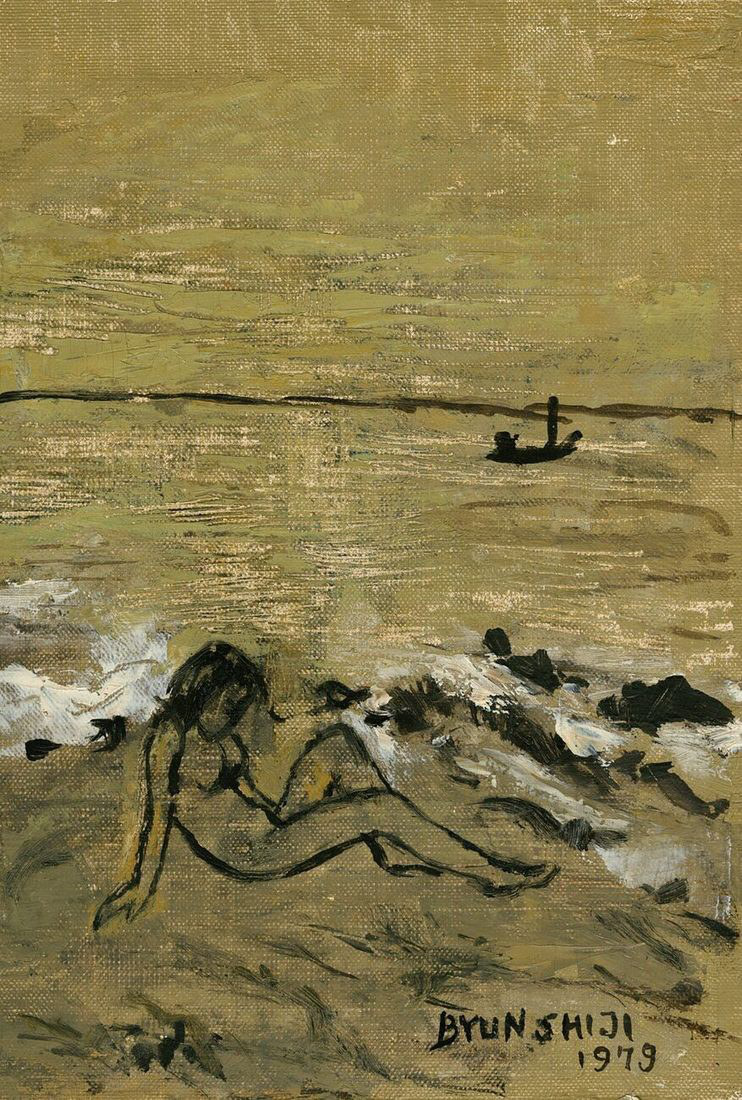
FŪDO 040 · 1979
Haenyeo
해녀
- Early Jeju
- Depth after weathering
Near breaking white waves, a woman diver reclines at an angle; body, sand and sea yield their boundaries within one weathered light.
The body returned from the sea briefly yields its weight within the weathered light of sand and wave.
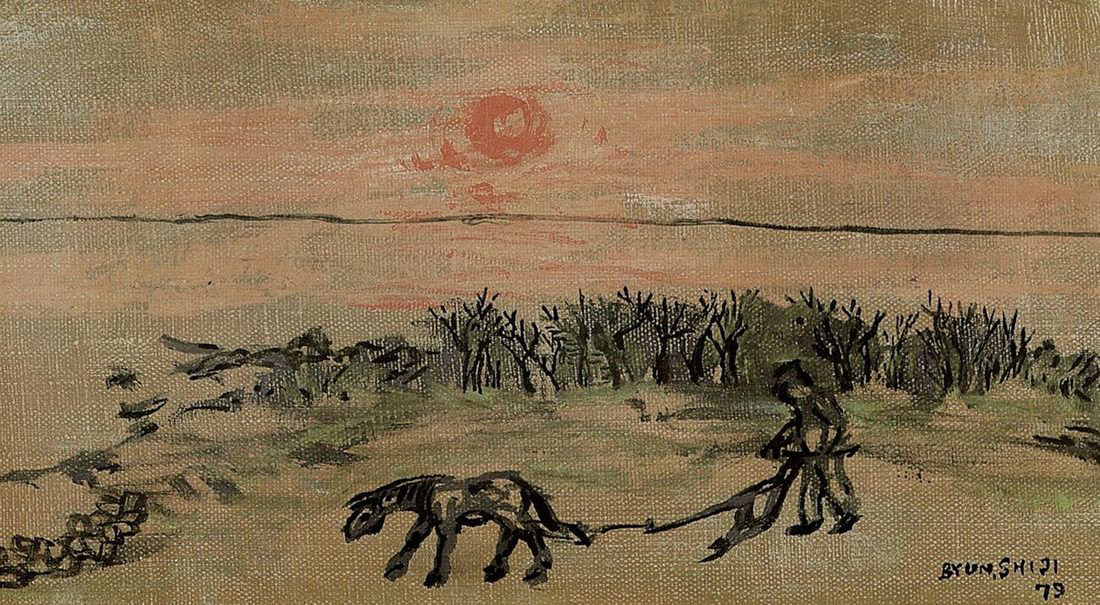
FŪDO 042 · 1979
Plowing
밭갈이
- Early Jeju
- Dried-grass colour
Beneath a hazy red sun, human and horse work a dry field, their outlines entering the colour and movement of the earth.
Human and animal do not possess the earth; labour draws them into its grain.
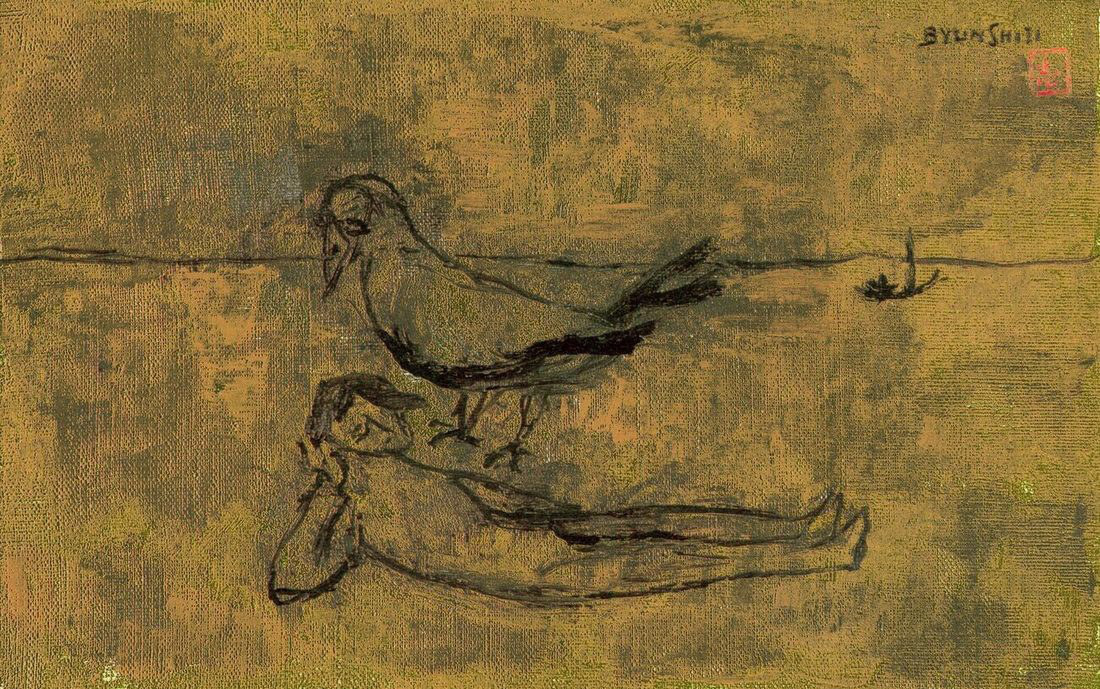
FŪDO 060 · 1979
The Crow and I
까마귀와 나
- Early Jeju
- The non-judging other
A crow remains near a person stretched upon the ground; despite their different positions, the space between them is one of silent regard rather than judgement.
Where speech ends, the crow remains beside solitude without explanation.
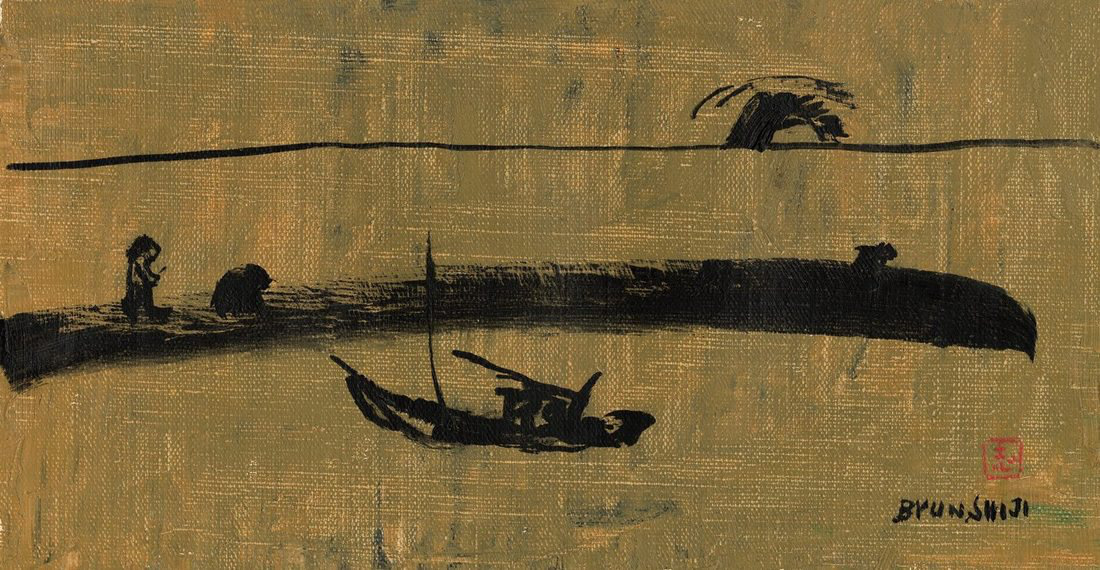
FŪDO 078 · 1979
The Jetty
선착장
- Early Jeju
- Returned absence
An empty boat has arrived below a dark jetty. A waiting figure and bundle remain above, while the returned vessel makes the missing person more visible.
A boat has reached the jetty, but the place of the returning person is empty.
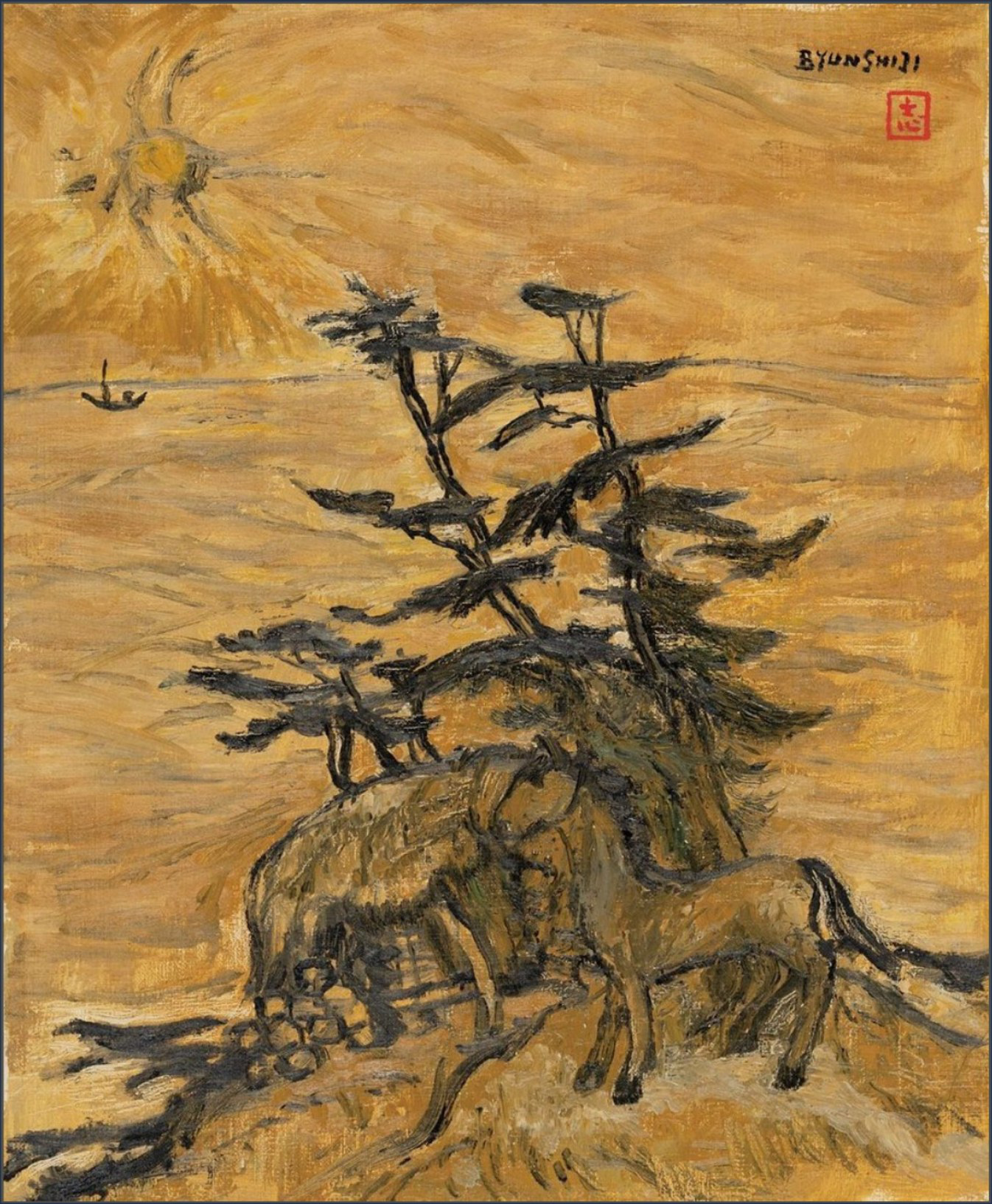
FŪDO 008 · 1983
Tropical Sun
열대의 태양
- Middle Jeju
- Beyond local colour
A black pine, a single horse and a distant boat inhabit an intense yellow field that exposes every being to the same sun and wind.