Chapter 02 · When Wind Became Form
Home Must Be Learned Again
From blue Jeju to the interior of fūdo
Online Exhibition/Chapter 2
The body reached home first; the paintings needed longer to enter Jeju.
Return at fifty was not a recovery of a completed identity. To see Jeju again meant receiving sea, islands, ritual and family labour as unfamiliar conditions. Here fūdo becomes not the background of home, but a world that precedes the human and draws the viewer inside.
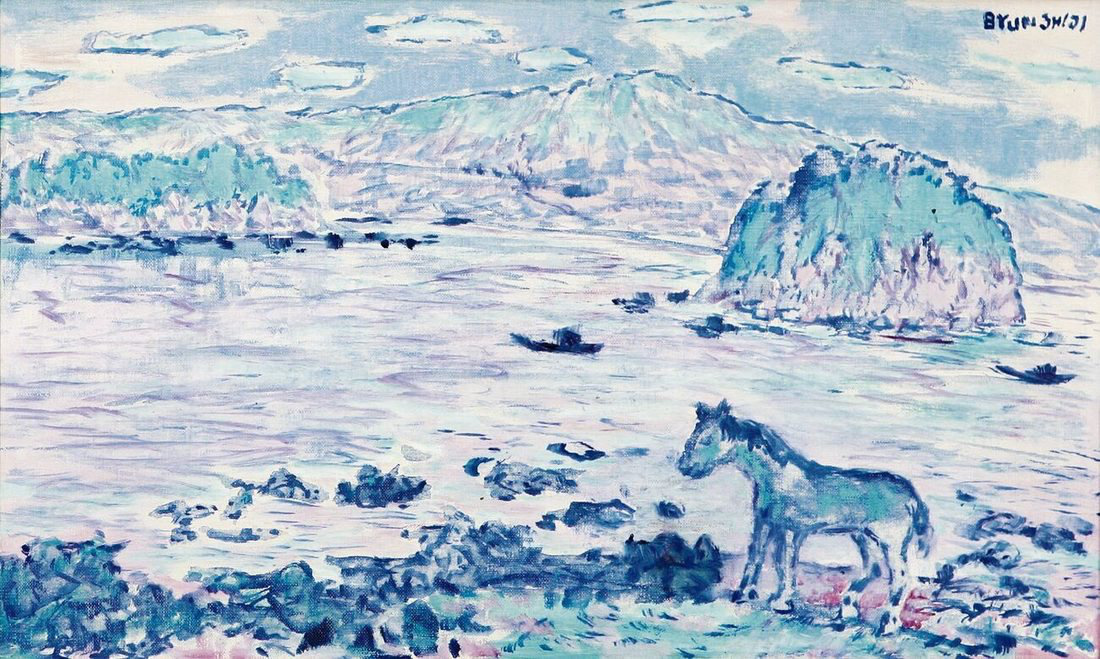
FŪDO 096 · 1976
Jeju
제주
- Early Jeju
- An unfamiliar home
A pony stands before a blue coast, rock island and distant mountains; the palette is still moist with colour, and home remains strangely distant.
The pony before blue Jeju has not yet learned the language of its fūdo.
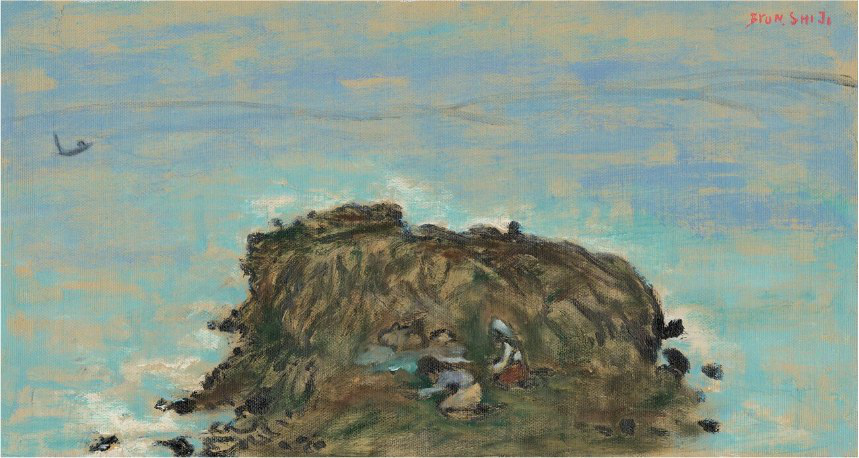
FŪDO 027 · 1976
Rite to the Sea God
해신제
- Early Jeju
- Communal prayer
A rock island rises from a vast blue sea, with a tiny figure bowing upon it; the human body is almost a point within the maritime expanse.
The bowed prayer is the first posture of relation before a sea larger than the human.
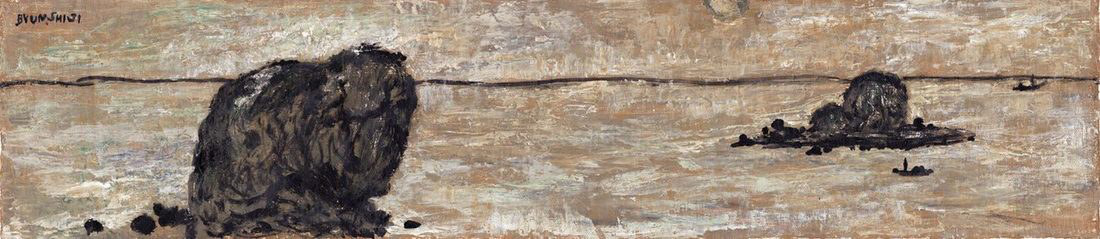
FŪDO 004 · 1977
Brother Islands
형제섬
- Early Jeju
- Fūdo as condition
Two rock islands occupy different distances across a long, faded field—one near and large, the other far and small, yet held by the same horizon.
The islands resemble one another without becoming one; distance holds them in a shared world.
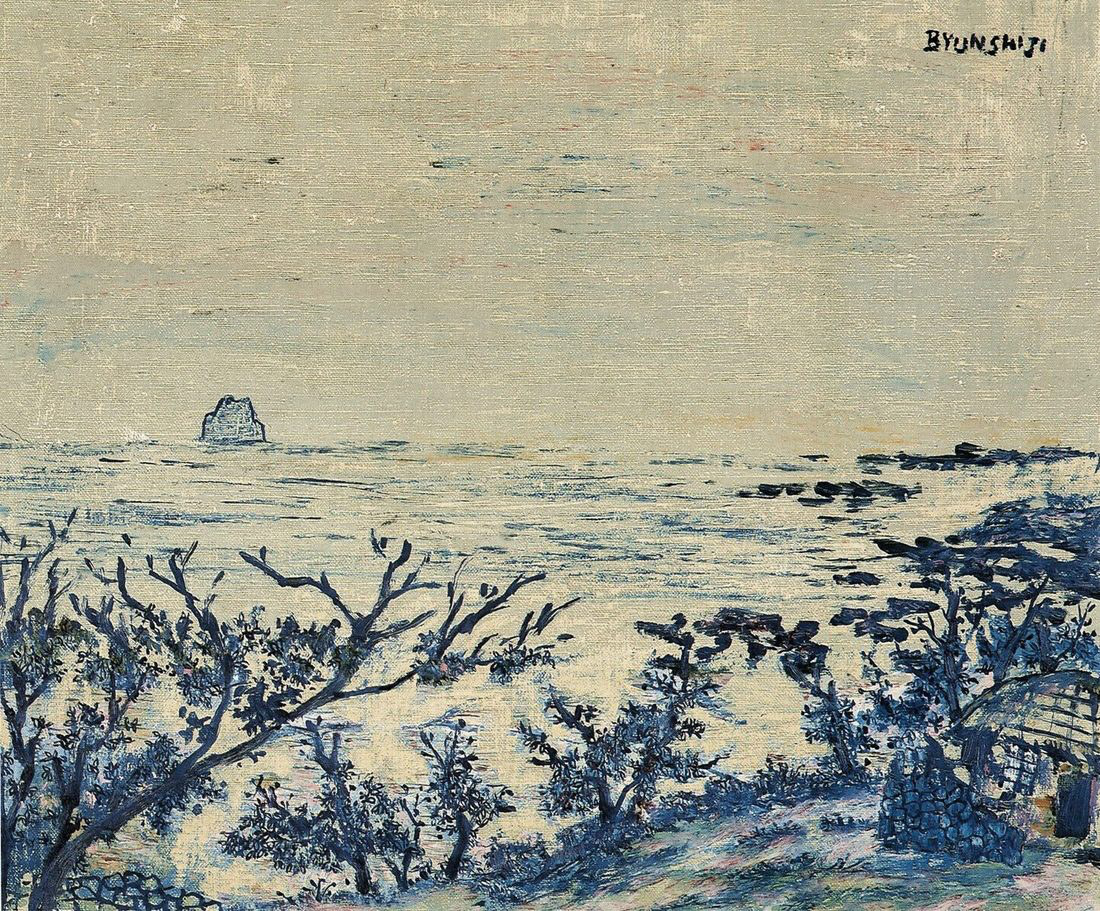
FŪDO 001 · 1978
Ieodo
이어도
- Early Jeju
- Entering fūdo
Dark branches and low vegetation tangle before a pale sea, while a distant rock island remains a small point beyond the rough foreground.
Ieodo remains distant, yet the viewer has already entered the wind among branches and stone walls.
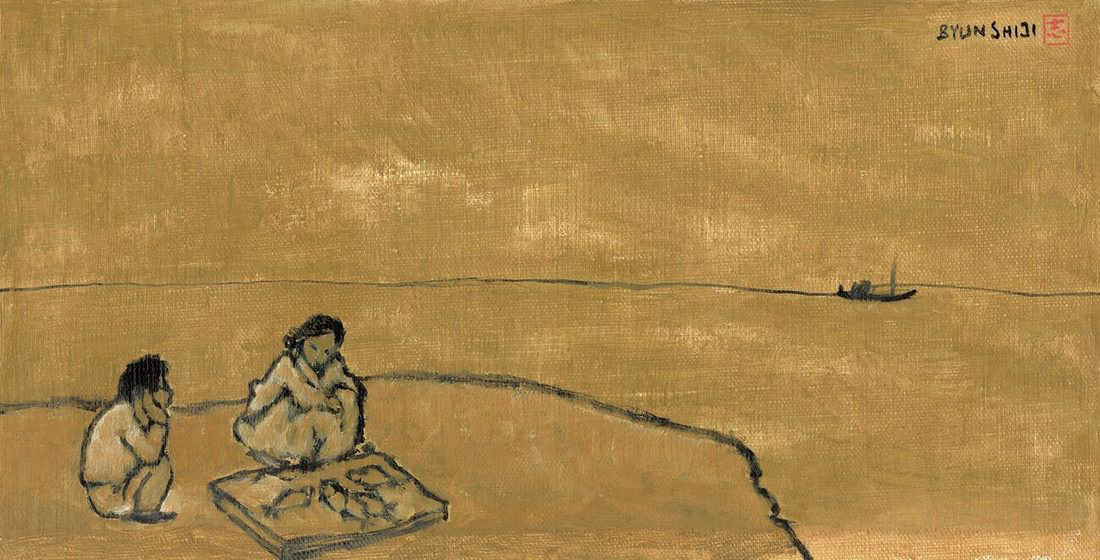
FŪDO 043 · 1979
Mother and Fish
어머니와 생선
- Early Jeju
- A family joined by the horizon
A mother and child sit beside fish laid out for sale; the child looks toward a small boat, while family labour is divided between shore and horizon.