CENTRAL READING
The Cliff's Edge
To paint dried-grass colour is to call Jeju into the work. Colour reveals fūdo rather than covering scenery.
PERIOD & MOTIFS
Middle Jeju I, 1980–1987
Ieodo, dried-grass colour, storms, wavering horizons and the black sun.
fudofūdocolour
LIFE & TIME
Chronological coordinates
- 1982The Cliff's Edge was created and registered in the official archive.
- REVIEWMiddle Jeju I, 1980–1987 · Ieodo, dried-grass colour, storms, wavering horizons and the black sun.
THE PAINTER’S VOICE
Related oral history
- Session 5From the Biwon Style to the Jeju Style
- Session 7Dried-Grass Colour · Technique · Independent Artistic World
RESEARCH
Research paths
- RESEARCHPainter and FūdoOpen source →
- RESEARCHA Century of WindOpen source →
- RESEARCHVerified ChronologyOpen source →
EVIDENCE
Evidence and interpretation
| Grade | Claim | Basis |
|---|---|---|
| A | 1982 · The Cliff's Edge | Title, year and image in the official 100 Works archive. |
| B | Visible form and recurring motifs | Direct comparison of image, artwork text and related works. |
| B | Middle Jeju I, 1980–1987 | Formal comparison within the reviewed chronological group. |
| C | Links to life, testimony and research | Curatorial relations proposed for research navigation. |
Related Works
Works to view together
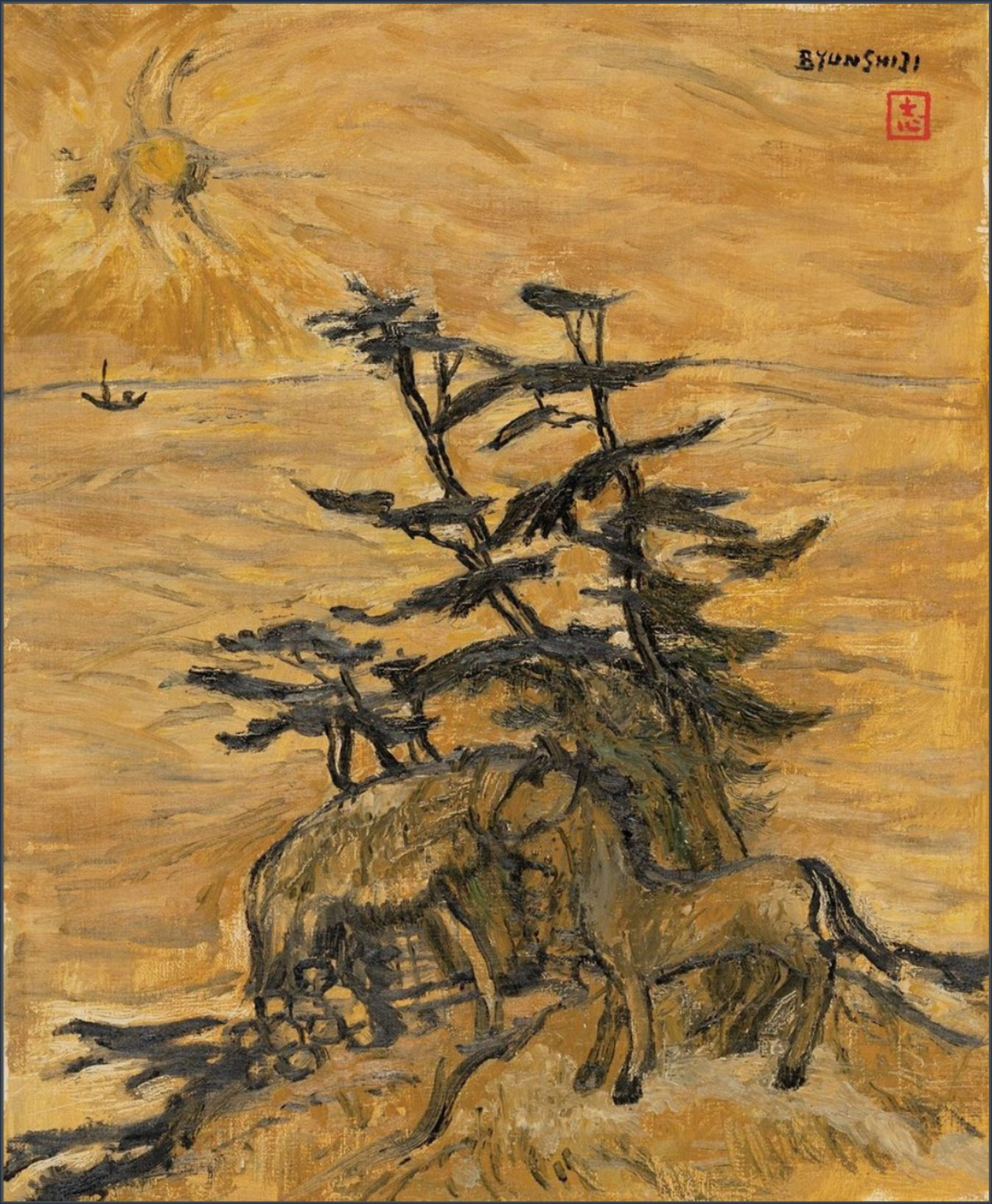
FŪDO 008 · 1983
Tropical Sun
This yellow is not merely local colour; it is the colour of life that has endured.
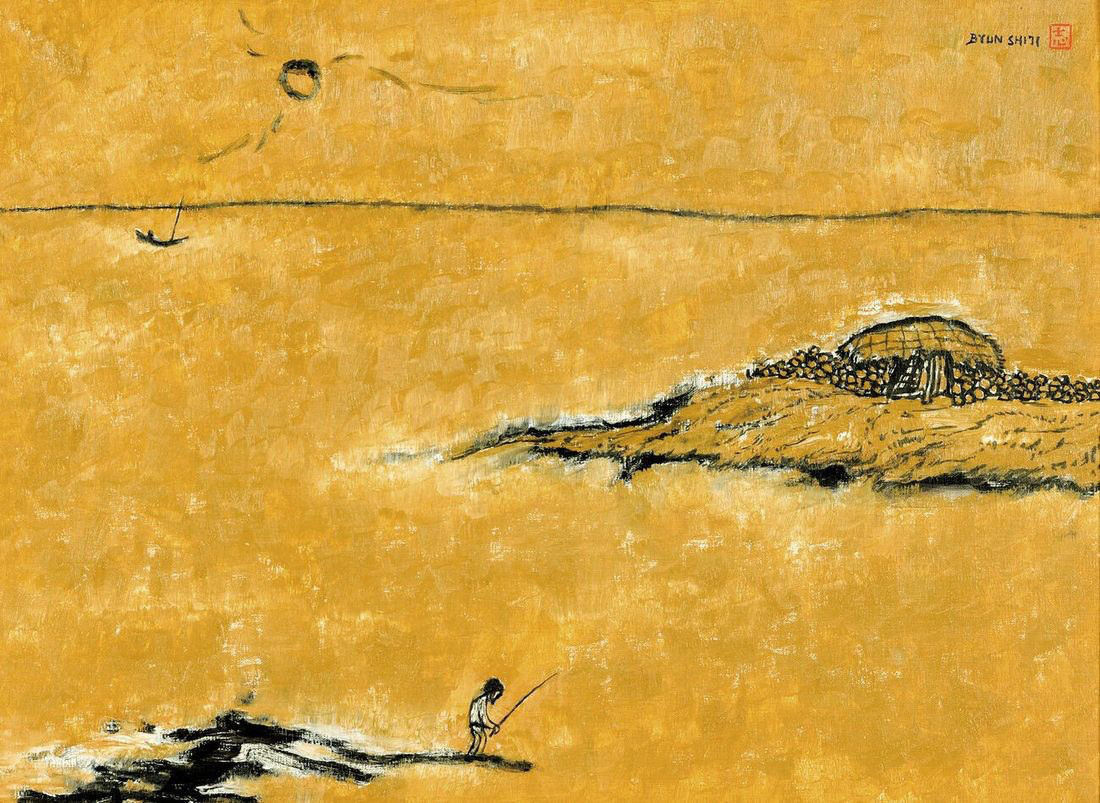
FŪDO 046 · 1982
Sea Village
The departing boat and remaining house bind maritime and terrestrial life within one fūdo.
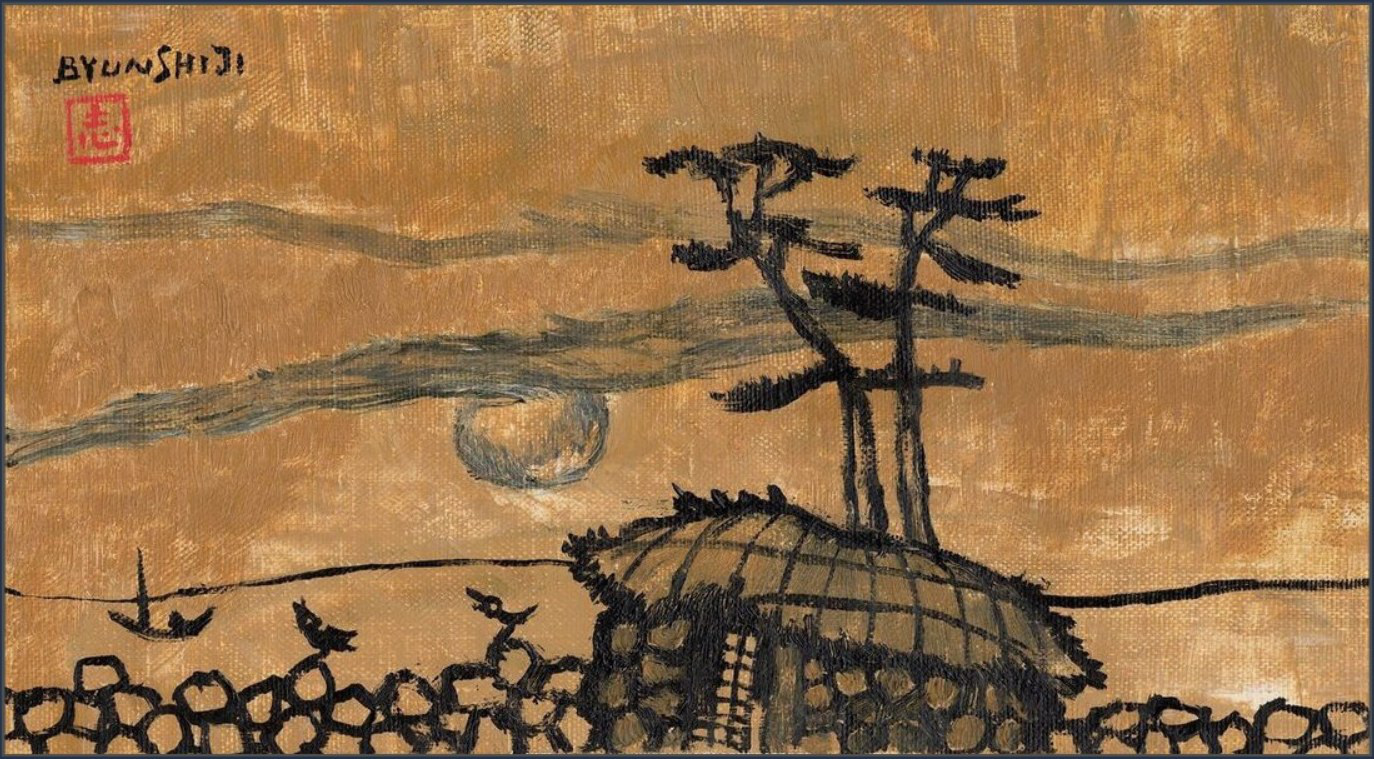
FŪDO 048 · 1982
Thatched House by the Shore
Waiting is the refusal of those who have companions to forget the one left alone at sea.
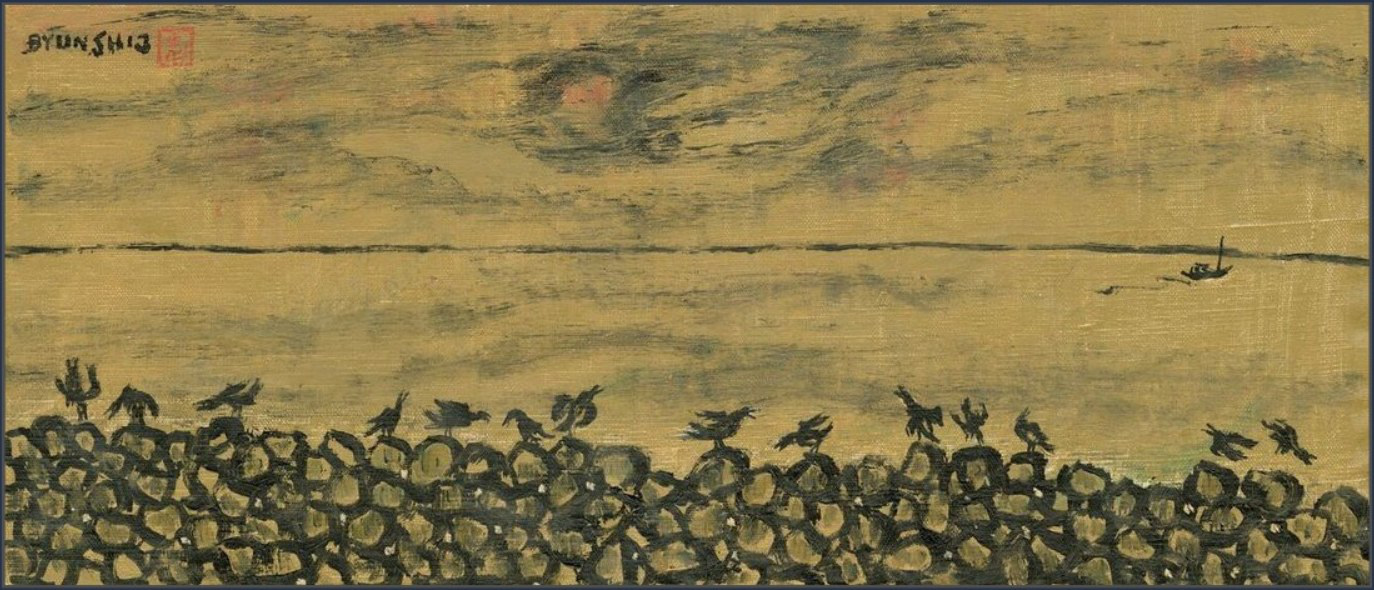
FŪDO 057 · 1983
Crows on the Stone Wall
Perhaps waiting is the act of those who remain looking toward the sea together.
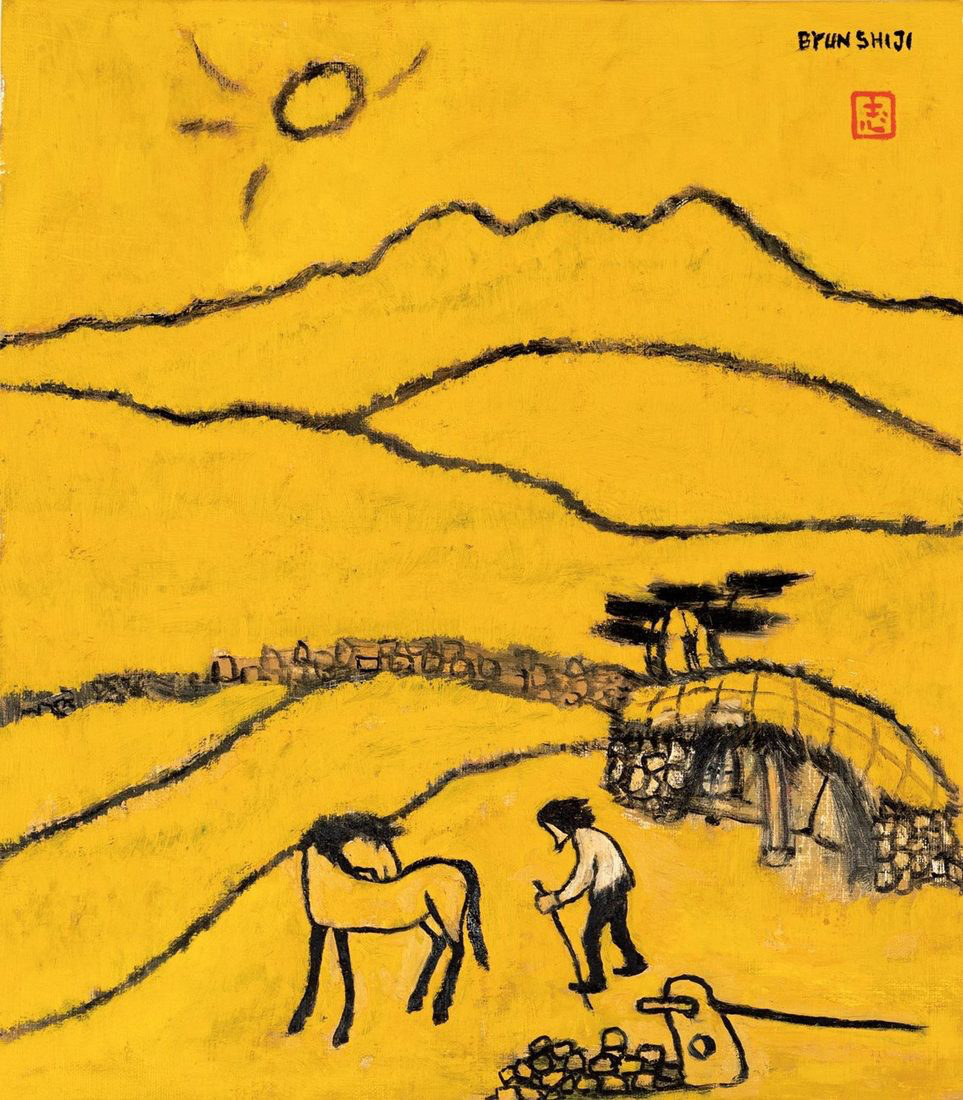
FŪDO 009 · 1987
Hallasan
Landscape is not a background behind a person, but the posture formed by a life lived there.
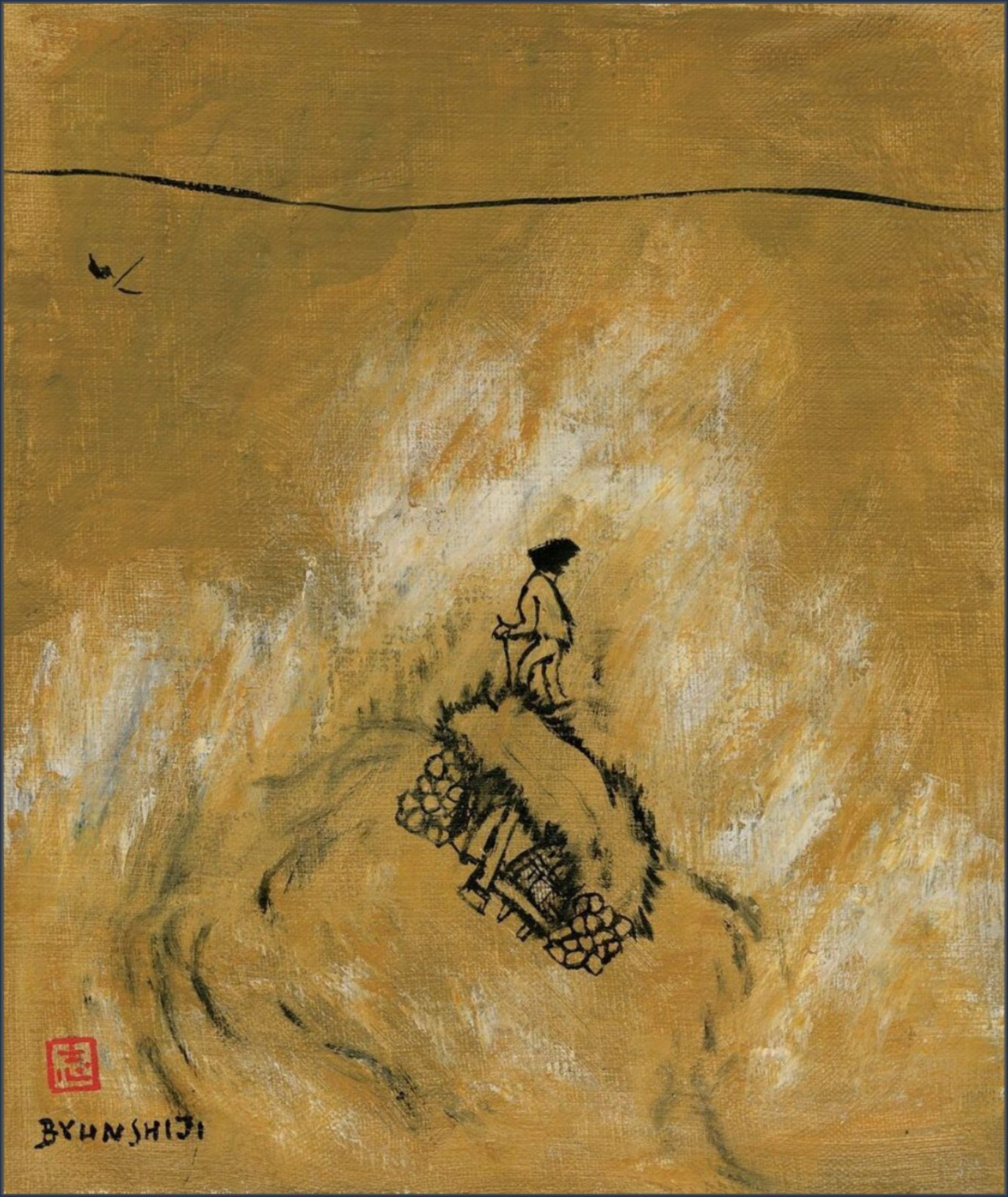
FŪDO 006 · 1983
A Wavering Horizon
Even when every standard wavers, one raises the gaze toward what is still to come.