Research/A Hundred Years of Wind/Ⅱ Figure & Being
Ⅱ Figure & Being · 27 / 100
The Light of Old Age
Late Form and Unresolved Tension
노년의 빛
A Bright Painting Need Not Be Serene
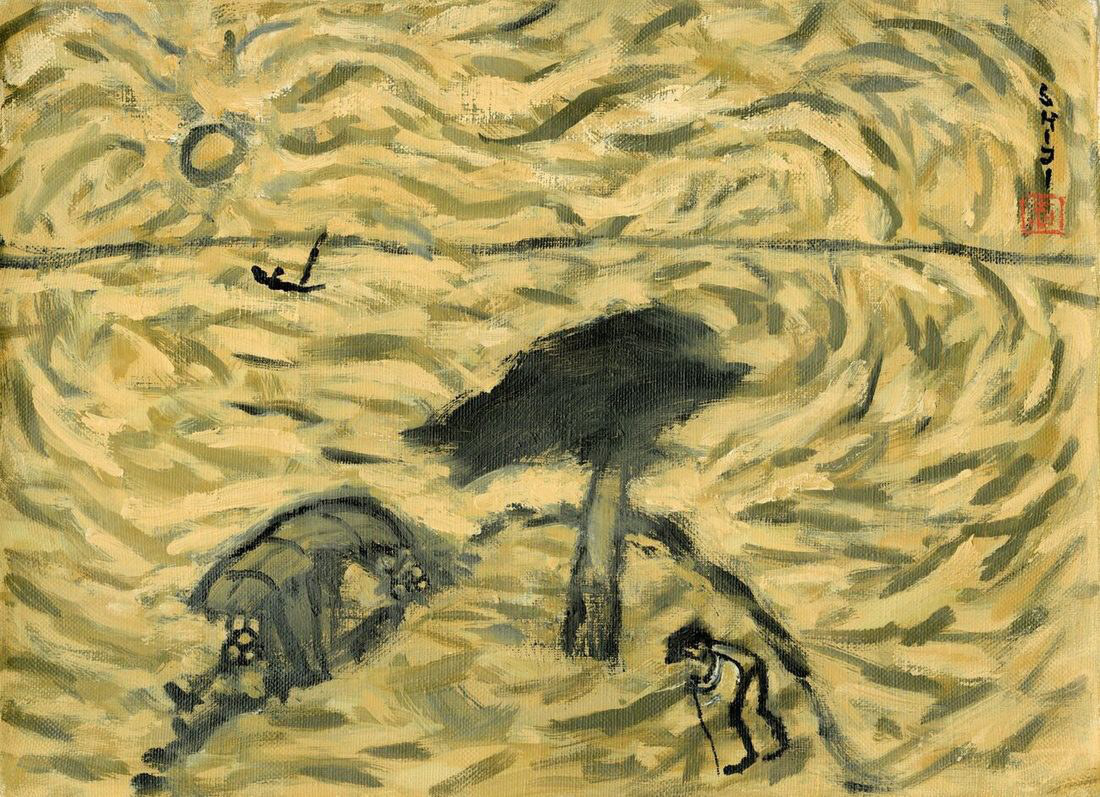
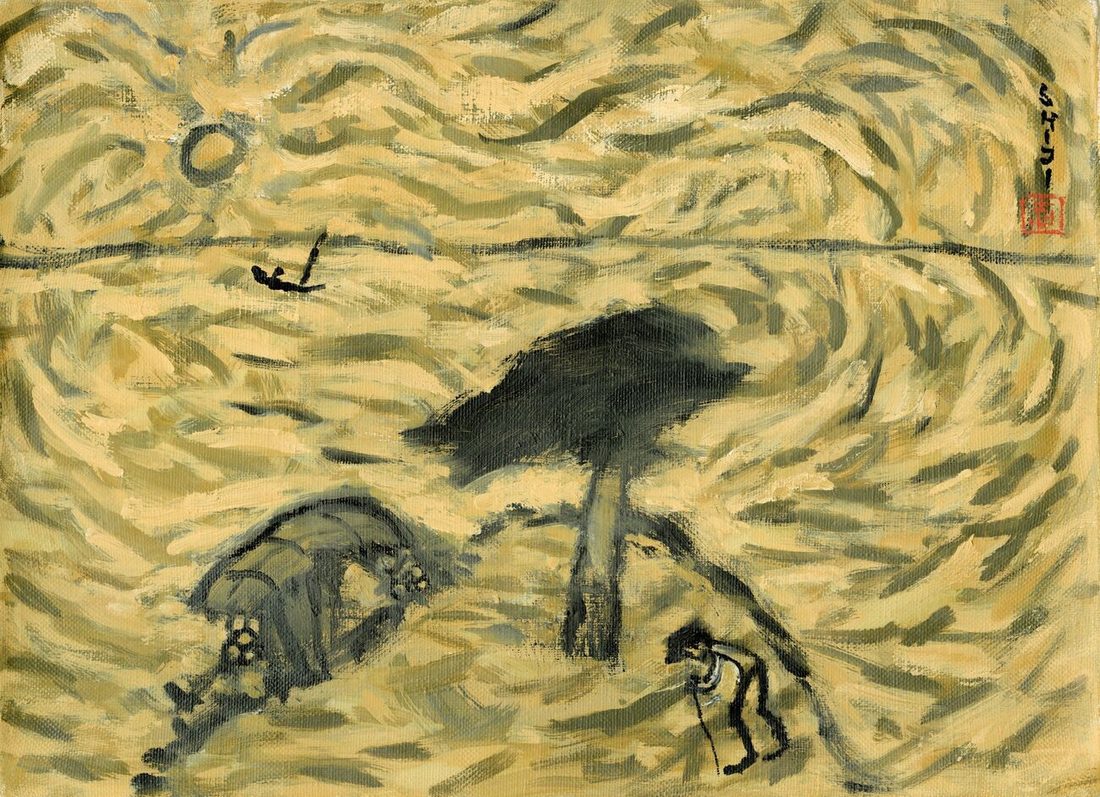
The ground of Noon (2007) is bright, but its marks do not rest. Curved strokes run in different directions, and the tree’s dark mass interrupts the light field. The person at lower right bends low. Before this picture, brightness in old age cannot simply be equated with peace of mind. An expanse of light can make a small body’s exposure more apparent.
Knowing a painter’s age can make every line seem like a final statement. Roughness becomes bodily decline; open space becomes desire extinguished. Such explanations arrive with their conclusions already in place. Before assigning a meaning to age, we should ask what has diminished and what, by contrast, has become more forceful.
Old age has no single expression. Just as quiet days and troubled days differ, late paintings need not share one character. Praising maturity does not require us to erase the tensions that remain. Their persistence may show that the painting is still engaged with a present problem.
A Late Painting and a Late Style
A painting’s late date and a judgement about its late style must be distinguished. One places it in a chronology; the other makes a claim about form. Reduced means or a looser composition do not automatically establish a late style. We need to explain what such changes do within the work.
In “Thoughts on Late Style”, Edward Said questions the habit of understanding late works only through reconciliation and serenity. Drawing on Adorno’s reading of Beethoven, he considers unresolved contradiction and disjunction as features of lateness. The essential point is not to let age substitute for an account of what the art does.
There is no need to fit Byun directly into that argument. It can nevertheless change our question. Rather than ask only what the painter reconciled himself with, we can ask what he still refused to relinquish. Between the abundant marks and the small body in Noon, a force remains that is not easily settled.
What Painting Less Actually Does
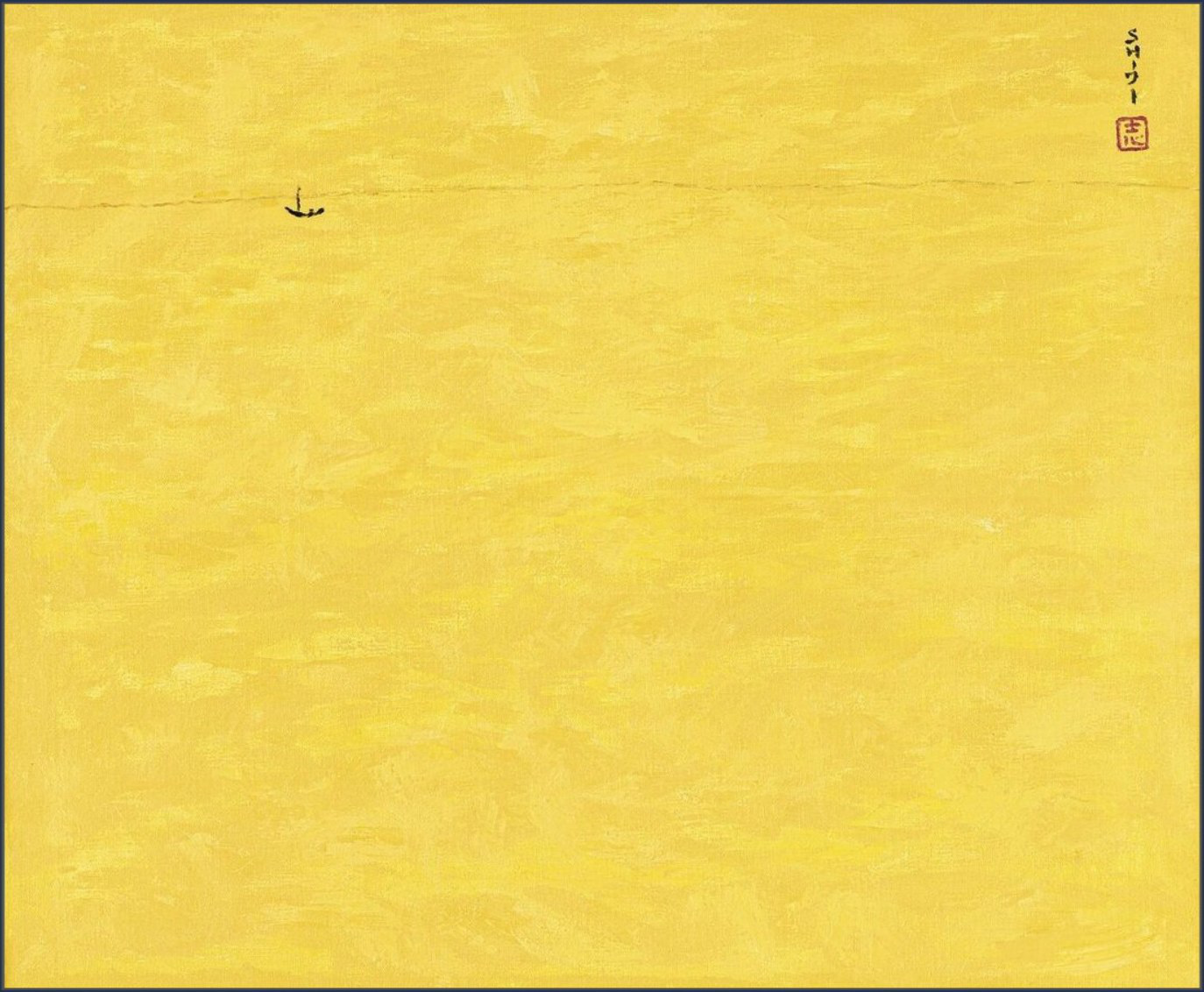
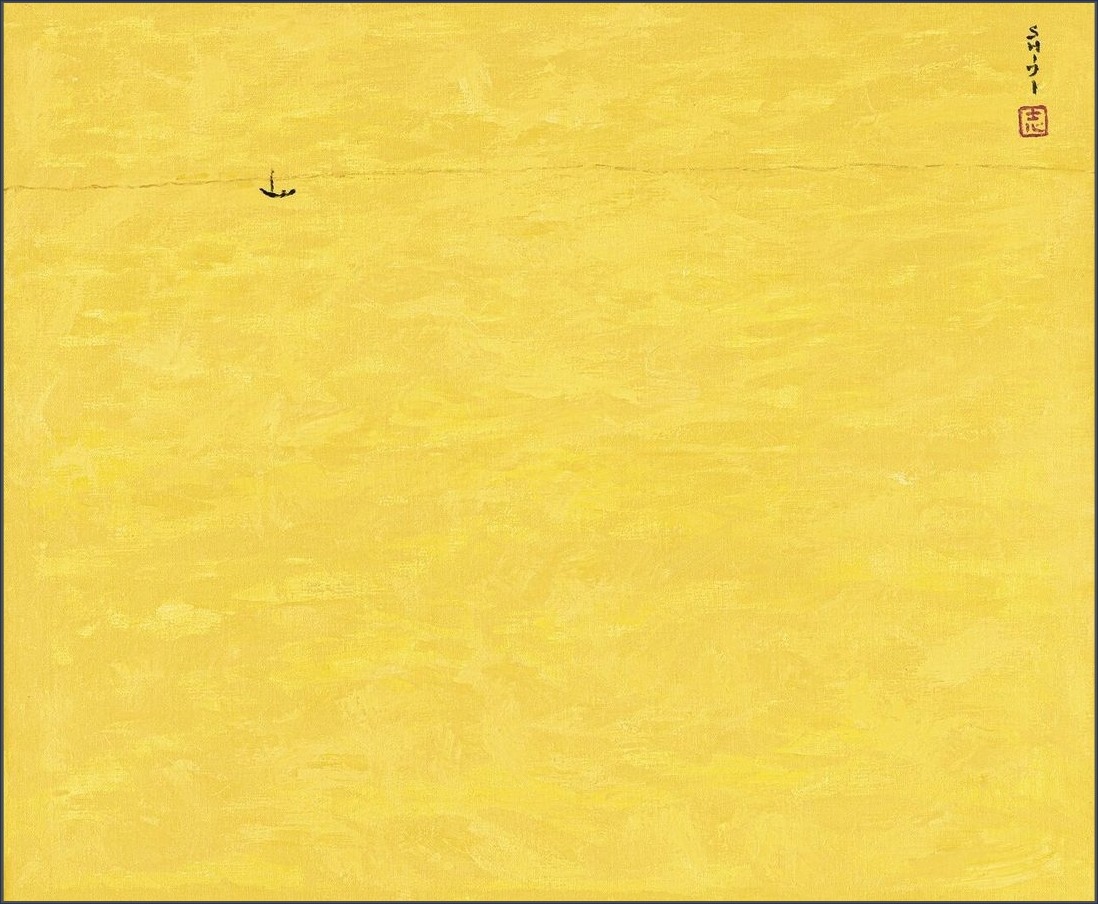
In A Single Dot (2006), the boat is very small and the horizon fine. Yet the broad ground is not inactive. Variations in brightness and the grain of brushwork hold the eye. The title invites us to see a motif reduced to a trace, while the actual painting retains relationships of scale, distance and surface.
Painting less is not merely reducing the number of objects. It means allowing a diminished boat to remain recognisable, and a fine line to make the space above it feel different from the space below. The fewer things remain, the more their placement matters. Open space is the extent through which that placement is felt.
It is difficult to call the simplicity achieved here an abandonment of skill. Clearing a picture also demands discrimination. Remove more and distance itself may disappear; add more and the small boat’s weight may change. Omission is not simply a name for what could not be painted. It is a decision about how far this painting needs to go.
Pausing the Straight Line from Darkness to Light
Set the broad light of A Single Dot beside the dense marks of Noon, painted the following year, and change no longer travels in only one direction. The earlier work is more sparing; the later one is again full of agitation. Dates follow a line, but formal choices need not. Openness and density can address different questions within the same period.
Dried-grass colour includes variations of light and dark. Yet reproductions alone cannot establish a colour history for an entire career. Lighting, photography, printing and screen settings can alter appearance. What these plates support is an account of contrasts within the images. Conclusions about the original colours and materials require a different comparison.
This does not eliminate colour’s emotional force. We can ask whether a dark form appears more isolated against light, or whether surrounding marks draw towards it. Rather than make light a code for reconciliation, we read the relations it creates. Comparable brightness may establish a quiet distance in one picture and an exposure without shelter in another.
Imagining a Hand Before a Rough Line
A rough line in a late painting invites us to imagine the hand that made it. The impulse is understandable, but the line does not diagnose the body. Brush, paint, ground, speed, pressure and decisions to revise all contribute to the mark. A single image cannot determine how much each contributed.
The idea of a beauty of unpolished simplicity also requires care. An unsmoothed form is not automatically more truthful. Roughness gains force when a simplified shape establishes a precise tension with its surroundings. Rough marks alone guarantee no depth. Rather than celebrate apparent awkwardness, we should ask how it operates in the picture.
The skill of someone who has painted for a long time need not announce itself through display. It may appear in the choice not to add what could have been added. Yet we cannot declare every part intentional. What matters is avoiding the extremes of total control and total incapacity, and attending to the work done by the forms that remain.
How a Small Boat Makes Space
The size of a canvas and the expanse felt within a painting are not the same. Enlarging a reproduction does not enlarge the original, nor does viewing it on a small screen necessarily shorten its internal distances. Physical dimensions require measurements. Felt expanse must be examined separately through proportions within the picture.
In A Single Dot, the small boat makes the broad field feel broader. Without it, our way of reading that field as sea would change. The small thing is not merely an ornament overwhelmed by expanse. It provides a measure. A trace needs its surroundings, while those surroundings gain scale through the trace.
Omission in late work cannot therefore be understood only as disappearance. Alongside asking what has gone, we need to ask what the remainder now makes possible. Fewer motifs may lengthen the act of looking. That time is not bestowed directly by the painter’s age; it is requested by the picture before us.
Distinguishing A Single Dot from The Last Work
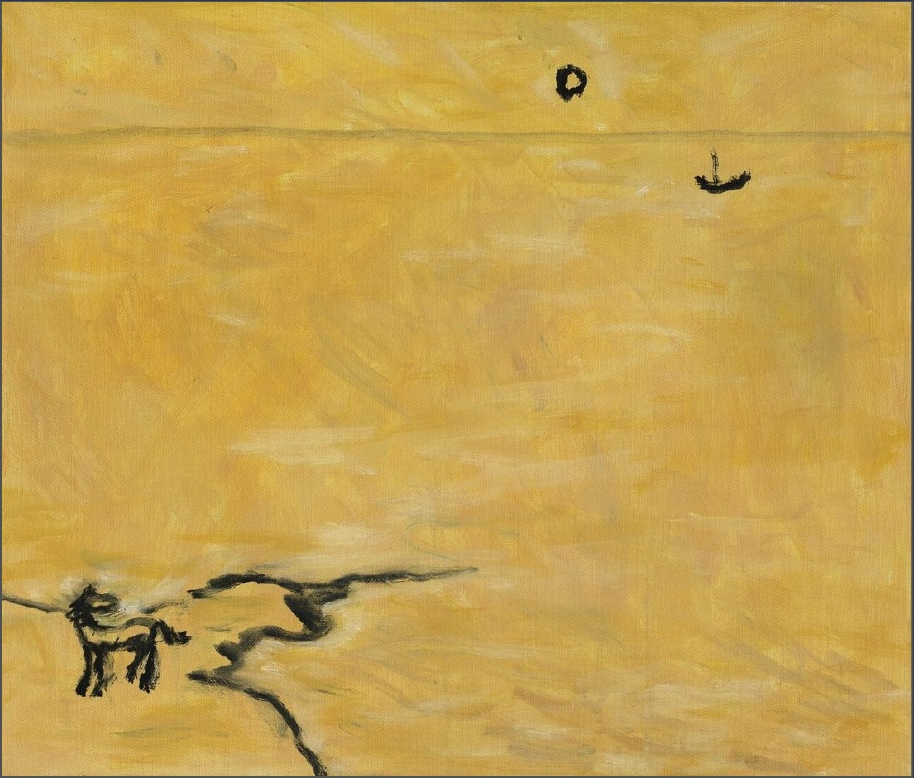
The archive distinguishes A Single Dot, dated 2006, from The Last Work, dated 2013. The latter retains a horse, a small boat, a round sun and a coastal line. The story that the final painting consisted of a single dot cannot therefore serve as the basis of interpretation. Distinguishing the works reveals more than one way of using omission.
The word last also asks us to distinguish an archival designation concerning sequence from a title assigned by the artist. The absence of a visible signature does not establish deliberate erasure or a premonition of death. Its position at the end clearly affects us, but our feeling cannot simply be identified with what the painter was thinking then.
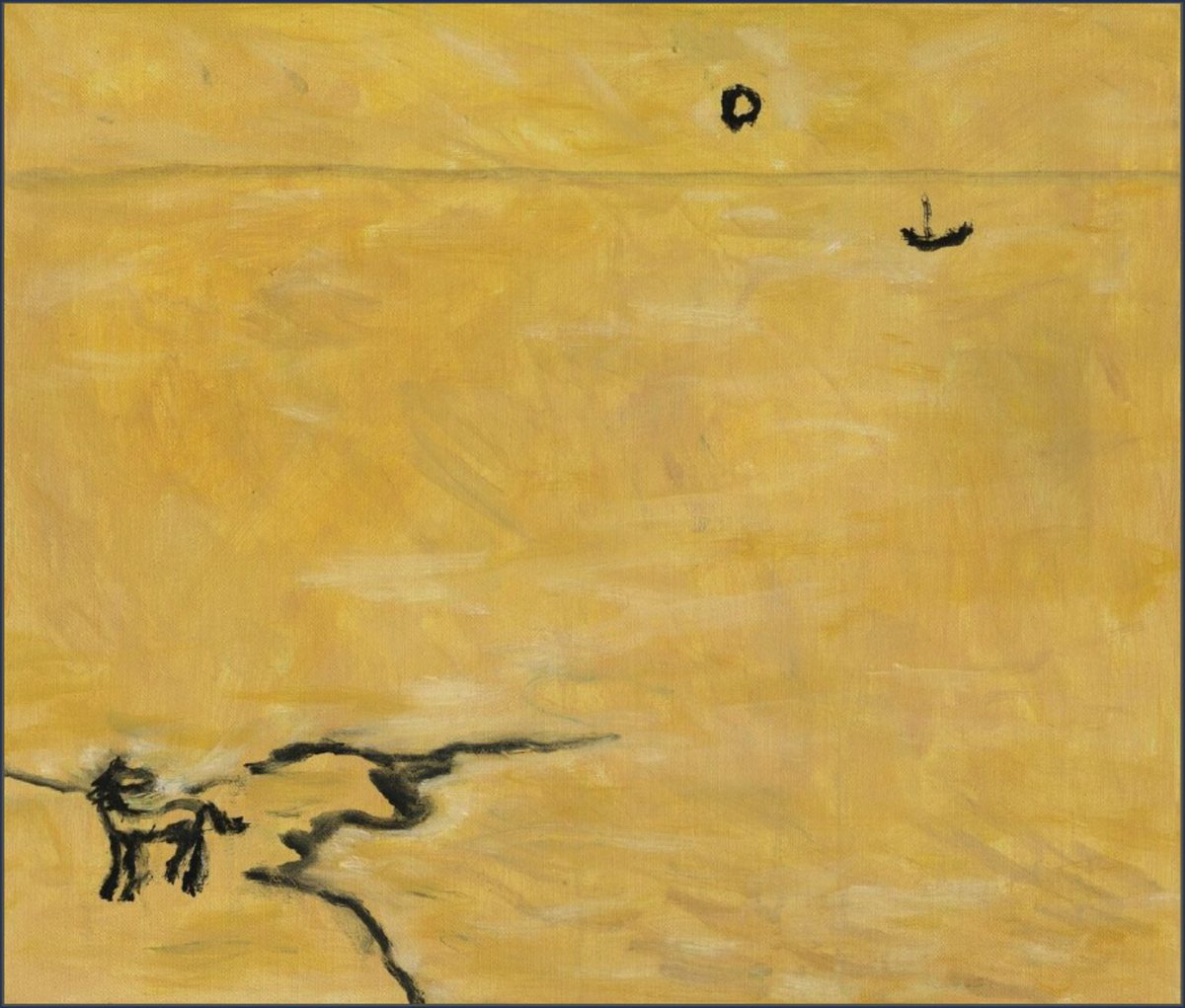
Such care need not make the painting less affecting. It restores the work from a monument already explained to a surface that still has something to show. Broad light separates the horse below from the distant boat. The eye can follow that interval without knowing a testament.
A Painting at the End Is Still Seen Now
If the light of old age is called only the light of someone who has let everything go, the choices remaining in the painting become obscure. A late date does not end the questions: how much of a trace should remain on a broad ground, and where should one dark form be placed? These are more specific than a phrase explaining age.
Before Byun’s late paintings, we can postpone the word completion. Openness and roughness, brightness and tension remain together. Not every work moves towards a reconciled ending, and the painting placed last does not stand in for everything before it. Looking at each work separately remains necessary to the end.
The coastal line descends. A horse is nearby. Above the distant boat, the dark rim of the round sun remains.