Research/A Hundred Years of Wind/Ⅰ Nature & Fūdo
Ⅰ Nature & Fūdo · 11 / 100
The Four Seasons of Jeju
Painting a Season, Living Through Seasons
제주의 사계
When There Is No Calendar in the Painting
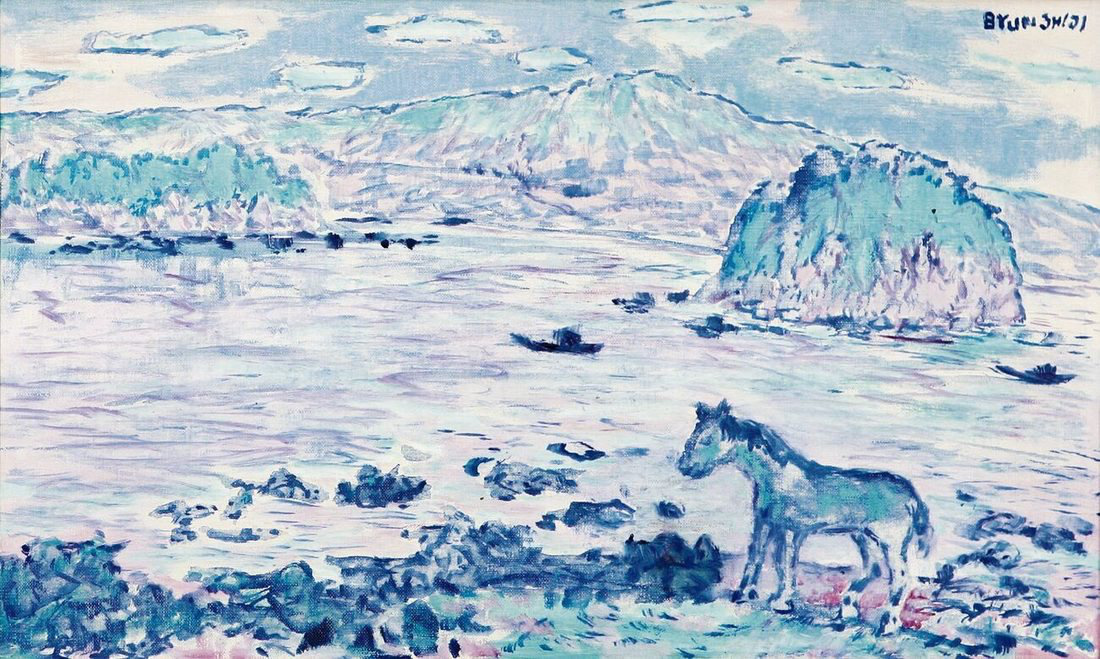
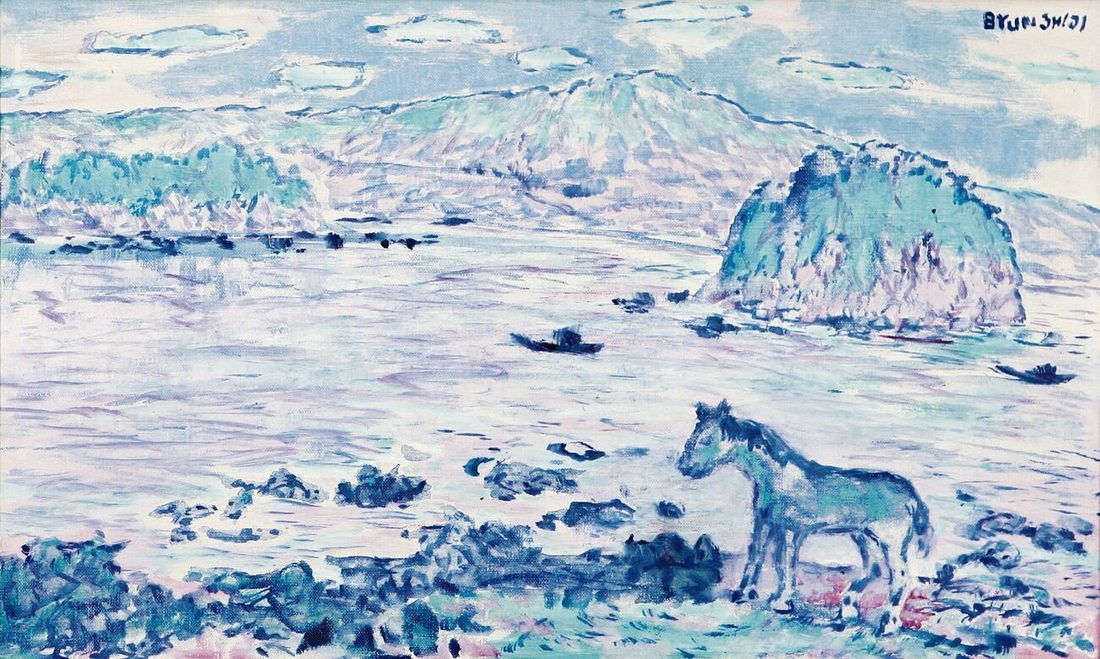
Blue extends across Jeju (1976). Fine strokes overlap on the light surface of the sea, and bluish tones connect the distant mountain with the horse nearby. Yet colour alone does not tell us the season. A blue sea need not signify summer, nor a pale sky establish spring. Colour first creates relationships within the painting; the name of a season comes afterwards.
Reading the seasons in Byun Shi-Ji may involve something other than locating spring flowers and autumn leaves in turn. We can attend to how far the sea opens, how exposed a small body appears, and what lightness remains between strokes. A season may approach through an atmosphere made by several elements rather than reside in one motif. We may stay with that atmosphere without identifying a season exactly.
Three times need to remain distinct: the time shown, the time of making, and the time in which we now look. An artist can recall summer during winter or revise one scene over several days. By not identifying a depicted season immediately with a month of production, we make room for the time of memory and decision that may have entered the painting.
What Returns Is Not the Same Day
The return of a season promises familiarity. For a living body, however, the season that returns is not the same. A path walked last year may be taken more slowly now. The same window opens, but someone who was beside it may be absent. Where recurring weather meets a life that cannot recur unchanged, the season becomes a return slightly out of alignment rather than a perfect circle.
This is not an invented account of a particular day in Byun’s life. It asks what kinds of time may enter the act of returning to a motif. The same horse can be surrounded by a different extent of space. Before the same sea, a line may stop elsewhere. A recurring subject and a decision that does not simply repeat itself meet within one painting.
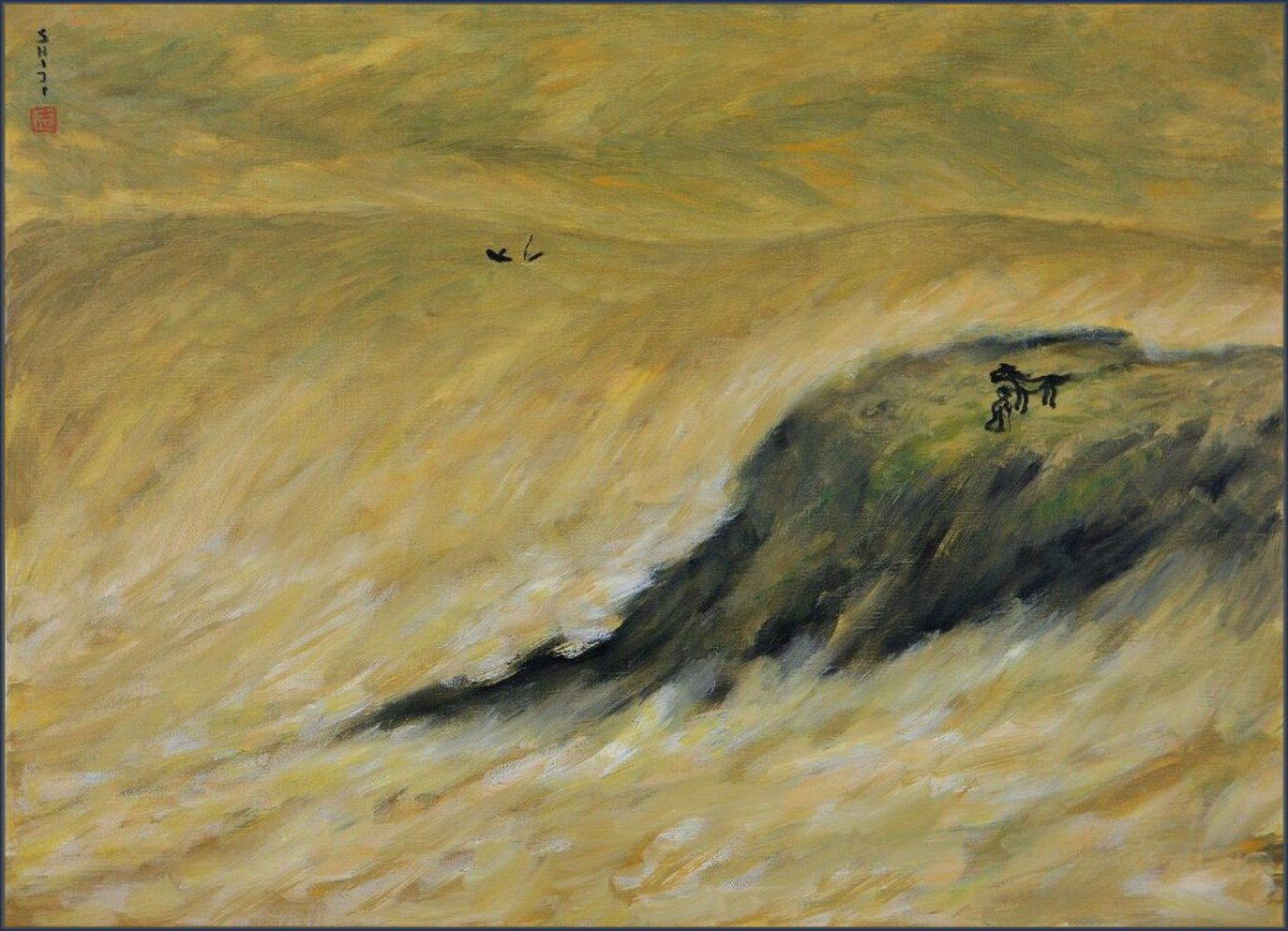
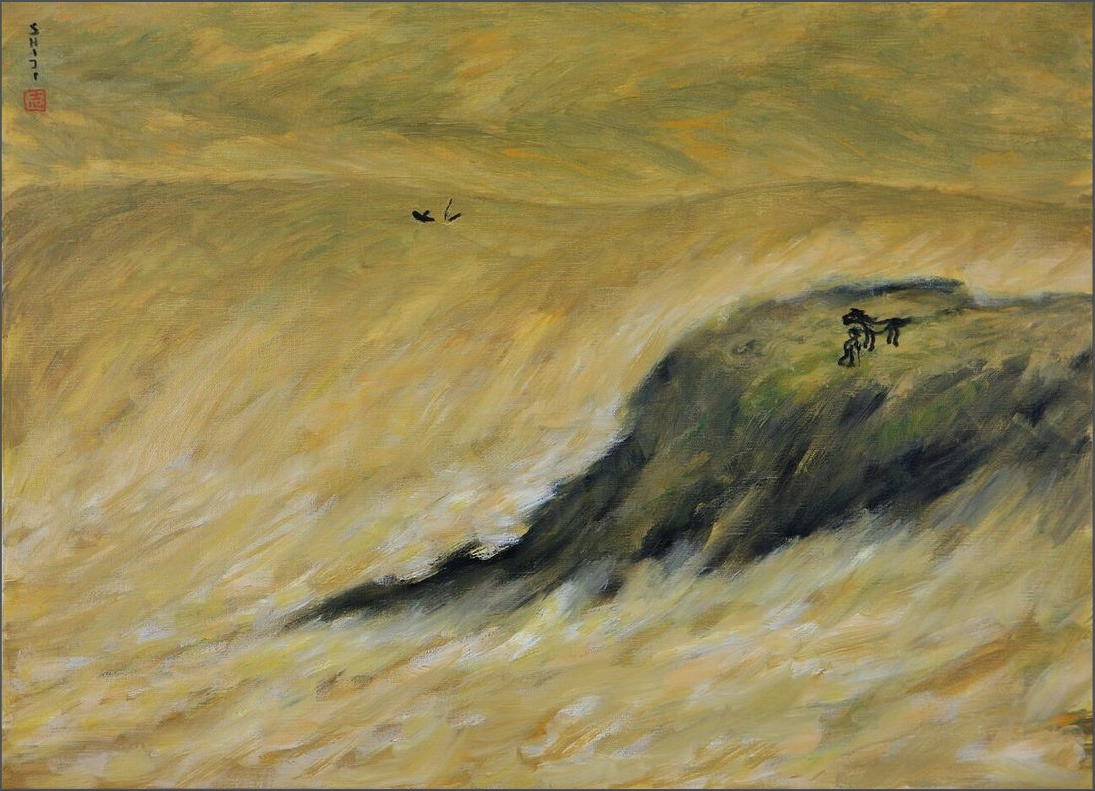
The four seasons cannot therefore be fitted directly onto a painter’s life. Youth as spring and old age as winter form an accessible metaphor, but it can overlook turbulence in late work and quiet in earlier work. The forceful diagonals of A Wavering Horizon (2005) interrupt an account of late painting as nothing but emptiness and calm. Different seasons can overlap within a life.
The Temperature of a Colour Is Not Fixed
To confine dried-grass colour to autumn is to narrow what it can do. Dry grass evokes a condition of having undergone change before it names any particular month. A ground within the same colour range can feel open when long, light strokes cross it, or heavy when darker masses settle upon it. Seasonal feeling arises from the handling of colour, not simply from its name.
The light sea in Jeju expands through the alternation of blue strokes and pale ground. In A Wavering Horizon, by contrast, dark land and light diagonals seem to press against one another within a yellowish field. Blue cannot simply be translated into cold, or yellow into warmth. The apparent temperature of a colour and the sense of ease afforded by a painting are different matters.
Following these differences, a season can become both describable weather and a feeling not yet named. Before asking which month it is, we may sense how far light reaches or how exposed a body appears. Painting does not abolish the divisions of a calendar; it adds a time those divisions cannot fully contain. Delaying the name allows more differences to come into view.
Looking Again at the Comparison with Monet
There is no need to divide eye from body and assign each to a different painter when comparing Byun with Monet. The National Gallery of Art explains that paintings in the Rouen Cathedral series, begun before the motif, were extensively reworked in the studio. They cannot be understood solely as immediate transfers of momentary impressions. Observation, memory and pictorial adjustment can work together within one artist.
The comparative question changes accordingly. It is not who saw with the eyes and who with the body. What differences were selected within a recurring subject, and how were they formed through colour and stroke? Calling Byun’s restricted palette profound does not require reducing another painter’s varied colours to surface appearances. A precise account of difference opens both bodies of work rather than diminishing one.
In Byun’s paintings, we can first follow the lines that make things recognisable and the colour that connects their surroundings. As colours gather within a narrower range, the density of strokes and intervals between things may become more consequential. Seasonal change may find a place in these differences. Identifying a depicted season and asking how seasonal experience becomes form belong together, but they are not the same task.
A Life That Waits for the Season
A season does more than change a beautiful view. It alters when a door opens or closes, how long work can continue outside, and when waiting becomes necessary. Thinking of these divisions in daily life gives a small painted house a role beyond decoration. Before asking what the house symbolises, we can ask where a person might find a place for the body, however briefly.
When such actions are not depicted, they cannot be established as events within the painting. Yet the relations among house, path and boat allow us to consider possibilities of living. Which way does the path open? How much water lies between boat and shore? Thinking about seasons becomes less a matter of supplying flowers or snow than of asking again how things may be used.
From this perspective, the seasons are not a cycle in which life automatically reaches fulfilment. They are a time of waiting for what will return while today’s tasks remain. The painter’s repetition need not merely reproduce an already complete Jeju. The need to look again at something familiar can become a reason to remain in one place and make a different painting.
A Colour That Does Not Stand In for Spring
To say that the seasons inhabit Byun’s colour need not mean that their actual colours are physically contained in the paint. It can mean that an eye which has watched the world change repeatedly participates in the present decision. That decision may preserve earlier experience or alter it. Memory is less a store that returns things unchanged than a time entering new relationships in the painting before us.
A seasonal feeling need not be fixed to a single emotion. Spring can include departure, and winter can include warmth. Rather than write these possibilities into a particular painting as its story, we can leave room for their complexity. Dried-grass colour then becomes less an answer explaining every past season than a ground upon which different memories may find a place.
The seasons move, in this reading, from a law determining the painter’s colour to a time through which a painting can be read again. Looking for spring, we notice a light interval on the sea; thinking of winter, we attend to the space beside a small body. We need not settle every seasonal name. Looking longer at the differences beneath the name can make the scene new.
A blue stroke remains on the pale water. Beside it is an interval. The eye crosses that interval and moves towards the next stroke.