Oreum
The summit is not a place to remain. An ascent is completed by descent.
Middle Jeju I, 1980–1987
Ieodo, dried-grass colour, storms, wavering horizons and the black sun.
Chronological coordinates
- 1986Oreum was created and registered in the official archive.
- REVIEWMiddle Jeju I, 1980–1987 · Ieodo, dried-grass colour, storms, wavering horizons and the black sun.
Related oral history
- Session 5Formation of the Jeju Style
- Session 7Independent Artistic World · Dried-Grass Colour · Imagined Landscape
Research paths
- RESEARCHPainter and FūdoOpen source →
- RESEARCHA Century of WindOpen source →
- RESEARCHIconography of the Bent BodyOpen source →
Evidence and interpretation
| Grade | Claim | Basis |
|---|---|---|
| A | 1986 · Oreum | Title, year and image in the official 100 Works archive. |
| B | Visible form and recurring motifs | Direct comparison of image, artwork text and related works. |
| B | Middle Jeju I, 1980–1987 | Formal comparison within the reviewed chronological group. |
| C | Links to life, testimony and research | Curatorial relations proposed for research navigation. |
Works to view together
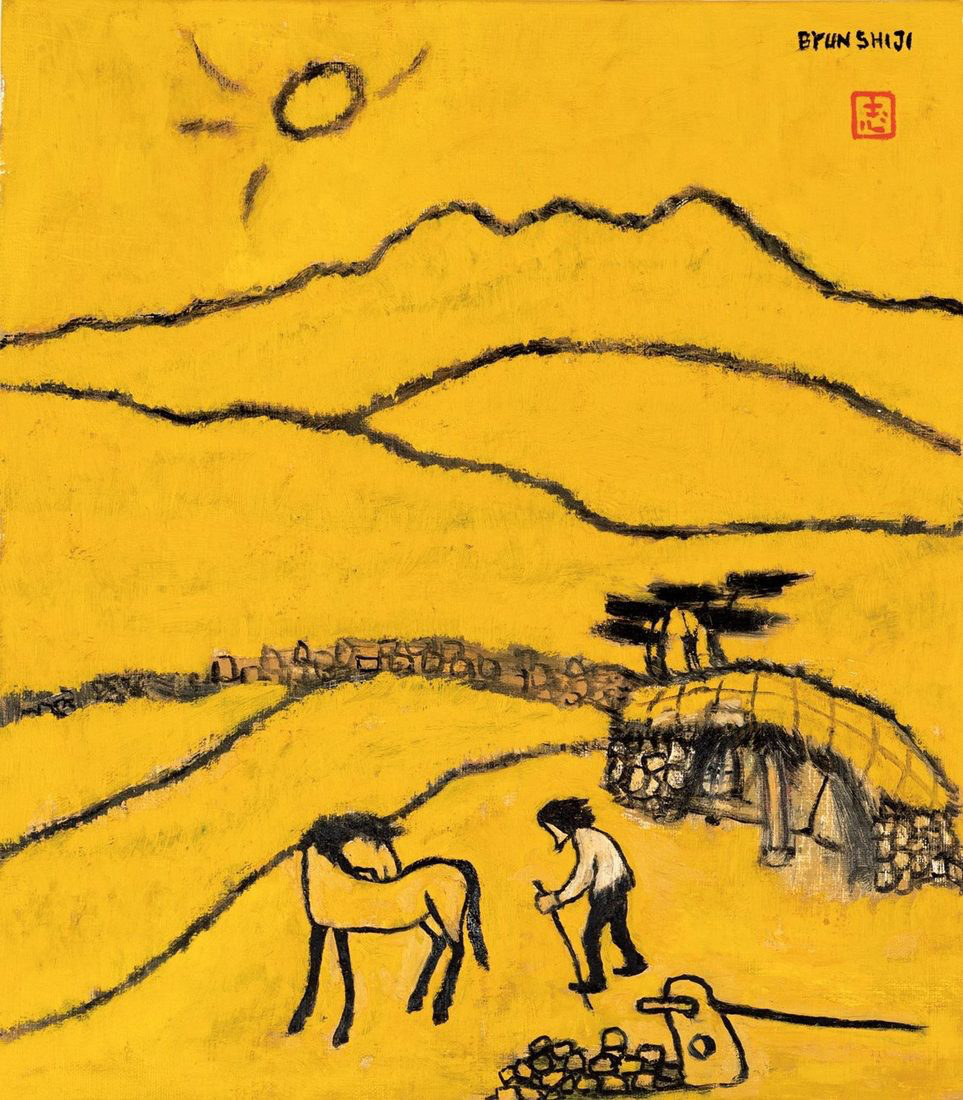
Hallasan
Landscape is not a background behind a person, but the posture formed by a life lived there.
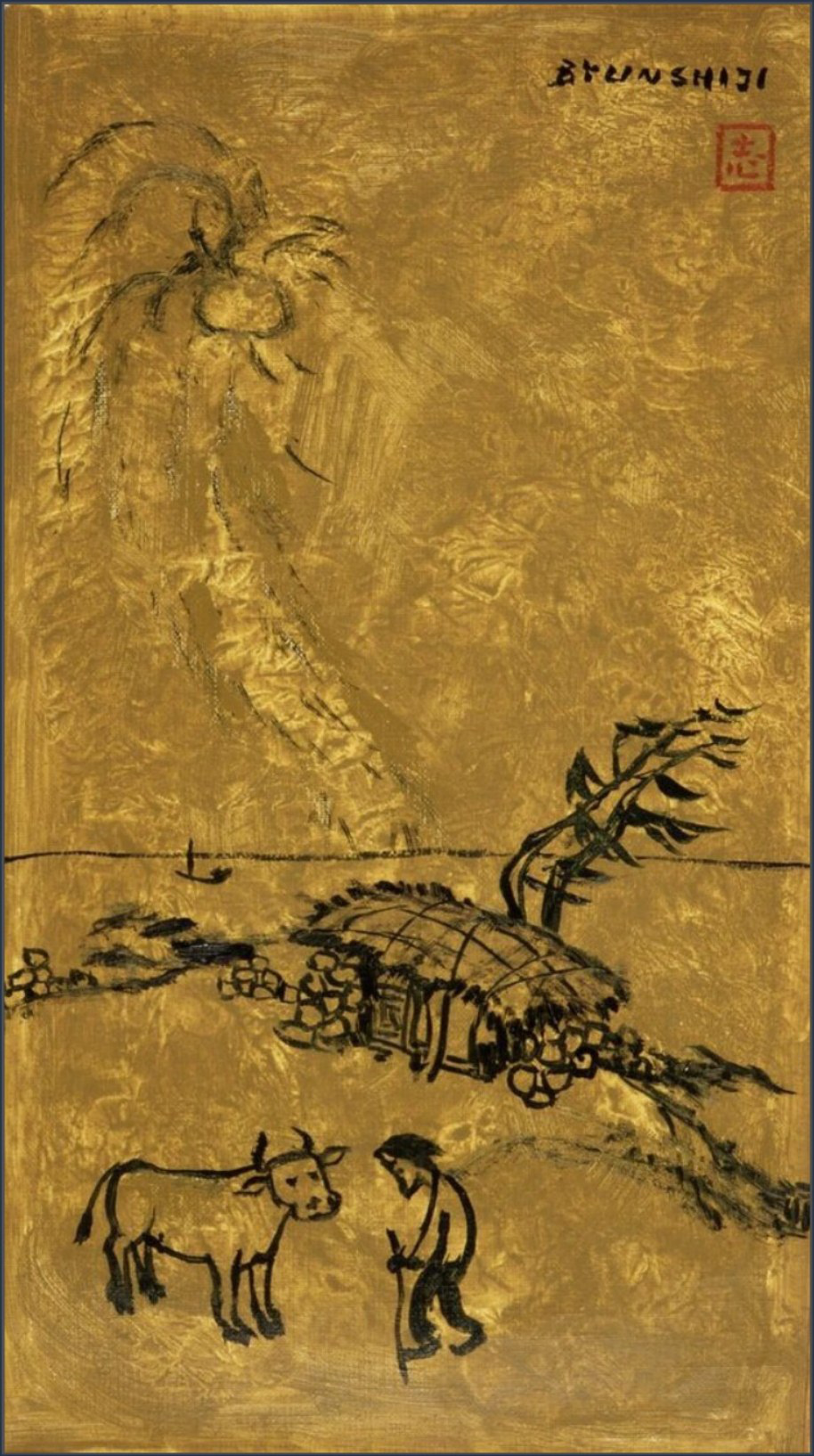
The Ox and the Old Man
The ox and old man have walked side by side for a lifetime. Both have aged, yet their mutual gaze remains unchanged.
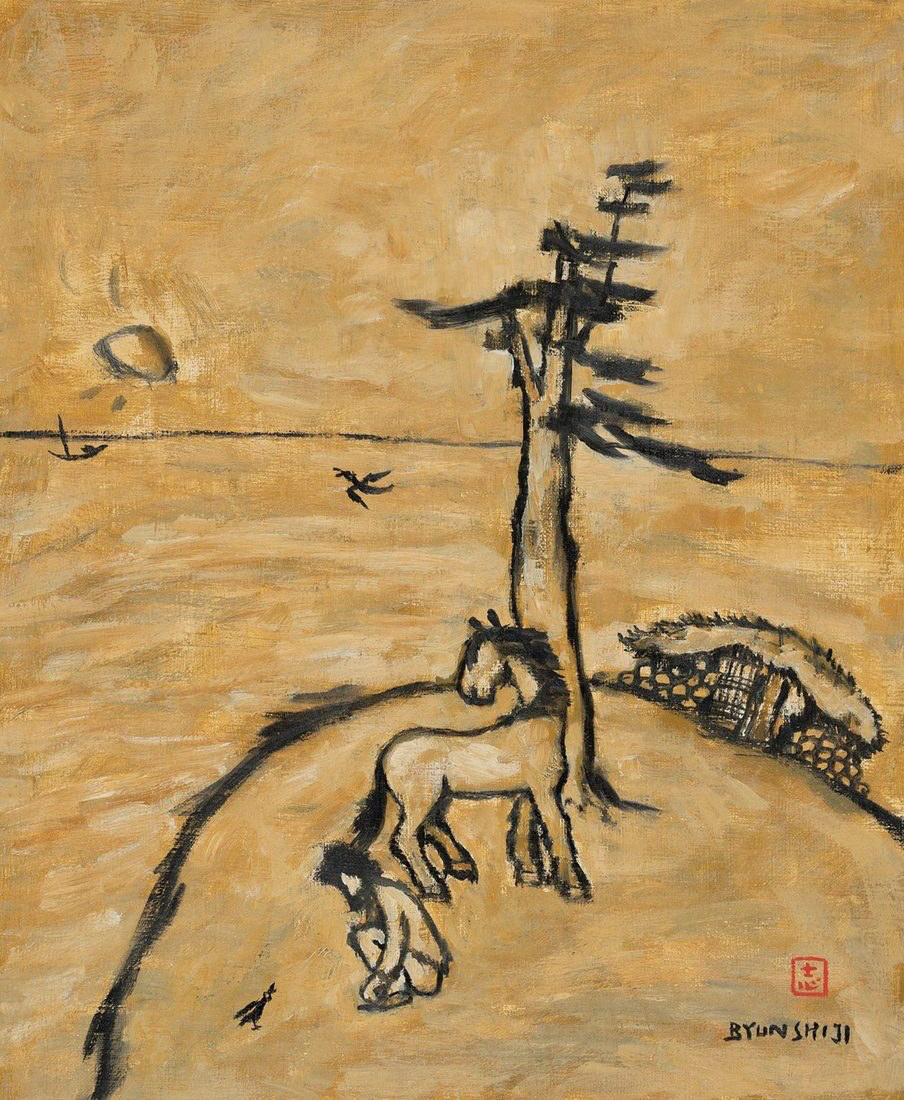
Dialogue
Human and horse receive the same wind, remain in the same place, and bend together. Enduring the same fūdo without words is itself a dialogue.
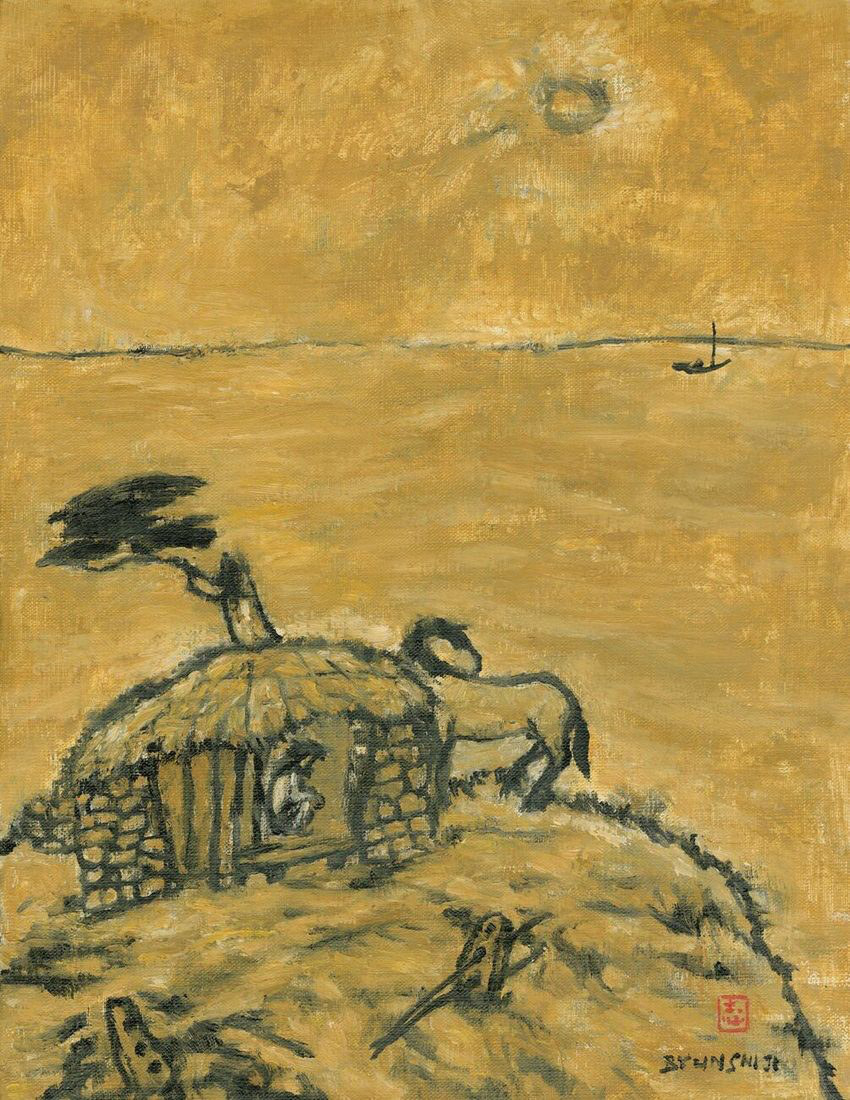
Sinking into Time
The person is absent and the horse waits instead. Waiting is the inability to withdraw the heart from that direction.
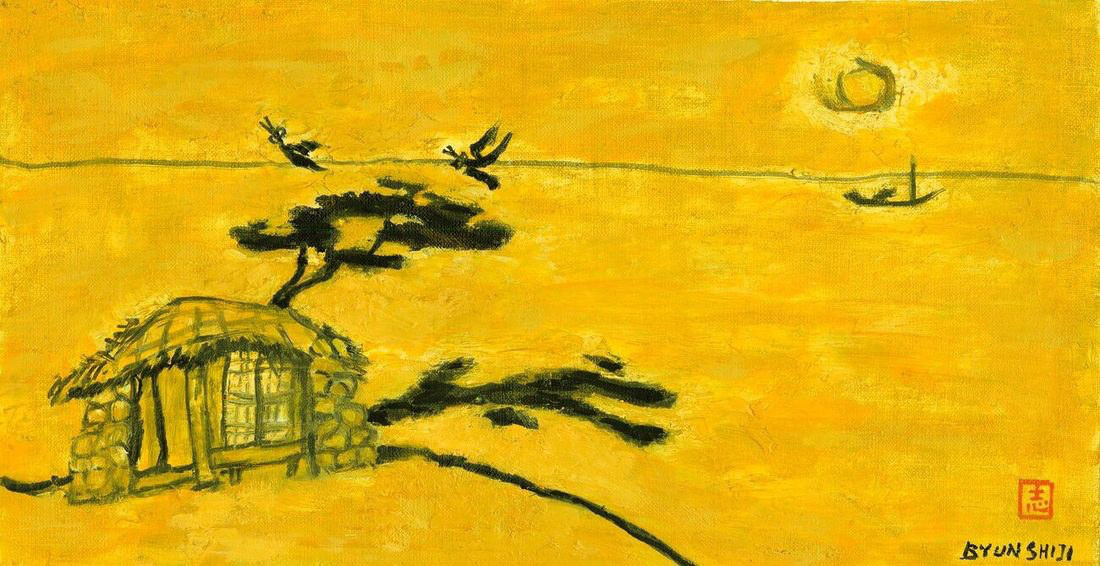
The Empty House
The tree gestures toward departure while the rock opens toward return: one sends away, the other waits.
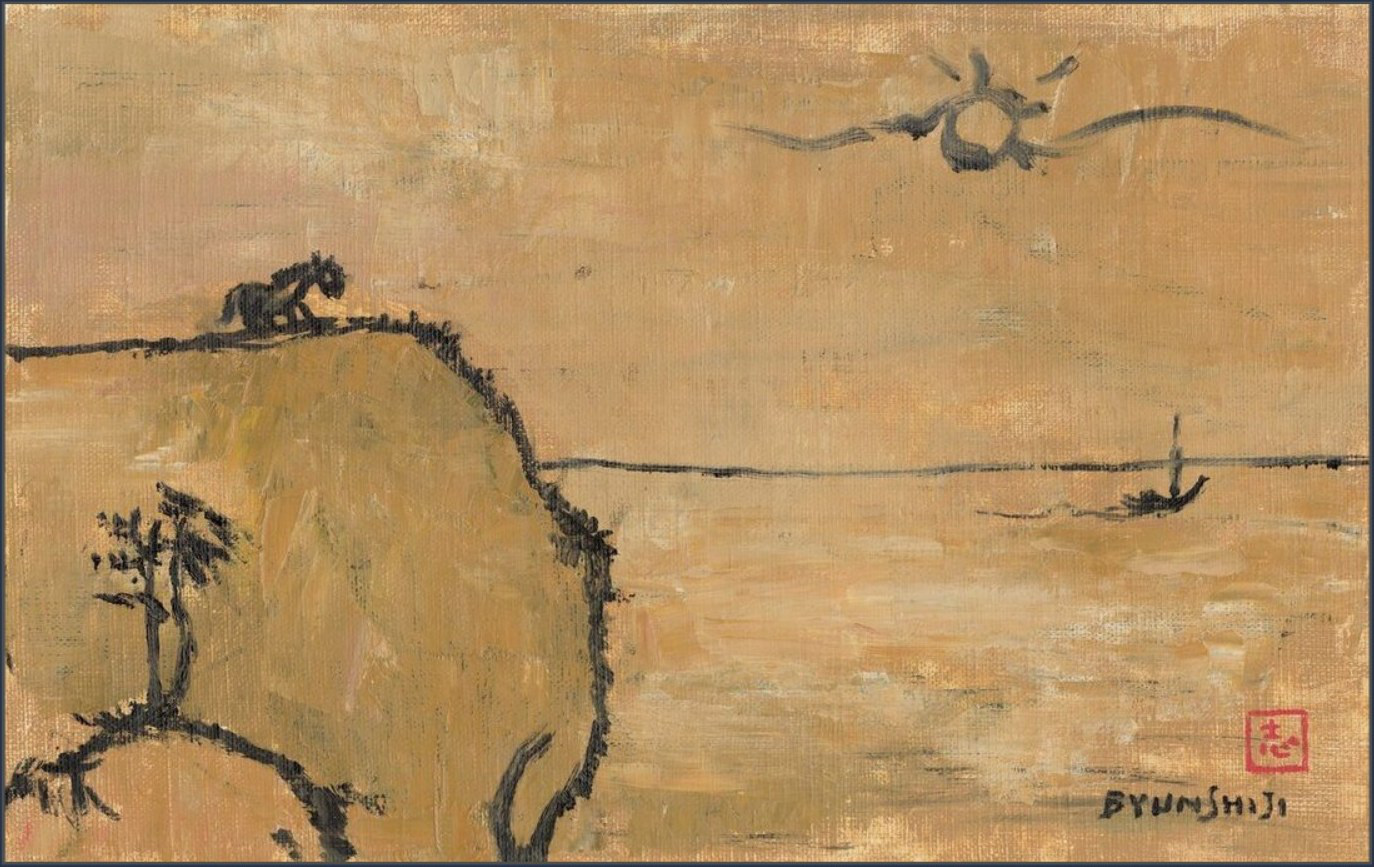
The Cliff's Edge
To paint dried-grass colour is to call Jeju into the work. Colour reveals fūdo rather than covering scenery.