Research/A Hundred Years of Wind/Ⅷ Philosophy of Art
Ⅷ Philosophy of Art · 98 / 100
The Painter of Storms
A Painting Wider Than Its Name
폭풍의 화가
Entering by a Name
We enter having heard “the painter of storms”.
We look for a leaning tree and bent body.
We have found an entrance, not seen the whole painting.
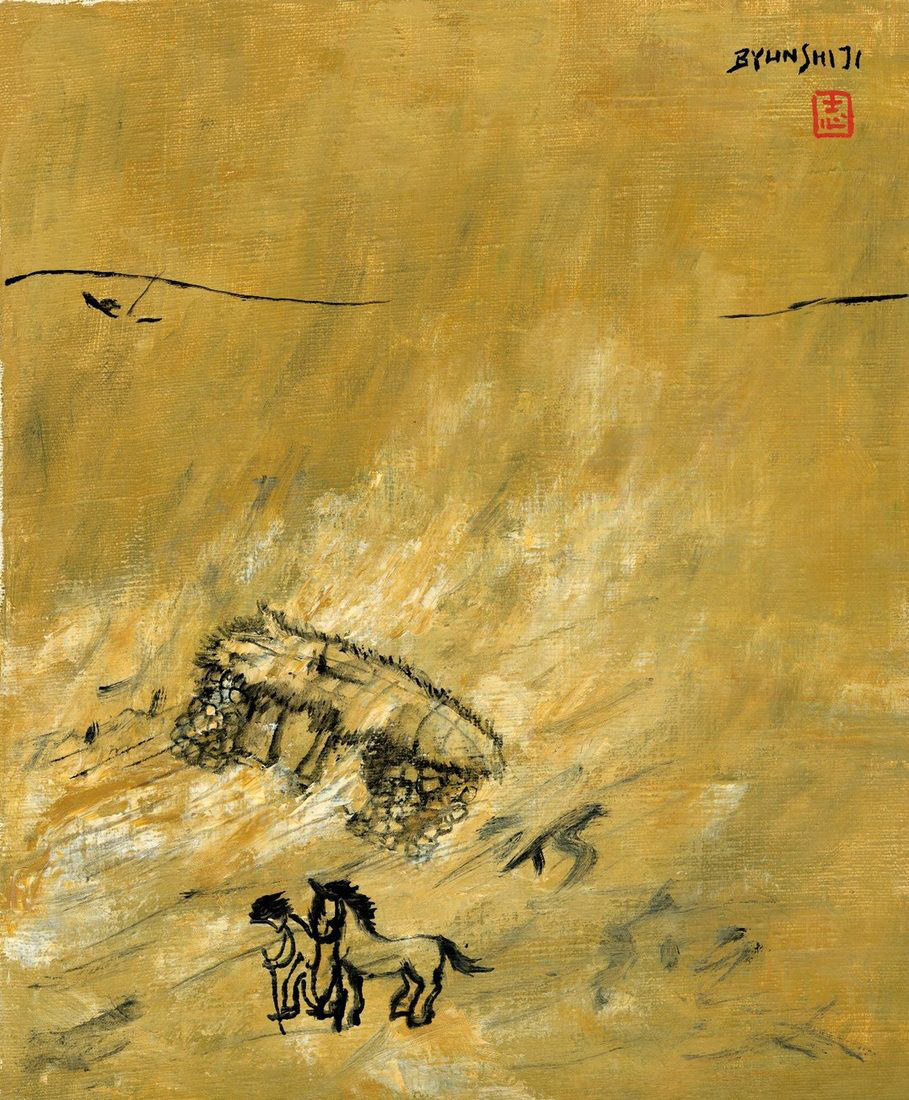
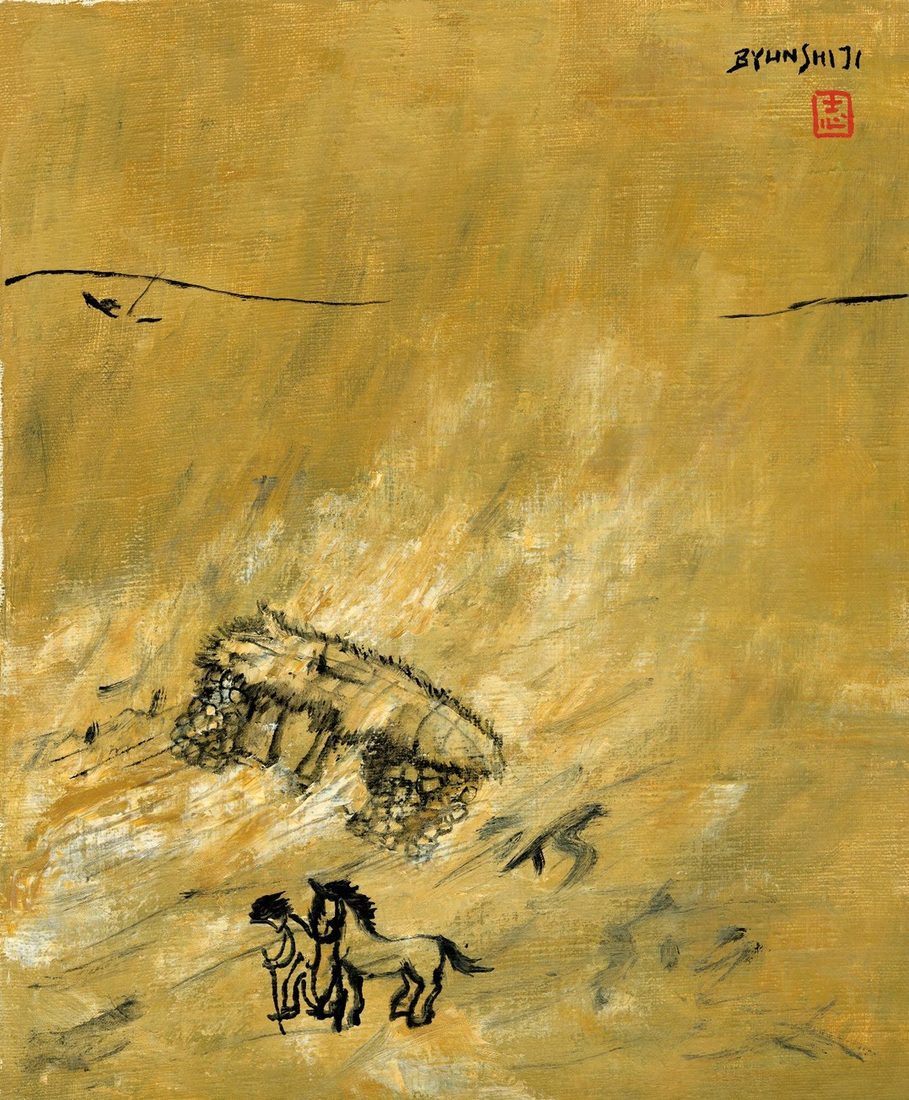
The space around the house in Stormy Seas is turbulent.
Below it, the person and pony are close.
A pressing force and a place of companionship share the painting.
The name need not be discarded.
Nor must the painting be folded small enough to fit it.
After entering, we may notice something else.
Strokes of the Late Years
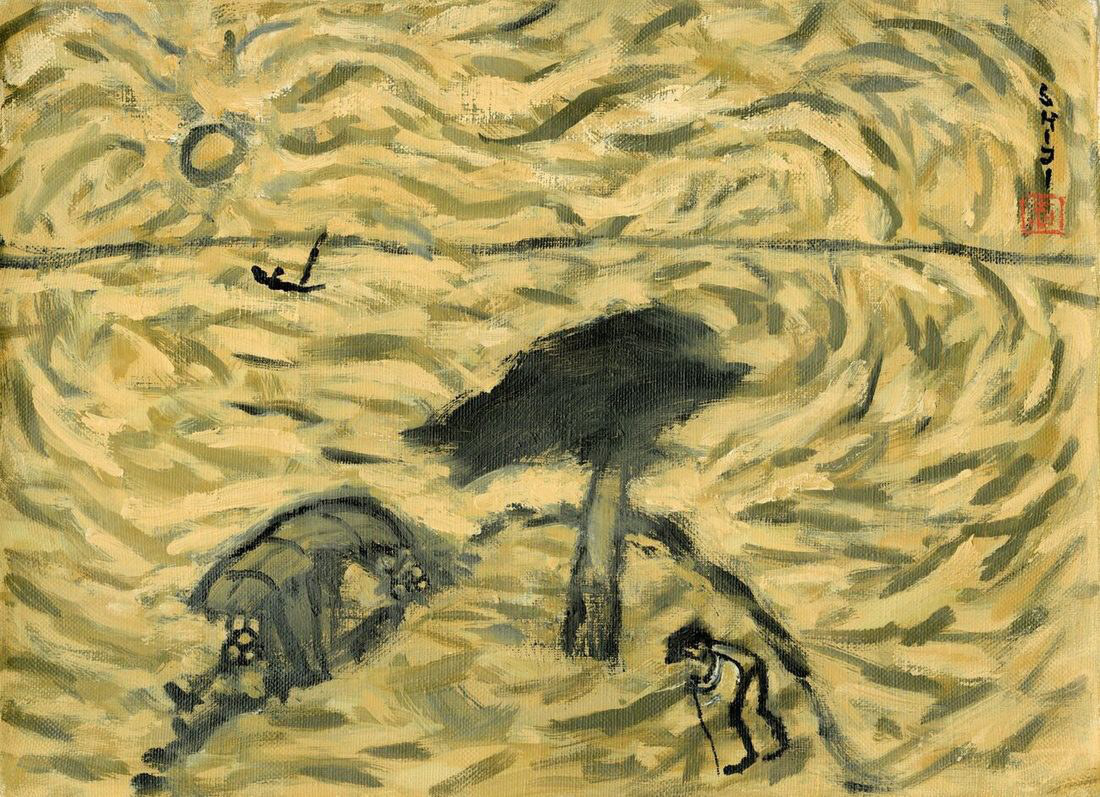
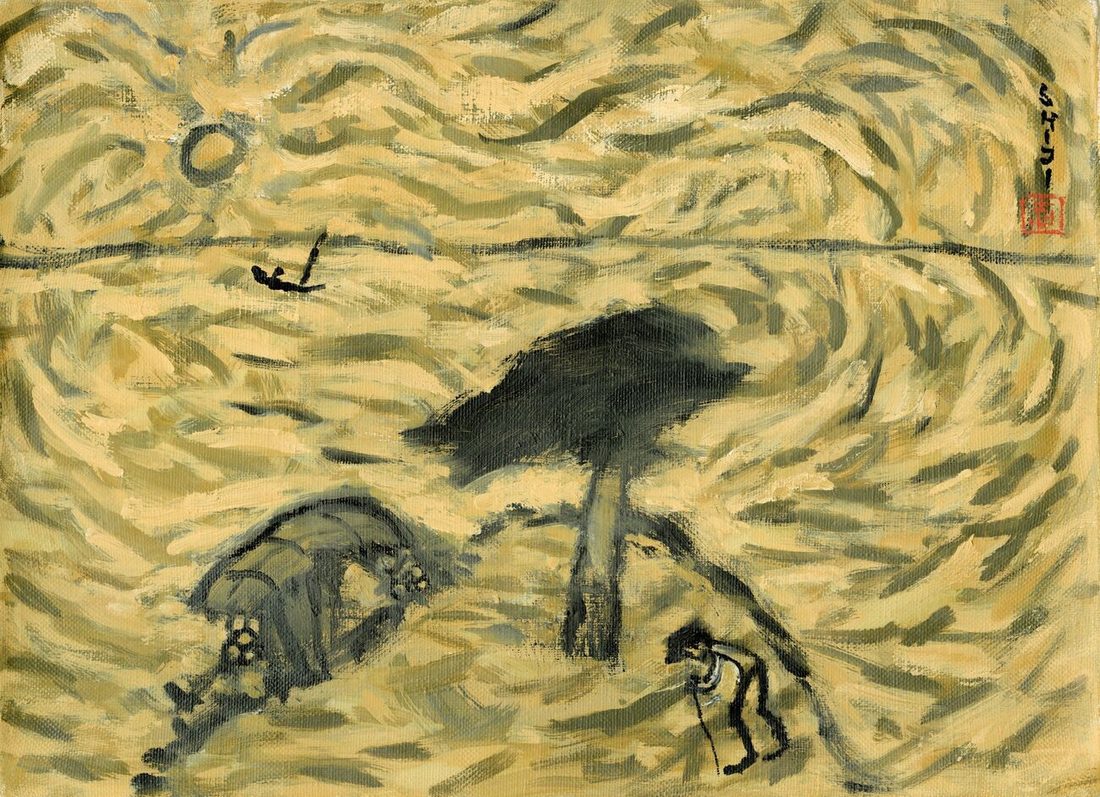
The 2007 Noon holds many strokes.
They pass around the house, tree and small person.
The ageing painter’s work did not always grow quieter.
Nor should many strokes be declared a sign of anxiety.
Look at direction and interval.
A large movement gathers around the small body.
Do not grant serenity merely because the painter was old.
Do not erase rest merely because tension remains.
Late paintings, too, must be met one at a time.
What a Name Selects
A nickname brings one thing to the front.
Heard often enough, it can hide what stands behind.
The name points to the painting while also obscuring it.
Who first used the name is a separate matter to establish.
This essay does not invent an origin.
It asks what we see now when we hear it.
After seeing the storm, look at the small body too.
Attend to the gap beside it.
The eye can go where the name does not reach.
The Seated Woman
The woman in Portrait of Nemo wears a white blouse.
Her hands overlap on the dark skirt.
She is not seated there merely waiting for storms in later paintings.
The people of Tokyo, the gardens of Seoul and the sea of Jeju remain.
They are different places through which one painter’s eye passed.
The later sea does not explain all the earlier years.
When one nickname proves insufficient, do not only add more.
Bring another painting beside it.
Begin again with a person’s hands.
The Picture at the Entrance
Hang only storms at the entrance and other works may seem exceptions.
The same happens when only quiet paintings are chosen.
Leave a route beyond the representative work.
A great museum’s name is not the end of that route either.
Wherever a work hangs, the distance between person and pony still needs looking at.
The gaze can also begin in a small catalogue.
An introduction can be short.
The paintings and records behind it should remain open.
Make it possible to cross from one sentence to one work.
Revising the Account That Remains
The painter can no longer alter his name through new paintings.
We can look more widely at the works that remain.
We can restore an omitted work to its place.
In his recollections, the painter brought what he had seen and learnt into his own style.
Memory and a changed landscape both took part.
He was not merely obeying the wind.
Affection can erase hesitation.
It can make every choice appear inevitable.
I want to give the person back his time to think again.
What Remains in Each Work
A sequence of discovery and maturity is not the sequence of every painting.
A lighter colour does not establish a calmer mind.
Set the image beside its date and look again.
Two bodies stand close in Stormy Seas.
In Noon, strokes turn around a small person.
The same painter placed bodies differently.
Even when a colour is familiar, each work calls for another look.
The paintings do not all say the same thing.
A name can help us begin to listen.
Where the Name Steps Back
We may come to see a storm and leave remembering the closeness of person and pony.
The light beside a dark tree may stay longer than the tree.
That is not misreading the name; it is seeing more of the painting.
Not everyone needs to become the painted person.
We can look at the pony beside them.
We can begin again from the distant boat.
A stroke passes beside the two bodies.
A small brightness remains between them.