Research/A Hundred Years of Wind/Ⅷ Philosophy of Art
Ⅷ Philosophy of Art · 97 / 100
The Honorary Director’s Eye
Making Room for Another Viewer
명예관장의 눈
One Postcard
Byun sent postcards to painters in Seoul.
He asked them to donate works to Gidang.
He recalled approaching them individually when the works did not come at once.
Kang Gu-beom built and donated the museum.
The painter’s concern met the donor’s work in a public place.
No single name should cover all those contributions.
This was not a wall for his own paintings alone.
Other painters’ works arrived too.
Gathering pictures also calls for room in which other eyes can see them.
The Making Eye, the Showing Eye
In painting, one thinks of a line not yet there.
In showing, one thinks of the existing work and the person who will face it.
The tasks are close, but not the same.
Allow a little space between paintings.
Consider whether the label is too large or too small.
Think about where a person’s eye might rest.
The title “honorary director” does not establish that he decided every arrangement and light.
But the asking and gathering remain on record.
In those acts, we can read an eye concerned with showing.
A Wall Far Away
The Korea Gallery at the Smithsonian’s National Museum of Natural History ran from 2007 to 2017.
It brought art, culture and history together.
It offered an encounter different from a solo retrospective.
Use the records to examine who selected which works.
Do not make one person’s eye responsible for everything.
Many tasks would have stood between a painting and that distant wall.
Someone also translates titles and distinguishes the works.
Those who know the painter closely meet those seeing him for the first time.
They may point out what the other passed over.
Between Two Paintings
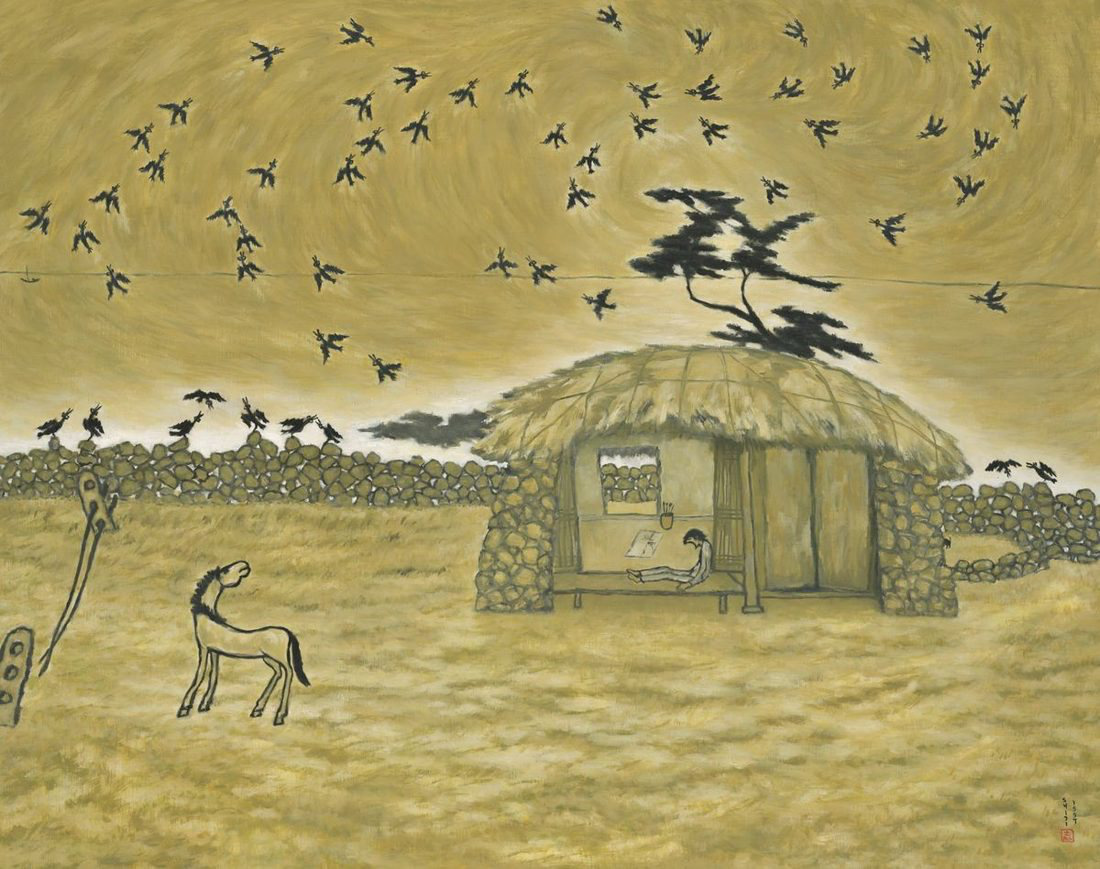
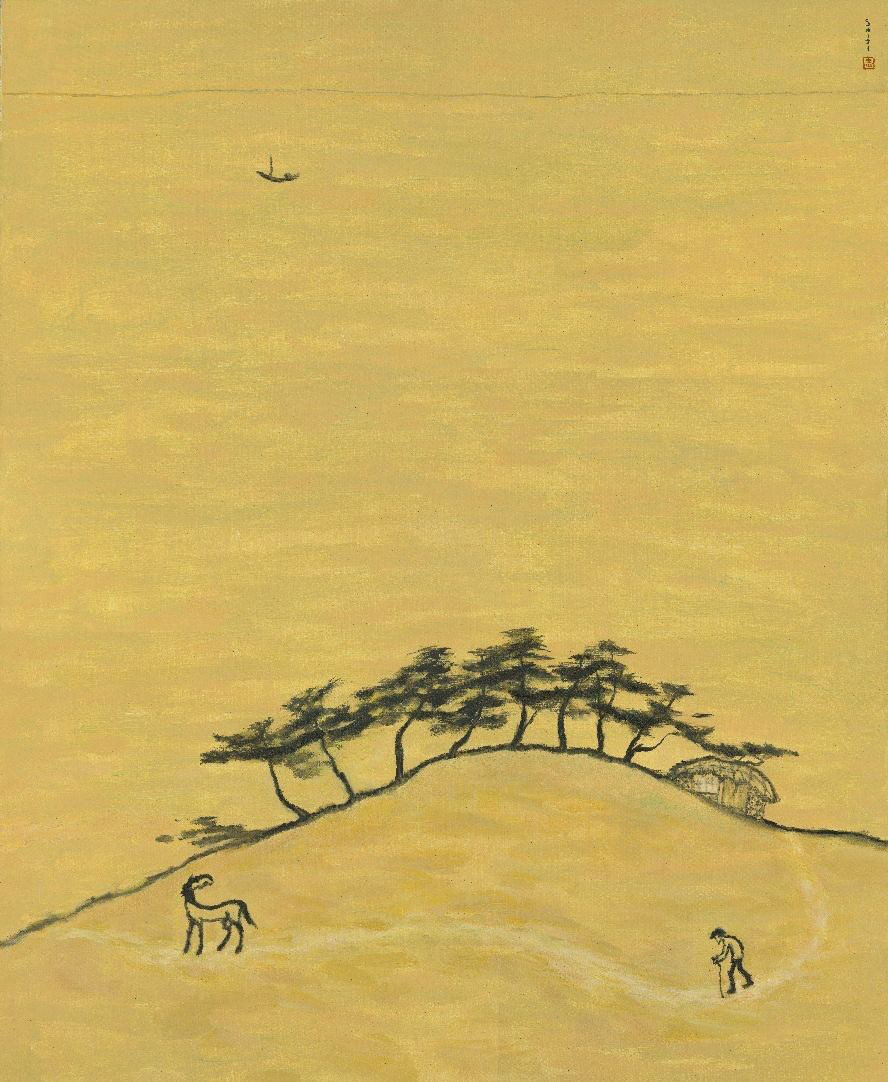
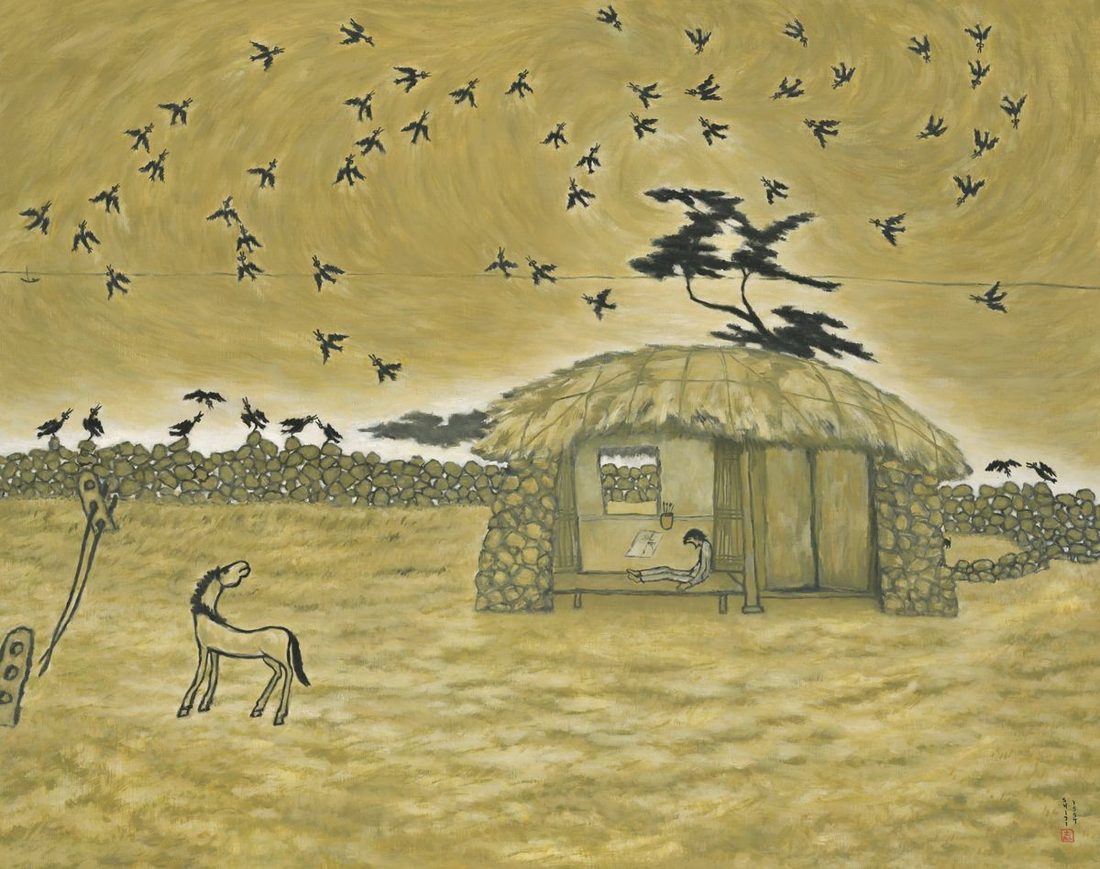
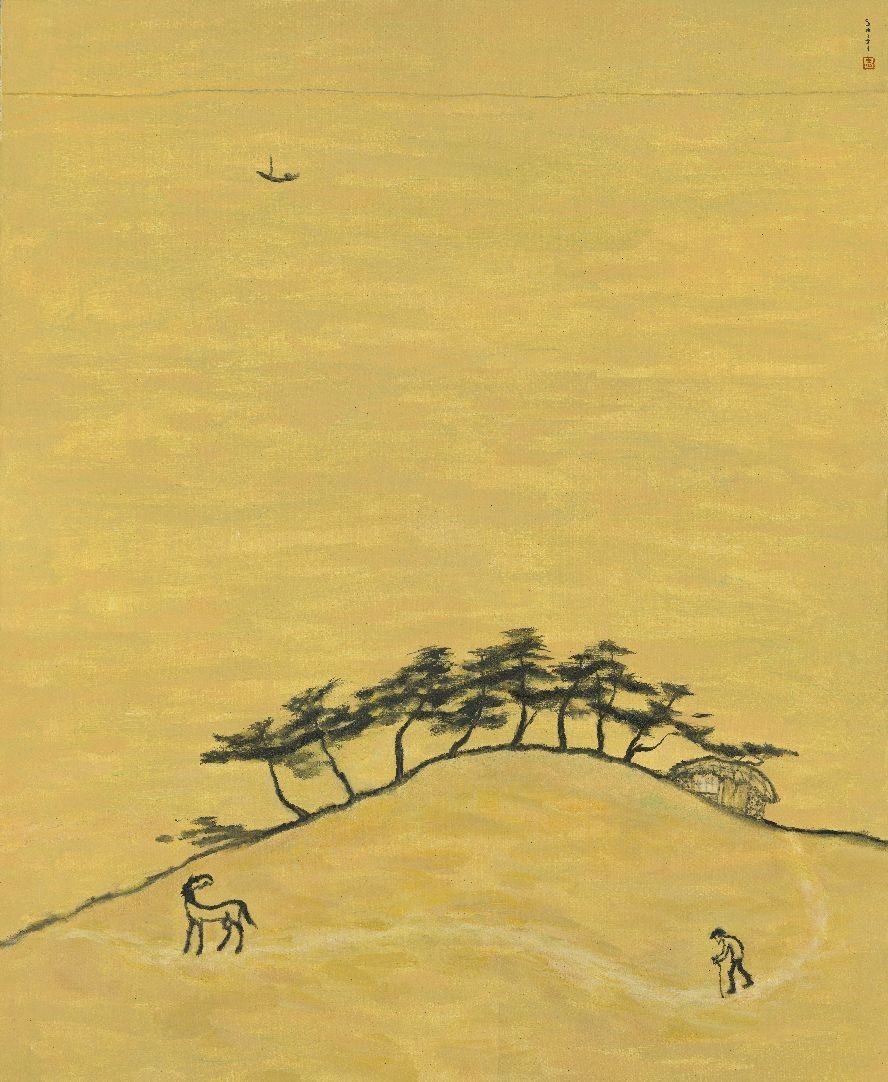
The Wild Dance and Going This Way shown here come from the supplied catalogue.
Their registration numbers have not been matched to the loaned works.
Begin with the two paintings we can see here.
In one, the eye moves between flying birds and birds on a wall.
In the other, it crosses the broad land between person and pony.
The journey of the eye to the distant boat takes a different time.
The first painting can change how the next is seen.
That order does not prove a story about the painter’s life.
An exhibition opens one possible path.
The Person Before the Wall
Seeing the work on Jeju may carry the memory of the road taken there.
The light and wind outside may return to mind.
But do not leave the eyes of those unable to come outside the door.
A distant viewer needs a good reproduction.
The title and dimensions should be readable.
A reproduction is not the original, but it can be a first meeting.
Leave a place to sit and look.
Leave room to approach and step back.
The wall supports the painting; the floor before it supports the person.
Beside the Painter’s Words
The painter knows something of how the work was made.
Yet we must ask when the words were spoken and which painting they concerned.
A close voice does not answer for every image.
Byun pointed out that his houses and trees differed from those in Sehando.
He also thought the feeling might be related.
A difference in form could remain beside a sensed affinity.
The person showing the work can keep both.
Let viewers read the painter’s words and see the differences in the pictures.
Protecting the work does not require protecting only one interpretation.
An Exhibition on a Small Screen
“How to Appreciate Art” speaks of reproductions and publications.
It also considers museums, libraries and music halls together.
Beside the call to look well stood the question of where looking could happen.
Images placed at equal size on a screen may have originals of different dimensions.
Making a translation easier to read must not make it more certain.
Do not let the convenience of the screen conceal those differences.
Make it possible to find the painting and return to its source.
A wrong title must be open to correction.
Clear ways in matter more than a pile of files.
Stepping Back a Little
The honorary director’s eye cannot look for everyone.
After making and gathering paintings, leave room for other eyes.
Even work held close need not remain a private encounter.
A hand sending a postcard differs from a body stepping back from a painting.
Yet both make room for someone beyond themselves.
A museum can be a place where such acts meet.
One person steps back a little.
The person beside them looks into that space.