Research/A Hundred Years of Wind/Ⅷ Philosophy of Art
Ⅷ Philosophy of Art · 95 / 100
Art and Non-Art
After Giving It a Name
예술과 비예술
Three Questions
Is it art?
Is it good art?
Do I like it?
The three questions need not have the same answer.
We may say we like the dried-grass colour.
Then look at what appears differently beside it.
Let that liking lead to more looking.
Do not give something a name merely to shut the door.
Ask again why it appeared that way.
The question becomes a way back to the painting.
The Fountain That Was Not Shown
Fountain was submitted for exhibition in 1917 but was not shown.
A photograph and a defence of it followed.
It was not accepted as art by everyone from the beginning.
There was conflict between those offering the object and those receiving it.
Its name and placement became questions.
The boundaries of the word “art” shifted there.
Set this beside Byun’s painting.
Do not decide first who the real artist is.
Ask what each made and what each asked us to choose.
Even Without Prettiness
The transcription’s section on art and beauty asks us not to treat the two as identical.
Lack of prettiness does not exclude art.
Nor does prettiness make art impossible.
A passage on the dissolution of artistic divisions considers crossing the boundaries of painting, sculpture and craft.
Do not leave Byun only as a painter who closed boundaries.
Read further into the questions he kept beside him.
Not every sentence in a notebook originated with its writer.
Distinguish copied words from his own arguments.
The time spent reading and learning remains significant.
The Label and the Painting
Danto asked how meaning is embodied in a work of art.
The question is not only whether it has been called art.
We must also consider what the thing is about.
Record the museum in which it hung.
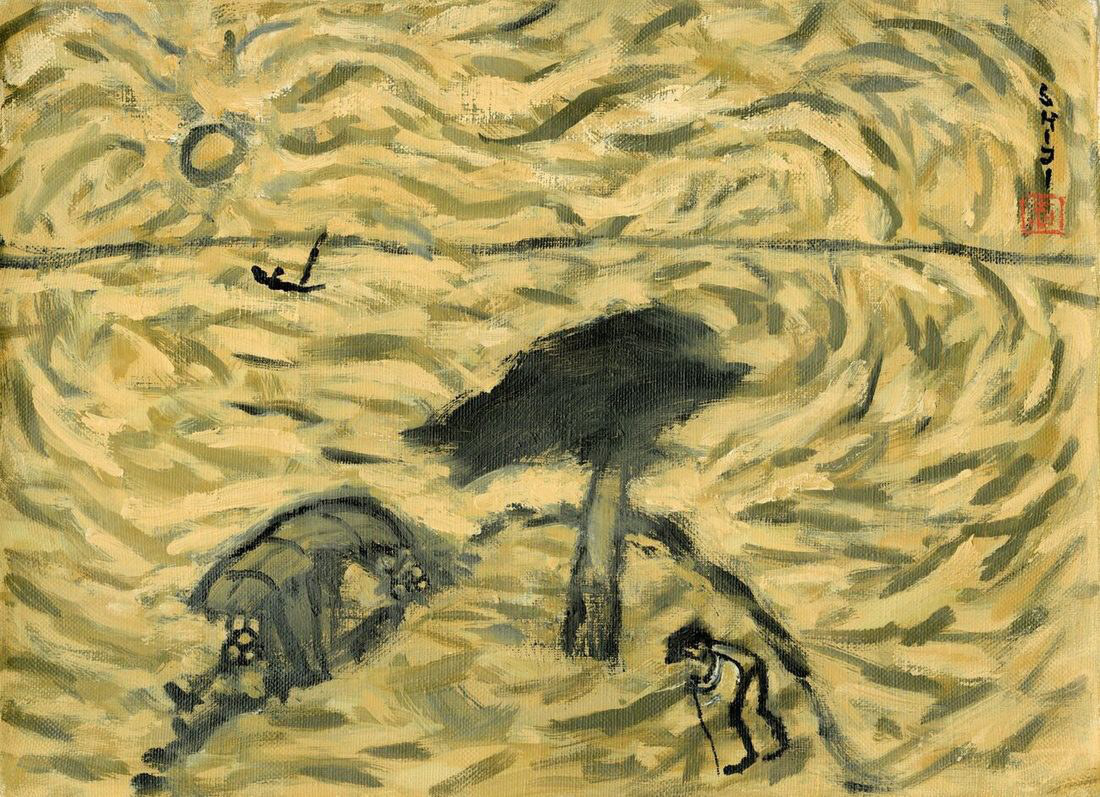
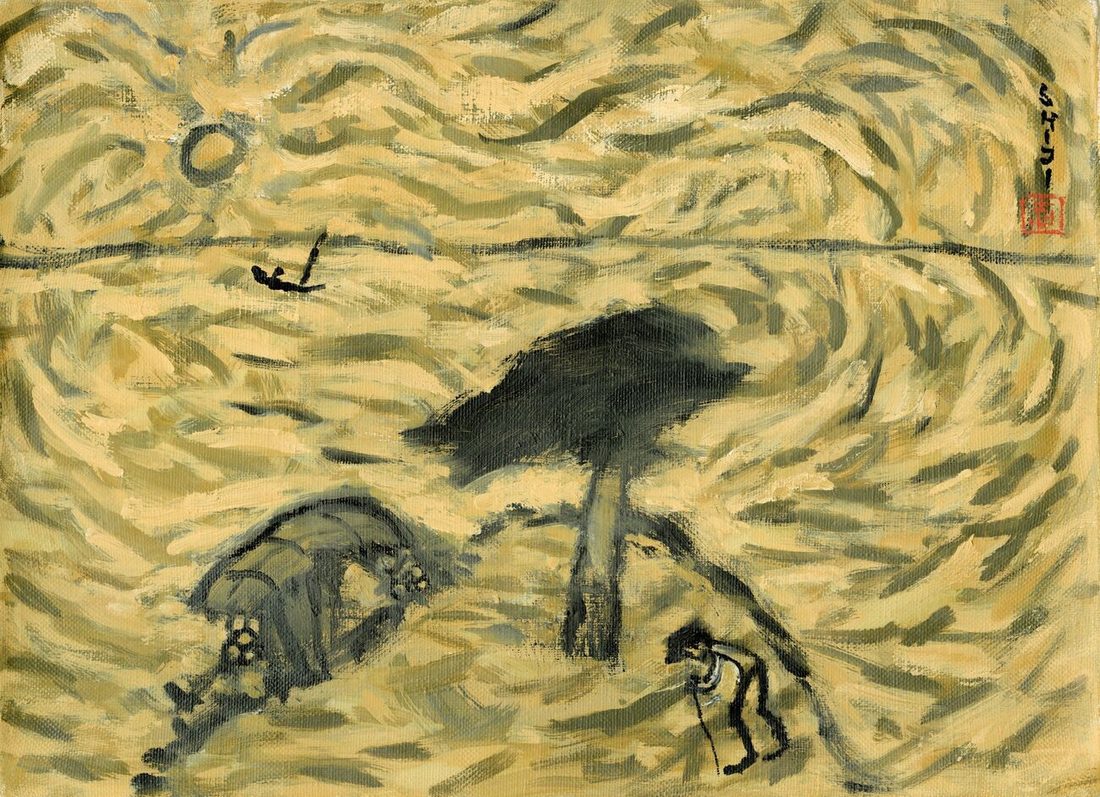
Then look at how the tree leans.
The exhibition history does not show that lean in our place.
Read the title and return to the image.
See the date, then look at the colour again.
Let neither the external record nor the painted form erase the other.
The Few Strokes Left
The person in Noon appears in a few strokes.
A tree and house are nearby.
Remove the person alone, and the body’s place changes too.
The hand’s skill works with the choosing eye.
There may be a need for the ability to paint much, or for judgement about leaving less.
Do not decide in advance which lies nearer to art.
Caring for Byun does not require pushing other art aside.
Look at his choice to leave a small body in a broad painting.
Stay first with the fact that the body continues to be visible.
Before the Word Decoration
A comforting painting can prompt thought.
An unsettling painting is not always profound.
One surface impression is not the whole encounter.
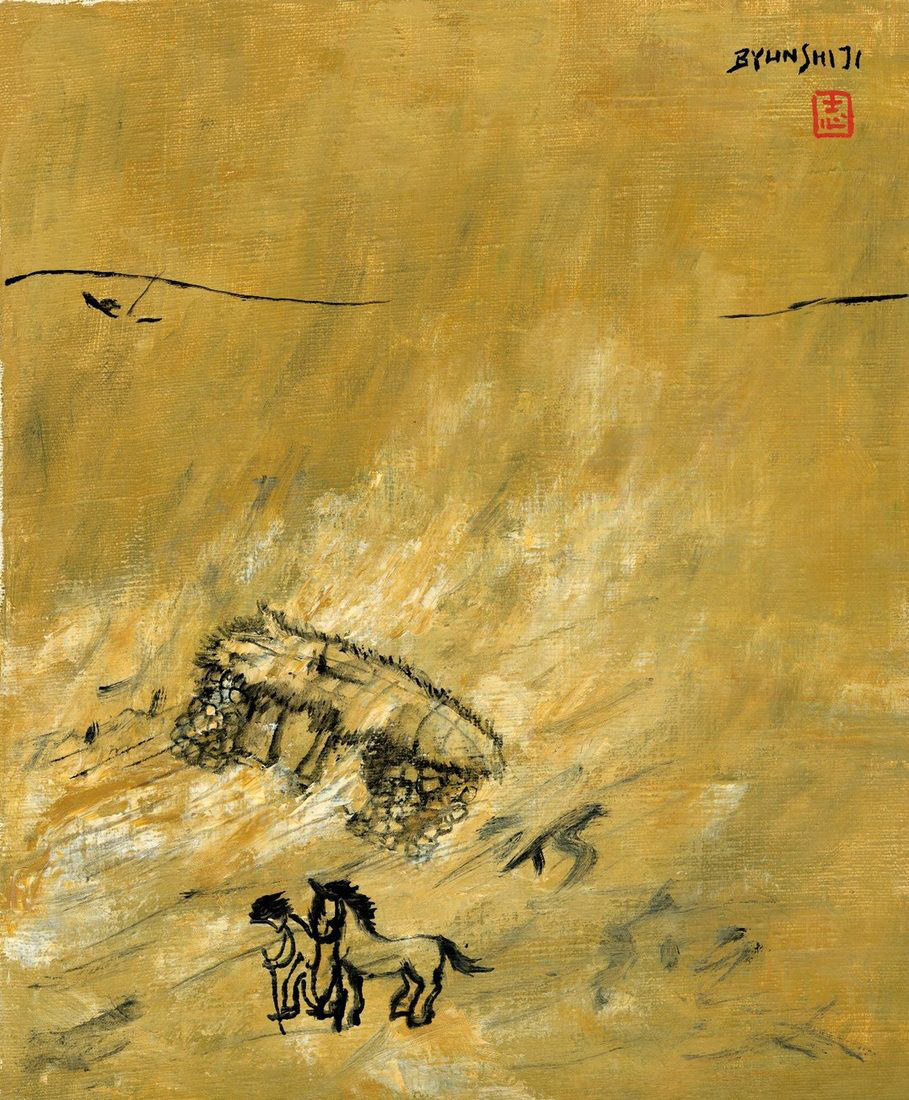
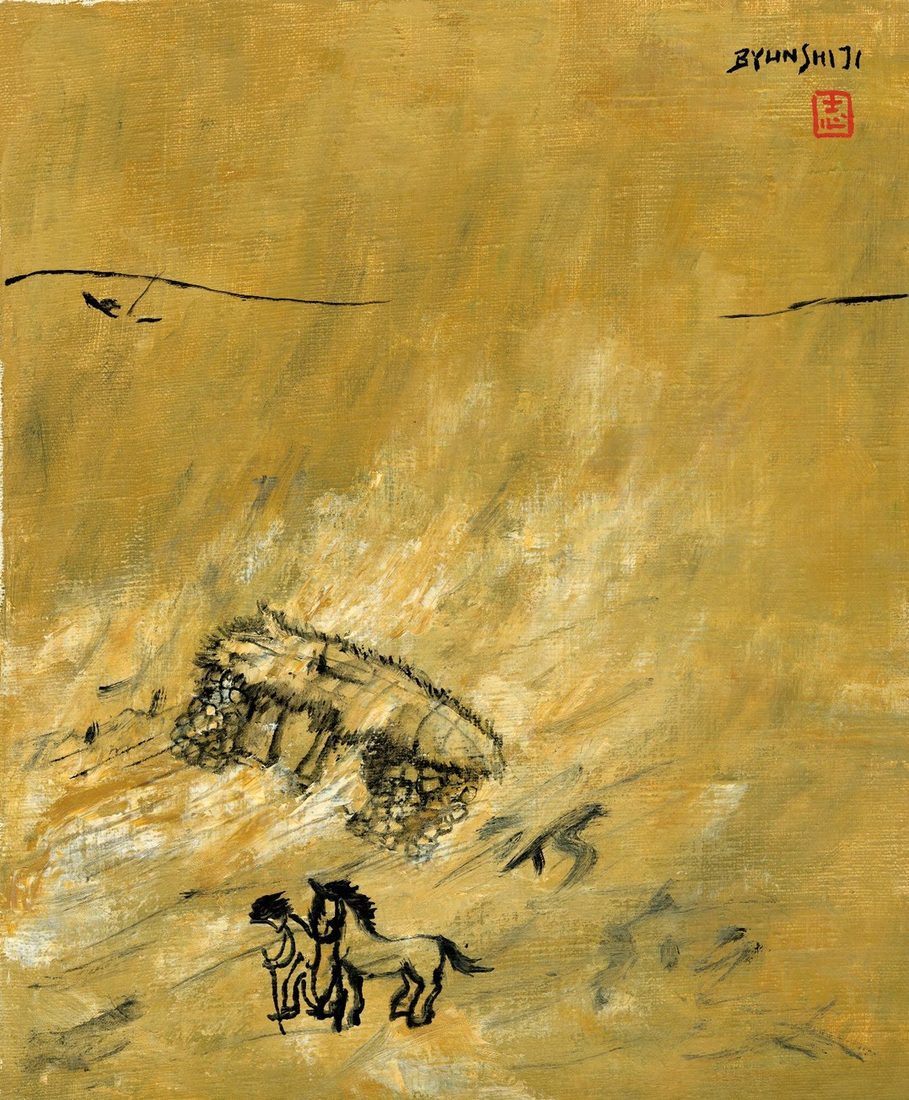
The ground of Stormy Seas is light.
Below the rough strokes, the person and pony are close.
Light, roughness and closeness share one painting.
Look again before calling it decorative.
Can we say where it remains merely at the surface?
Let neither approval nor dislike finish before the painting does.
Someone Who Saw Differently
If life is felt in the painting, point to where.
The bent body?
The pony beside it?
The narrow gap between them?
The person beside us may see differently.
Let the eye move to where they looked.
We can look again without abandoning our first feeling.
The criticism notes speak of self-criticism within creation.
A viewer’s words can also be revised.
Revise them before the painting, not merely before the explanation already given.
After the Name
Do not end with the word “art”.
Try once more to say what is visible and how.
Leave a small path back to the painting.
Particularity does not require a cry of uniqueness.
The person and pony are placed this way in this painting.
We can stay a long time with that relation.
One light stroke passes beside the two bodies.
The eye follows it.
The small ground beneath their feet comes into view again.