Research/A Hundred Years of Wind/Ⅷ Philosophy of Art
Ⅷ Philosophy of Art · 91 / 100
The Painter’s Hand
Taking Up the Brush, Laying It Down
화가의 손
Hands on the Lap
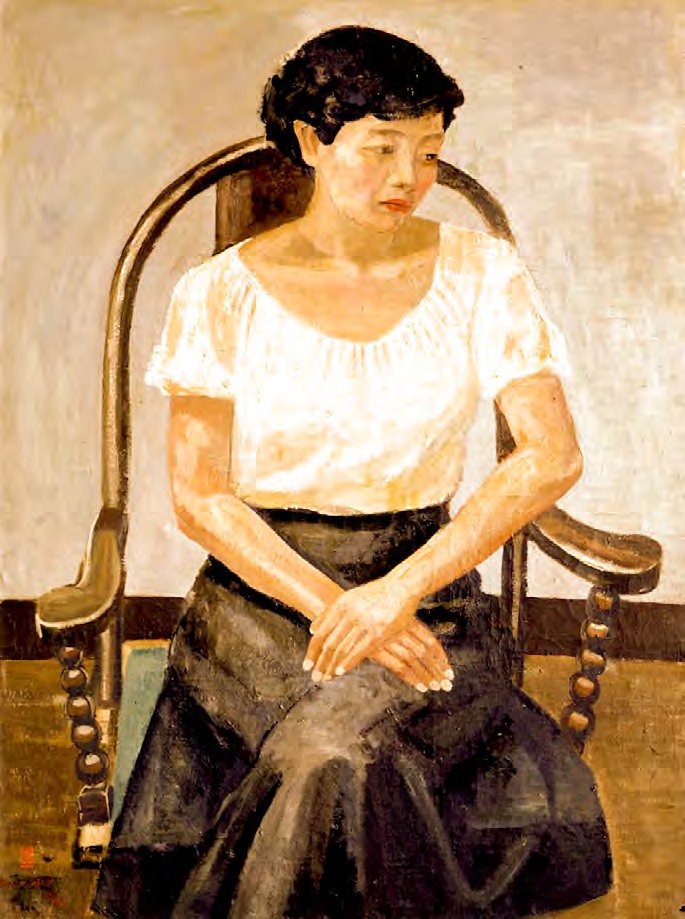
The woman in Portrait of Nemo folds her hands on her lap.
Below the white blouse, her fingers are light.
Beneath them lies the dark skirt.
Those are not the painter’s hands.
Yet to paint that overlap, he must have looked closely.
Beside the painted hands remains the time spent looking.
What should be painted?
How far should the brush go?
The hand holding it also needs a place to stop.
An Interrupted Stroke
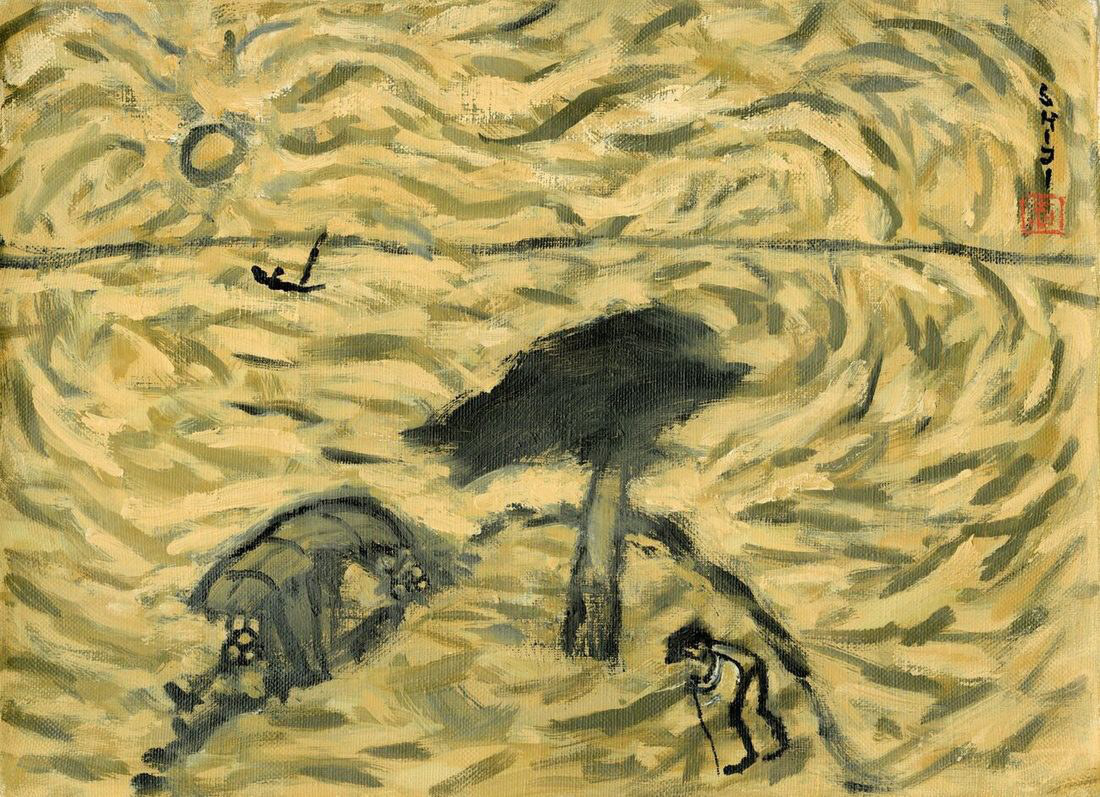
Noon holds many short strokes.
Some are dark; some break off.
The eye follows them, then slows in the intervals.
It seems a dry brush has passed.
But a reproduction cannot tell us all the force and speed of the wrist.
See the roughness; leave the unknown movement unknown.
Looking again, “rough” is not enough.
There are fine strokes and places darkened by overlap.
Following those small differences brings us a little nearer to the hand.
What the Eye Learnt
Byun said one had to look and learn much on site.
Even painting later from memory required that earlier seeing.
Memory was not a shortcut around the work of the eye.
The hand paints; the eye looks again.
When the neighbouring line changes, the new line changes in appearance too.
The hand does not merely repeat what it has learnt.
Folded hands and a body bent in the wind are painted differently.
Yet each is placed with its surroundings.
Think of the hand that attended to those surroundings too.
Even a Practised Hand
The body can move towards a tool before describing its position.
Here I borrow from Merleau-Ponty’s thinking about the body.
The hand’s knowing is more than obedience to a mental instruction.
A practised hand can still make an unexpected line.
Then it must look again.
Long experience does not make every stroke right.
Sometimes thought leads the hand.
Sometimes an unexpected stroke changes the thought.
The painting changes between them.
Where the Knife Slows
Cook Ding in the Zhuangzi slows at a difficult place.
He concentrates his gaze and moves the knife only a little.
Care remains within familiarity.
Set the painter’s hand beside that account.
A hand that moves well can also hesitate.
It attends to the place beyond which it should not go.
The brush lifts to leave room for a neighbouring form.
The line ends and a light area remains.
The unpainted next step belongs to the painting too.
Time with the Brush Laid Down
Byun said he waited for paint to dry before working on it again.
There were also days spent waiting for concentration to return.
His thoughts about the composition could change in the meantime.
Leave the wet area alone.
Step back a little and look.
Time when the brush does not touch the canvas is also the painting’s time.
He said that trying to improve a good effect could destroy it.
More work did not always mean better care.
His attention returned to what was already there.
Before an Ageing Hand
The painter spoke of changes in concentration.
That does not make every stroke a sign of illness.
A painting is not a chart of the body’s condition.
Nor should every bodily difficulty be called transcendence.
There may have been hesitation.
Choosing and changing may still have remained.
Noon holds many strokes.
The late paintings did not always grow emptier.
Among those many marks, a small person appears beside the tree.
Where the Hand Has Left
Do not put a whole life into one stroke.
Look instead for the places that held sustained attention.
The hands below a face, a body before a house, the space beside a tree.
The painter no longer stands here.
The things he placed remain, supporting one another.
Another person’s gaze arrives.
Two hands rest on the lap.
The fingers are a little light.
The skirt beneath them is dark.