Research/A Hundred Years of Wind/Ⅷ Philosophy of Art
Ⅷ Philosophy of Art · 92 / 100
Alcohol and Art
The Time After Discovery
술과 예술
Night and Day
Byun recalled sitting by the shore on Jeju, struggling to find his own painting.
At night he drank.
One day, on the shore, he saw white things altered towards yellow.
He took notice of that colour and tried to bring it into painting.
Thought lay between seeing and making.
This is not an account of a painting completing itself overnight.
Look at the sea and return.
Choose a colour and look again.
Discovery still leaves the painter work to do.
The Word Intoxication
Nietzsche considered how dream, form and intoxication meet in art.
Read these paintings beside that question.
Ask how an intense experience acquires a form that remains.
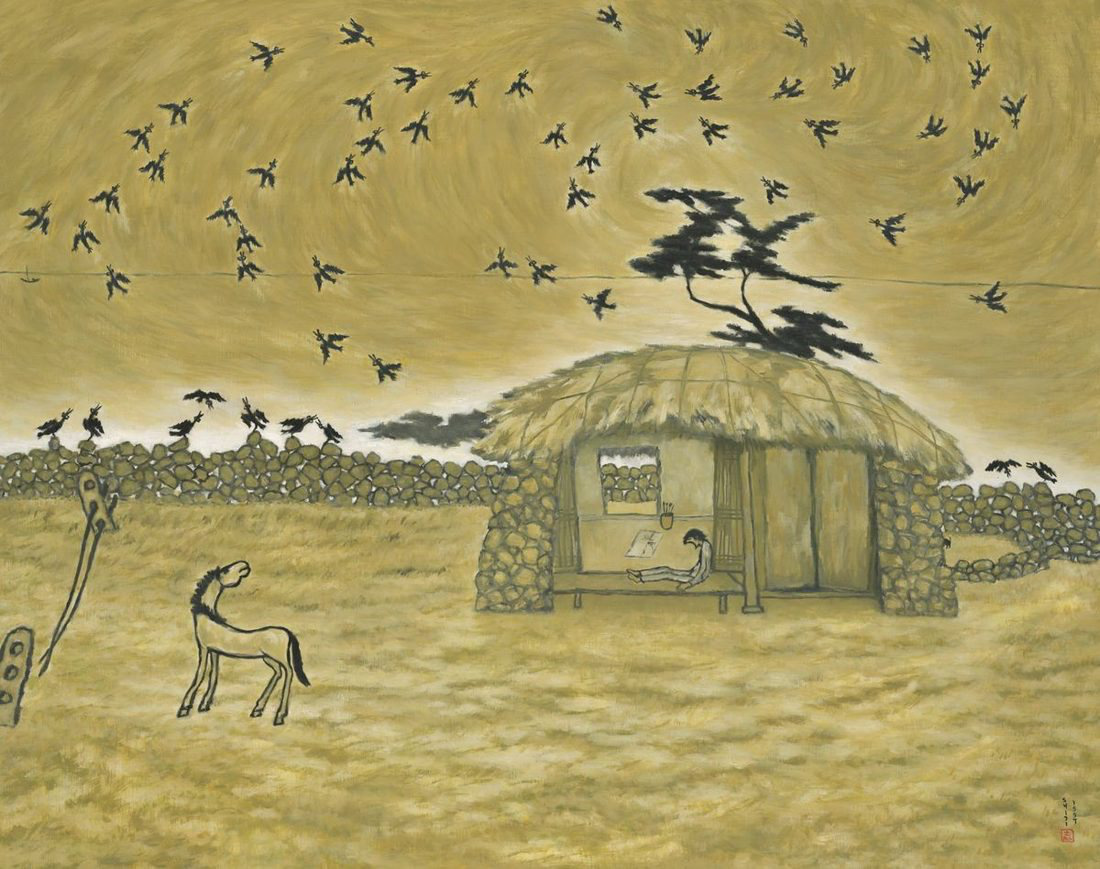
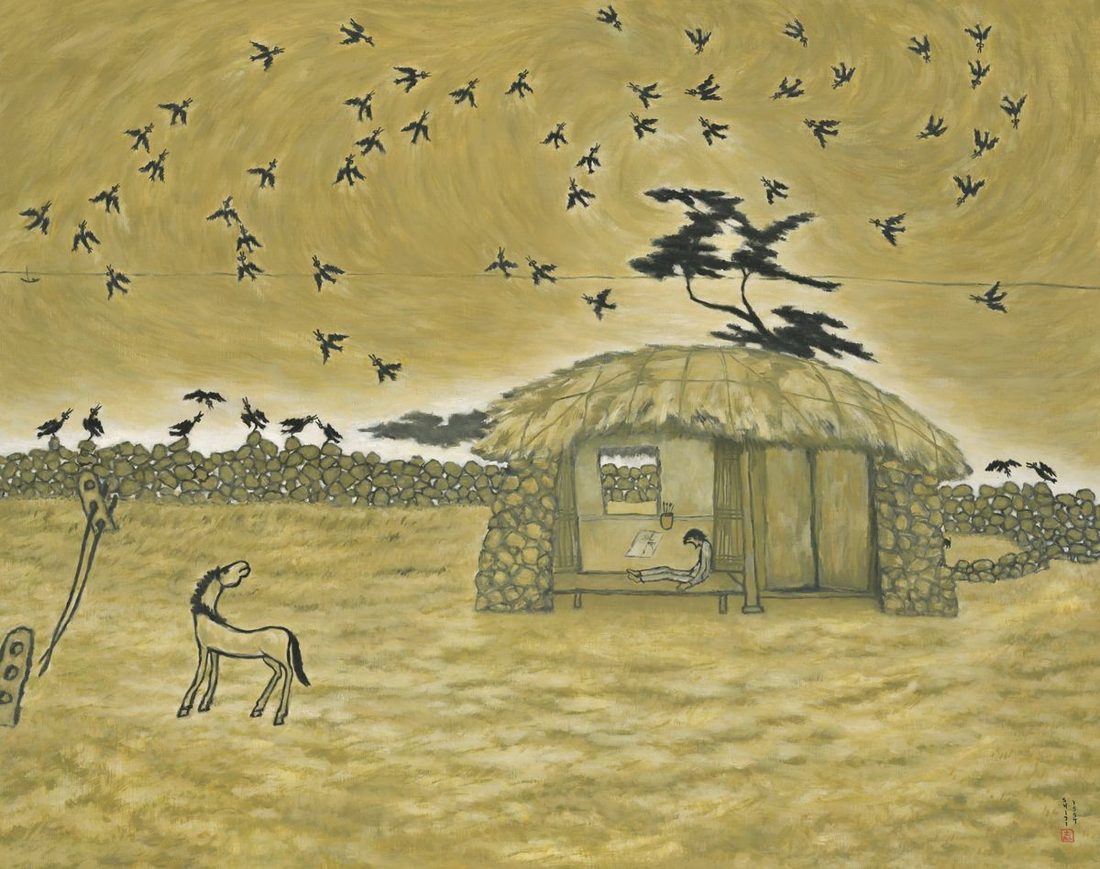
Wings scatter across the sky in Wild Dance.
There are birds that remain on the wall.
The eye moves between wings and low stones.
A restless painting does not tell us that its maker was drunk.
What moves now may be our own gaze.
The image’s rhythm is not the state of the painter’s body that day.
Poetry Beside Wine
In “Be Drunk”, Baudelaire places poetry and virtue beside wine.
He asks us to put a question about time to wind, waves and birds.
That intoxication is not confined to a glass.
This meeting is made by reading the works together.
It does not mean Byun painted after reading that poem.
It invites us to listen beyond our own thoughts.
First we see the flock.
Looking again, we see a small bird on a stone.
There are moments when we do not forget everything, but notice one thing more.
Outside the Story of One Night
The story of a masterpiece painted in a drunken night is memorable.
The days of learning before it are less visible.
The days of revision after it are easily left out.
A quietly chosen line can look rough.
A line that seems to flow may hold long practice.
The mark that remains does not reveal all the time before it.
Even after the mind is deeply stirred, choices remain.
What should change, and where should one stop?
A moment must pass through those questions to stay in a painting.
A Small Contact
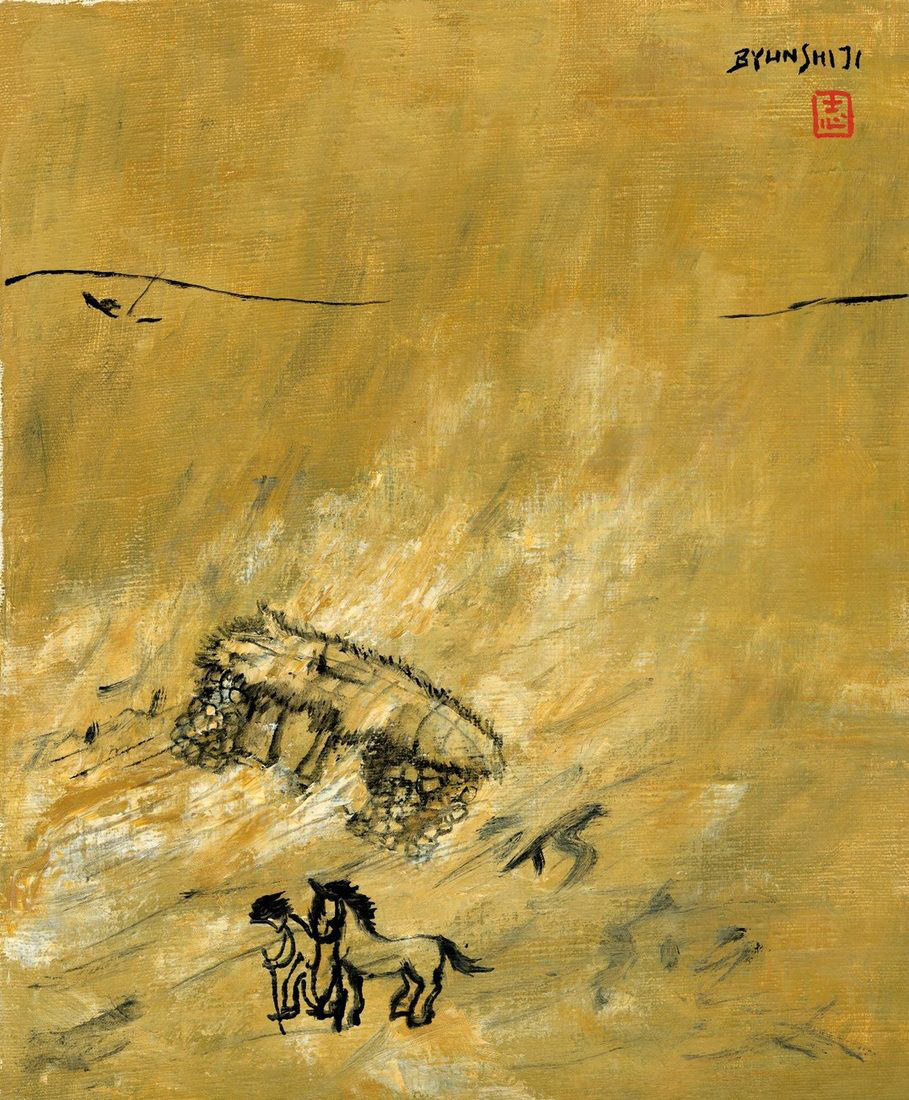
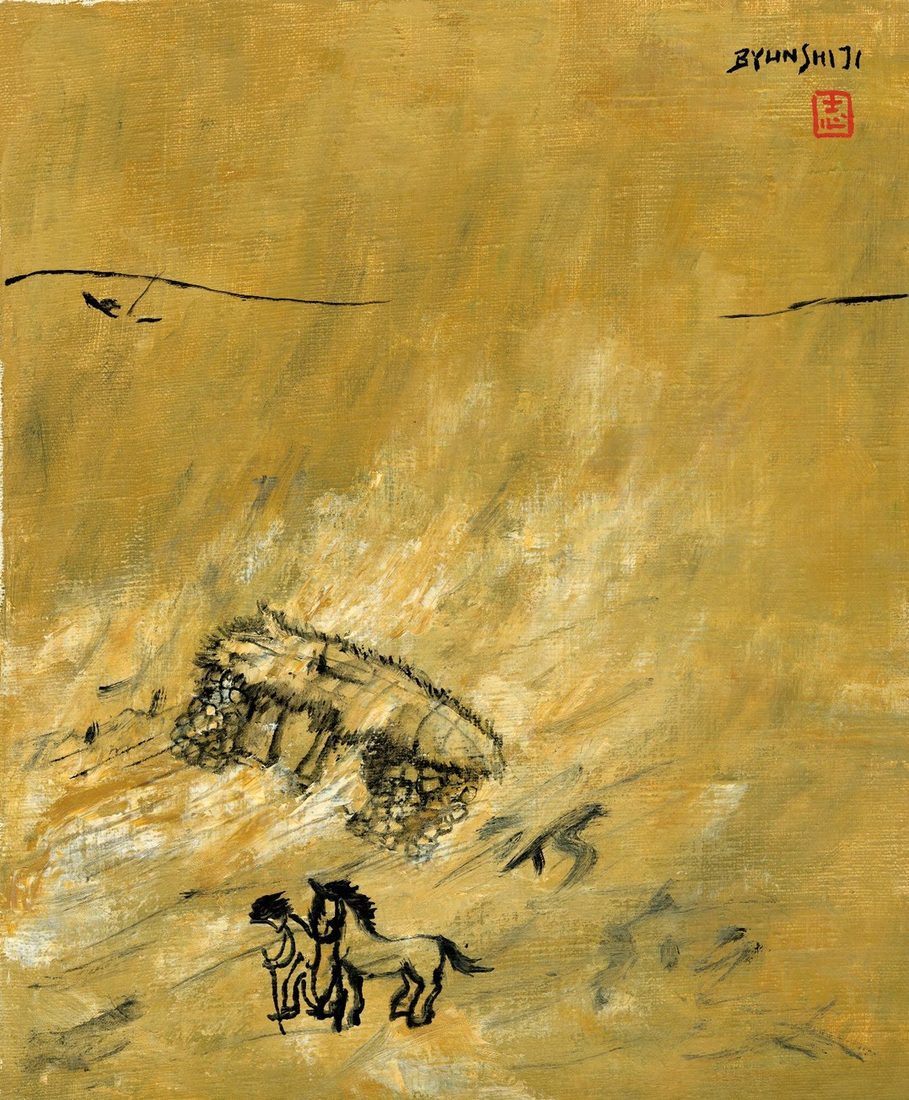
Light strokes pass diagonally around the house in Stormy Seas.
Below, the person and pony are close.
It is a small contact within a great movement.
We may find comfort in their closeness.
Yet we have not discovered the person’s inward state.
We can see companionship without knowing everything.
Caring for a painful painting does not mean asking for more pain.
The same is true of stories about drink.
A surviving work does not make the maker’s hardship necessary.
Another Period in Pollock’s Life
The Pollock-Krasner House records Pollock’s sober period from 1948 to 1950.
He made important paintings then.
An account of drink and impulse alone leaves out those years.
Nor does this mean that sobriety automatically produces masterpieces.
There were materials, a room, repetition, judgement, and relations with others.
One bottle does not explain a painter’s work.
Do not assign only impulse to Pollock and only restraint to Byun.
Look at what each left on the surface.
Both, painting differently, had time in which to choose.
The Eye That Returns
Byun spoke of losing a good effect while trying to improve it.
Speed or duration alone, he said, could not judge a work.
His account directs attention to the hand after the intense moment.
There must be a chance to look again.
Does the cherished stroke obscure another form?
Does what seemed good then still belong in the painting?
Not everything that first came to mind must be kept.
There is freedom in changing it too.
It means staying before the painting after intoxication has passed.
Beside the Flying Birds
Do not erase the drink recorded in his recollections.
Do not entrust every painting to it either.
Keep in view the person who looked, tried, and painted again.
Wild Dance has its pauses.
They lie between wings and on the stone beneath a resting bird.
The dance grows clearer beside that stillness.
Birds are scattered across the sky.
The eye rests on one of the birds on the stone wall.