Research/A Hundred Years of Wind/Ⅶ Comparison & Context
Ⅶ Comparison & Context · 89 / 100
Visual Art and Art: Seeing and the Life of the Mind
Beginning with What Is Before Us
미술과 예술, 시각과 정신
Looking at Two Hands
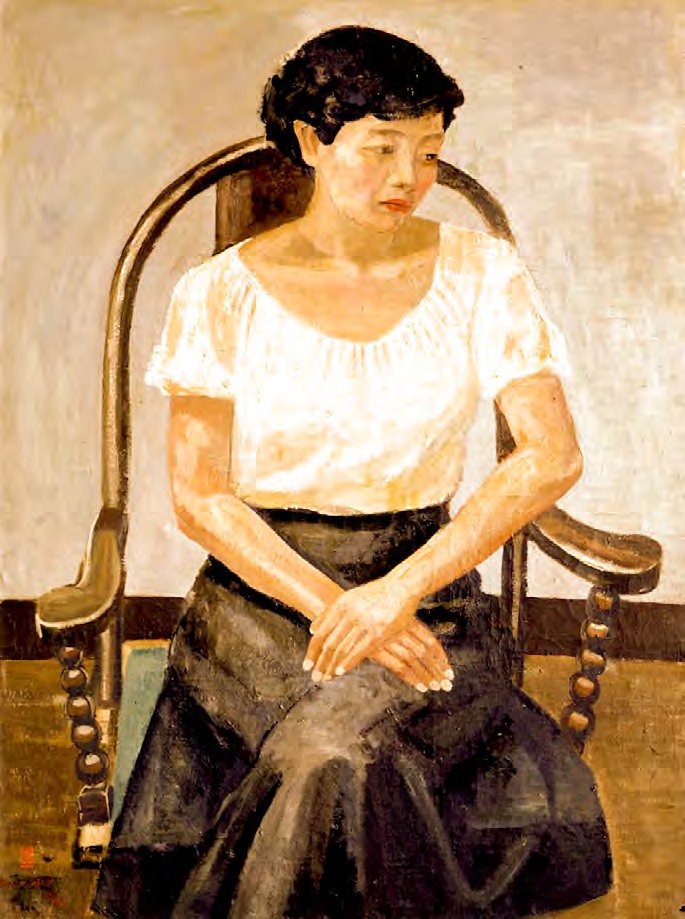
Look at the two hands in Portrait of Nemo.
Follow the fingers and the dark skirt comes into view.
Behind the body, the chair continues.
While seeing the shape, we also sense the posture.
Admiration for the painting overlaps with the feeling of a person being there.
It is not always possible to say which came first.
We can ask separately what the eye saw and what stayed in the mind.
But we need not begin by building a wall between them.
The hands still rest on the same knees.
When Words Travel
Translate misul as “painting” and sculpture is left outside.
Here I use “visual art”.
The broader word yesul remains “art”.
Nor do I translate “mind” as something wholly outside the body.
I mean a life that remembers, feels and judges.
The body that sees and touches belongs to that life.
Do not add certainty while translating.
“Appears so” differs from “was so”.
Keep that small distance in the other language.
What the Hand Can Do
I turn to an excerpt headed “Technique and Art”.
What has been checked is a later compilation, not the printed book itself.
Within that limit, it reopens the relation between making and art.
A carefully painted hand can hold hesitation.
A few strokes can make a distant person visible.
Technique is not merely a stair to leave behind.
There were choices in the early paintings too.
On Jeju, the way of choosing changed.
The later work does not gain depth by erasing what came before.
The Mind Beside the Paint
Notes on artistic and natural beauty consider how mind and matter intertwine.
Thought does not occur only apart from materials.
Where the brush will touch, colour has already been laid down.
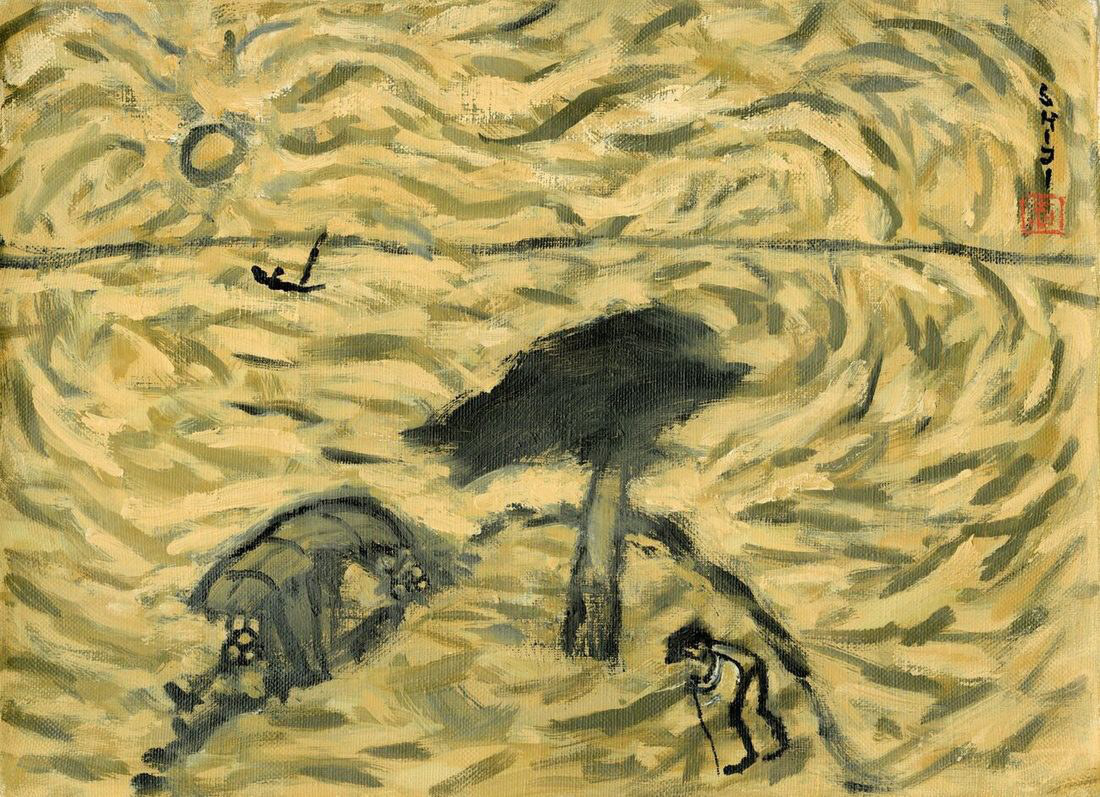
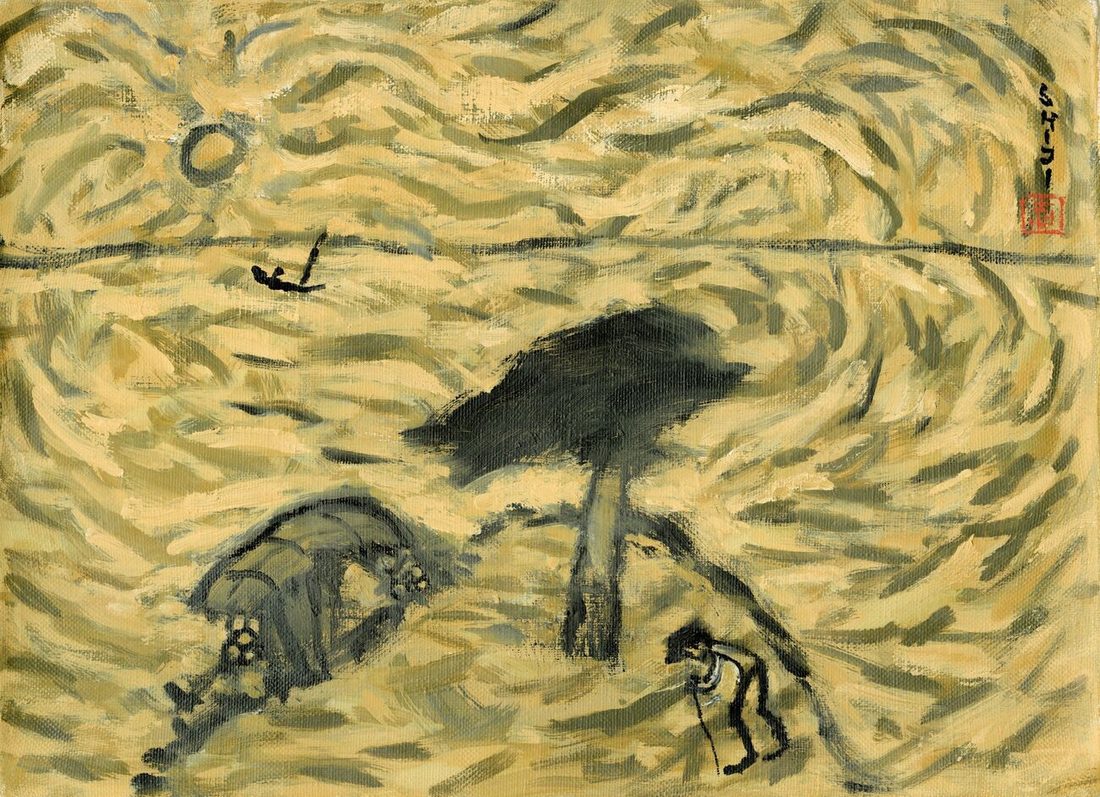
The tree in Noon is dark.
Short strokes pass beside it; a small body bends.
As the eye moves, wind is felt.
Yet no single stroke tells us which day’s memory it holds.
Look as far as seeing allows.
Remember that the words added next are our own.
In a Gentle Painting Too
A rough painting is not always more truthful.
A gentle painting can also leave something lasting.
The eye may slow before the light on a hand.
Below the white blouse is a dark skirt.
Between them rest two hands.
The eye descends from the face to that place.
Feeling a life does not require knowing every misfortune behind the painting.
We can first see where the hands lie.
Do not let what is known conceal them.
Someone Who Looks Again
The criticism notes place revision and judgement within creation.
The maker looks at the painting again.
The eye questions what the hand has done.
The viewer can return too.
A body that first seemed lonely may begin to suggest waiting.
Look within the painting for what made it appear differently.
Knowing the world outside the painting does not mean we have fully seen it.
Looking long at the image does not erase the life outside.
The eye learns by moving between them.
The Sea Seen and Brought Home
Byun said he returned home to paint after watching a storm.
He remembered what he had seen at sea.
He brought what he remembered into his own painting.
A body and time lie between those acts.
People may meet the same wind and keep different things.
Fūdo does not command a single painting.
There is no need to pass beyond colour and line to find the mind.
Look beside the person and beside the tree.
A question not asked before may arise there.
Back to the Hands
No single line divides technique from art.
Seeing and making are already intertwined.
That time is present even in a small hand.
Words bring us closer to a painting.
A painting can make us revise those words.
Neither has to be finished first.
One hand rests upon the other.
Behind the body, the chair’s rounded rim continues.