Research/A Hundred Years of Wind/Ⅶ Comparison & Context
Ⅶ Comparison & Context · 87 / 100
Matisse’s Colour, Byun Shi-Ji’s Line
The Colour Beside the Line
마티스의 색, 변시지의 선
Without Parting Them
We say that Matisse has colour and Byun has line.
Yet Matisse’s colour has edges.
Beside Byun’s lines, broad colour remains.
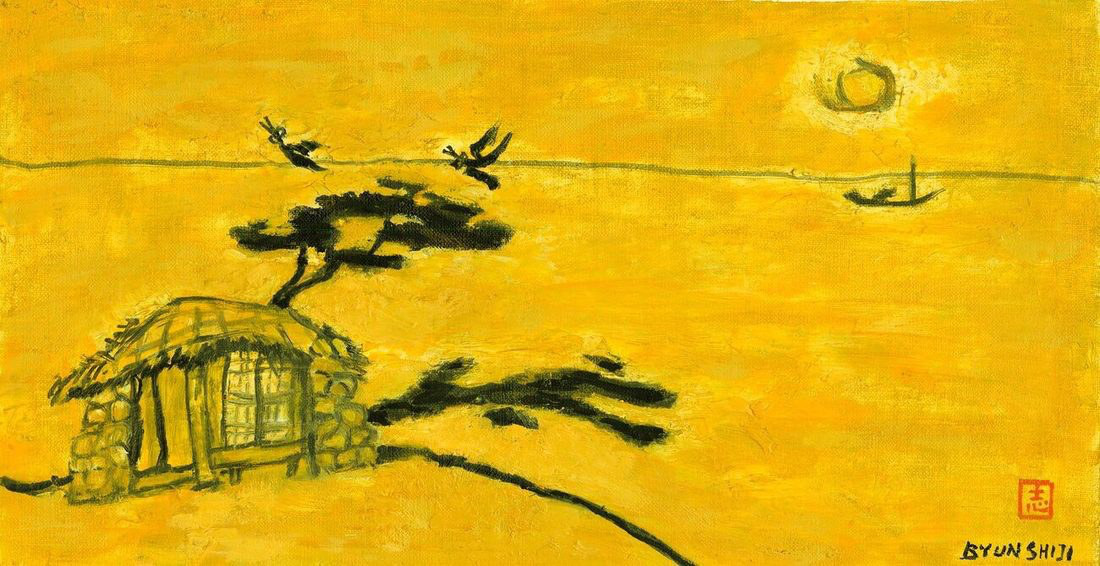
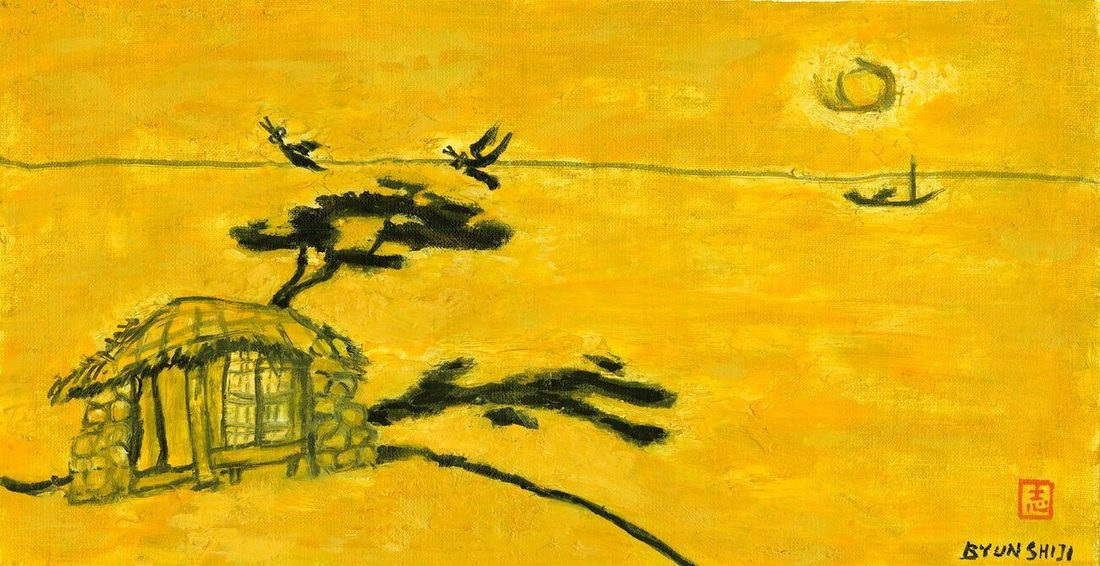
Black lines give the house its form in Empty House.
The broad dried-grass colour makes it small.
The boat lies far away within that colour.
Where does the line end?
How far does the colour reach?
Even after recognising the house, the eye stays with what surrounds it.
Narrow Gaps in a Red Room
In Matisse’s The Red Studio, red joins wall and floor.
Narrow gaps left in the red mark the furniture’s outlines.
An unfilled place becomes a line.
The red holds the room together.
The narrow gaps distinguish its objects again.
Within one colour, the table remains a table.
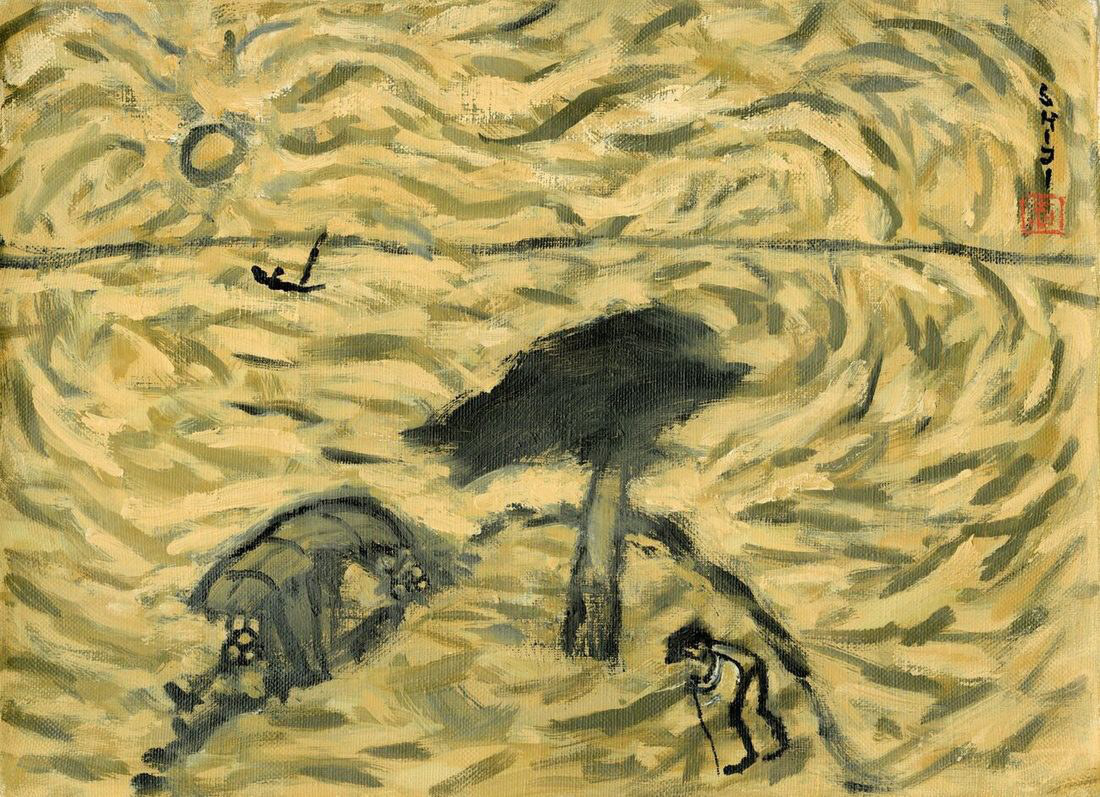
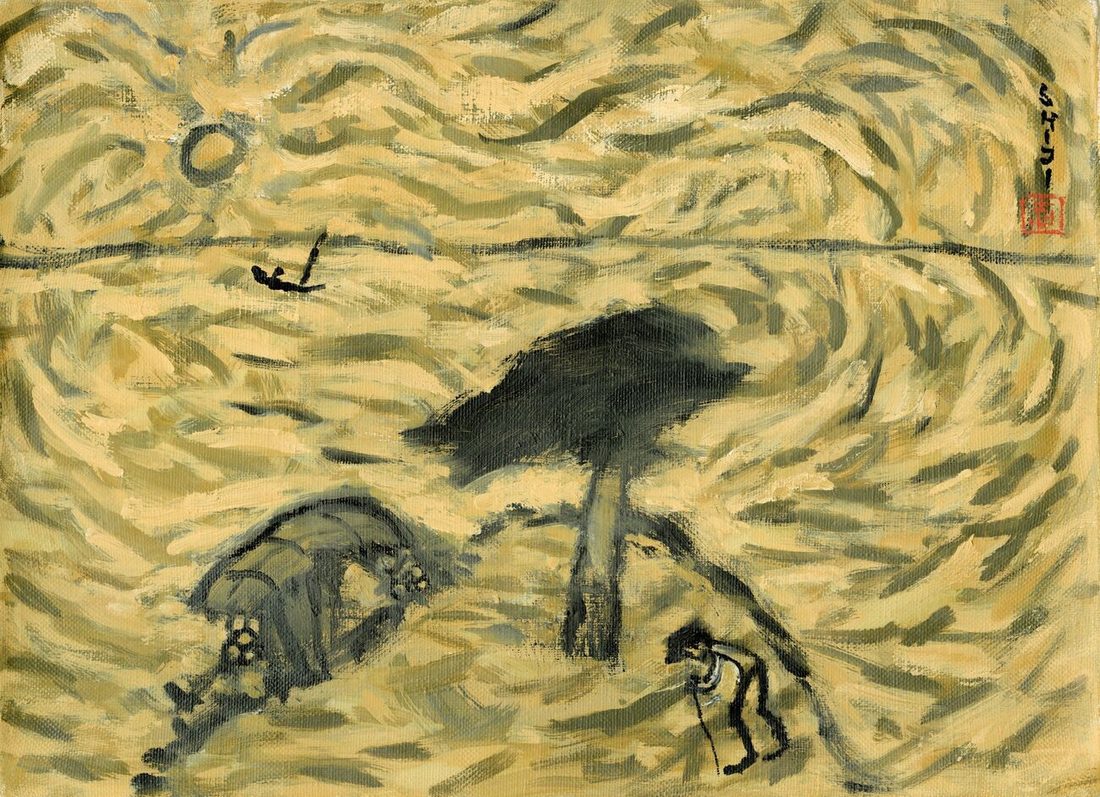
In Empty House, light areas meet dark strokes.
It is a different meeting from that in the red room.
In both, line and colour together give things their place.
A Body in the Notes
Byun’s notes include a section on Matisse’s ideas about form.
It considers how a body may be revealed through its essential lines.
The painter’s attention to colour also stayed with the body’s contour.
Movement can remain in a still body.
Look at where the hand rests and where the weight falls.
A body need not be running to differ from an inert object.
Matisse’s words in the notes remain Matisse’s words.
Beside them, we can consider what Byun was reading.
There is a distance between a sentence read and a painting made.
Black Makes the Light Visible
Noon holds many strokes.
Light areas move around the tree’s dark mass.
The light of the painting is not confined to the sun’s circle.
Black narrows, then gathers.
What was line becomes mass.
Beside it, the dried-grass colour changes in appearance.
Byun said that even the same yellowish tone changed with what he painted.
He did not simply set down the colour he had seen.
There was still a choice to make before the canvas.
Time After the Scissors
Matisse’s cut-outs involved more than scissors.
There were hands painting and drying paper, and hands pinning it in place.
A cut shape could still be moved.
Moving one shape changes the space beside it.
The cutting may be over while the work is not.
With fewer things left, their positions become clearer.
Byun also waited for paint to dry before returning to it.
There was time spent thinking about the composition.
A painting that looks simple may hold many days behind it.
What to Keep of What Was Seen
Not everything before the eye will fit.
Seeing much may still mean painting less.
What to keep must be decided again before the work.
Matisse’s red and Byun’s light ground both passed through choices.
Colour is neither an arbitrary name nor simply a trace that arrived by itself.
It has to live with the other things in the painting.
The two painters need not have seen the same things.
Similar choices can make different paintings.
Different paintings can return the same question.
Where the House Becomes Small
Remove the house from Empty House and its smallness changes.
It is small beside the broad sea and distant boat.
Its surroundings have a share in its size.
The small gaps in Noon lie among many strokes.
The eye can find a resting place without a vast empty field.
From that gap, it passes to the next stroke.
It is not only a matter of drawing one object well.
It is also seeing what to place beside it and what to leave out.
The line comes alive with its surroundings.
Beside a Different Painting
I will not say that one conquered while the other surrendered.
The red room and the small house are not in that contest.
Each gives things a place within its own colour.
Another painter remains in Byun’s notes.
Learning does not require resemblance.
One can look at a different painting and return to one’s own.
Beside the house’s black line is a light area.
The eye stays there.
The house looks a little smaller.