Research/A Hundred Years of Wind/Ⅶ Comparison & Context
Ⅶ Comparison & Context · 86 / 100
École de Paris and École de Seogwipo
Painting in Different Places
에콜 드 파리와 에콜 드 서귀포
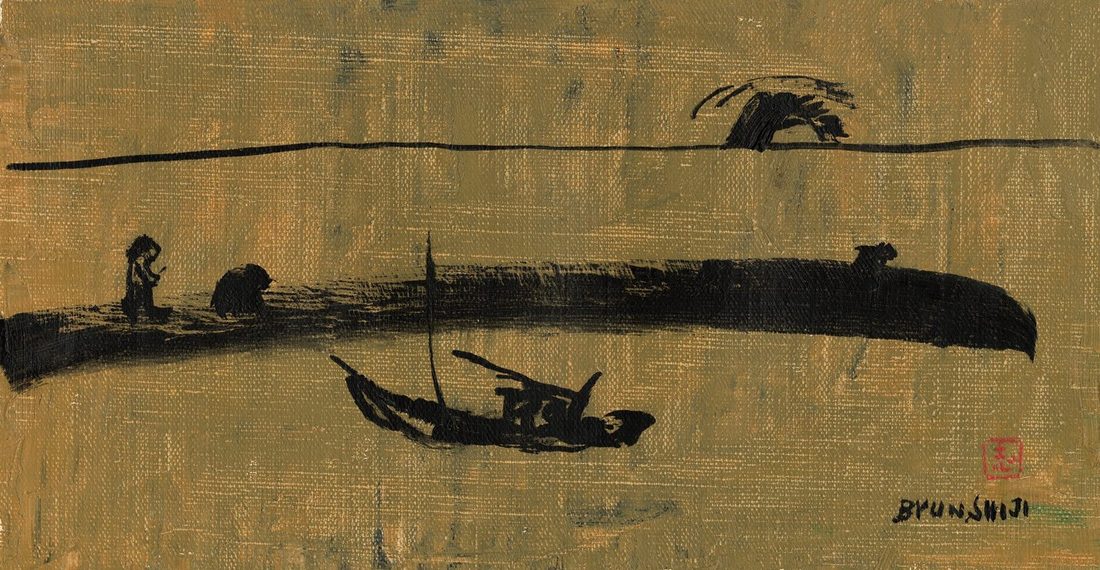
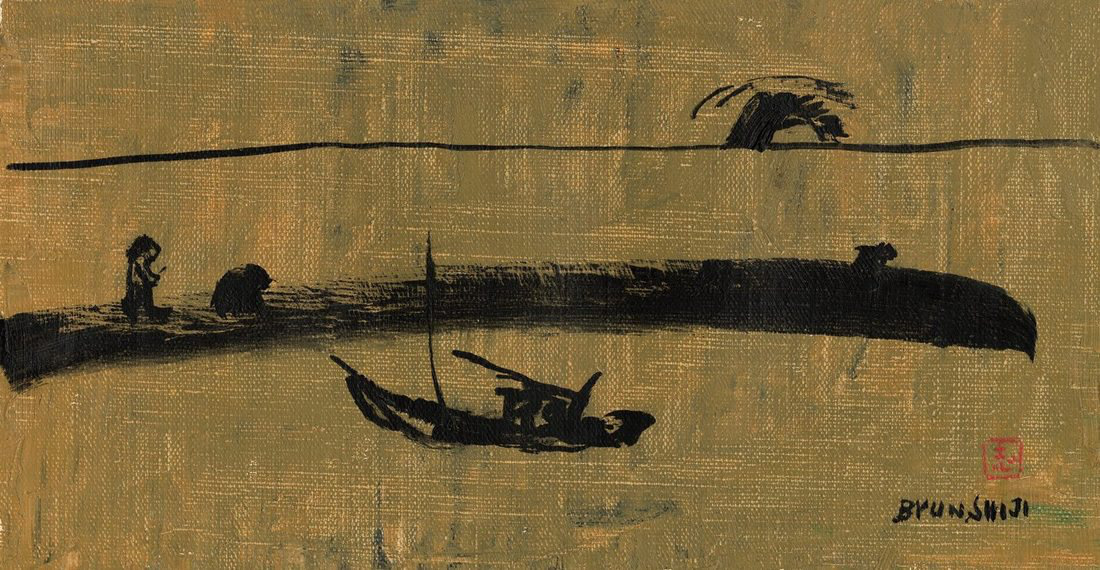
Between Boat and Shore
In The Jetty, a person stands on land.
A boat lies nearby on the water.
They are close, but they do not touch.
I set Seogwipo beside Paris.
Not to make it a smaller Paris.
I want to see how a painting made here can reach someone there.
“École de Seogwipo” is a name borrowed for this essay.
It does not name a documented school.
Beneath the name, I first place one painter’s work.
Those Who Came to the City
Painters came to Paris for different reasons.
Some fled persecution.
Some sought a place where they could work more freely.
Painting needs a room.
Outside it, there must also be someone to show the work to.
Arriving in a great city does not open every door.
One can be alone among people.
Help can reach a room where someone works alone.
That distance does not appear on a map.
Rooms Along the Way
Byun recalled moving from lodgings in Tokyo to an artists’ studio settlement.
He had also lived close to other painters.
Returning to Jeju did not erase those years.
In Europe, he drew when he found a place along the way.
He found his way, drew, and walked on.
Jeju was not the only place where his brush had paused.
The eye of someone who returns still holds the places left behind.
Looking at a Jeju tree, he paints with a hand trained far away.
Home does not make that hand anew.
Sending a Postcard
One painter’s style is not the life of a whole city.
To speak of Byun is not to say everything about Seogwipo.
Other paintings and other days belong there too.
To gather works for Gidang, he sent postcards to painters.
He asked for donations.
When that was not enough, he said, he approached them individually.
Beside the hand that painted was a hand that asked.
Making his own paintings did not mean doing everything alone.
I want those other hands to remain beside the work.
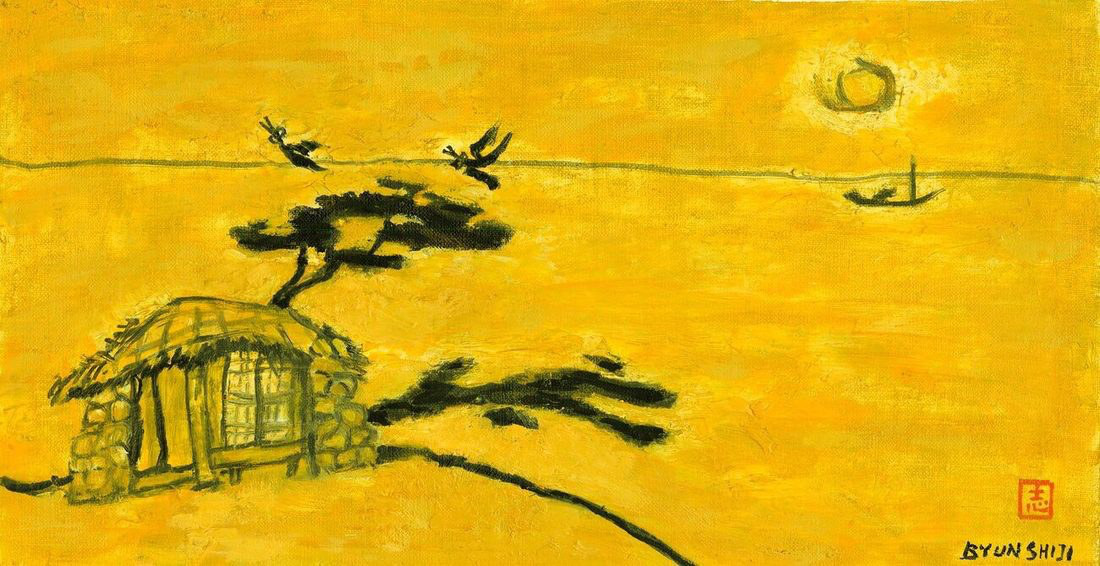
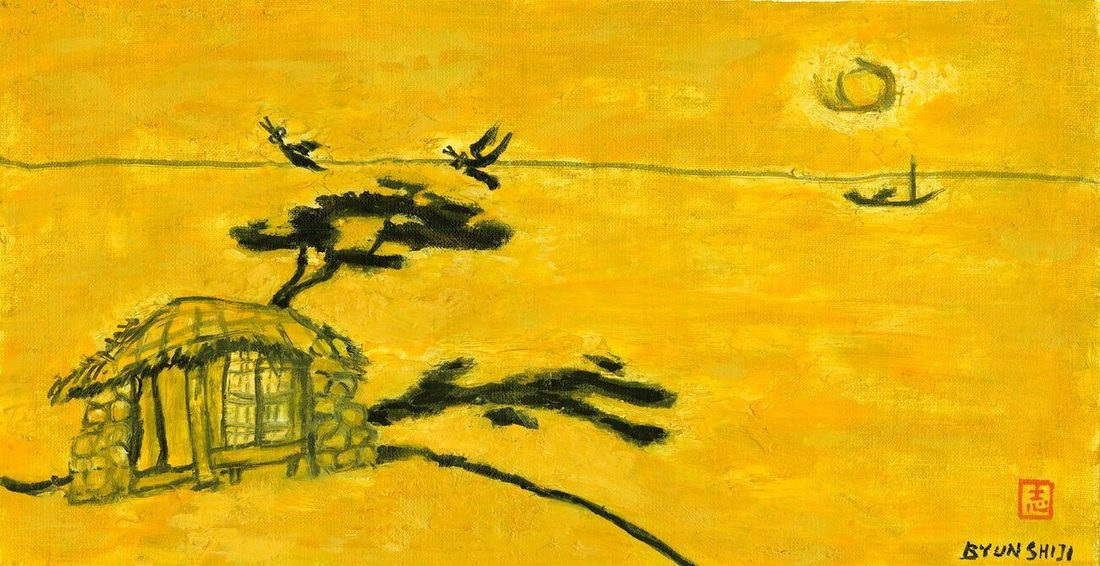
Around an Empty House
In Empty House, the house and tree gather on one side.
A boat is far away.
The eye must cross the broad field to reach it.
Few people in a painting do not tell us how many people filled the painter’s life.
He did not paint everyone he met.
Sometimes only the distance left by an encounter is visible.
There is a need for time alone with a painting.
There are times when another pair of eyes is needed.
A quiet painting can pass through many hands before it reaches us.
Before It Hangs Far Away
When a painting hangs in another country, new people see it.
That does not mean it held nothing before.
The small house was already small before it travelled.
We can tell someone the name of a stone wall.
We can explain a thatched house.
Even someone new to those names can see the small body before the house.
Translate one title carefully.
Check the date and link it to the right painting.
A distant reader’s way back begins with such small tasks.
The Same Wind, Different Paintings
Paintings differ even on the same island.
The bodies meeting the wind are different, as are the homes they return to.
So are the days they lived before that wind.
Byun said that the landscape of the mind was not confined to Jeju.
He was not concerned only with the scenery of a place.
He was also concerned with what it was to live there.
A name for a place should not become a wall.
Beside the Jeju painted by one artist, there must be room for another person’s Jeju.
A painting may belong to one person; the island does not.
Back to the Jetty
Neither Paris nor Seogwipo needs to stand above the other.
We can ask what was seen and how it was painted in each place.
The paintings can meet without losing their differences.
Someone far away may notice the bent body first.
Then they may ask the name of the ground beneath it.
There is more than one way into a painting.
The person is on land.
The boat is on the water.
The water between them remains.