Research/A Hundred Years of Wind/Ⅵ Time & Memory
Ⅵ Time & Memory · 72 / 100
The Time of the Artist’s Notes
Time Spent Writing, Reading and Revising
작가노트의 시간
A Sentence beside the Brush
When opening a painter’s notes, we tend to look first for answers to the pictures. What does this colour mean? Why retain this line? But notes also contain words written before an answer: a passage copied from someone else, an attempted explanation, a question to revisit. They preserve not only what the painter knew but what he wished to know.
The supplied transcription describes red Korean glosses added to a Japanese text in the notes on form. Statements concerning Ingres’s painting and form are being grasped again in another language. Rather than a declaration in one voice, a page suggests overlapping times of reading, translating and questioning.
The pen does not merely explain the brush. Before the pen, the painter becomes a reader, someone returning to what he has already studied. Protecting a painting’s individuality does not mean having learned from no one. It can include remaining with another person’s words long enough to find the questions one needs.
Different Times Gathered in One Book
The ARKO Arts Archive catalogue records Art and Fūdo: An Artist’s Notes on Line, Colour and Form as a book by Byun Shi-Ji published by Youlhwadang in 1988. A publication date tells us when a book appeared as a volume. It does not establish that every sentence was first written in that year.
In his oral account, Byun describes a basis in notes prepared for lectures, earlier writing and rewritten material. He also speaks of selecting passages needed by a painter from books on aesthetics. The volume was less a certificate of a philosophy completed on one day than a meeting of sentences needed in different circumstances.
The editorial English title retains Fūdo. Here it means not weather alone but the lived conditions of light, land and ways of life. That gloss does not substitute for the contents of the book. Its range must be read through the title, bibliography, oral account and particular textual edition, each checked in its own right.
The Hand That Wrote and the Person Who Said It
A sentence in the painter’s hand does not necessarily make him the original author of its thought. The transcription of the form notes conveys descriptions of Ingres, passages introduced as Ingres’s words and Korean glosses beside them. Distinguishing these layers lets us encounter both the painter who reads and the painter who speaks.
This distinction does not diminish the notes. What was selected for copying matters too. Retaining one line among many reveals a direction of attention. Yet selection and complete agreement are not identical. A copied sentence may be one the reader still intends to think through.
Text and marginal gloss may have been written at different times, but ink colour alone cannot provide exact dates. A date in a scan filename is not automatically a writing date either. Rather than inserting a later chronology where the record is uncertain, we leave that uncertainty available for another reader to examine.
A Sentence Is Tested Again before a Painting
The existence of notes does not fix a painting to one meaning. A statement about colour need not be enacted identically by every painting. Returning from text to image brings both correspondences and remainders. The mismatch itself can generate another question.
The transcription of the criticism notes discusses comparison, judgement, revision and further painting as occasions for self-criticism. Criticism is not confined to the space outside a finished work. Someone is already looking during its making. The painter moves his hand while assessing what that hand has left.
There is no need to turn that passage into a rule explaining how every work was made. It can instead become a questioning tool. What does this line clarify? What might another layer lose? The notes do not judge on the painting’s behalf; they make judgement before it more careful.
Not Confining Two Traditions to One Sentence
When speaking of an encounter between Eastern and Western traditions, we must first ask what each term denotes. Classifications in theory, explanations used in teaching and paintings actually seen are different kinds of evidence. A page glossing Japanese in Korean is less proof of two civilisations merging than a particular trace of reading across languages.
In his oral account, Byun does not confine his thinking about fūdo to the period after settling on Jeju. He recalls considering ways of life and customs in Korea while still in Japan. This cannot serve as a precise chronology of composition, but it asks us to reconsider a story in which every idea originated in one moment of return.
An individual style may receive many paths. Books read, paintings seen, explanations revised through teaching and new experiences in daily life do not all point in one direction at once. Erasing those paths to leave one pure origin would make the painter’s work of forming a language smaller, not greater.
Reading in Order to Teach
Byun does not say that he intended to expound every system of aesthetics. He recalls seeking passages that addressed what beauty and art are, questions directly needed by a painter. His reference to finding a few necessary lines reveals a purpose of reading rather than its sheer quantity. He sought sentences that could be placed beside painting.
A lecture sentence is written to be handed to someone. Words one believes one understands alone must be reconsidered when explaining them to another. An oversized term needs an example; a familiar distinction that does not fit a work calls for a changed question. Teaching brings another person who prevents thought from closing too easily.
In this sense, the time of notes does not accumulate only within an individual. Explanations meant for students and questions that may return belong to it. We need not invent classroom conversations: the testimony that these were lecture notes gives a sufficient direction. Even a page written by one person contains a place leading towards others.
The Surrounding Words before the Aphorism
Short statements endure. But not every statement made short was actually spoken by the painter. Compress an explanation into a line and place it in quotation marks, and interpretation takes the place of a voice. However well intentioned, a sentence of uncertain authorship can become the foundation of mistaken research.
An oral transcript retains questions, hesitations and moments when a year is corrected. Remove them all and reading becomes smoother, but the workings of recollection disappear. Keeping the transcript distinct from an accessible edited version preserves both. The strength of plain speech does not come from making it sound more categorical.
The same distance should survive translation into English. A possibility should not become a certainty. A statement recording someone else’s thought should not become the painter’s own aphorism. Translation does not turn up the voice; it lets another reader judge its volume.
Notes Opened beside a Self-Portrait
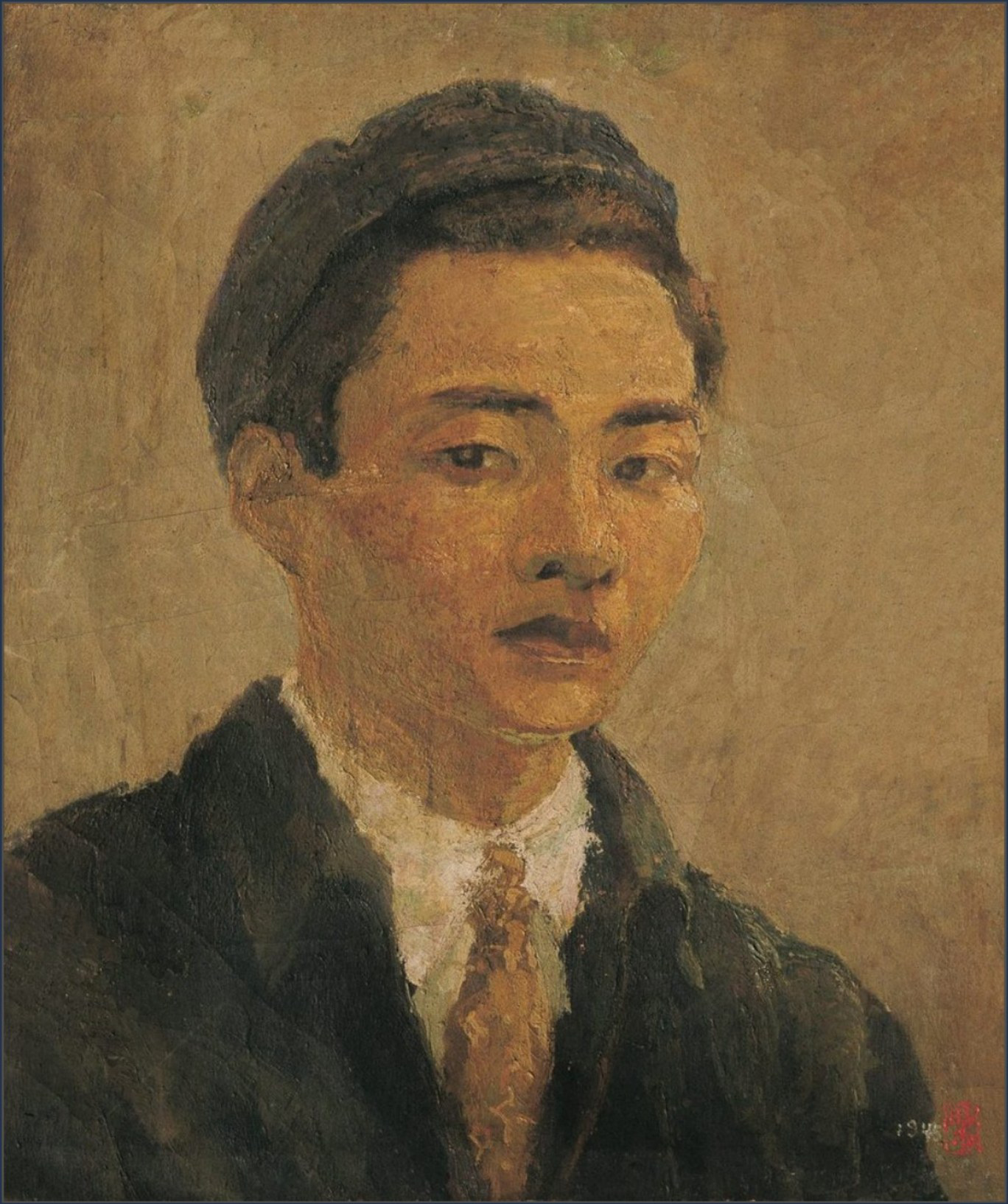
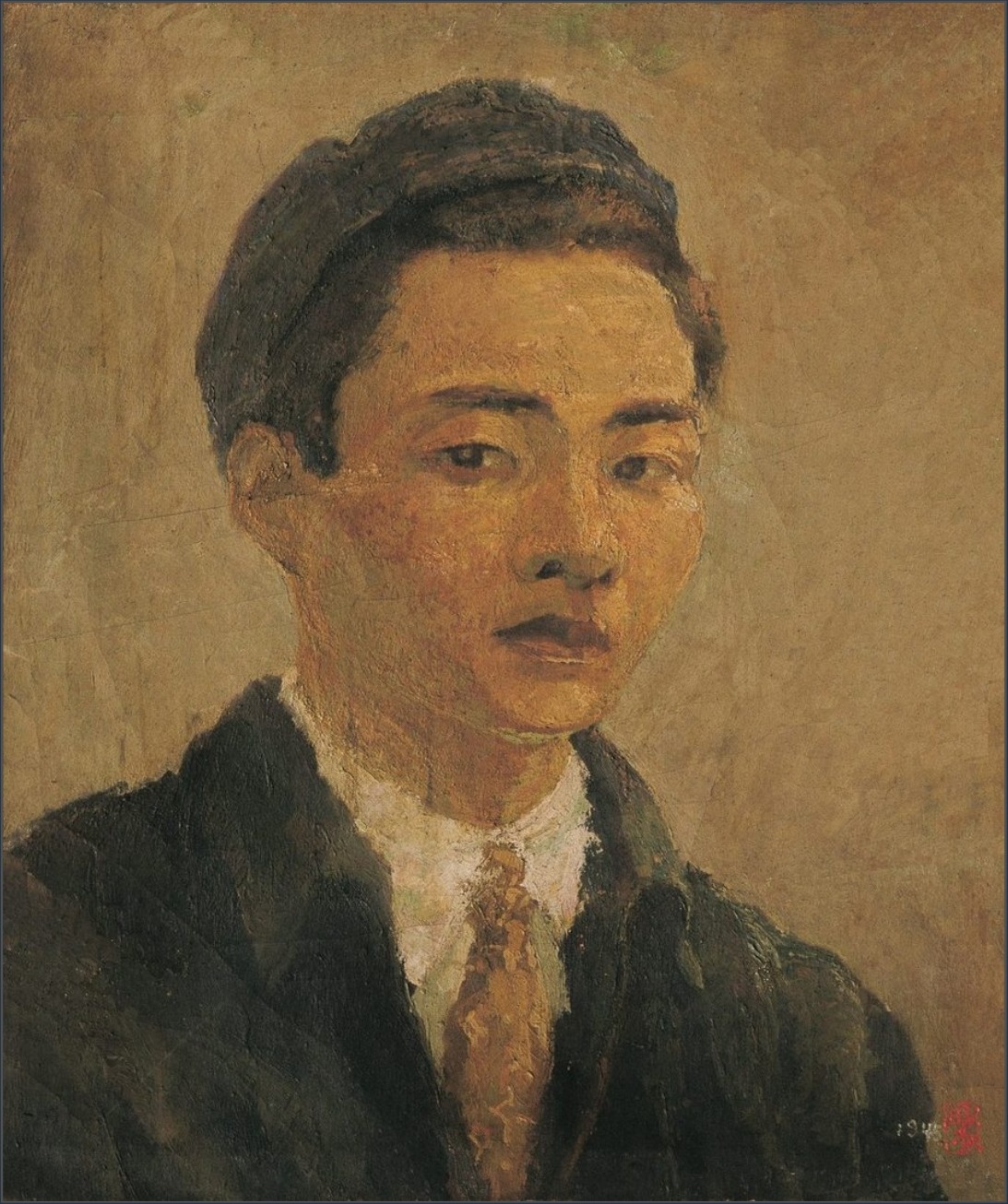
Byun also made a self-portrait. Reading the notes beside the face catalogued as a work of 1944 removes the need to call writing his only self-portrait in place of painting. He depicted himself as a face and explored thought in sentences. Two different kinds of evidence widen our encounter with one person.
Notes are not a box sealing a finished self. Other authors enter; the writer’s words change; later transcriptions add another layer. To preserve them well is not to tidy everything into one voice, but to leave a route by which readers can retrace where each statement came from.
A page in the transcription carries a Japanese sentence. Beside it is a Korean gloss. Before reading the next line, we remain for a moment between the two.