Research/A Hundred Years of Wind/Ⅴ Life & Place
Ⅴ Life & Place · 63 / 100
Monet’s Light, Byun Shi-Ji’s Wind
Beyond Separate Senses: How Experience Becomes Painting
모네의 빛, 변시지의 바람
Beyond the Opposition in the Title
Placing Monet’s light beside Byun’s wind may seem to make the difference immediately clear. It is easy to say that one painted what he saw and the other what he experienced bodily. Yet light is seen from a bodily position, and wind is also felt through visible movement. The senses do not divide so neatly.
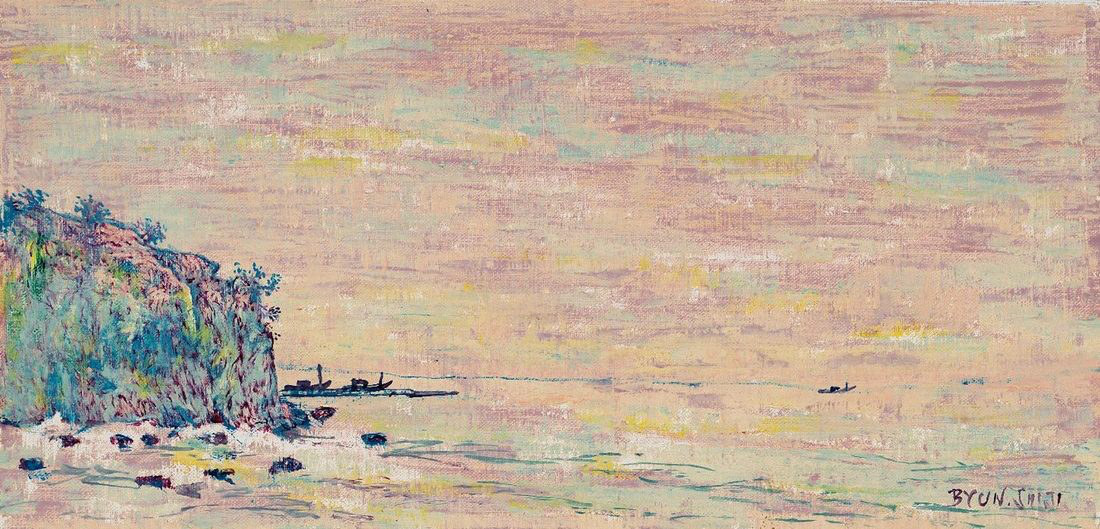
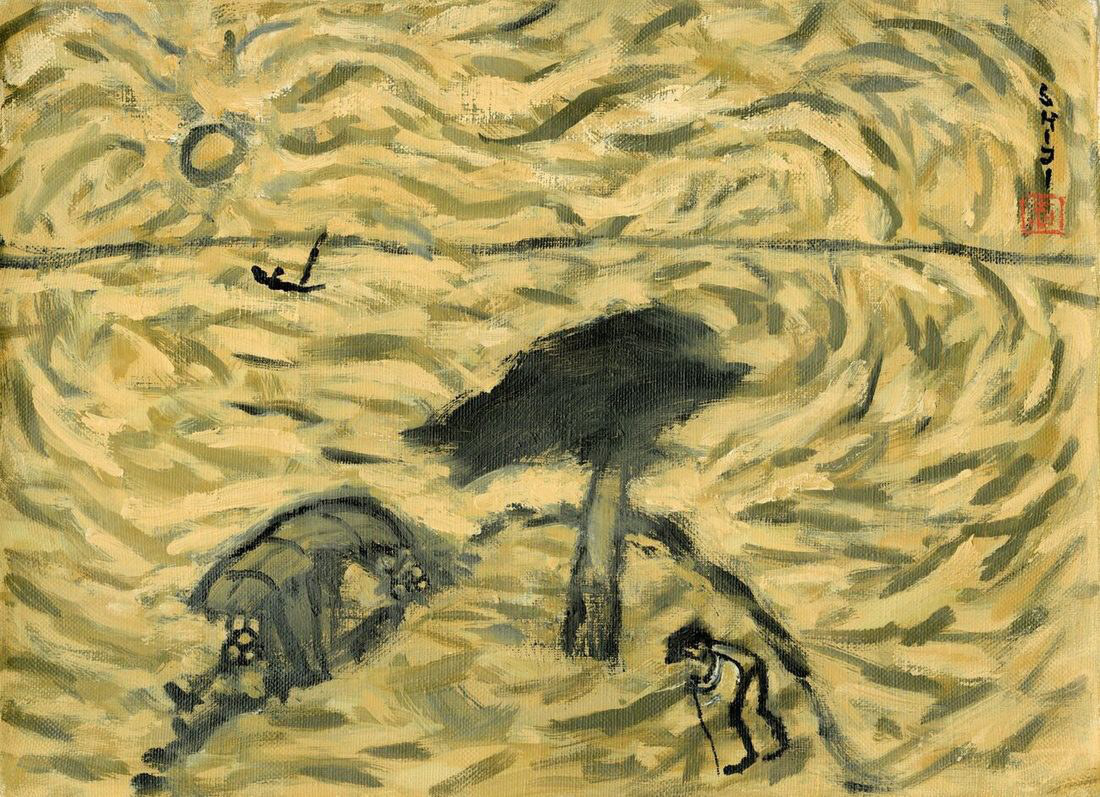
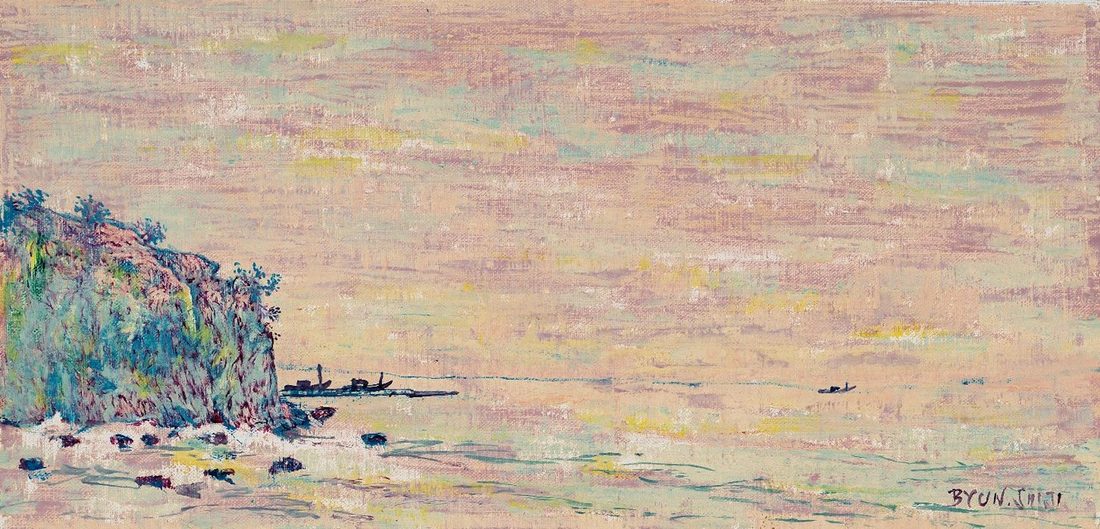
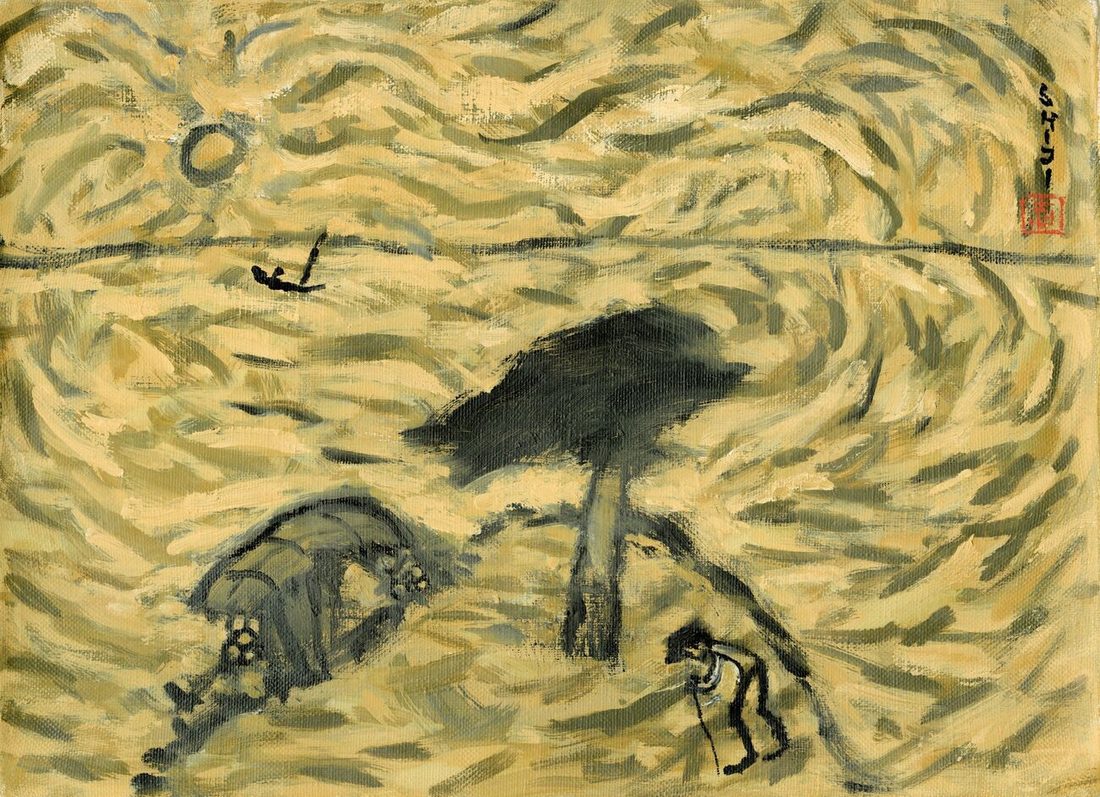
In Byun’s Sunset, several pale colours overlap across sea and sky. In Noon, a light ground and curving strokes coexist. Light does not belong only to the earlier work, nor wind only to the later one. Light and movement form a picture together in different ways.
The title is therefore a beginning for comparison, not a chart separating two painters. Does something seen or experienced immediately become a painting? If not, what decisions and intervals lie between? That question gives us a reason to read the two together.
Monet in the Notes
The supplied transcription of Byun’s handwritten notes includes a discussion of Monet’s grainstack series. It follows observation from summer light into evening, winter and fog, describing how one subject gives rise to several canvases. Byun’s notes thus preserve time spent reading another painter’s work.
Within the notes, the passage is introduced as Monet’s words. What has been examined here, however, is the layer of study and recording preserved by Byun. The sentence’s first source and route of translation have not been established. It should not be quoted as a newly discovered Monet diary or as Byun’s own original statement.
This distinction does not diminish influence. It shows that influence passes through particular acts of reading and judgement. It opens the possibility of reflecting on a method of looking again at the same subject, rather than simply adopting another painter’s colours. The possibility remains without becoming a proven cause of a particular work.
The Moment Is Also Made in the Studio
Monet’s paintings cannot be treated only as rapid records of momentary light. The National Gallery of Art explains that work on the Rouen Cathedral series on site was followed by completion in the Giverny studio in 1894. Observation in front of the subject and judgement in the studio coexist within a work.
The Art Institute of Chicago’s study of Stacks of Wheat (End of Summer) likewise examines accumulated paint layers and evidence of compositional adjustment. A sensation that looks immediate can result from several acts of work. The moment within a painting is not identical to the time needed to make it.
Here a dialogue with Byun’s practice becomes possible. He too spoke of translating what he had seen at the coast into his own style at home. The methods need not be called identical. It is nevertheless difficult to sustain a contrast in which one merely waits upon nature while only the other actively constructs a world.
Several Colours in Early Jeju Painting
In Sunset (1975), pink, blue-green and pale yellow tones meet across sea and sky. A mass of coastline stands to the left, with small boats farther away. Colour does not merely fill the surfaces of particular objects; it responds across different parts of the picture.
There is no need to treat this painting as a stage that had not yet reached the later dried-grass colour. Its lightly differentiated colours, small boats and intervals already make a scene. A different style arriving later does not turn this earlier painting into an incomplete answer.
Nor can a relation to Monet be settled by the use of blue. We need to distinguish which light and which compositional relations resemble one another, and what the notes record. Comparison becomes firmer when formal similarities and documentary connections are examined together.
Light That Makes Wind Felt
The luminous space of Noon (2007) is not merely a quiet empty ground. Curved marks, darker and lighter, cross sky and earth. House, tree and person stand within their flow. Brightness does not erase movement; it reveals the intervals between strokes.
Dividing light here into a physical phenomenon and wind into a spiritual one narrows the painting. Differences of light and dark make movement felt, while traces of movement alter how brightness seems to spread. Colour and line do not simply state separate meanings; each changes what the other does.
Together, Sunset and Noon reveal a change more complex than a passage from blue to yellow. The colour range, density of marks and positions of small boats and figures change together. Wind does not arrive merely where colour has been discarded; it is sensed in newly formed relations.
Looking Without Dividing Eye and Body
At the Orangerie, eight Water Lilies compositions extend across two oval rooms. The museum relates the space to Monet’s conception. Painting here is not only an object before the eyes but an environment encountered as the viewer turns and changes distance.
This example alone complicates the division of Monet into a painter of pure vision and Byun into a painter of the body. The difference concerns less the presence of the body than the way it is set in motion. Enveloping canvases and long intervals between small figures can produce different rhythms of viewing.
In Byun’s paintings too, moving closer reveals marks, while stepping back reconnects house and person. As the viewer’s position changes, so does the relation of part to whole. Bodily looking begins not only in a mysterious union of the senses but in such small changes of distance.
Reworking Painting in Another Place
Learning another pictorial language does not mean remaining within it forever. Byun recalled trying his Biwon-period manner in Jeju and finding that a Jeju subject alone was insufficient. The change of place had to be worked through again in the relations within the painting.
To describe this process solely as inserting an Eastern spirit into a Western eye simplifies both. Observation and memory, materials and habits, living and judgement are already interwoven. The change was not a replacement of one civilisational half, but a reworking of what had been learned under different conditions.
Nor do we need a genealogy in which Byun can be reached only through Monet. Recorded study establishes connections; differences between works show their limits. Influence need not mean subordination or a debt that must be overcome. It is a relation that changes as new paintings are made.
Returning to the Same Place
Painting a subject repeatedly does more than repeat the subject. It tests habits of looking. Yesterday’s colour may connect differently today, and an interval once taken for granted becomes a question again. Repetition deepens not simply through number, but through what is seen anew on each occasion.
Monet’s series and Byun’s recurring subjects return this question through different pictures. Something matters more than assigning light to one and wind to the other: leaving moving experience within a still surface without closing the time of those who look again.
A small boat rests in the sea of Sunset. Step back a little and it becomes smaller. The pale colour beside it remains wide.