Research/A Hundred Years of Wind/Ⅳ Technique & Medium
Ⅳ Technique & Medium · 54 / 100
Repetition and Difference
When Familiar Things Occupy Different Places
반복과 차이
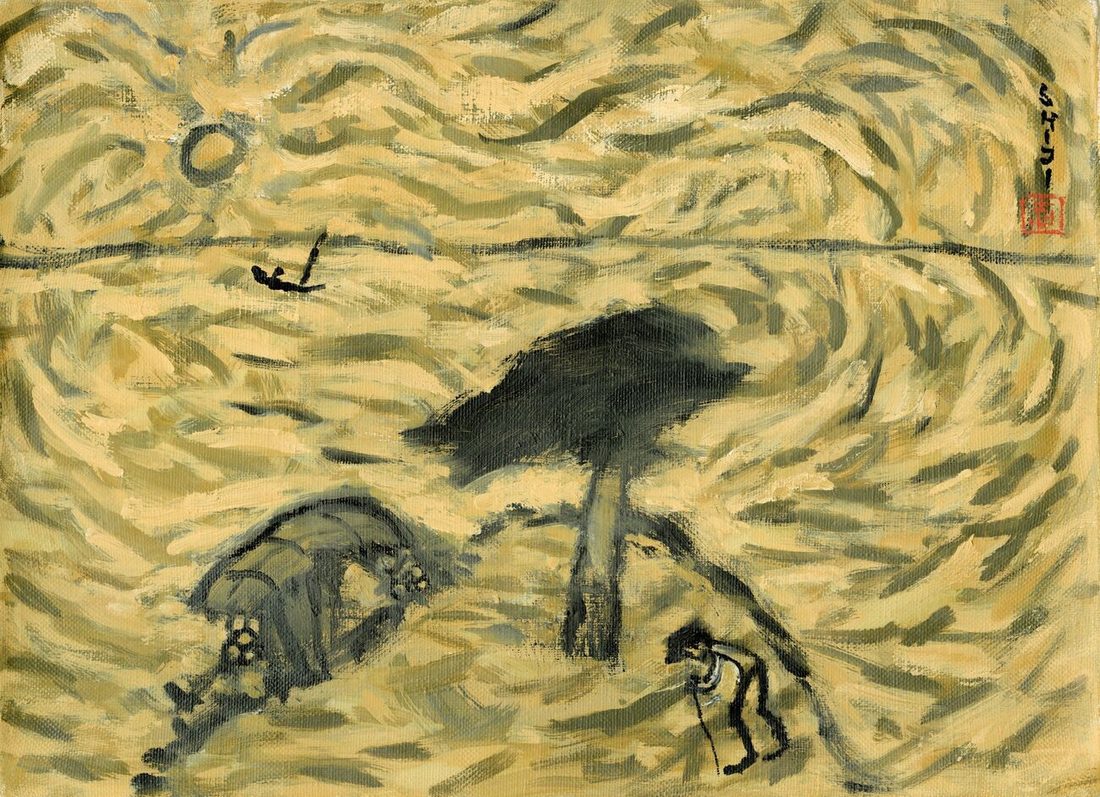
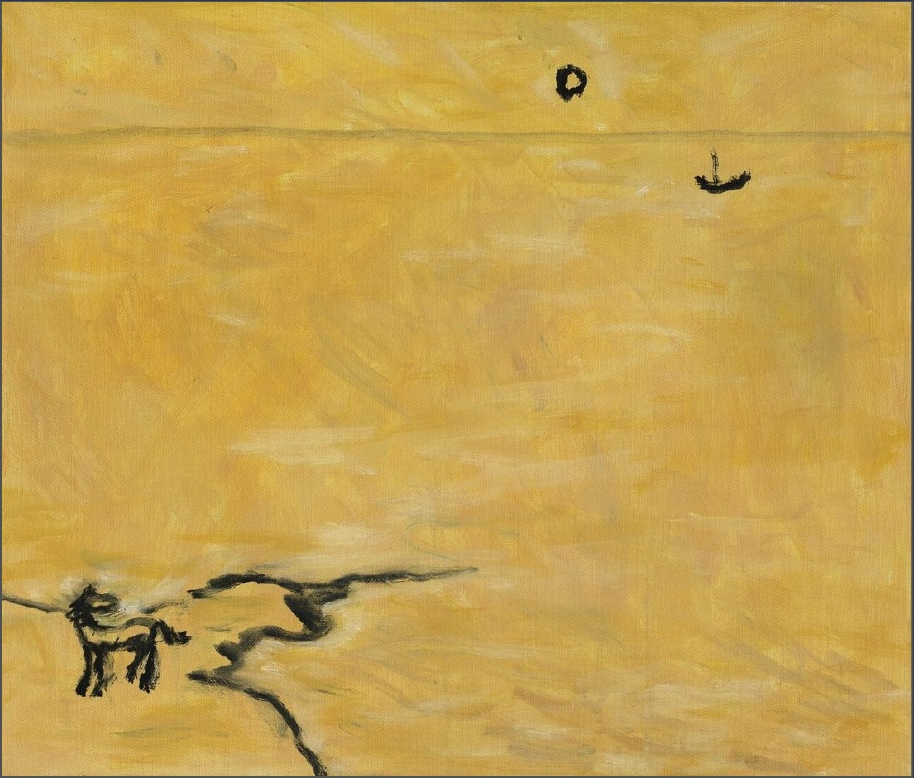
The List May Be the Same; the Painting Is Not
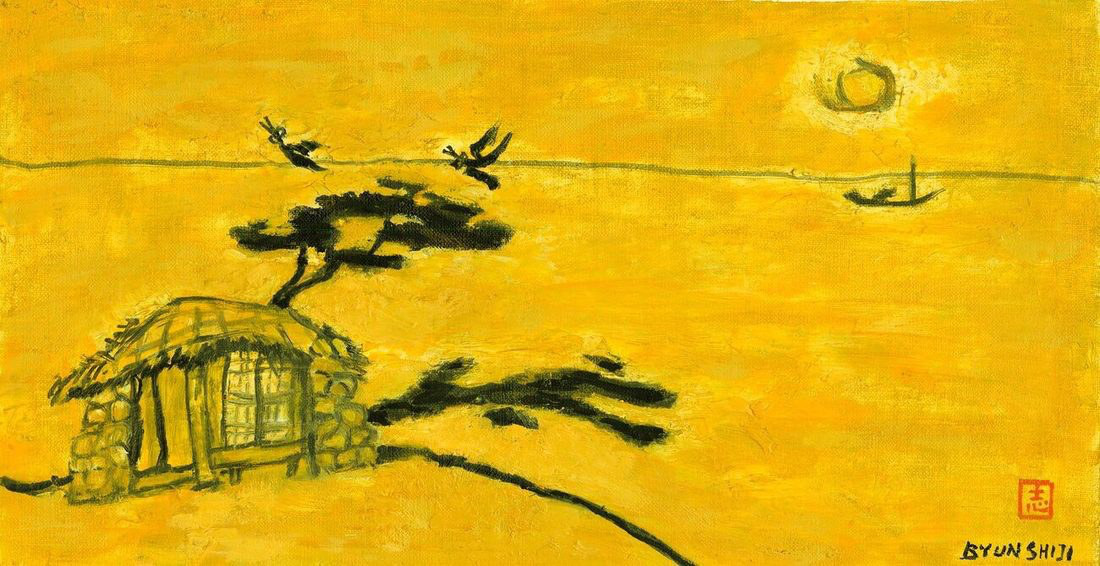
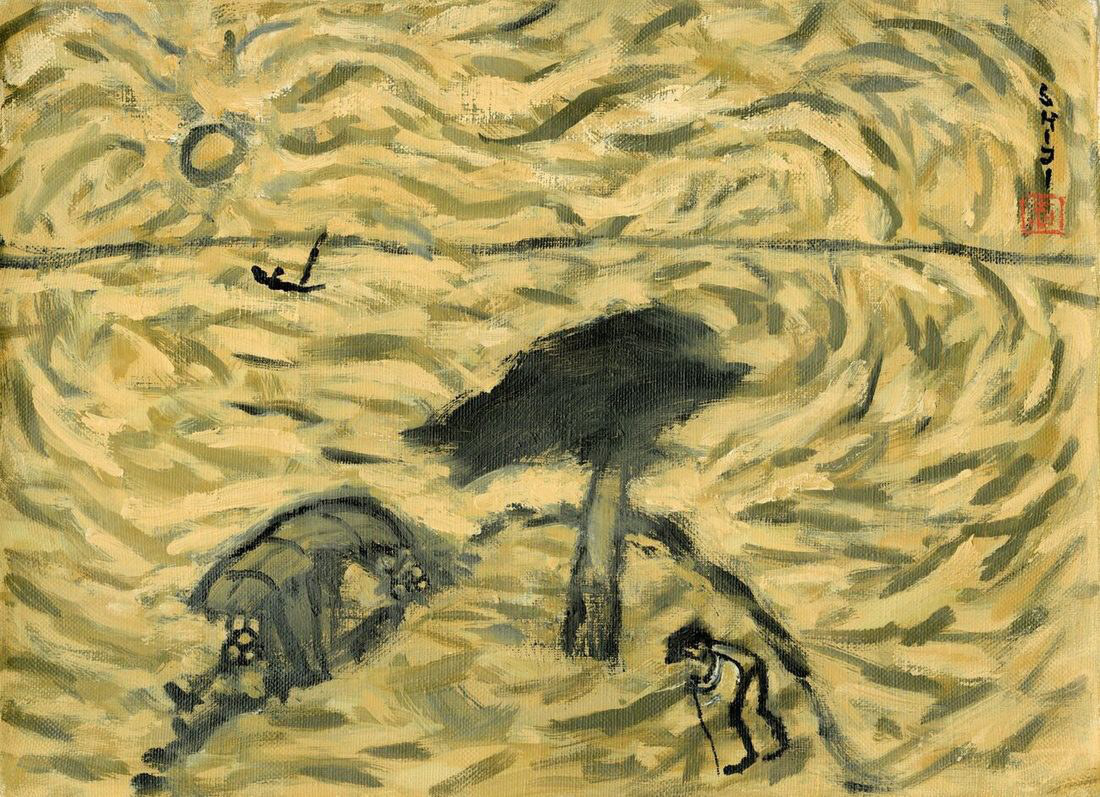
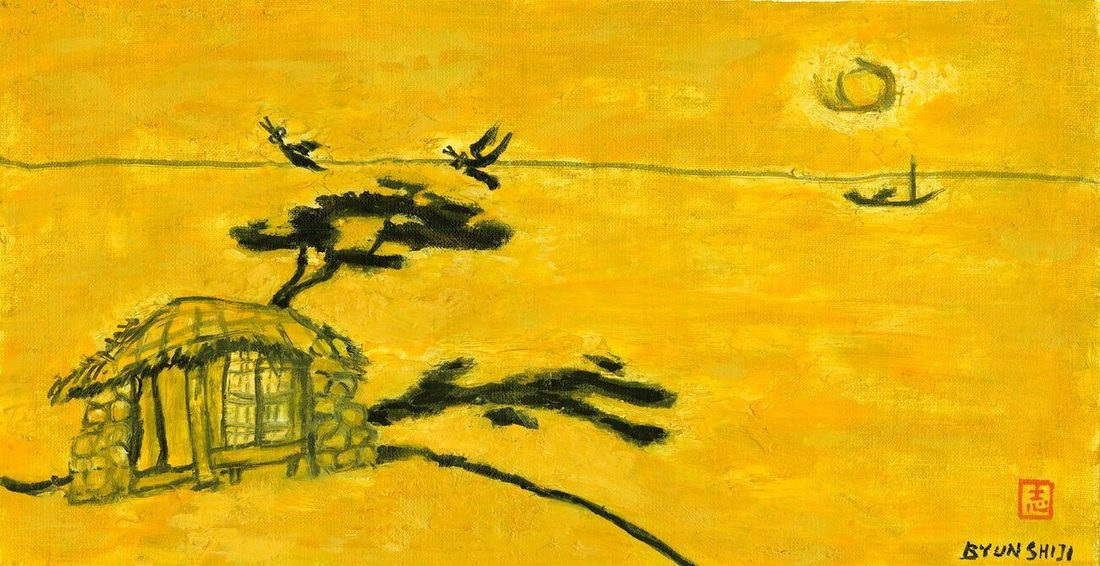
House. Tree. Sun. Boat. The same names can be listed for Empty House and Noon. Yet the two paintings do not readily coincide. Empty House contains a broad, luminous interval; Noon is animated by layer upon layer of short strokes. Recognising the same motifs is the beginning of comparison, not its conclusion.
Calling repetition self-copying may be premature. So may praising every recurrence as the birth of a new world. Either judgement skips the actual differences between works. We need to place the paintings beside each other and examine directions of line, positions of bodies and areas left open.
The question here is not only why the same thing was painted again. What changed in being painted again, and what did that change make possible? Repetition’s value must be established beyond the fact of recurrence, in the relationships of each painting.
The Place of the House and the Density of the Marks
In Empty House, house and tree gather on the left. Boat and sun are distant, with a broad brightness remaining between. Where no person is visible, the house stays more distinctly in our attention. Rather than deciding what is missing, we become aware of the long intervals between what can be seen.
In Noon, strokes throughout the ground keep the eye moving. Passing around house and tree, it reaches the small person below. Instead of crossing a long open interval, we rediscover a body among many marks. The motifs recur, but the time offered to the viewer changes.
The greater density of the 2007 painting, compared with the one from 1987, challenges the claim that the work always became emptier towards the end. Openness and density are not steps on a one-way staircase. Byun made different relationships through both sparse arrangements and paintings containing many marks.
Monet’s Repetition Also Contains Studio Time
Monet’s Rouen Cathedral series provides an important comparison for changes of light and atmosphere. Yet he cannot be treated simply as a passive observer transcribing nature’s timetable. The National Gallery of Art explains that he moved between canvases while working on the site and later completed them in his Giverny studio.
What was seen on the site and what was judged again in the studio meet in one painting. This can be compared with Byun’s testimony: he too emphasised observing and learning outside, then translating the experience into his own style at home. We cannot divide them into a painter of the exterior alone and a painter of interiority alone.
The difference lies in the form that this movement takes within the work. Byun’s houses and trees can be read less as measurements of an unchanged site than as relationships in which memory and observation are rearranged. Comparison with Monet need not become a story of surpassing him; it clarifies the work of judgement within repetition.
Cézanne’s Mountain Is Not Just Any Mountain
To describe Cézanne’s Mont Sainte-Victoire only as a replaceable object for structural experiments misses the memory of a place. The Metropolitan Museum’s account identifies a landscape familiar from childhood and relates the viewpoint of that painting to the vicinity of his sister’s home. Structural enquiry and intimacy with a place do not exclude one another.
Byun’s Jeju is not made of private memory alone either. It involves houses, paths and changing landscapes that were observed, learned and recomposed. For both painters, place can be considered both an object of observation and a site repeatedly returned to. On that shared ground, we can examine differences of line, colour and distance.
This comparison avoids a hasty division between a universal West and a particular East. A painter can look deeply into one place while asking broader formal questions. Byun’s distinctiveness lies not simply in retaining the name Jeju, but in making the sensations gathered there into pictorial relationships that cannot readily be exchanged for others.
Difference Is a Question, Not a Compliment
Deleuze’s Difference and Repetition offers a philosophical point of reference for not reading repetition solely as the confirmation of identity. Yet invoking the book does not demonstrate a painting’s difference. Here its question is borrowed to ask what becomes newly visible when a familiar form is placed again. No direct influence is being asserted.
A change in the tilt of one line can alter a relationship. But not every small variation is significant. We need to consider where it redirects attention and how it makes a body appear. Defending repetition does not require assigning the same value to every work.
The difference between Empty House and Noon does not consist simply in their different dates. The presence or absence of a person, a broad open ground or one dense with strokes, and the emphasis given to the tree make the difference. Time becomes legible in the painting through such specific choices.
Not a Single Line Towards the End
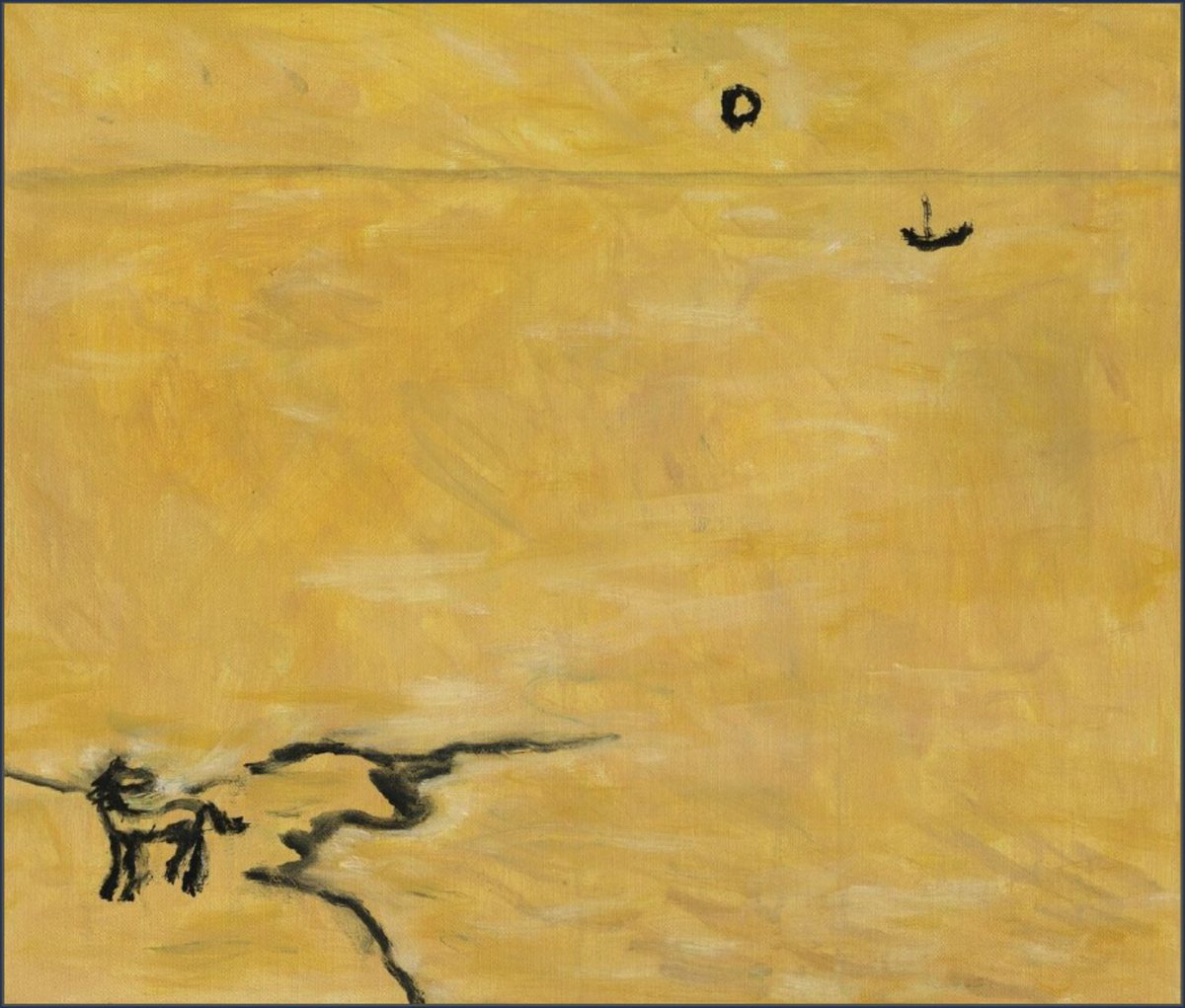
Knowing the broad intervals of The Last Work can tempt us to read every earlier painting as a preparation for them. Yet Noon’s dense strokes make a painting of their own. Describing the late work as a one-way progression erases this richness of difference. The final painting is not an answer sheet for its predecessors.
There is more than one way to leave a body small. It may be placed within a broad ground or made visible among many strokes. One asks us to see the body at a distance; the other, to find it within an animated field. Their emotional character is not determined simply by the amount painted.
Repetition can become a prolonged testing of these possibilities. Familiarity may make small differences more apparent, but it can also conceal them. That is why both painter and viewer need to look again. Even at the moment we think we know a painting, the eye must move afresh.
The Responsibility of Looking Again
An archive that places works together also shapes our experience of repetition. Forcing them into equally sized boxes and cropping them can make different proportions look alike. Incorrect titles and dates can alter the sequence of change. Reading repetition requires a form of presentation in which differences can remain visible.
In comparison, we can begin with the whole before moving closer to a relevant detail. A detail should not decide the character of the whole. We also remain mindful of changes of brightness introduced through reproduction. These checks do not obstruct appreciation; they help us encounter apparently similar works as different ones.
Respecting repetition does not mean praising every recurrence. We should be able to ask where a familiar relationship comes alive again and where a conventional arrangement takes precedence. Allowing that question keeps Byun’s paintings from becoming objects of commemoration alone. They remain works to be looked at.
Returning to the First Painting
After looking at several works, we return to the first with a changed order of attention. We notice the size of a house previously passed over; the distant boat stays a little longer. The painting has not changed. Time spent with neighbouring works has entered the experience. The viewer changes within repetition too.
This change does not reproduce the painter’s process. We cannot see everything he once saw. We can encounter the way one choice illuminates another among the surviving works. Recurring motifs connect not identical answers, but relationships that can be questioned again.
We are before Empty House again. The tree is above the house; the boat is distant. Noon’s many strokes, which filled the eye a moment ago, recede. The bright area beside the house slowly opens out.