Research/A Hundred Years of Wind/Ⅳ Technique & Medium
Ⅳ Technique & Medium · 55 / 100
Paint and Earth
Related Sensations, Different Materials
물감과 흙
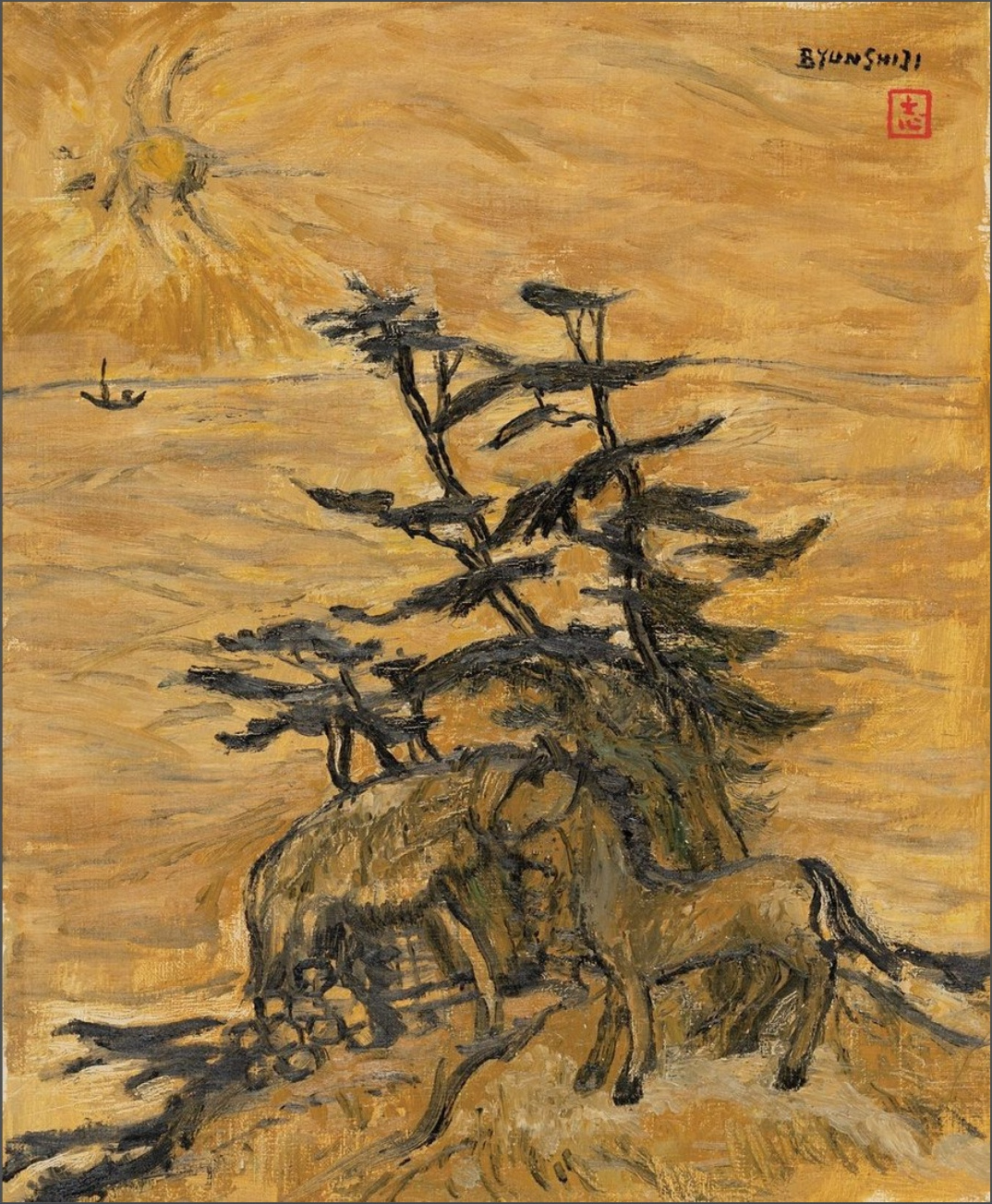
Painting Earth and Adding Earth
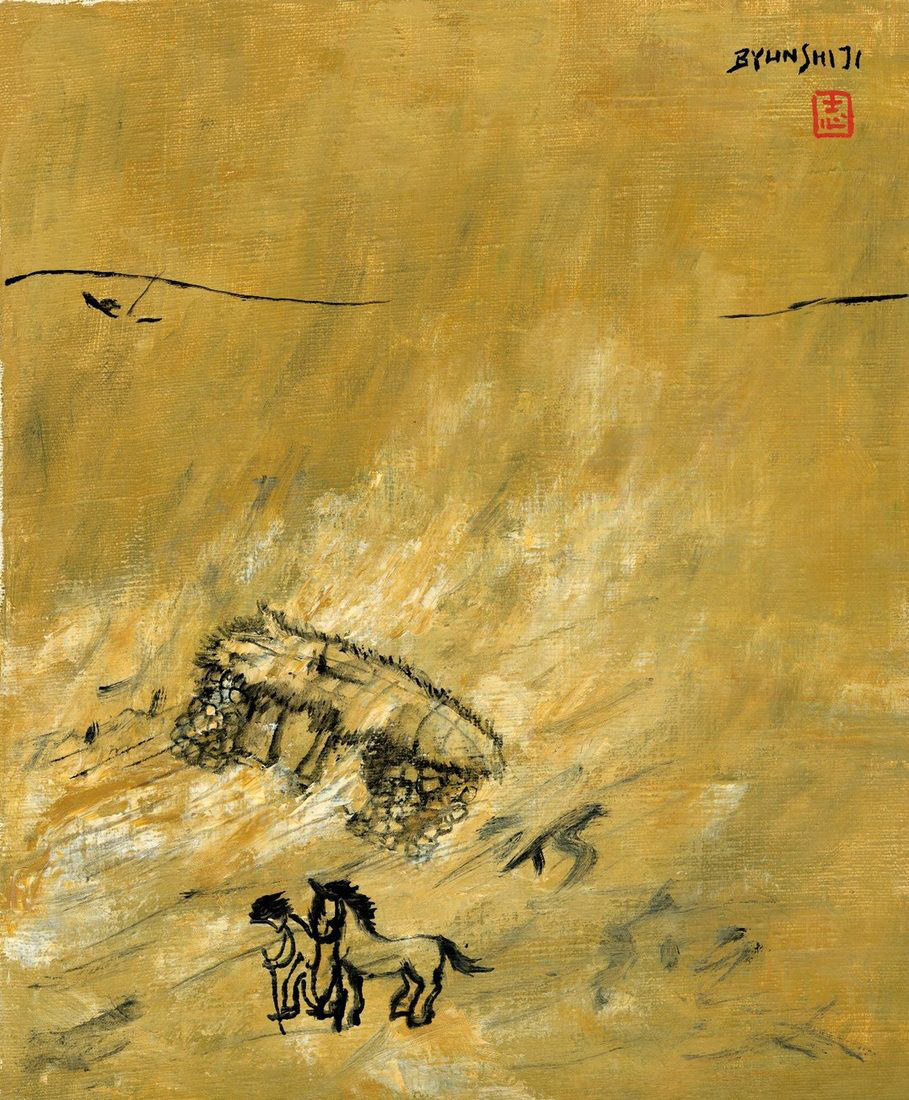
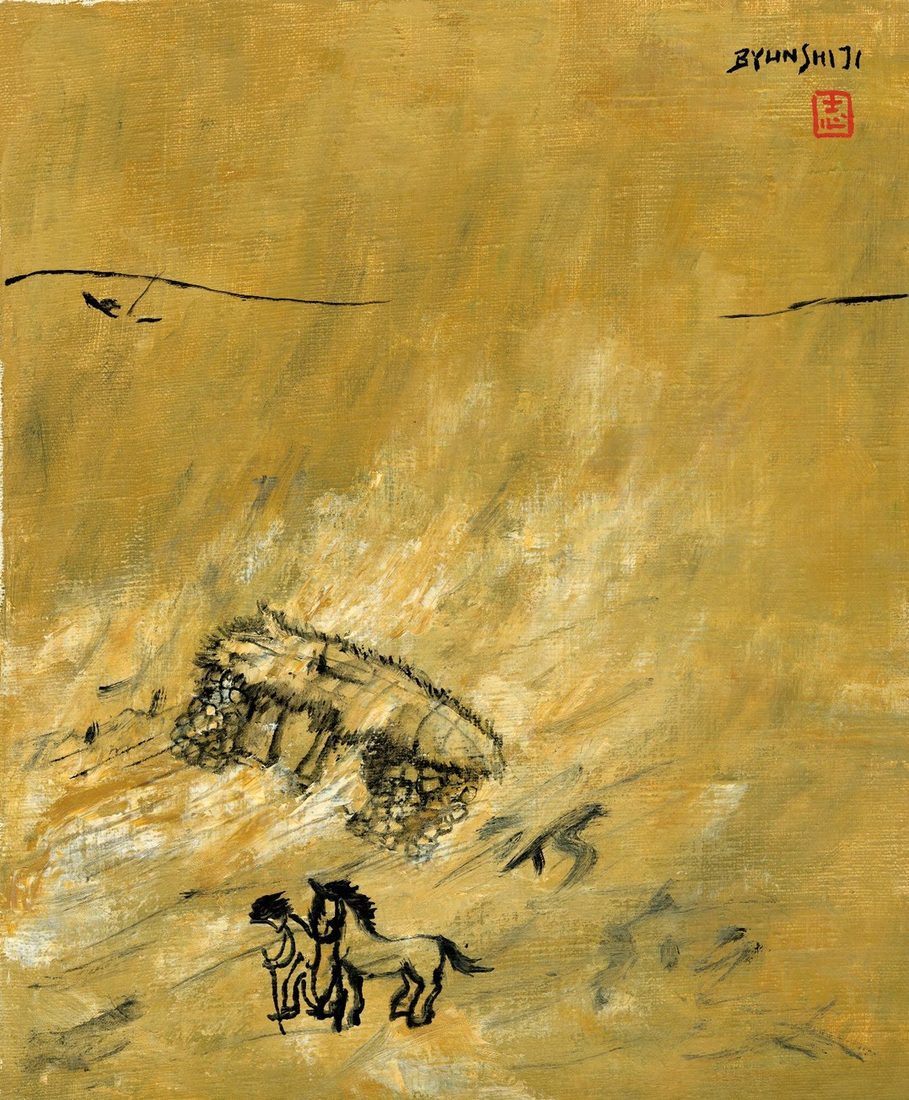
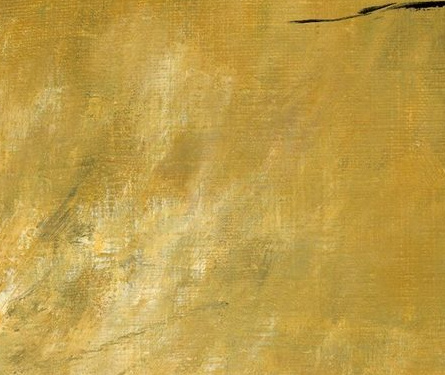
Seen closely, the ground of Stormy Seas brings pale and dark marks together unevenly. It may recall dry land or grass weathered by wind. But feeling like earth is different from containing earth as an added material. This distinction is the starting point for speaking of paint and earth together.
Earth can be depicted. A pigment derived from earth may be used. Soil from a particular place may be added to paint, or an earthy sensation may be evoked without such an addition. These possibilities can overlap, but they are not identical claims. Establishing which applies requires records and examination specific to the work.
What can first be read in Byun’s painting is a relationship of sensations. Colour, apparently broken strokes and exposed intervals of ground together create an impression of dryness. Describing it does not require inventing an unverified recipe. The feeling of fūdo need not disappear when paint is allowed to remain different from earth.
Oil Is More Than Shine to Be Removed
The Canadian Conservation Institute describes oil paint as pigments dispersed in a drying oil. Oil is not merely an unnecessary ingredient that makes a surface shiny. An observation of low gloss therefore cannot be converted immediately into a conclusion that oil was removed. Material structure and visible effect require separate consideration.
Stormy Seas contains both more evenly covered areas and places where the ground remains visible within the pale marks. That difference can be seen. Which brush, paint and underlying preparation produced it is another question. Photographic texture does not reveal the whole sequence of making in reverse.
The distinction does not diminish technique. It permits more precise questions about it. The word “rough” should not cover over the different workings of materials. Respecting the conditions encountered by the painter’s hand means not treating a description of an effect as an equally certain account of the process.
A Dry-Looking Stroke Can Contain Waiting
Galpil, or dry-brush handling, helps describe a stroke that does not fill its course evenly. Bright gaps within it divide directions, making its beginning and ending feel different. The term must not become an assertion that all oil was taken out of the paint. Here it refers to a visible effect of handling.
In his oral testimony, Byun described working again after oil paint had dried to some degree, and works that took longer according to their size. A surface that seems rapidly made may contain intervals of painting, waiting and looking again. One apparently spontaneous stroke does not represent the production time of the whole work.
Paint does not simply yield the desired appearance at once, and judgement does not conclude in one movement. Waiting allows the painting to be seen again; an earlier composition may be reconsidered. The passage from the sensation of fūdo to an artwork contains not only time spent in the wind, but time spent with paint.
Whose Work Was Being Described?
The supplied oral transcript contains a description of mixing oil paint with sand and applying it thickly. In that passage, however, Byun is discussing other people’s abstract painting, not giving his own recipe. Isolating the sentence changes the claim. Who speaks and whose work is being discussed must be established together.
Nor does the passage prove that Byun never used soil or sand. That would require separate examination of particular works and production records. It simply cannot serve as direct testimony establishing his own use of an additive. Leaving the unknown open protects both the factual account and the interpretation.
Criticism need not stop because a material claim remains unverified. We can still ask why the surface of Stormy Seas recalls dry land and what friction arises between its pale marks and dark lines. Precision of sensation does not depend on attaching the name of an unconfirmed substance.
Re-making a Sensation Rather Than Transferring a Substance
Painting Jeju does not necessarily require adding Jeju soil. Evoking a place and bringing its substance into a work are different practices. In Byun, colour and line, low houses and inclined bodies meet to make fūdo felt. The transport of matter is not the only connection to a place.
Dividing paint into Western industry and earth into Eastern origin is also inadequate. Such labels do not explain what paint does within the work. Which area does it cover and which gap does it leave? Where does a line separate from its ground and where does it seem to mingle? Material differences need to be read through these specific actions.
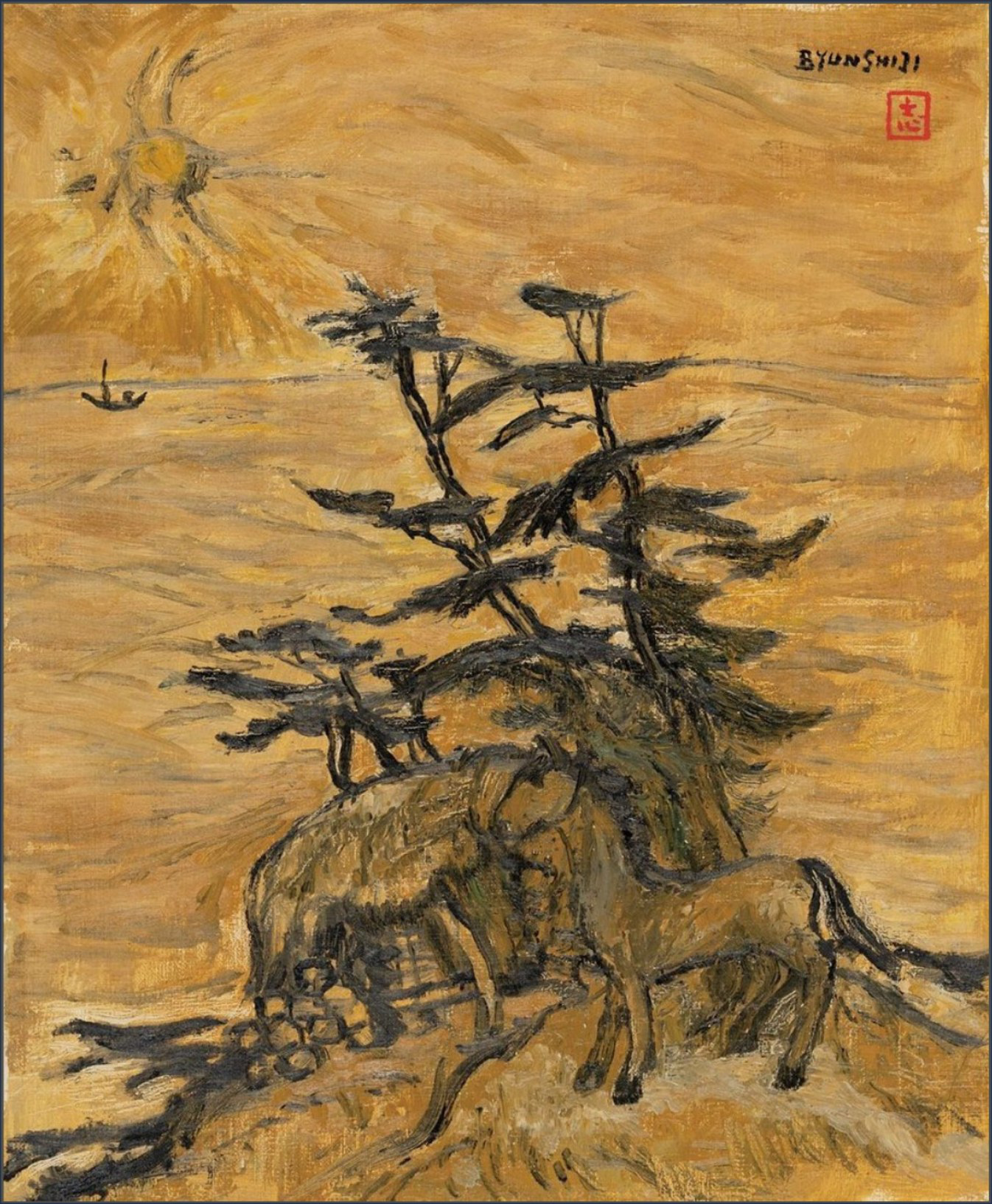
Fūdo can be read not merely as the source of a colour, but as an interweaving of living conditions. A body receives the wind, a house sits low, a small boat remains against a bright field. The paint establishing these relationships can feel weighty and dry without becoming identical to earth. Resemblance is broader than sameness.
Not Every Crack Is Beautiful Time
Traces in an aged surface bring time to mind. But calling every crack a harmless autobiography can obscure the condition of the object. The Canadian Conservation Institute distinguishes stable cracking from conditions involving lifting and a risk of loss. A metaphor of time must not replace a conservation judgement.
The reproductions accompanying this essay show interruptions in brushwork, but these have not been diagnosed as cracks or flaking. A rough impression produced by enlarging an image is also different from damage to the original surface. The time of materials can become clearer through condition records and appropriate examination of the object.
Respecting roughness left by the painter is different from neglecting ongoing damage. The concern to distinguish them also belongs to reading the work. An association with weathered earth can remain, but it should not prevent us from noticing what the actual paint may be losing.
The Path from Reproduction Back to the Work
A reproduction is an important entrance to a work. But lighting, photography and display brightness can change the impression of a surface. What has been examined here is the colour and the marks in the supplied plates, not the original gloss or pigment composition. That is why the limits of the presenting medium are also recorded.
Further material study and production records may allow a more precise account. We should record not only what was established, but which part of which work was examined. A material identified in one painting must not automatically be extended to them all. Different histories of making may lie within the same dried-grass colour.
Such records do not eliminate a painting’s poetic resonance. They make sustained, trusting attention possible. When we say that something resembles earth, we can distinguish a viewer’s experience from a material finding. When different kinds of statement occupy their own places, the work remains larger than its explanation.
Paint Remains Paint and Calls Up Fūdo
Reading paint and earth together need not end with a declaration that they have become identical. It can attend instead to the re-emergence of a place’s sensations through a different material. Light seen by the eye, wind experienced by the body and paint handled by the hand meet in one painting without losing their differences.
The painter’s work lies within those differences. Because the world cannot be brought over intact, he must select, translate and look again. Paint is not simply a channel transmitting the mind’s commands. It is also a condition that requires waiting and renewed work. When fūdo becomes painting, that condition remains within it.
Pale strokes pass above the small bodies in Stormy Seas. Close up, the ground remains visible within them. The eye stays at the edge of the paint. A step back, and the wind blows again.