Research/A Hundred Years of Wind/Ⅳ Technique & Medium
Ⅳ Technique & Medium · 53 / 100
The Aesthetics of the Unfinished
The Painting That Stops and the Looking That Continues
미완의 미학
Looking Rough and Being Unfinished
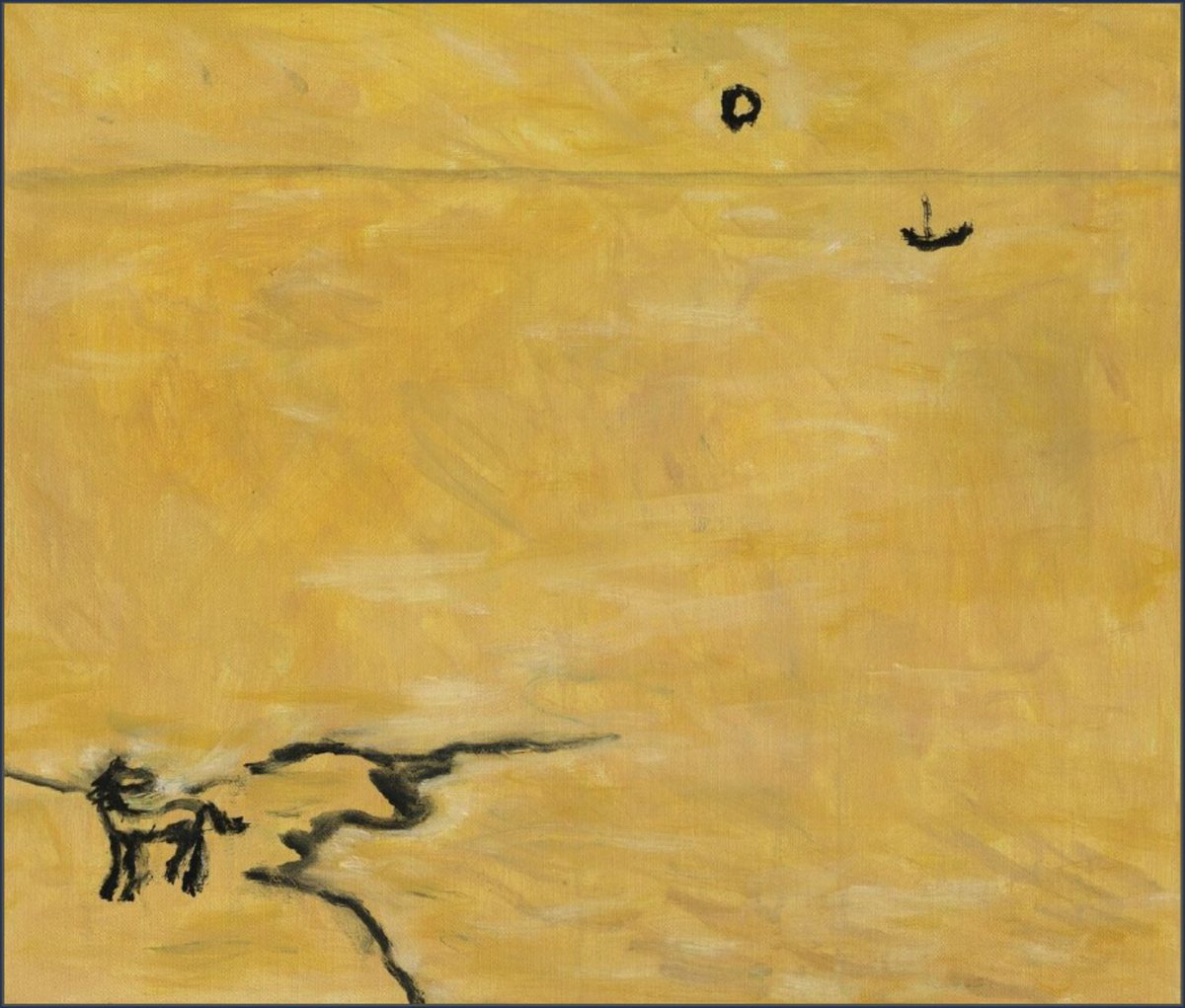
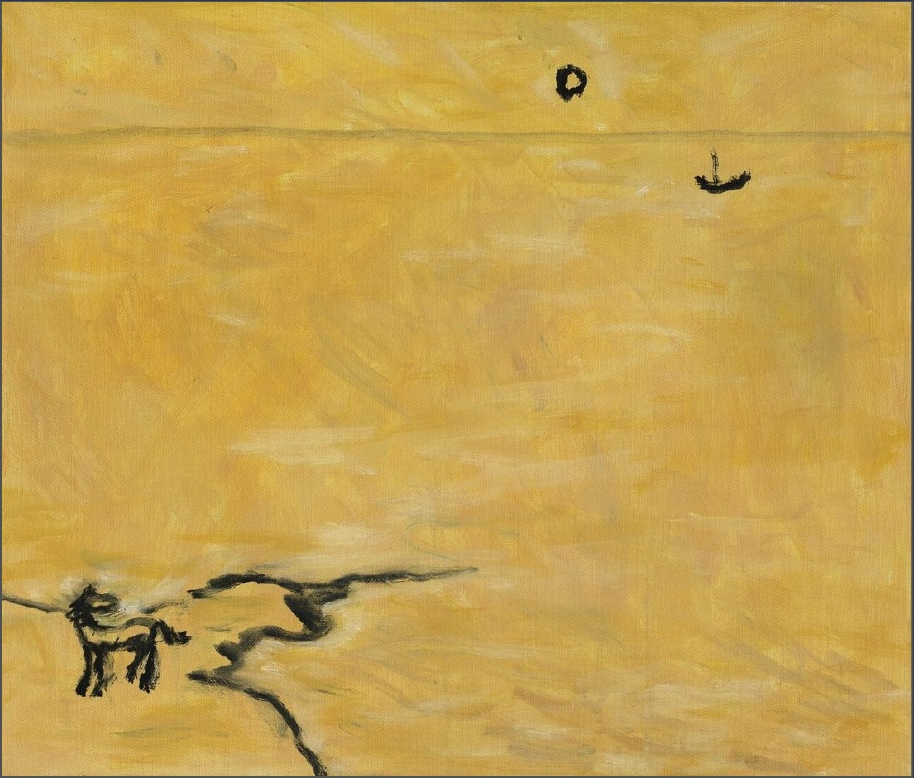
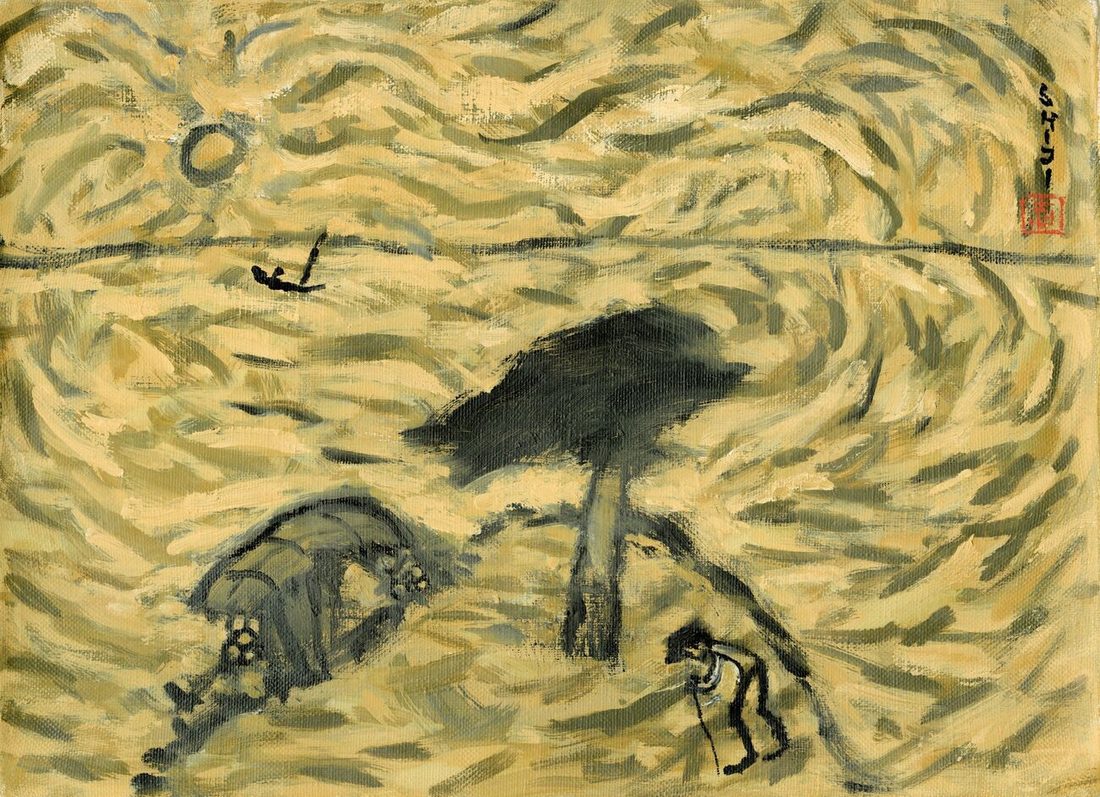
The Last Work contains a small pony, a sun, a distant boat and lines of coast. Few forms and broad surrounding space do not in themselves make it unfinished. Before asking what else should be there, we need to look at the intervals already made by what is present. Sparseness and insufficiency are not synonyms.
Conversely, leaving little is not enough to establish intentional completion. A production process that actually stopped and a finished work that feels open-ended are different cases. A title and an impression of the surface cannot settle the distinction. An aesthetics of the unfinished should make us more attentive to it, not blur it.
Three questions are separated here: the documentary question of whether production ended, the formal question of how finished a surface looks, and the experiential question of how far our looking continues. When one answer does not stand in for the others, we can attend longer to a rough stroke.
Different Circumstances Beneath One Name
The Metropolitan Museum’s Unfinished: Thoughts Left Visible distinguished works left incomplete from works whose makers adopted an intentionally open-ended form. Interruption through death or other circumstances was not equated with deliberate non finito. Different histories of making lie beneath the single name “unfinished”.
This difference does not predetermine artistic value. An interrupted work may generate a profound experience, while a deliberately rough finish may fail to sustain much tension. Applying the label “unfinished” should not end the judgement. We must ask what is actually visible in that state.
Byun’s late paintings can be approached in the same way. We first examine the small forms and broad grounds, overlapping strokes and apparently broken lines. Do they work together as a painting? Where do we expect another mark, and where does that expectation fall quiet? It is there that completion becomes a concrete question.
Not Calling Every Interruption in Stone Intentional
To describe all Michelangelo’s unfinished sculptures as declarations against completion erases their circumstances. The Royal Academy’s account of the Taddei Tondo suggests that he may have left it when he travelled to Rome for another commission. The fact that a master did not finish a work does not by itself show that he wished not to finish it.
We may see the emergence of form in an interrupted surface. But a viewer’s preference for that state must be distinguished from the artist’s choice of it. Appreciation is not testimony that fills a gap in evidence about intention. Comparison becomes more searching when these two histories are allowed to remain different.
Nor should stone and the ground of an oil painting be treated as the same material when Michelangelo is placed beside Byun. We can instead ask how a form becomes visible within its surroundings. Rather than transferring one answer to the other, we consider the differences that different materials bring to a shared question.
A Painter Seeking Completion
Byun’s oral testimony retains a concern with completion. He hoped that the works he was proceeding with carefully might reach a stage of resolution. It is therefore difficult to describe his rough paintings as a wholesale refusal of completion. His concern appears closer to what state could count as complete than to whether completion should be abandoned.
He described losing a good effect while trying to improve it, and the difficulty of returning to an earlier state once it had been altered. In this experience, stopping is neither idleness nor courage by definition. It is the difficult judgement of recognising what remains alive and whether another intervention would damage it.
A painting that appears unfinished may therefore have been accompanied by sustained looking. The issue is not simply the amount omitted, but the judgement not to add. We need not assume that this judgement was identical in every work. One painting may have called for the brush again; another may have required its remaining spaces to be left.
The Time Within a Line That Seems a Single Breath
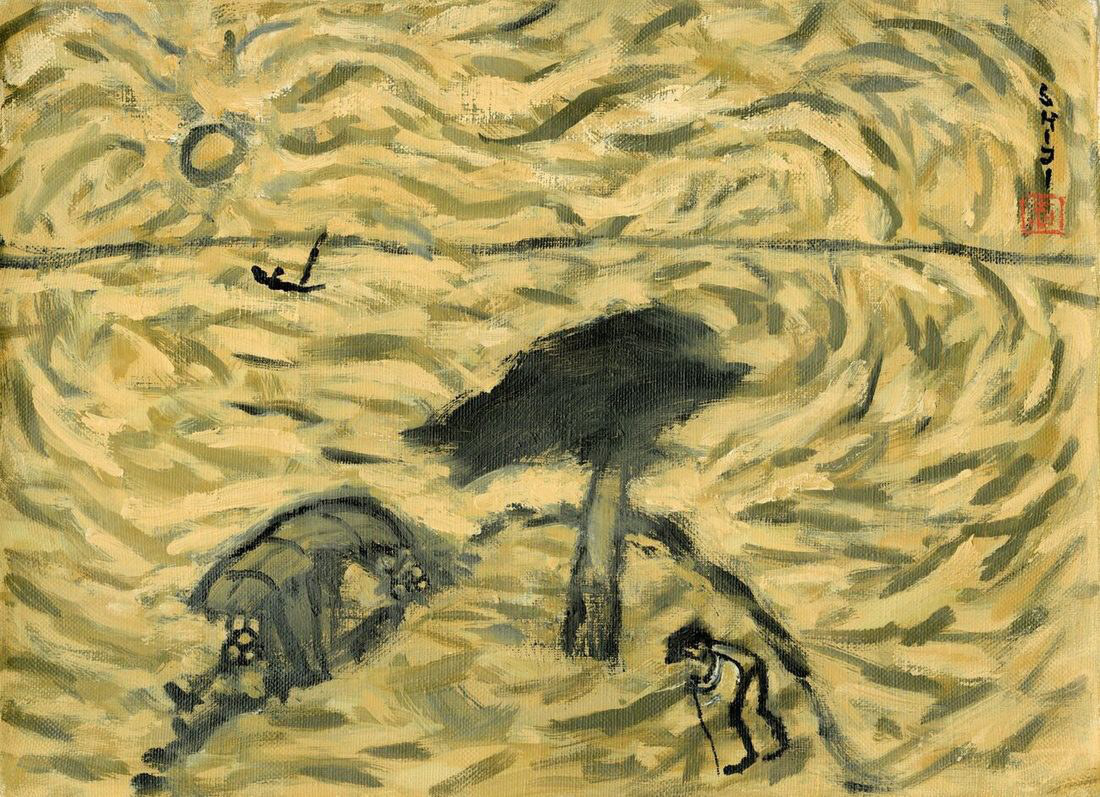
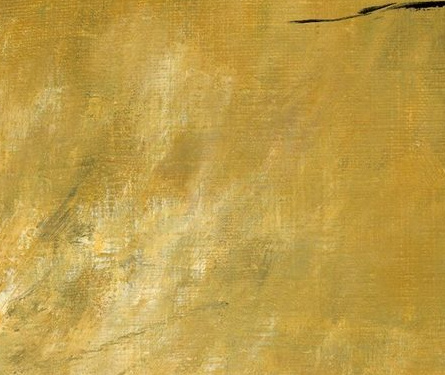
In the detail from Stormy Seas, pale strokes and darker marks overlap without filling the surface evenly. The ground appears through gaps and directions shift. We can relate the effect to the feel of dry-brush work. Yet roughness in a reproduction cannot establish the paint mixture or the number of strokes used.
In his testimony, he described returning to oil paint after allowing it to dry to some degree. A painting that seems to flow in one breath is different from a work literally made without interruption. Continuity may result from extended adjustment. Making an uninterrupted impression may itself have involved many pauses.
Seen this way, pauses and revisions are not enemies of vitality. The painting’s rhythm depends on when it is touched and which traces are retained. Nor need rough strokes be labelled truth and smooth ones falsehood. What matters is how closely the character of the surface works with the relationships within that painting.
Before the Title The Last Work
The title The Last Work brings particular expectations. We may look for a scene in which everything is resolved and a life closes quietly. Yet the painting retains specific forms: sun, boat, pony and coast. The weight of the title should not cover these small differences.
Being last concerns a work’s place in a sequence. It does not by itself establish a conclusive testament or an intentional incompletion. The presence or absence of a signature likewise cannot determine completion on its own. Surviving records and the object’s condition must be considered together. An emotional response cannot replace that enquiry.
Keeping the distinction does not diminish the painting’s resonance. A broad light remains between the ground occupied by the pony and the distant boat. Even without knowing what else might have been intended, we can see the interval that is there. Uncertainty and the ability to remain before a painting can coexist.
What the Viewer Carries On
An open painting does not authorise the viewer to repaint it at will. What continues is looking, not the application of paint. One day the pony’s small body may be noticed first; on another, the distant boat may draw the eye. The order of attention changes within the same painting.
Empty space is not simply a blank to be filled with anything. Neighbouring forms and the edge of the canvas give it shape. The viewer’s imagination moves in encounter with that shape. More than one interpretation is possible without erasing the work’s evidence. Openness does not mean the absence of all constraints.
A completed work can thus sustain unfinished looking. The end of production need not be the end of meaning. After the painter’s hand has withdrawn, the viewer’s eye returns. Distinguishing these two endings prevents an aesthetics of the unfinished from being reduced to an account of a work’s defects.
Before Praising Rough Simplicity
When late work is described through jolbak, or unpolished simplicity, questions remain. What relationships does the simple form retain? Does its roughness hold the eye or merely repeat a familiar effect? Age alone does not make every omission profound. A work’s force must be established again in that particular painting.
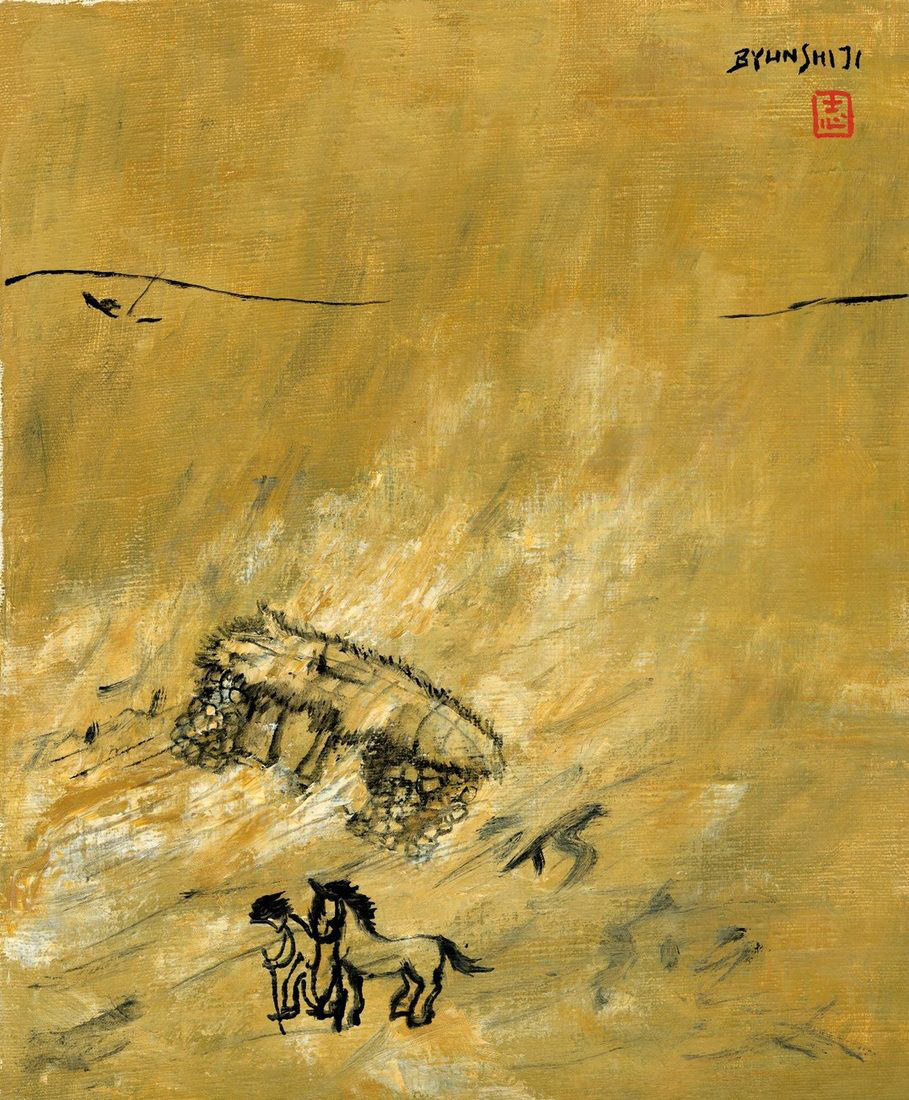
The early Jeju Ponies and the final painting have different densities. The first contains two bodies and several colours; the second, a small pony and broad intervals. They can be compared without treating one as an immature preparation and the other as a perfect answer. They make places for bodies in different ways at different times.
Nor need suffering and frailty be made necessary conditions of art. A work’s depth arises not simply because suffering occurred, but because the remaining materials and forms actually establish relationships. What deserves our care is not a myth embellished around the painter’s wounds, but the particular judgements retained in the paintings.
After Nothing More Is Added
The unfinished is not invariably better than the finished, and completion is not invariably closure. Keeping this simple distinction lets us look at Byun more freely. A rough stroke need not prompt a search for what is lacking. A small form need not bear the conclusion of an entire life.
The painter in the testimony sought something better while trying not to lose what was already good. He stood between continuing and stopping. This hesitation does not simply weaken a work; it returns completion to a living act of judgement. Not every painting could be ended in the same way.
The boat in the final painting is very small. A bright field extends below it; the pony is low in the picture. No new line is placed between them. Only the eye crosses once more.