Research/Reading the Masters/Ⅴ Those Who Painted People
Ⅴ — Those Who Painted People · No. 30 / 50
Caravaggio — Narcissus
카라바조 — 〈나르키소스〉
c. 1597–1599. Oil on canvas, 110 × 92 cm. Galleria Nazionale d’Arte Antica, Palazzo Barberini, Rome.
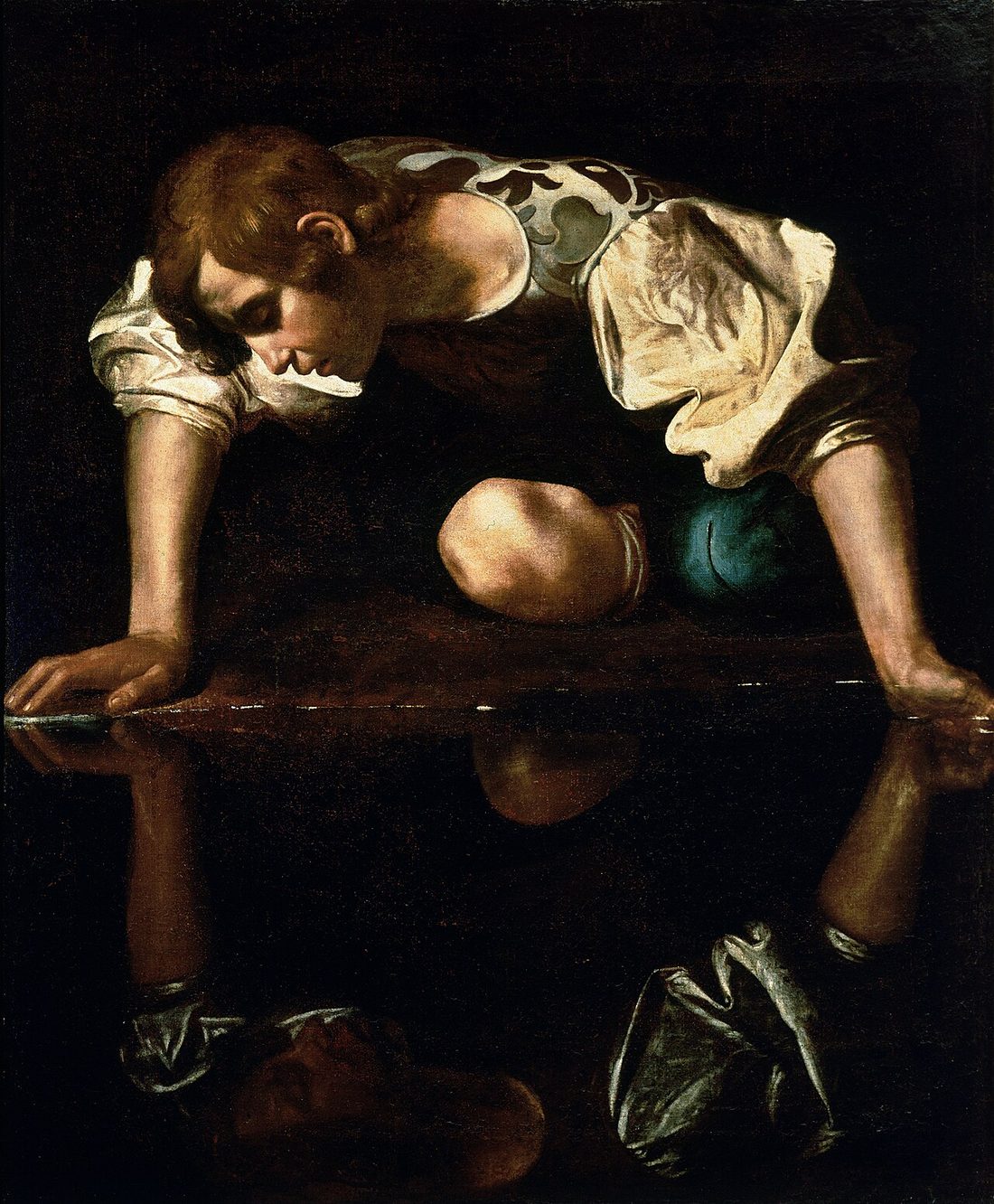

A young man bends over water. Below him, the same face appears upside down. The background is dark, and the world closes around body and reflection.
Narcissus loved his own face but did not understand that it was an image. The more he tries to touch it, the more the water moves and the face disappears. The object of love is himself and, at the same time, an other he can never possess.
Caravaggio did not embellish the myth. He left only one body and one reflection within darkness. Above and below form a circle, and the youth becomes trapped inside himself.
Byun Shi-Ji’s figures rarely look at their own faces. They look toward the sea, the wind, and roads from which no one returns. Caravaggio’s figure is imprisoned within the self; Byun’s forgets the self before a world larger than himself.
A gaze descending only inward and a gaze moving outward into climate and place: these are different ways of bearing solitude.
The face in the water still cannot be held.
The interpretation is the author’s. No unverified statement has been presented as the artist’s own words.