Research/Reading the Masters/Ⅴ Those Who Painted People
Ⅴ — Those Who Painted People · No. 29 / 50
Michelangelo — Sistine Chapel Ceiling
미켈란젤로 — 〈시스티나 성당 천장화〉
1508–1512. Fresco, approximately 40 × 14 m. Sistine Chapel, Vatican City.
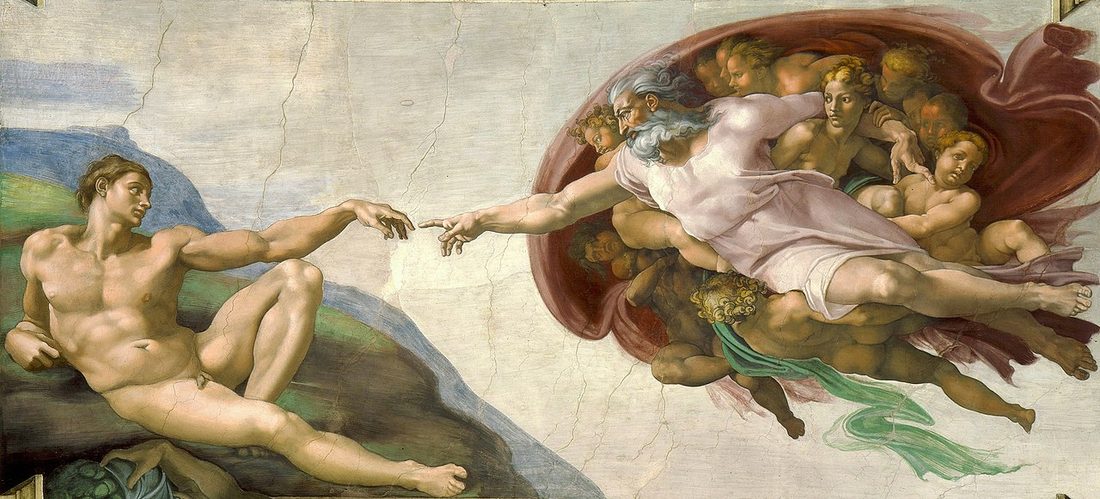

Hundreds of bodies cover the ceiling. Creation and fall, prophecy and salvation unfold across a single architectural field.
Michelangelo painted with the eye of a sculptor. The figures seem not merely colored but built through mass. Muscle, torsion, weight, and tension appear to support the ceiling itself.
In The Creation of Adam, two fingers remain separated by the smallest interval. Divine force is felt less through contact than through the gap between them. Empty space is not nothing; it is the place of an event that has not yet occurred.
Byun Shi-Ji’s empty spaces contain a similar tension: a sea from which the boat has not returned, a field after someone has passed, a sky before the crow descends. Emptiness holds absence and waiting.
Michelangelo’s bodies are monumental and heroic. Byun’s are small and bent. Yet both understood the body as a place where spirit resides.
The two fingers have not yet touched.
The interpretation is the author’s. No unverified statement has been presented as the artist’s own words.