Research/Reading the Masters/Ⅴ Those Who Painted People
Ⅴ — Those Who Painted People · No. 31 / 50
Édouard Manet — Olympia
마네 — 〈올랭피아〉
1863. Oil on canvas, 130.5 × 190 cm. Musée d’Orsay, Paris.
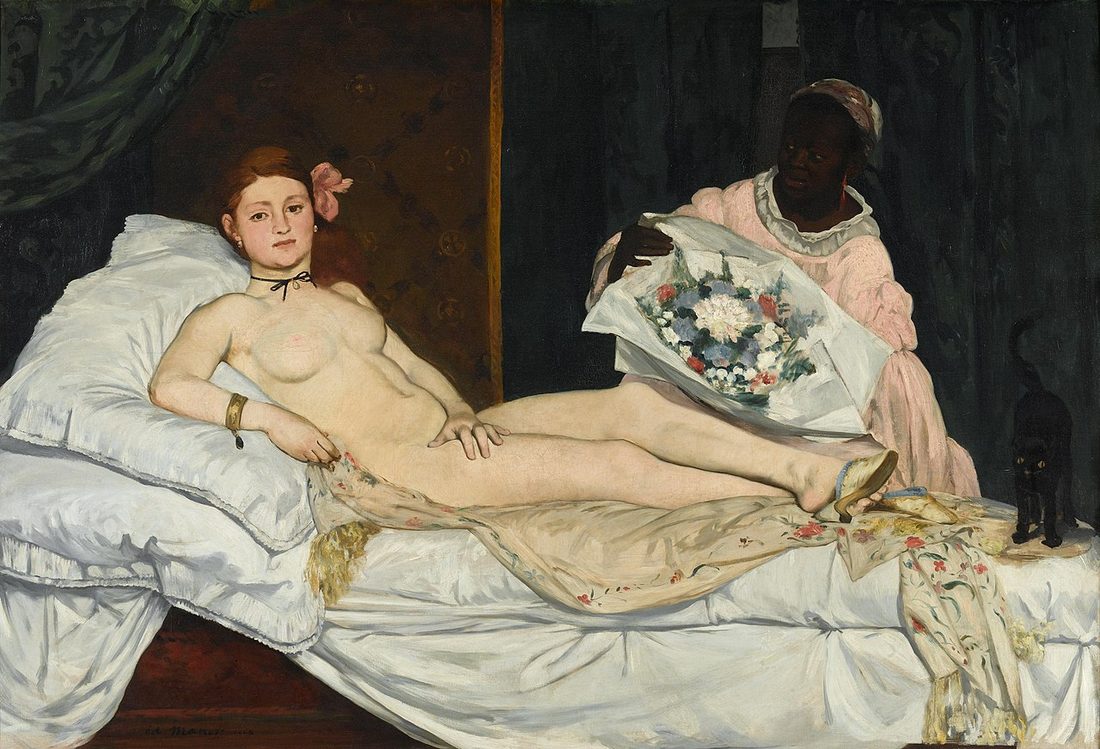

A woman lies on a bed. Her body faces us, and her eyes meet ours. There is neither modesty nor apology in her gaze.
Manet borrowed the pose of the classical nude but removed the shelter of mythology. She is not Venus but a woman of nineteenth-century Paris. The bouquet, black cat, ribbon, and loosened slipper place her within contemporary reality.
What disturbed viewers was not nudity alone but the gaze returned to them. The spectator was no longer the secure master of looking. The one who looks also becomes the one being seen.
Byun Shi-Ji’s figures often turn away or stand in profile, yet they do not allow the viewer to remain comfortable. Posture arrives before face, and the body enduring wind questions our own position. Manet overturned the authority of the gaze; Byun unsettled the place from which landscape is seen.
One changes the viewer’s place from a bed, the other from an open field.
Olympia still refuses to look away.
The interpretation is the author’s. No unverified statement has been presented as the artist’s own words.