Research/Reading the Masters/Ⅱ Those Who Went Into the Dark
Ⅱ — Those Who Went Into the Dark · No. 08 / 50
Edvard Munch — The Scream
뭉크 — 〈절규〉
1893. Tempera and crayon on cardboard, 91 × 73.5 cm. National Museum, Oslo.
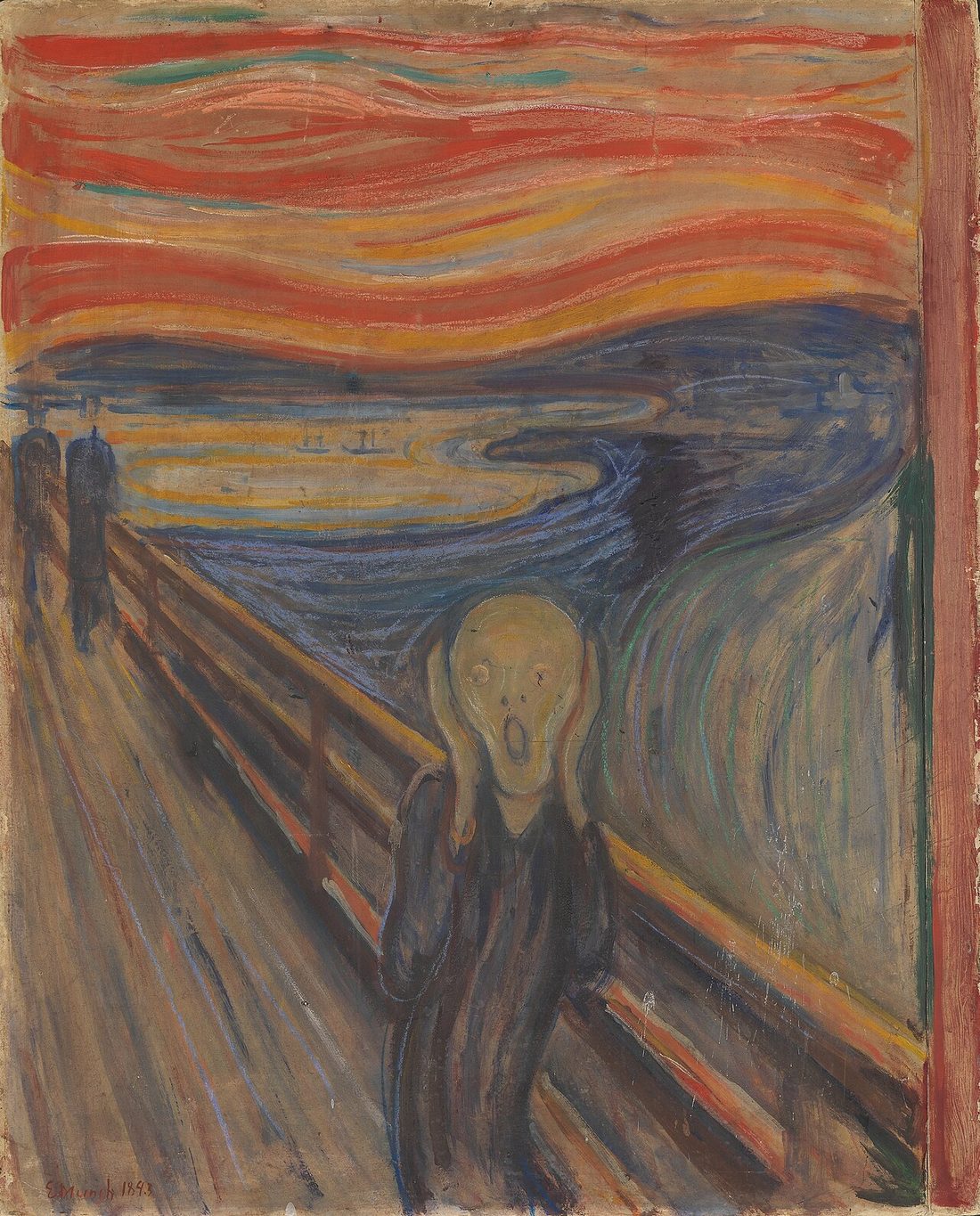

The sky is red. There is a bridge, water, and a single face above them. The figure covers its ears with both hands and opens its mouth.
In a diary entry from 1892, Munch described walking with friends when the sky turned blood-red and he sensed a vast scream passing through nature. What matters is that he wrote of hearing rather than merely seeing. The painting turns an invisible sound into color and line.
It is not clear whether the figure is screaming or trying to block the scream of the world. Two people continue walking in the distance as though nothing has happened. The most frightening thing is not the red sky but the fact that no one turns around.
The image may be compared with the Korean emotion of han, but the two are not identical. Han contains time—the long duration of enduring and slowly dissolving pain. Munch’s scream has no such interval. It is the sharpness of a present that can no longer be borne. Byun Shi-Ji’s old man does not cast his cry outward. He bends his back and remains inside the frame. Munch released the cry because he could not endure; Byun swallowed the wind in order to endure.
To be able to scream is still to feel. Where feeling is gone, even the scream disappears.
The sky is still red.
The interpretation is the author’s. No unverified statement has been presented as the artist’s own words.