Research/Reading the Masters/Ⅱ Those Who Went Into the Dark
Ⅱ — Those Who Went Into the Dark · No. 09 / 50
Francisco de Goya — The Black Paintings
고야 — 〈검은 그림들〉
1819–1823. Oil on plaster, later transferred to canvas; a cycle of fourteen works. Museo del Prado, Madrid.
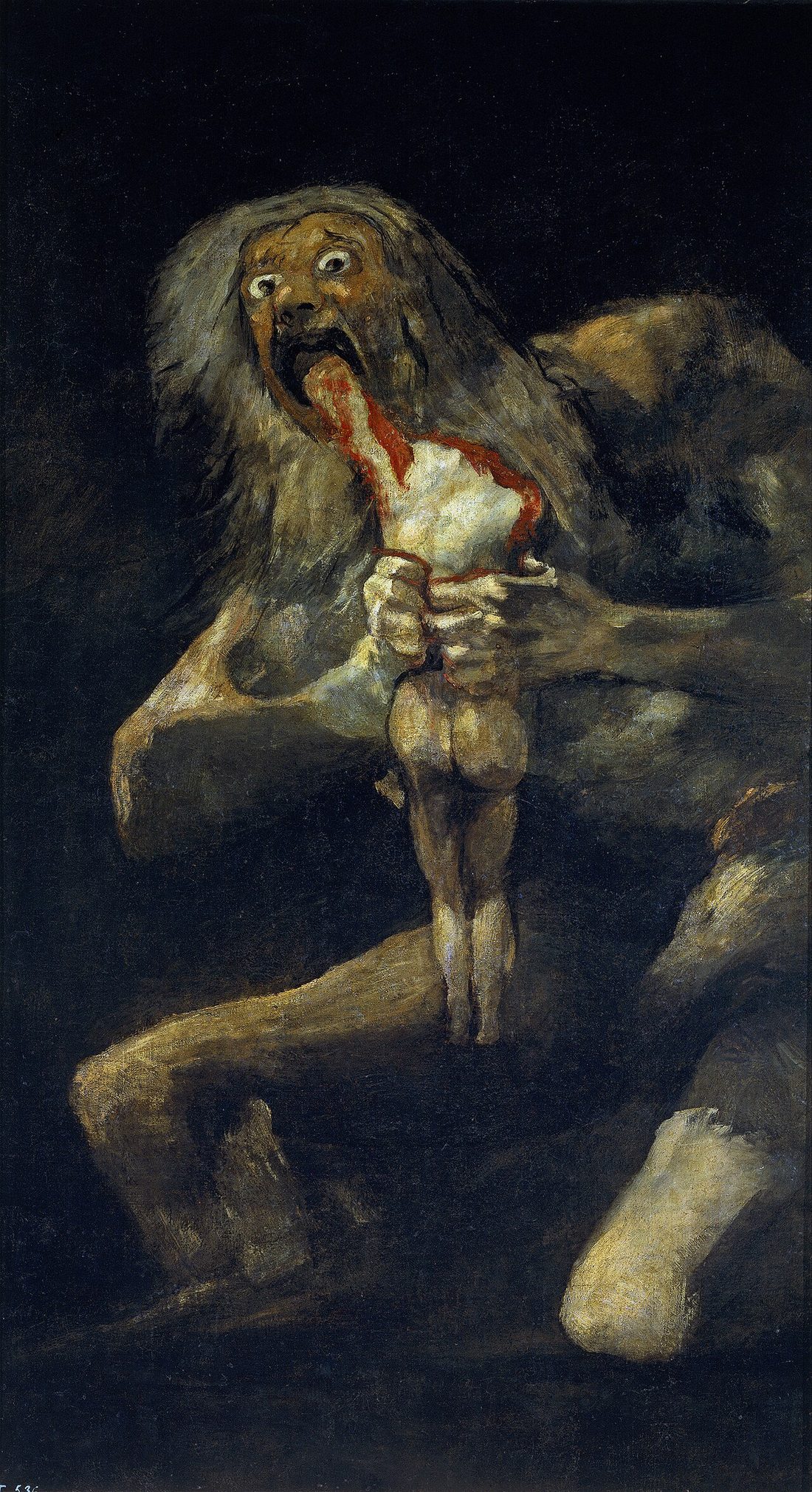

He could no longer hear. He was past seventy and had witnessed war and repeated changes of power. Goya painted directly on the walls of a house outside Madrid. The works were not commissioned and were not intended for exhibition.
What remains when a painter makes pictures that will not be sold? In Saturn Devouring His Son, a god consumes his own child. Divine majesty disappears, leaving only animal terror. It is a myth of time, but it can also appear as a state devouring its people.
The quietest image, however, is The Dog. Almost the entire field is empty. Only the head of a dog appears near the bottom. We do not know what it sees. Above it, nothing is depicted.
This empty space may seem to resemble Byun Shi-Ji’s margins, but its nature is different. Byun’s emptiness contains a boat that has not returned, a person waiting, and the trace of wind that has passed. Goya’s emptiness offers no response at all. One absence is longing; the other is a silent world.
Goya abandoned the wish to paint beautifully. The brushwork is rough and the colors are dark. Yet the images remain powerful because they are honest. When an artist cannot heal the wounds of an age, he can still record them.
The dog is still looking upward.
The interpretation is the author’s. No unverified statement has been presented as the artist’s own words.