Research/Reading the Masters/Ⅱ Those Who Went Into the Dark
Ⅱ — Those Who Went Into the Dark · No. 07 / 50
Caravaggio — The Incredulity of Saint Thomas
카라바조 — 〈의심하는 토마스〉
c. 1601–1602. Oil on canvas, 107 × 146 cm. Picture Gallery, Sanssouci, Potsdam.
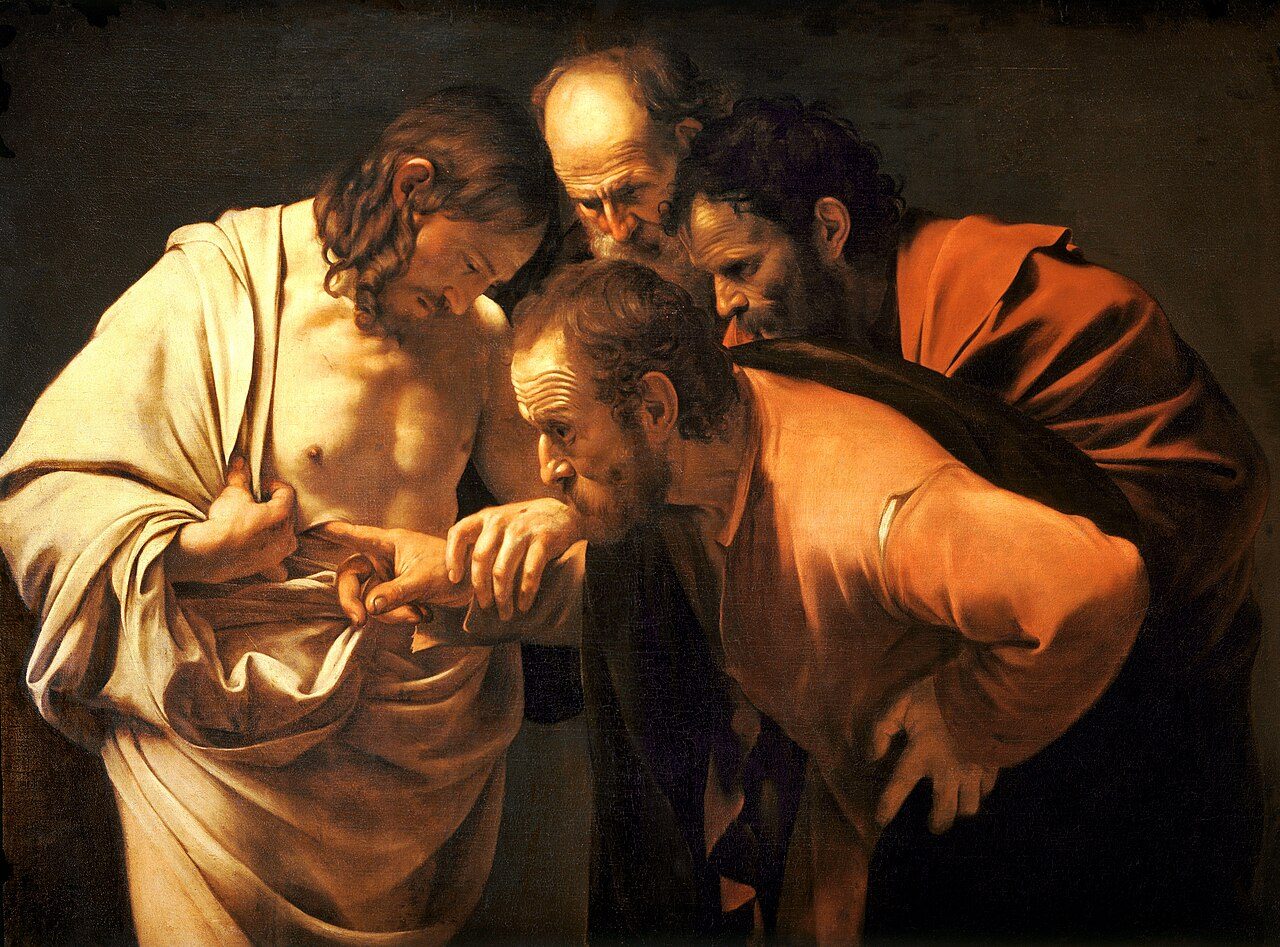

It is dark. A single beam illuminates only four faces and a cluster of hands. The background has been erased. What matters is one hand and an open wound.
Thomas places his finger inside the wound in Christ’s side. Christ guides his wrist. If faith were only an abstract idea, this scene would be unnecessary. Caravaggio suggests that faith does not arrive through sight alone; it comes through the body and through wounds.
The violent chiaroscuro of tenebrism heightens the drama, yet it is more than theatrical effect. Darkness covers the unnecessary world, and light leaves only what must be verified. The erased space makes the painting.
Byun Shi-Ji also erases. He removes the details of sky and earth and leaves a field of dried-grass color, an old man, and a horse. Caravaggio reveals by concealing; Byun reveals by emptying. Their methods are opposite, but both leave only what must remain.
The one who doubted reached out first. A faith that never asks may remain shallow. The hand that seeks the wound is not refusing belief; it is trying to cross more deeply into it.
If we stand before the painting long enough, we become that hand.
The interpretation is the author’s. No unverified statement has been presented as the artist’s own words.