Research/Reading the Masters/Ⅰ Those Who Held the Light
Ⅰ — Those Who Held the Light · No. 04 / 50
Pierre-Auguste Renoir — Luncheon of the Boating Party
르누아르 — 〈뱃놀이 하는 사람들의 점심〉
1880–1881. Oil on canvas, 130.2 × 175.6 cm. The Phillips Collection, Washington, D.C.
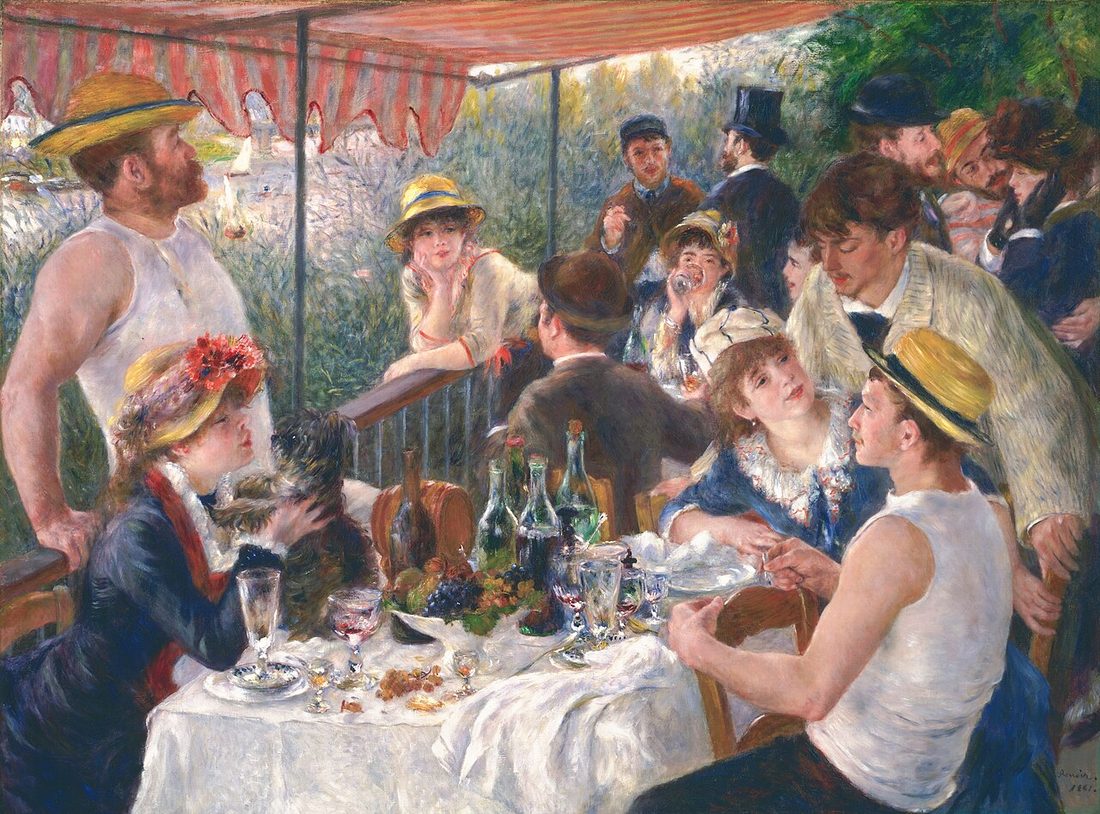

It is a terrace by the river on a Sunday afternoon. Friends have gathered; there are wine, fruit, and laughter. Sunlight filtered through the awning lays soft shadows across faces and clothes.
Renoir did not turn happiness into a fixed expression. The woman holding a dog, the man raising a glass, the figure leaning against the railing—all remain inside their own moments. Conversation and breath come before pose. The painter did not observe them from a distance; he lived that afternoon with them.
The scene recalls the Korean tradition of building a pavilion beside water, inviting friends, pouring wine, and composing poems. A riverbank in Paris and a waterside pavilion in Joseon are far apart, yet both make precious use of an afternoon beside nature.
From Byun Shi-Ji’s position, however, the difference is equally clear. Renoir’s canvas is full of people; Byun’s usually leaves one person behind. Renoir’s light sparkles between figures, while Byun’s light settles over the entire surface as dried-grass color. The joy of company and the time of solitary endurance cannot replace one another.
The gathering ends, and the river remains. Happiness may be nothing grander than sharing a meal with good people and briefly forgetting the hour.
Only in the painting does that afternoon never pass.
The interpretation is the author’s. No unverified statement has been presented as the artist’s own words.