Research/Reading the Masters/Ⅰ Those Who Held the Light
Ⅰ — Those Who Held the Light · No. 03 / 50
Claude Monet — Impression, Sunrise
모네 — 〈인상, 해돋이〉
1872. Oil on canvas, 48 × 63 cm. Musée Marmottan Monet, Paris.
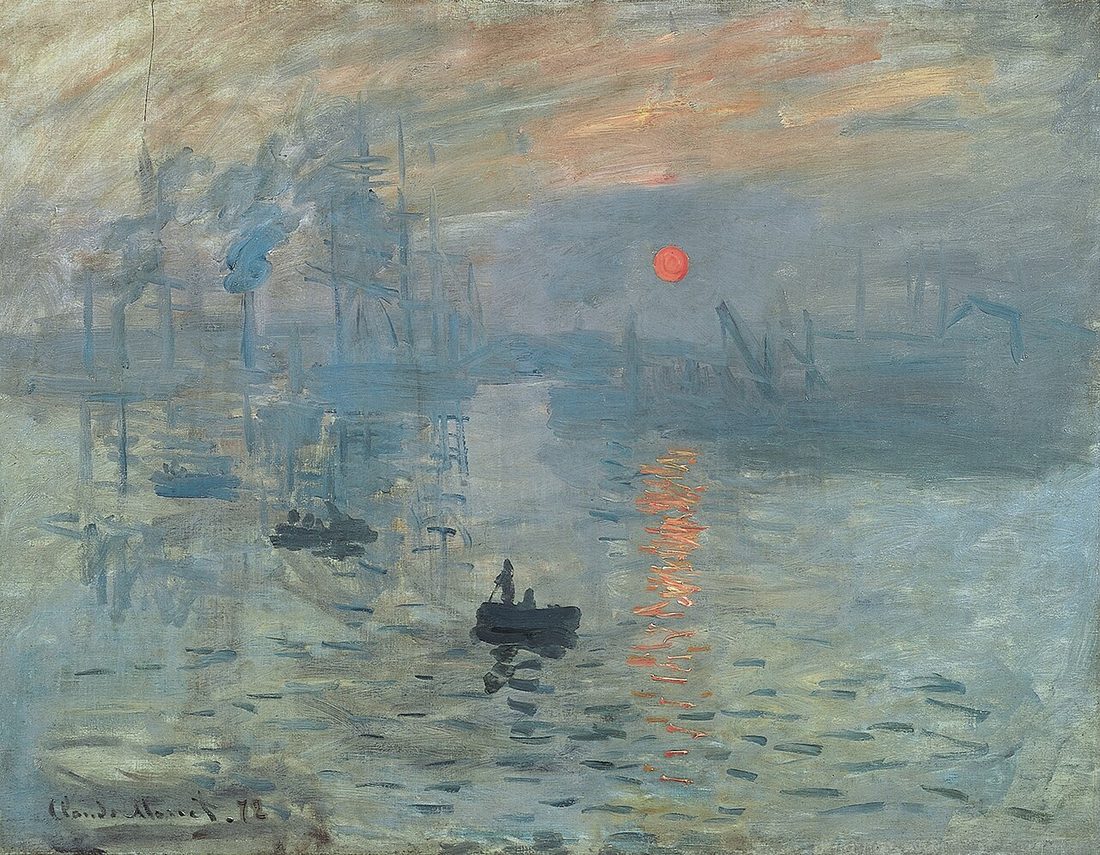

It is a harbor at dawn. There is mist, water, and a single orange sun suspended above them. The boats are little more than contours, as though they might disappear at any moment.
Night has ended, but day has not yet arrived. Monet painted not a finished world but a world in the process of becoming: color before it is named, form before it hardens. Rapid brushwork and wet layers of paint hold the tremor of an instant. Colors are not fully mixed on the palette; they meet and permeate one another on the canvas.
The boundary between sky and sea dissolves. It becomes difficult to know where water ends and mist begins. When the boundary disappears, the distinction between the viewer and the landscape briefly softens as well. In East Asian ink painting, bleeding is not an error but a period in which the material is allowed to speak. Monet opened a similar interval within oil painting.
Byun Shi-Ji’s horizons also often vanish. Sky and sea become one field of dried-grass color, leaving only a boat. Monet’s erasure belongs to mist; Byun’s belongs to wind.
Nothing is eternal. Yet a painting that honestly holds a vanishing moment may endure, because it trusts flow over completion and becoming over fixity.
The mist has not yet lifted.
The interpretation is the author’s. No unverified statement has been presented as the artist’s own words.