Research/A Hundred Years of Wind/Ⅵ Time & Memory
Ⅵ Time & Memory · 78 / 100
Sehando and Jeoldo
Reading Relationships in Landscapes of Isolation
세한도와 절도
Naming Two Distinct Works
Sehando dates to 1844; Byun Shi-Ji’s Jeoldo is identified as a work of 1981. The interval is 137 years. Yet more important than calculating the interval is linking each name to its particular work. If similar-looking pictures are gathered under one title, a comparison may begin by looking at the wrong objects.
Sehan calls to mind a cold season; jeoldo, an isolated island. One seems to name a time first, the other a space. Yet a cold season requires somewhere to live, and time passes for those waiting on an island. The titles meet where time and space become conditions of one another.
The comparison is not a contest over whose solitude is deeper. It asks what preserves a relationship within a condition of separation. Nearness and distance within the image matter, but so do making a picture, giving it to someone and looking at it again. A painting of isolation need not itself be isolated.
Books Arriving from Beyond Sehando
The National Museum of Korea places Sehando in the context of books Yi Sang-jeok sent to Kim Jeong-hui during exile. The work is not a certificate of a world deserted by everyone. It responds to a relationship that continued through adversity. An absence of depicted people is different from an absence of friends.
The museum describes two pines and two cypresses beside a house with a round doorway. Before compressing these trees into a single symbol, we should consider how distinct trees form the surroundings of a house. House, trees and open intervals together establish a place.
A picture can be a response addressed to someone far away. We can therefore read its intervals as solitude while also considering what crosses them. Emptiness need not mean only the absence of relationship. A distance directed towards someone may remain within it.
An Isolated Island Is Not Necessarily Uninhabited
A 2018 report on Jeoldo, accompanied by a photograph credited to MMCA, describes a crouching person beneath a tree and a pony. We therefore cannot retain the draft’s premise of an empty island without a directly depicted person. This point relies on the report; registration-number and high-resolution image checks remain outstanding.
The presence of a person does not give solitude only one meaning. A horse nearby does not remove vulnerability. Yet where another life is present, isolation differs from complete unrelatedness. The distance surrounding an island and the nearness between bodies can operate at different scales.
If we read the title as the severing of every relationship, these distinctions disappear. Restricted passage and self-sufficiency without dependence are not the same condition. Living in a separated place need not mean having no need of help; it may make the question of what can reach one more urgent.
Do Not Turn the Posture of a Tree into a Moral Ranking
The contrast between an upright Chusa and a leaning Byun is easy to remember. But a memorable sentence need not show a picture accurately. Reduce distinct trunks and branches to one vertical line, or make every leaning tree teach the same lesson of survival, and the particular forms disappear.
Byun stressed that his trees and houses differed from the forms in Sehando, while considering why viewers might experience a similar feeling. For him, resonance was not evidence of copying identical forms. It was a tentative, personal interpretation of how different forms might meet in feeling.
Following that distinction, a tree’s posture becomes a question of relationship rather than a moral score. Towards which open area does a branch extend? How far is it from the house? What does a shadow or dark mass bring visually closer? Comparison should multiply these particular questions instead of attaching a verdict.
Open Space and Painted Space
Comparing the intervals of an ink painting with the coloured field of an oil painting need not set emptiness against fullness. Paper or paint remains present even where figures are absent or objects few. A space without depicted forms is not a space without material. The question is what becomes more visible because less is depicted.
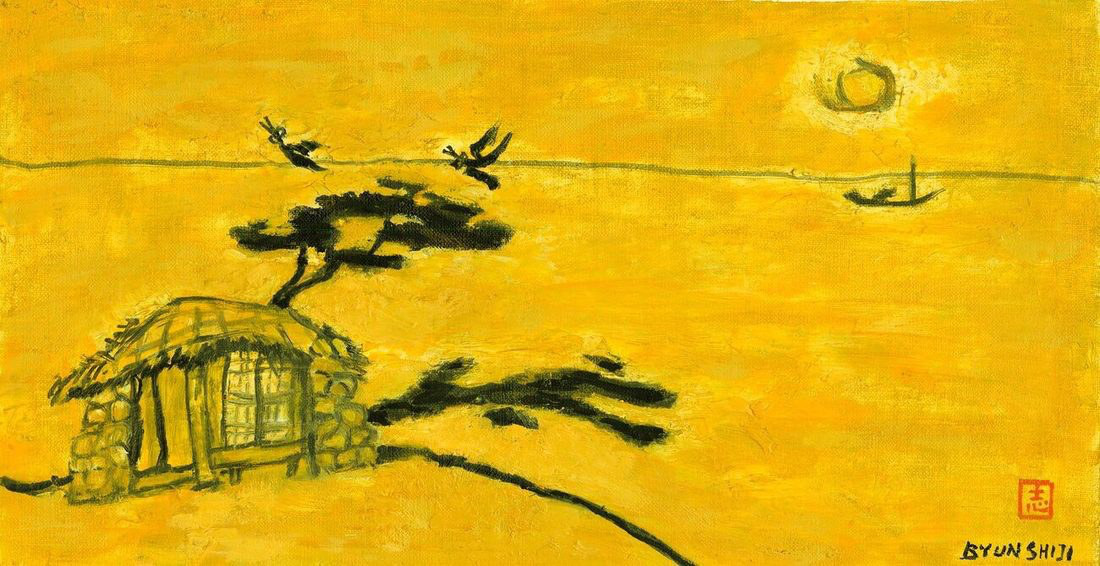
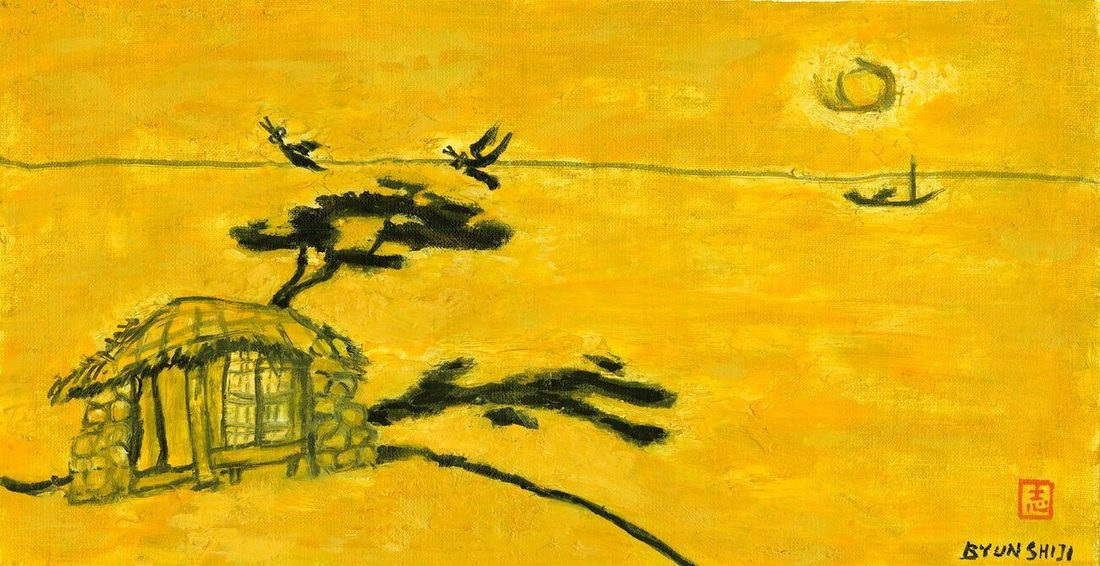
In the supporting comparison Empty House, a broad field of light remains between the house and leaning tree on the left and a distant boat to the right. This work must not be relabelled Jeoldo. It lets us examine, in a reproduction actually available here, how nearby forms around a house and a distant expanse of water establish different distances.
To call that brightness simply warm would diminish the tension of distance. Colour can suggest intimacy while making something separated appear farther away. Nor does an interval have only one meaning. It may offer rest, or remain a space that has not yet been crossed.
A Painting That Travels beyond the Island
Sehando travelled with Yi Sang-jeok to China, and responses by Qing literati were added to the scroll. A picture of a winter in a remote place moved among people. The solitude represented by a work and the exchanges it generates are not opposites. Expressing solitude can itself occasion another encounter.
Reading Byun’s paintings elsewhere need not erase the sensations of their places of origin or production. But neither should we close the door by insisting that only someone on Jeju can see them properly. We can provide the context an unfamiliar reader needs while leaving room for that reader’s own questions.
Translations and reproductions are then more than small substitutes for a work. They mediate a further encounter. They must, however, disclose that role. When a reader can distinguish the work from its commentary, viewing from afar becomes an opportunity to compare rather than merely receive a prescribed emotion.
What Changed in 137 Years
The shared name Jeju does not make two periods the same world. Penal exile and modern migration or return belong to different historical conditions. Erase that distinction through the common fact of wind, and fūdo becomes nature without history rather than a place that holds it.
Ink on paper and oil on canvas are not two stages in a simple progression. Different surfaces and tools open different possibilities. A connection with the same island does not make one work the completion or modern version of the other. Even a reading through translation should preserve what does not coincide.
If a dialogue across 137 years is possible, it is not because time has been erased. It is because different times are placed together before a reader today. Without reducing the works to one ground, we can ask again about having a place to live and thinking of someone far away.
Not the Cold, but Relationships within It
Adversity may reveal the character of a relationship. That does not make adversity itself good. Art remaining within difficulty is not the same as difficulty being necessary for art. Respect for a painting must not justify the injury inflicted on the person who made it.
Reading Sehando and Jeoldo together need not produce a ranking of those who withstand solitude. It can sharpen an attention to what connects people where connection seems threatened. Books arrive, pictures are given, another living presence is considered. Relationships remain in small particulars rather than grand declarations.
After reading the records of the two works, we return to the supporting reproduction. The house is on the left. The boat is far away. The eye slowly crosses the brightness between them.